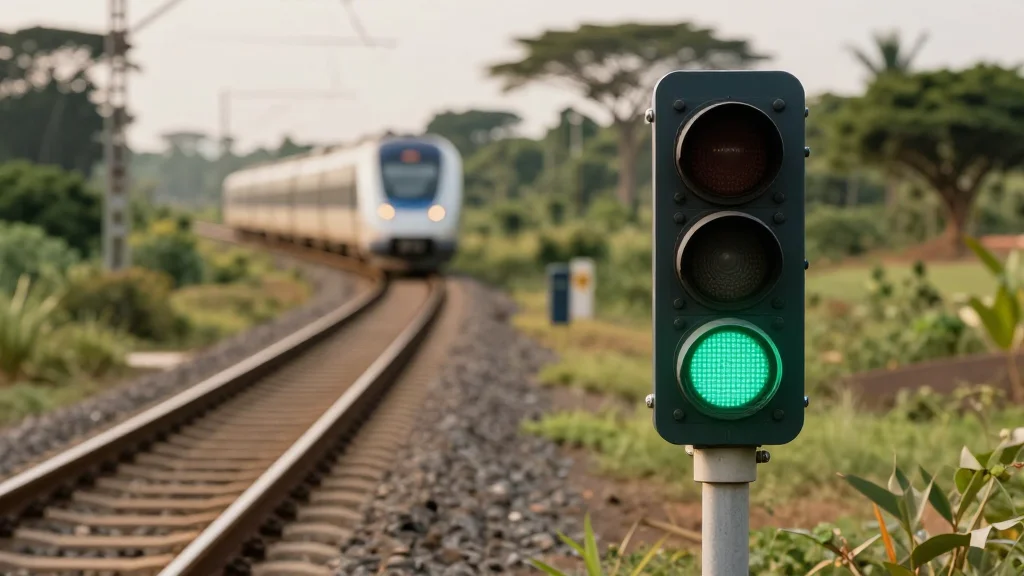
Ghana Secures EU Grant for ETCS Project
Why It Matters
The grant removes a critical bottleneck, allowing Ghana to unlock the full potential of its flagship rail corridor and accelerate regional trade integration while easing fiscal pressure through external financing.
Key Takeaways
- •EU approves $22 million grant for Ghana’s ETCS Level 1 upgrade
- •Funding will enable simultaneous train movements on the 97.6 km line
- •Line cost $449 million but operates at single‑train capacity due to signaling gaps
- •ETCS Level 1 aims to boost safety, capacity, and reliability for SGR expansion
- •Grant marks shift to financing projects via external aid amid Ghana’s fiscal constraints
Pulse Analysis
The Ghana Railway Development Authority’s 97.6‑kilometre Tema‑Mpakadan corridor is the inaugural segment of a planned 1,000‑kilometre standard‑gauge railway that will link the bustling Port of Tema to inland markets and eventually Burkina Faso. Completed in November 2024 at a cost of $449 million, the line has been hamstrung by outdated signalling, allowing only one train to occupy the single track at a time. In late 2025, the authority expects to restart passenger services after a series of remedial works.
The European Commission’s €20 million (about $22 million) grant will fund the deployment of European Train Control System (ETCS) Level 1, a proven signalling solution that provides continuous movement authority and train‑borne supervision. By replacing legacy equipment, ETCS Level 1 enables multiple trains to run safely on the same track, dramatically increasing line capacity and reducing delays. The technology also enhances traffic management and aligns Ghana’s rail infrastructure with international safety standards, a critical step as the country prepares to extend the network toward the northern corridor.
Beyond the technical upgrade, the grant signals a strategic shift toward external, grant‑based financing as Ghana grapples with tight public finances. Leveraging EU support reduces the immediate fiscal burden while showcasing the country’s commitment to modern, export‑oriented logistics. Successful implementation could attract further investment for the remaining SGR phases, stimulate regional trade, and improve the competitiveness of West African supply chains. The partnership also deepens Ghana‑EU cooperation, positioning the nation as a hub for future rail‑centric development projects across the sub‑Saharan corridor.
Ghana secures EU grant for ETCS project
Comments
Want to join the conversation?
Loading comments...