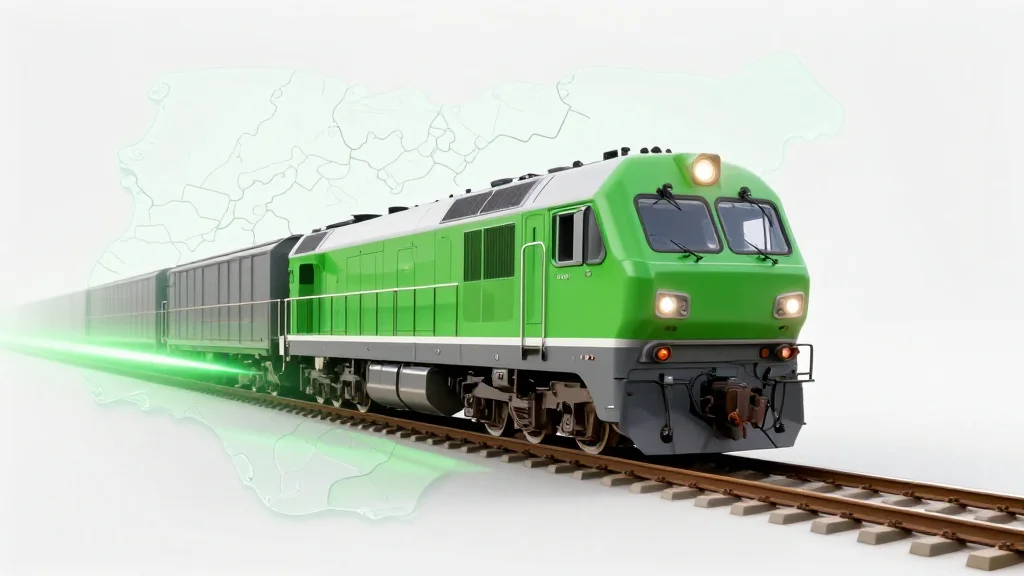
Nigeria Moves Towards Freight Network Liberalisation
Why It Matters
Private‑sector freight rail reduces Nigeria’s costly road bottlenecks and accelerates economic diversification, while supporting the country’s climate‑friendly infrastructure agenda.
Key Takeaways
- •NRC issued provisional licence to Traxport for dual‑gauge network
- •Traxport will launch freight services on Lagos‑Kano corridor
- •Integrated rail logistics platform aims to cut road congestion
- •Cleaner locomotives support Nigeria’s energy transition goals
- •Private‑sector rail entry aligns with federal infrastructure strategy
Pulse Analysis
Nigeria’s logistics bottlenecks have long hampered its economic momentum, with over‑reliance on road transport inflating costs and contributing to congestion in major corridors. The federal government’s recent transport blueprint emphasizes multimodal integration, aiming to shift freight volumes onto rail to improve efficiency and lower emissions. By liberalising access to its railway network, the Nigerian Railway Corporation is creating a regulatory environment that encourages private investment and aligns with broader African infrastructure development trends.
Traxport Rail Services’ provisional licence covers both the 1,435 mm standard‑gauge and 1,067 mm narrow‑gauge tracks, a rare dual‑gauge permission that broadens operational flexibility. Focusing first on the Lagos‑Kano corridor—Nigeria’s most vital trade artery—the company intends to roll out an end‑to‑end logistics platform that synchronises scheduling, cargo handling and real‑time tracking. In addition, Traxport plans to deploy low‑emission locomotives, positioning the venture as a catalyst for the nation’s energy transition and a showcase for green freight solutions in West Africa.
The commercialisation of rail freight promises tangible economic dividends: reduced haulage costs, faster delivery times, and a de‑congested road network that can support growing passenger demand. For investors, the licence signals a clearer path to revenue generation in a market historically dominated by state‑run operations. Moreover, successful implementation could spur ancillary services—warehousing, intermodal terminals and technology providers—fueling job creation and enhancing Nigeria’s standing as a regional trade hub. However, challenges remain, including infrastructure upgrades, financing gaps and the need for skilled personnel to manage sophisticated rail‑logistics systems. Overcoming these hurdles will be critical to realising the full potential of Nigeria’s freight network liberalisation.
Nigeria moves towards freight network liberalisation
Comments
Want to join the conversation?
Loading comments...