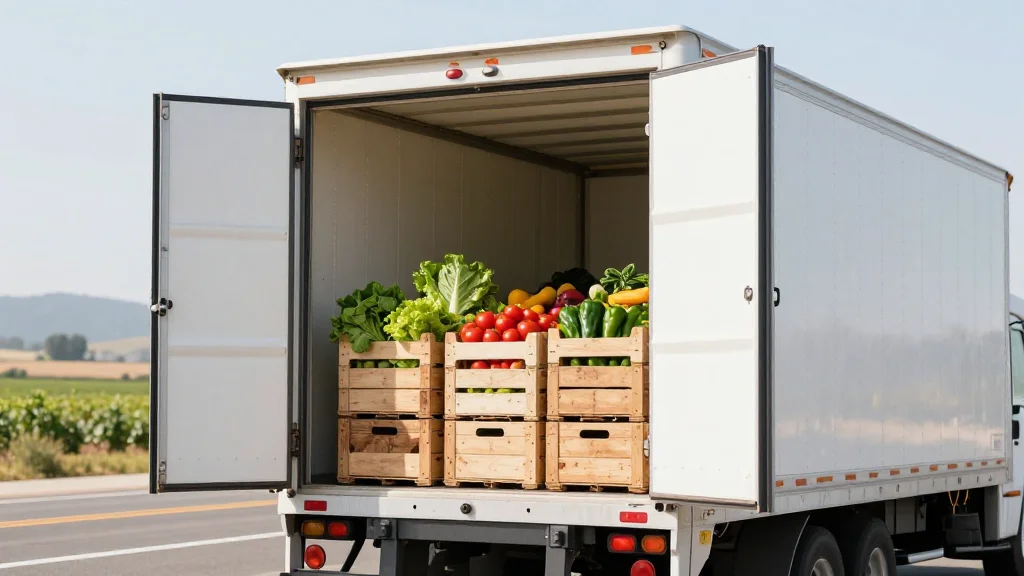
Produce Season’s Prodigal Return
Why It Matters
The rapid rise in rejection rates and spot prices indicates a tighter refrigerated market, forcing shippers to pay premiums and pulling capacity away from other freight, which could ripple through the broader trucking industry.
Key Takeaways
- •Fresno reefer rejection rates jumped from <4% to >14% in a month
- •Fresno‑Chicago produce spot rates rose ~25% in recent weeks
- •General reefer rates on same lane up 43%, highest since 2022
- •Early-season West produce harvest draws capacity, raising freight premiums
- •Tight refrigerated market may spill over to broader truckload sector
Pulse Analysis
The first major California harvest is now underway, and data from USDA and SONAR confirm that freight demand is spiking. Rejection rates—a proxy for capacity strain—have more than tripled in Fresno, while produce spot rates have surged 25% on key lanes to Chicago. Such movements are not isolated; general reefer rates on the same corridor have jumped 43%, the strongest increase since 2022, underscoring how quickly seasonal urgency can reshape pricing dynamics.
For carriers, the early-season rush translates into higher earnings per mile but also heightened operational pressure. Shippers of lettuce, strawberries, and broccoli are willing to pay premiums to avoid spoilage, prompting a reallocation of trucks from lower‑margin loads to high‑value produce. This capacity shift tightens the broader refrigerated market, where national rejection rates remain near 17% and spot rates hover just below recent peaks. The resulting premium environment can compress margins for non‑produce freight, forcing logistics planners to reassess routing and load‑mix strategies.
Looking ahead, the produce season’s impact could extend beyond the refrigerated segment. As capacity tightens in the West, carriers may divert assets from the Midwest and Southeast, potentially inflating rates in those regions as well. Market participants should monitor weather forecasts—wet conditions could delay harvests and amplify urgency once planting resumes. Companies that leverage real‑time data platforms like SONAR will be better positioned to anticipate rate spikes, secure capacity, and mitigate the risk of supply chain disruptions across the entire truckload ecosystem.
Produce season’s prodigal return
Comments
Want to join the conversation?
Loading comments...