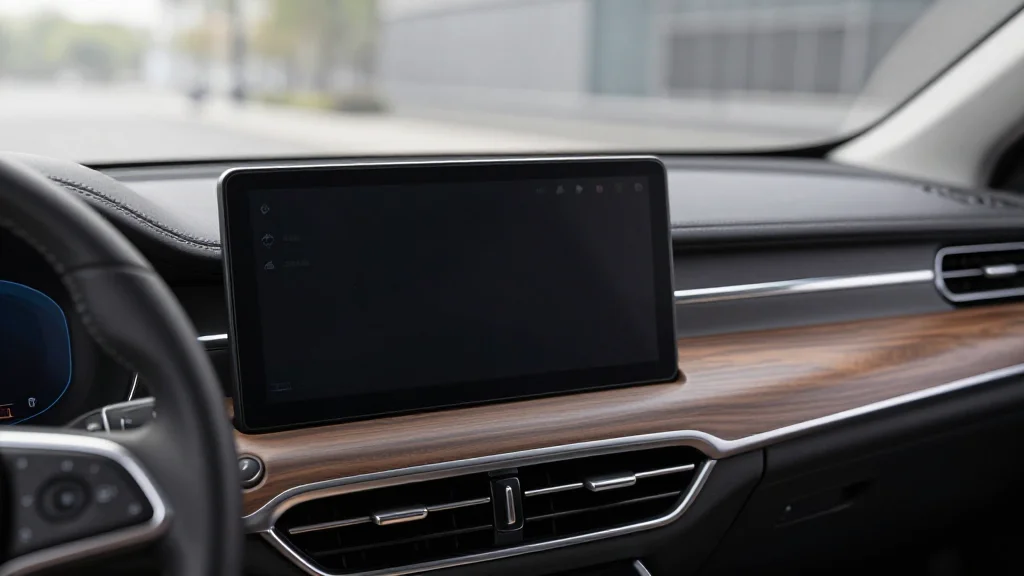
'The Focus Remains On Driving:' Mazda Defends Its Screen-Heavy Approach
Companies Mentioned
Why It Matters
The move signals a broader industry pivot toward digital cockpits, reshaping how automakers balance technology integration with safety and driver engagement.
Key Takeaways
- •Mazda's new EVs feature 26‑inch central touchscreen.
- •Head‑up display replaces traditional instrument cluster for safety.
- •Customer feedback drives Mazda's shift to buttonless HMI.
- •European design director highlights passenger engagement via large screens.
- •Critics warn oversized screens could increase driver distraction.
Pulse Analysis
Mazda’s recent rollout of the 6e and CX‑6e EVs marks a decisive break from its historically restrained cabin design. Produced in China, these models showcase a 26‑inch infotainment panel that eclipses traditional gauge clusters, reflecting a global trend where manufacturers leverage larger displays to consolidate controls and infotainment. This shift aligns with consumer expectations for seamless connectivity and mirrors moves by rivals such as Tesla and Hyundai, which have long embraced digital‑first interiors. By integrating a head‑up display (HUD), Mazda attempts to mitigate the potential safety drawbacks of a screen‑heavy layout, keeping critical driving data within the driver’s line of sight.
Safety advocates remain skeptical, noting that excessive reliance on touch interfaces can divert attention from the road. Studies on driver distraction indicate that visual‑motor tasks, like navigating complex menus, increase glance duration and reaction times. Mazda’s European design director argues that a well‑implemented HUD can offset these risks, eliminating the need for a traditional instrument cluster. The company’s human‑machine interface (HMI) strategy emphasizes minimal physical buttons, a design choice justified by internal surveys that suggest customers prefer streamlined, touch‑centric controls. Yet, the balance between convenience and cognitive load will be a litmus test for the brand’s driver‑focused philosophy.
Market reception will likely hinge on how Mazda reconciles its heritage of driver engagement with the allure of modern digital experiences. While younger buyers may welcome the all‑screen cockpit, long‑time enthusiasts worry about eroding the tactile feedback that defines Mazda’s driving dynamics. Competitors like BMW and Audi are also expanding HUD capabilities, suggesting a converging industry standard. If Mazda can demonstrate that its large displays enhance, rather than hinder, the driving experience—perhaps by preserving a minimalist interface for models like the Miata—it could set a new benchmark for integrating advanced infotainment without compromising safety.
'The Focus Remains On Driving:' Mazda Defends Its Screen-Heavy Approach
Comments
Want to join the conversation?
Loading comments...