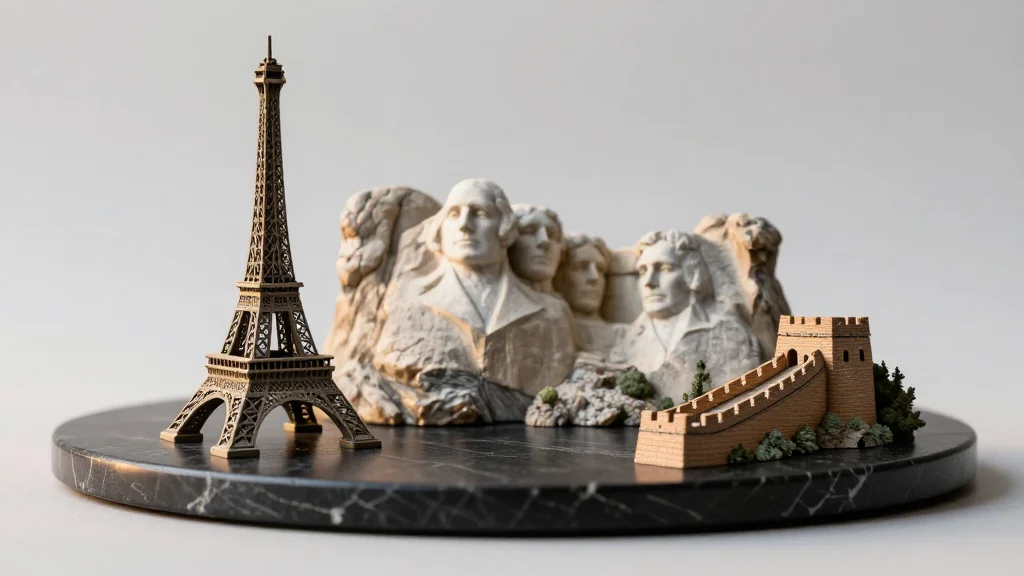
In China’s 'Silicon Valley,' US Landmarks Stand in a Strange World Frozen in Time
Companies Mentioned
Why It Matters
The park illustrates how China leverages domestic tourism and themed experiences to showcase soft power, while Shenzhen’s tech‑driven growth signals the city’s role as a future engine of global innovation and consumer spending.
Key Takeaways
- •Window of the World draws 3 million visitors annually
- •Ticket costs ≈ $32; night entry ≈ $15
- •Shenzhen population near 18 million, tech hub for AI
- •Park features 48‑hectare replicas of global landmarks
- •QR‑code passports let visitors collect digital stamps
Pulse Analysis
Shenzhen’s rise from a modest fishing village to a megacity of nearly 18 million people epitomizes China’s rapid urbanisation and tech ambition. The city now hosts a dense constellation of skyscrapers, autonomous taxis, solar‑powered charging stations and drone‑delivered meals, positioning it as a leading hub for artificial intelligence, robotics and smart‑city infrastructure. This economic dynamism fuels a burgeoning middle class with disposable income, eager for novel leisure experiences that blend technology with cultural consumption.
Window of the World capitalises on that appetite by offering a compact, affordable global tour within a single park. For roughly $32, visitors can wander past scaled‑down versions of the Eiffel Tower, the Statue of Liberty and the Pyramids, each equipped with QR‑code‑linked information and a digital passport stamp. The model mirrors China’s broader strategy of creating immersive, app‑driven attractions that turn physical visits into data‑rich interactions, reinforcing domestic tourism while reducing the need for costly overseas travel.
Beyond entertainment, the park serves as a soft‑power showcase, projecting an image of China as both a preserver of world heritage and a pioneer of high‑tech visitor experiences. As Shenzhen continues to export its smart‑city solutions, attractions like Window of the World may evolve with augmented‑reality overlays, AI‑guided tours and seamless mobile payments, setting a template for future experiential venues worldwide. The convergence of cultural nostalgia and cutting‑edge technology underscores the city’s dual role as a tourist magnet and a laboratory for the next generation of digital leisure.
In China’s 'Silicon Valley,' US landmarks stand in a strange world frozen in time
Comments
Want to join the conversation?
Loading comments...