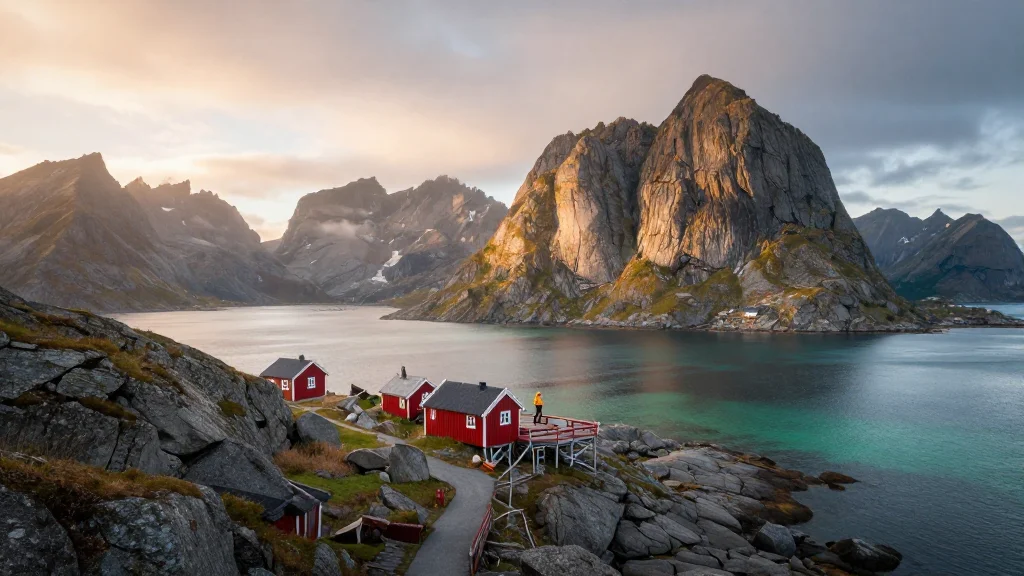
Lofoten Islands Surge as New 'Coolcation' Hotspot, Tourist Nights Double

Why It Matters
Lofoten's rapid ascent illustrates a pivotal shift in global travel preferences toward cooler, nature‑focused destinations, reshaping tourism flows away from overcrowded Mediterranean hotspots. The region's experience offers a case study in managing sudden demand in fragile ecosystems, highlighting the need for coordinated infrastructure upgrades, sustainable visitor caps, and community‑driven tourism models. How Norway balances growth with conservation could set a template for other emerging Arctic and sub‑Arctic locales seeking to harness viral popularity without compromising environmental integrity. The trend also signals broader economic opportunities for northern regions traditionally sidelined in favor of southern beach destinations. Increased visitor spending supports local businesses, creates jobs, and can stimulate investment in transport and hospitality infrastructure. However, unchecked growth risks inflating prices, straining public services, and eroding the authentic cultural fabric that initially attracted travelers. The Lofoten story underscores the importance of proactive policy and industry collaboration to ensure that the benefits of "coolcations" are distributed equitably and sustainably.
Key Takeaways
- •Over 100,000 hikers visit Lofoten each summer, far exceeding the archipelago's 25,000 residents.
- •Northern Norway recorded more than 2 million overnight stays in summer 2025, with Lofoten showing the strongest growth.
- •Hotels in Henningsvær report near‑full occupancy even in October, driven by German and American travelers.
- •Social‑media virality of Reinebringen's stone‑step climb sparked the tourism surge.
- •Local authorities are considering airport expansions and visitor‑management caps to protect the environment.
Pulse Analysis
Lofoten's meteoric rise is less a flash‑in‑the‑pan phenomenon and more a symptom of a structural reorientation in travel demand. Climate‑induced discomfort in traditional sun‑belt markets has accelerated the search for alternatives that combine dramatic scenery with cooler temperatures. Norway, with its robust safety record and high‑quality infrastructure, is uniquely positioned to capture this shift, but the Lofoten case warns that viral popularity can outpace the capacity of small communities.
Historically, destinations that experience a sudden influx—think Iceland after the 2010 volcanic eruption or Croatia post‑Game of Thrones—often grapple with overtourism, price inflation, and cultural dilution. Lofoten's limited accommodation stock and fragile Arctic ecosystems amplify these risks. The proactive steps being discussed—visitor caps on Reinebringen, staggered ferry schedules, and targeted off‑season marketing—reflect a growing awareness that sustainable scaling is essential. If managed well, Lofoten could become a benchmark for responsible Arctic tourism, demonstrating how to monetize viral exposure while preserving natural capital.
From a market perspective, the Lofoten boom could catalyze a cascade of investment in northern logistics, from upgraded regional airports to high‑speed ferry services. Travel operators may develop packaged "coolcation" itineraries that link Lofoten with Tromsø, the Luleå archipelago, and even Finnish Lapland, creating a new Nordic corridor. Conversely, failure to address capacity constraints could push travelers toward alternative, less regulated locales, diluting Norway's competitive edge. The next twelve months will reveal whether Lofoten can sustain its newfound fame without compromising the very qualities that made it a hidden treasure.
Lofoten Islands Surge as New 'Coolcation' Hotspot, Tourist Nights Double
Comments
Want to join the conversation?
Loading comments...