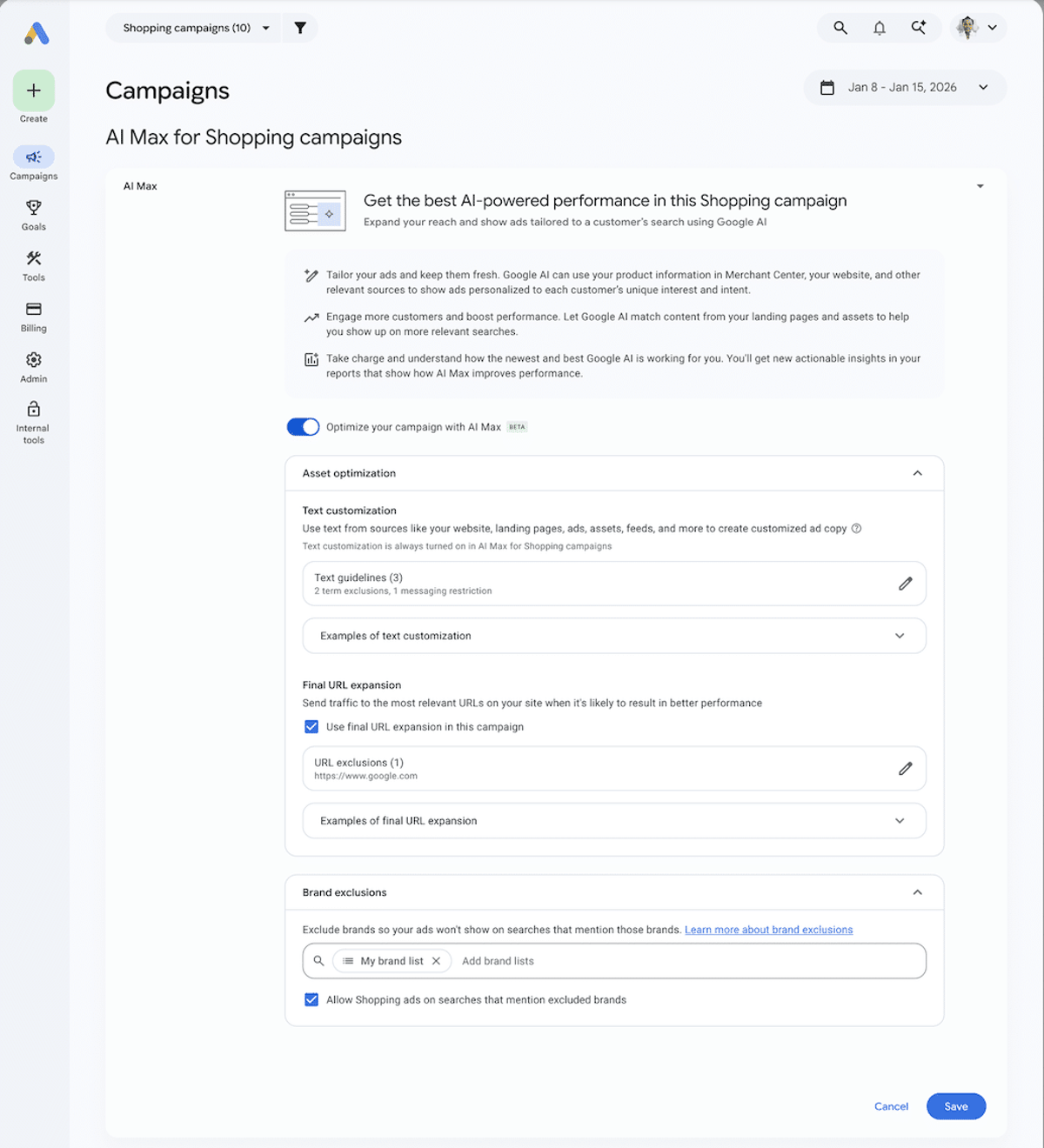
Google AI Max Gets New Controls, Shopping Rollout and Travel Consolidation
Why It Matters
By embedding AI deeper into Shopping and Travel, Google gives brands a faster path to capture early‑stage demand while preserving regulatory control, reshaping how advertisers allocate budget and manage campaigns.
Key Takeaways
- •AI Max now supports Shopping and Travel campaigns
- •AI Brief lets advertisers steer Gemini-powered AI with natural language
- •Text disclaimer and URL automation add compliance safeguards
- •Consolidated Travel interface reduces operational complexity for agencies
- •Retailers gain adaptive ads for long‑tail queries, boosting early discovery
Pulse Analysis
Google’s AI Max platform is moving from a Search‑only add‑on to a cross‑format engine that spans Shopping and Travel. This shift reflects the broader industry trend toward conversational search, where users pose natural‑language questions rather than exact keywords. By leveraging Gemini, Google’s next‑gen large language model, AI Max can interpret intent and generate ad copy that aligns with emerging query patterns, giving advertisers a competitive edge in a market where relevance and speed are paramount.
The introduction of AI Brief marks a significant step in reconciling automation with brand safety. Advertisers can now input plain‑language directives—such as preferred messaging tones, prohibited terms, or audience priorities—and receive previewable ad drafts before launch. Coupled with new text disclaimer overlays and AI‑driven final URL expansion, the suite addresses long‑standing compliance concerns, especially for regulated sectors like finance and healthcare. These controls reduce the “black‑box” perception of AI‑generated ads, encouraging broader adoption among risk‑averse marketers.
For retailers, AI Max’s Shopping integration taps merchant‑center data to serve adaptive ads that surface during exploratory browsing, not just at the point of purchase. Travel advertisers benefit from a consolidated interface that merges previously fragmented campaign types, streamlining reporting and budget allocation. As AI becomes the default engine for matching ads to intent, Google’s expanded offering could accelerate budget migration from manual keyword bidding to automated, intent‑driven strategies, reshaping the competitive dynamics of digital advertising.
Google AI Max gets new controls, Shopping rollout and travel consolidation
Comments
Want to join the conversation?
Loading comments...