
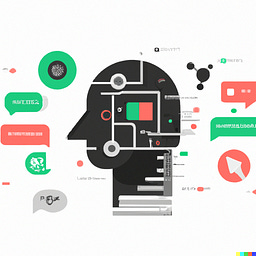
Key Takeaways
- •AI can recreate information instantly
- •Generated outputs feel like personal memories
- •Memory authenticity becomes questionable
- •Impacts learning, credibility, mental health
- •Raises ethical concerns about truth perception
Summary
The post highlights how generative AI can instantly synthesize explanations, summaries, and reconstructed narratives, making the output feel as familiar as a personal memory. Over repeated interactions, these AI‑crafted responses begin to blur the line between lived experience and second‑hand information. The author warns that this convergence creates a new kind of memory that isn’t rooted in direct experience. As AI becomes a primary source of knowledge, distinguishing true recollection from algorithmic reconstruction grows increasingly difficult.
Pulse Analysis
Generative AI models, from large‑language transformers to multimodal systems, now produce concise, structured narratives in seconds. By ingesting massive datasets, these tools can answer questions, summarize articles, or even simulate a step‑by‑step walkthrough of complex concepts. The resulting text mimics the clarity of a well‑written textbook, but because it is assembled on demand, users often internalize it as if they had personally studied the material. This shift reduces the friction of knowledge acquisition, yet it also compresses the provenance of information into a single, opaque output.
Psychologically, the brain treats repeated exposure to coherent narratives as genuine memory, a phenomenon known as source monitoring error. When AI‑generated explanations are repeatedly consulted, they can become indistinguishable from lived experiences, fostering false memories or overconfidence in misunderstood topics. Educators and professionals must therefore recalibrate teaching methods, emphasizing critical evaluation of AI outputs and reinforcing meta‑cognitive skills that differentiate original experience from algorithmic synthesis. Failure to do so may erode analytical rigor and amplify misinformation.
From a business perspective, the blurring of memory and AI content raises both opportunities and liabilities. Companies can leverage instant knowledge generation for rapid onboarding, customer support, and content creation, boosting efficiency and scalability. However, without transparent disclosure that information originates from AI, brands risk damaging credibility if inaccuracies surface. Regulatory bodies are beginning to explore labeling requirements for AI‑produced material, and proactive firms will adopt clear attribution practices, audit pipelines for bias, and invest in user‑education programs. Balancing innovation with ethical stewardship will be key to maintaining trust in an era where AI‑crafted memories are commonplace.


Comments
Want to join the conversation?