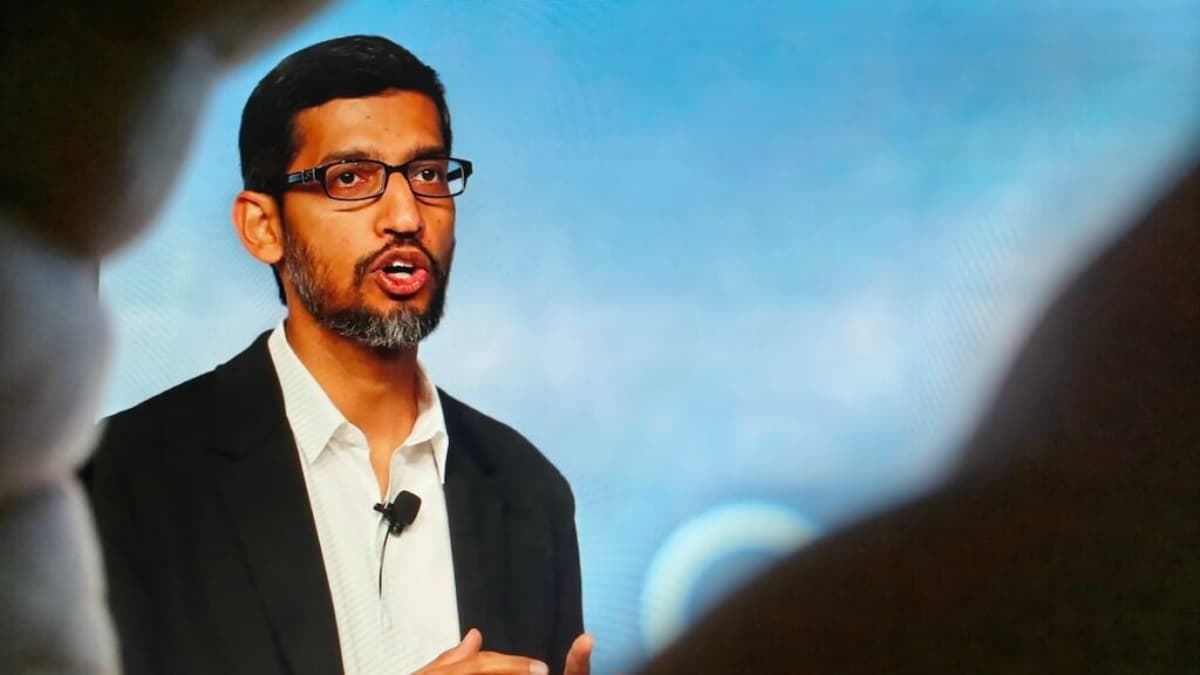
Sundar Pichai Says AI Represents The 'Most Profound' Technology Ever And The US 'Must Take The Lead' On It
Companies Mentioned
Why It Matters
Pichai’s call signals a push for U.S. policy and investment to shape AI’s economic and societal impact, while infrastructure bottlenecks could reshape global competitive dynamics.
Key Takeaways
- •Pichai calls AI “most profound technology” and urges US leadership
- •AI drives breakthroughs in healthcare, education, and wildfire response
- •Data‑center expansion faces water, power, and community opposition in US
- •China tests underwater data centers to cut cooling energy
- •Alphabet shares slipped modestly as AI race intensifies
Pulse Analysis
Sundar Pichai’s recent remarks place artificial intelligence at the center of America’s next technological renaissance. By labeling AI as the "most profound" invention, he frames it not merely as a tool but as a strategic national asset. This rhetoric aligns with bipartisan calls for a coordinated AI strategy that balances rapid innovation with safeguards on privacy, bias, and workforce displacement. Policymakers are likely to look to Pichai’s appeal as a catalyst for legislation that funds research, supports retraining programs, and establishes standards for responsible deployment, ensuring the United States retains its historic edge in breakthrough tech.
Beyond the political narrative, AI’s tangible impact is already reshaping core industries. In healthcare, generative models accelerate drug discovery and enable predictive diagnostics, shortening time‑to‑market for life‑saving treatments. Education platforms leverage adaptive algorithms to tailor curricula to individual learner needs, boosting outcomes while reducing teacher workload. Emergency services benefit from AI‑enhanced wildfire modeling, giving firefighters real‑time risk assessments. These cross‑sector gains underscore why corporations are pouring capital into AI talent and infrastructure, betting that the technology will become a universal productivity multiplier across the economy.
However, the race to scale AI is confronting a less glamorous bottleneck: physical infrastructure. U.S. hyperscalers such as Alphabet, Amazon, and Microsoft are encountering community pushback over water consumption, energy demand, and land use, leading to delays or cancellations of multibillion‑dollar data‑center projects. In contrast, China’s Shanghai HiCloud is piloting underwater data centers that exploit seawater cooling to slash energy costs, illustrating how environmental constraints can spur novel engineering solutions. As investors watch these dynamics, Alphabet’s modest share dip reflects both optimism about AI’s upside and caution over supply‑side hurdles. The coming months will reveal whether regulatory clarity and sustainable data‑center designs can keep the United States at the forefront of the AI revolution.
Sundar Pichai Says AI Represents The 'Most Profound' Technology Ever And The US 'Must Take The Lead' On It
Comments
Want to join the conversation?
Loading comments...