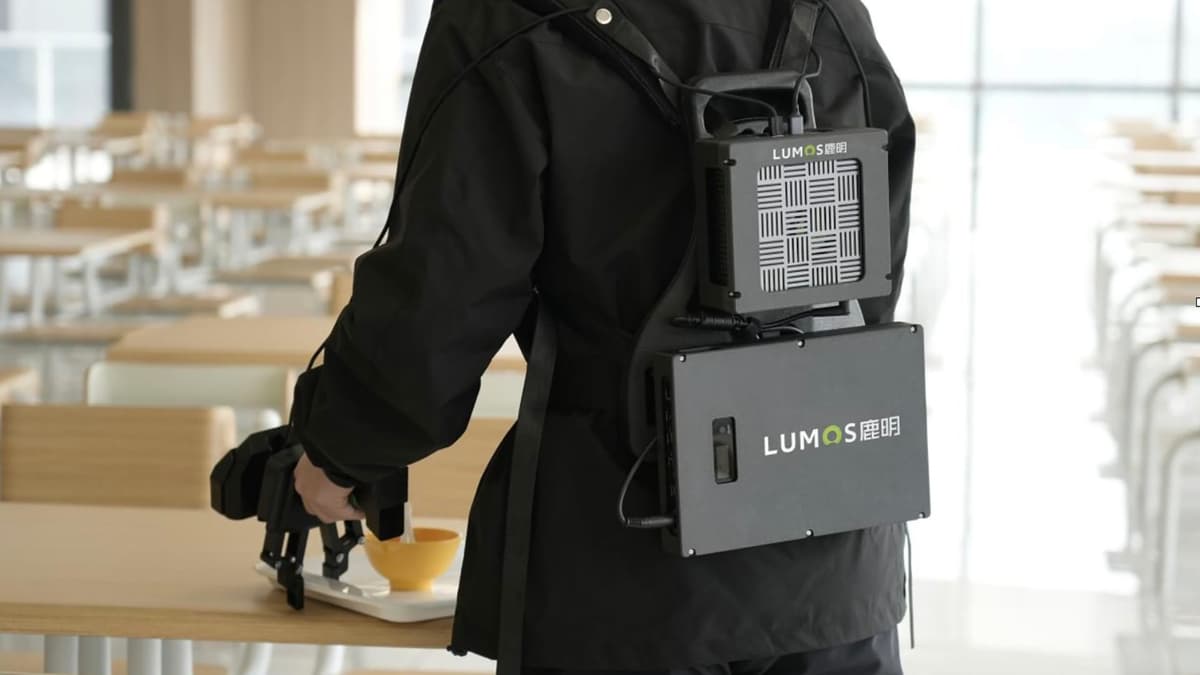
This Company Has Built a Backpack-Style System for Robotics Data Collection
Companies Mentioned

Why It Matters
By democratizing large‑scale, low‑cost data capture, Lumos tackles the primary bottleneck in training robust embodied AI models, potentially lowering entry barriers for robotics firms and speeding commercialization.
Key Takeaways
- •FastUMI Pro reduces data collection time to ten seconds.
- •Goal: 10,000 units, one million data hours by 2026.
- •Backpack design enables distributed, real‑world data capture.
- •Data supermarket offers purchasable standardized datasets.
- •Lumos prioritizes data pipeline over model architecture.
Pulse Analysis
The rapid progress of large language models has highlighted a stark contrast with embodied AI: while text data is abundant, real‑world interaction data remains scarce. Scaling laws suggest that model performance improves predictably with more data, yet robotics lacks a comparable reservoir. This gap forces developers to rely on costly, lab‑bound data collection, limiting the diversity needed for generalizable policies. As industries seek robots that can operate reliably outside controlled settings, the demand for massive, varied datasets becomes a strategic priority.
FastUMI Pro addresses this need by turning a simple backpack into a portable data‑collection workstation. Built on the universal manipulation interface (UMI) framework, the device decouples sensor streams from any specific robot, allowing the same data to train multiple morphologies. By slashing task recording time from 50 seconds to ten seconds and cutting per‑sample cost below $0.08, Lumos achieves an order‑of‑magnitude efficiency boost over teleoperation. The planned rollout of 10,000 units across industrial, residential, hospitality, retail, and office spaces creates a distributed network that captures nuanced, context‑rich interactions far beyond what centralized labs can provide.
Beyond hardware, Lumos is shaping an emerging data‑as‑a‑service market with its "data supermarket," where curated, standardized datasets are sold to developers and research labs. This model lowers the barrier for smaller firms to access high‑quality training material without building their own collection infrastructure. If the ecosystem matures, we could see a virtuous cycle: richer data fuels better models, which in turn generate more sophisticated data‑collection strategies. However, challenges remain in ensuring data quality, privacy, and consistent labeling across heterogeneous environments. Success will hinge on robust pipelines for evaluation and filtering, reinforcing Lumos' bet that data, not model architecture, will be the decisive competitive edge in embodied AI.
This company has built a backpack-style system for robotics data collection


Comments
Want to join the conversation?
Loading comments...