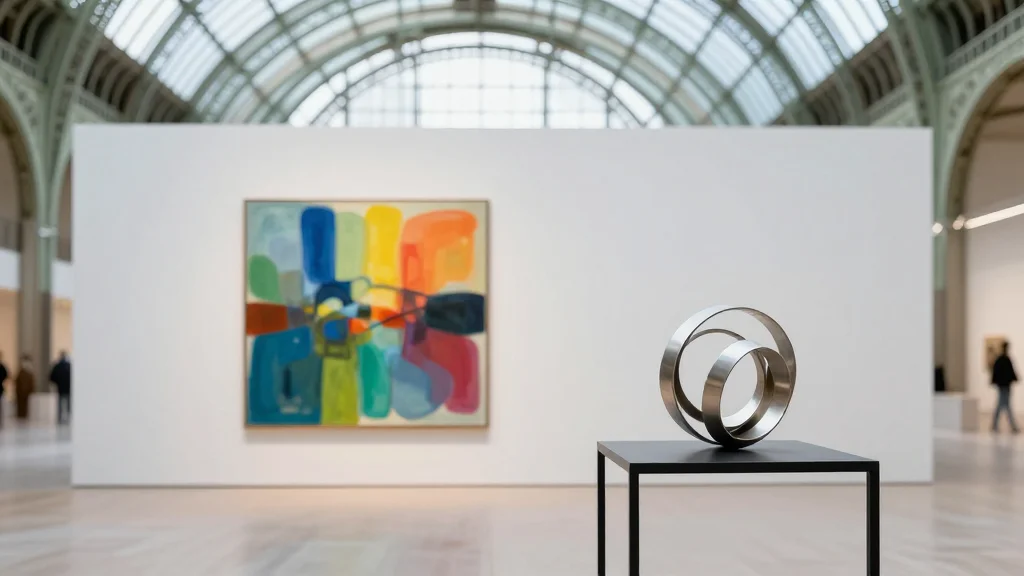
Art Paris 2026 Draws Record Participation as Argo Fine Arts Launches Debut Gallery

Why It Matters
Art Paris 2026’s strong turnout signals a resurgence of European art fairs as decisive market platforms, especially as Asian and North‑American fairs face logistical headwinds. The Fonds d’art contemporain’s focus on “La réparation” brings institutional decolonization to the commercial floor, encouraging collectors to consider provenance and historical context alongside aesthetic value. Meanwhile, Argo Fine Arts’ debut demonstrates how legacy connections can be leveraged to launch innovative gallery models that prioritize curatorial freedom over traditional financing, potentially reshaping how new galleries enter the market. Together, these developments suggest a dual trajectory: museums and public collections are increasingly engaging with critical narratives, while private dealers are experimenting with agile, low‑overhead structures. The convergence may accelerate a more diversified, socially aware art market that balances profit with purpose.
Key Takeaways
- •Art Paris 2026 opened April 9 at the Grand Palais with record attendance.
- •Fonds d’art contemporain presented 37 works, 17 never shown before, under the theme “La réparation.”
- •Samantha McCoy launched Argo Fine Arts, featuring a Jackson Pollock and works by Twombly and Löhr.
- •Argo adopts an “ephemeral” gallery model, declining external investment to stay independent.
- •A conference “Les territoires de la réparation” highlighted decolonial perspectives in contemporary collecting.
Pulse Analysis
The 2026 edition of Art Paris illustrates a turning point where thematic rigor and market dynamism intersect. Historically, Paris fairs were seen as secondary to London’s Frieze and New York’s Armory Show; this year’s robust participation and high‑profile programming suggest a rebalancing of influence. The Fonds d’art contemporain’s “La réparation” stand is emblematic of a broader institutional shift toward confronting colonial histories—a move that aligns with museum trends in Europe and North America, where decolonization panels have become commonplace. By embedding this discourse within a commercial fair, the organizers signal that ethical considerations are no longer peripheral but integral to sales narratives.
Argo Fine Arts’ debut adds another layer of complexity. The gallery’s reliance on family heritage—highlighted by the Pollock connection—offers a compelling brand story that resonates with collectors seeking provenance. Yet its refusal of outside capital and commitment to an “ephemeral” format challenge the conventional growth model of galleries that typically seek venture‑backed scaling. If Argo can sustain sales without a permanent space, it may inspire a wave of lean‑startup galleries that prioritize curatorial agility over real‑estate commitments, especially in high‑cost cities like Paris and New York.
Looking ahead, the fair’s success could encourage other European venues to adopt similar thematic frameworks, blending scholarly content with market activity. This hybrid approach may attract a new generation of collectors who value both investment potential and cultural responsibility. For Argo, the next steps—expanding to New York and possibly launching satellite pop‑ups—will test whether the “ephemeral” model can be replicated across markets. The outcomes will likely inform how emerging galleries navigate the tension between legacy branding and innovative business structures in the evolving art ecosystem.
Art Paris 2026 draws record participation as Argo Fine Arts launches debut gallery
Comments
Want to join the conversation?
Loading comments...