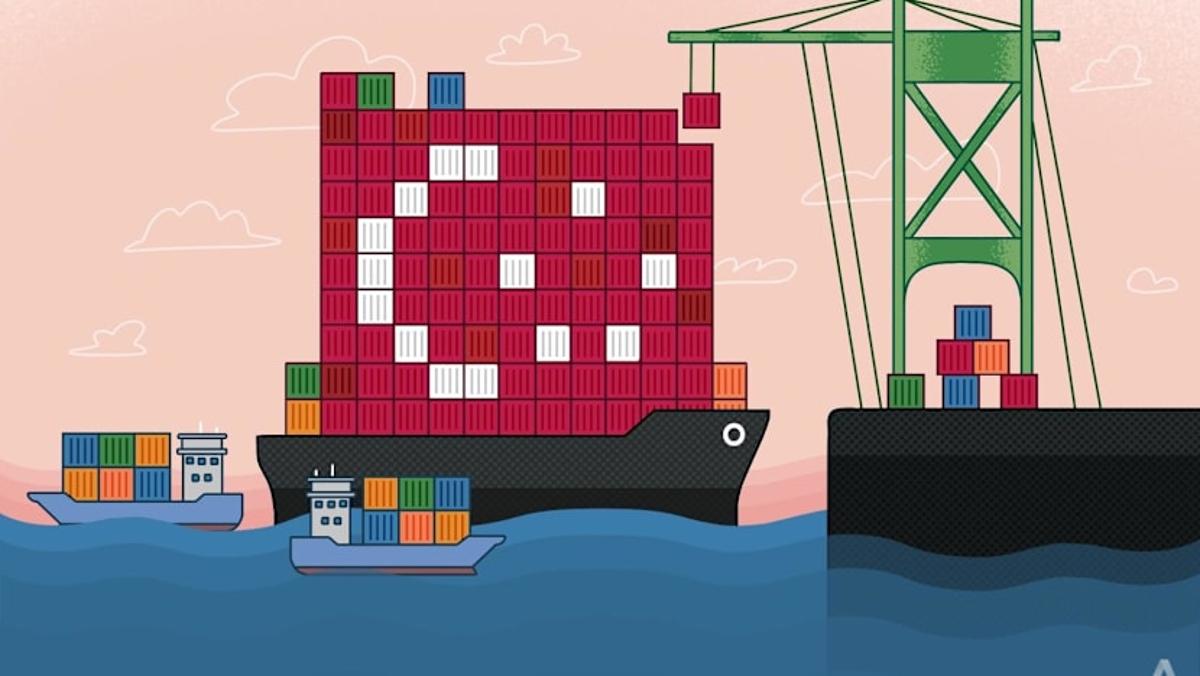
With Competitors Hot on Its Heels, How Can Singapore's Port Stay the Course?
Companies Mentioned
Why It Matters
The port’s performance underscores Singapore’s vital role in global trade networks and its economic resilience despite intensifying competition from mega‑ports in China.
Key Takeaways
- •2025 throughput: 44.66 million TEUs, 3.22 bn gross tonnes.
- •Port contributes 7% of Singapore’s GDP, 170k jobs.
- •Strategic location enables fast transshipment, low vessel wait times.
- •Automation at Tuas aims for 65 million TEU capacity by 2040s.
- •Decarbonisation and alternative fuels critical for future competitiveness.
Pulse Analysis
Singapore’s maritime dominance rests on a unique blend of geography and market positioning. While Chinese ports such as Shanghai and Ningbo‑Zhoushan benefit from massive domestic cargo flows, Singapore functions primarily as a transshipment nexus linking Southeast Asia, India, the Middle East and Europe. This role insulates it from single‑economy shocks and makes the port a critical conduit for intra‑Asian trade, which now accounts for the world’s largest container volume. Analysts note that the port’s ability to keep vessel waiting times low, despite handling the world’s highest aggregate arrivals, reinforces its reputation for reliability and efficiency.
Operational excellence is amplified by strategic investments in automation and digitalization. The Tuas Port project, already the world’s largest automated terminal, will consolidate container handling into a compact footprint, enabling rapid container transfers between mainline and feeder vessels. When fully phased, Tuas is slated to process 65 million TEUs annually, far exceeding current volumes and positioning Singapore to capture growth from shifting supply‑chain routes, including the post‑Red Sea crisis re‑routing. Complementary services—bunkering, ship finance, legal and engineering—create an integrated ecosystem that attracts global shipping lines seeking one‑stop solutions.
Looking ahead, the port’s sustainability agenda will be decisive. Decarbonisation pressures demand low‑carbon bunkering, shore‑power adoption, and fuel‑trial frameworks, while a skilled talent pipeline ensures the adoption of AI‑driven logistics and advanced vessel services. Public‑private partnerships, such as those championed by the Singapore Maritime Foundation, are expanding scholarships and upskilling programs to meet these needs. Together, automation, green initiatives, and human capital development will help Singapore preserve its edge as a resilient, high‑value maritime hub in an increasingly competitive regional landscape.
With competitors hot on its heels, how can Singapore's port stay the course?


Comments
Want to join the conversation?
Loading comments...