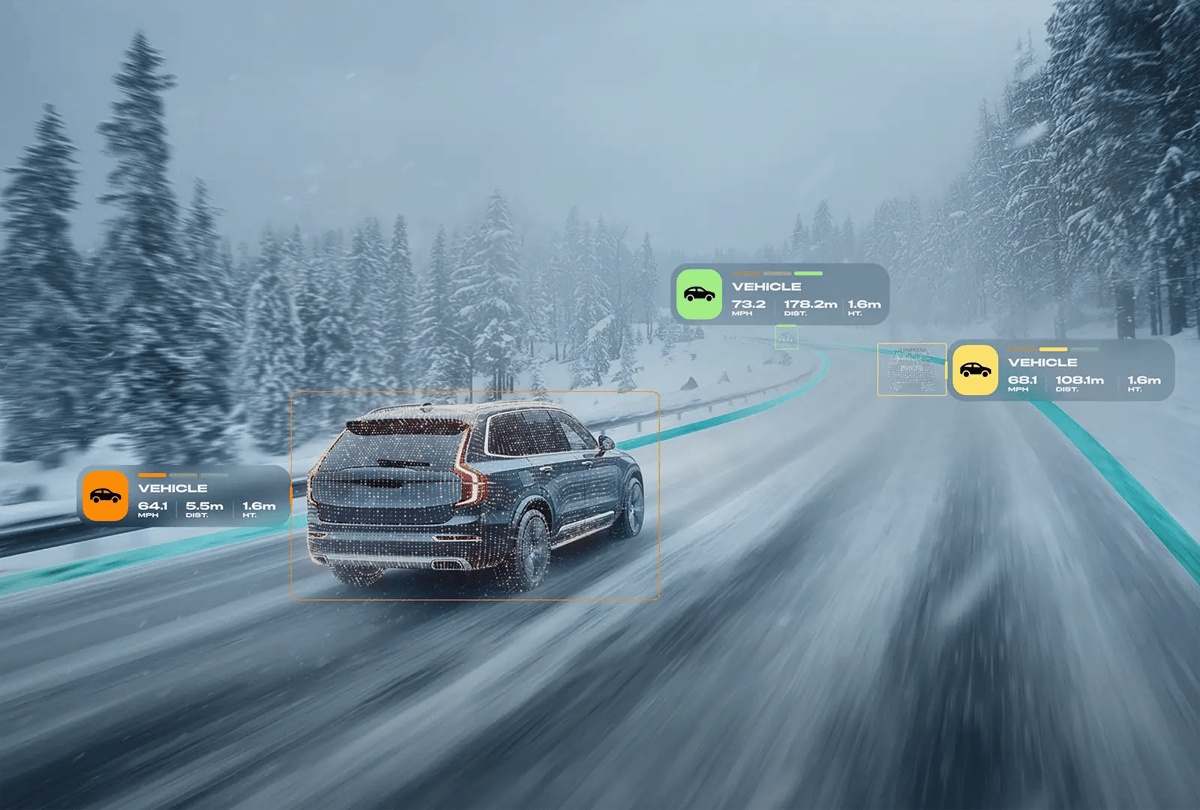
Merging LiDAR Performance with Radar Robustness
Key Takeaways
- •Teradar raised $150 million to launch terahertz sensor line
- •Sensors combine LiDAR resolution with radar all‑weather robustness
- •Solid‑state design enables placement behind bumpers, no moving parts
- •Modular transmitter/receiver chips allow scalable, low‑cost automotive integration
- •Atmospheric absorption makes the signal stealthy, hard to jam
Summary
Teradar emerged from stealth with a $150 million Series B round to launch a new class of terahertz sensors that blend LiDAR‑level resolution with radar‑grade all‑weather and Doppler performance. The solid‑state, modular design can be mounted behind vehicle bumpers, eliminating moving parts and reducing cost for mass‑market cars. Teradar’s architecture uses interchangeable transmitter and receiver chips, enabling scalable configurations for both consumer automotive and stealth‑focused defense applications. Early OEM samples are being delivered, positioning the company to compete for major vehicle programs.
Pulse Analysis
The automotive sensor market has long been split between high‑resolution LiDAR, which struggles in rain, fog and snow, and robust radar, which lacks the detail needed for precise object classification. Teradar’s terahertz platform occupies a sweet spot in the electromagnetic spectrum, delivering centimeter‑scale point clouds while retaining radar‑like Doppler velocity data. This hybrid capability addresses the "all‑weather" bottleneck that has slowed autonomous‑vehicle rollouts, giving manufacturers a single sensor that can see through adverse conditions without the mechanical complexity of rotating LiDAR units.
Financial backing of $150 million signals strong investor confidence in the commercial viability of terahertz sensing. Teradar’s modular architecture—standardized transmitter and receiver chips mounted on a common PCB—drastically reduces bill‑of‑materials and simplifies supply‑chain logistics. OEMs can tailor sensor density to vehicle segment, from entry‑level models like the Ford Focus to premium sedans, while defense customers benefit from the inherent low‑observable nature of terahertz waves, which attenuate beyond a few meters, making jamming and detection difficult. The company’s Boston location taps deep semiconductor expertise, accelerating the transition from prototype to high‑volume production.
Looking ahead, Teradar’s roadmap targets mass‑market adoption through partnerships with Tier 1 automotive suppliers and expansion into industrial and defense sectors. As regulatory frameworks evolve to accommodate new frequency bands, the firm’s CMOS‑compatible manufacturing process positions it to scale efficiently. If the technology meets its cost and performance promises, it could reshape sensor stack‑ups across autonomous platforms, reducing reliance on multiple disparate devices and fostering a more integrated, resilient perception ecosystem.


Comments
Want to join the conversation?