How Do You Advertise Australia’s First New City in 100 Years? Common Ventures Turns to Tech to Solve the Ultimate B2B Challenge
Companies Mentioned
Why It Matters
The initiative shows how AI can overcome the marketing paradox of selling an unfinished mega‑project, accelerating investor confidence and setting a template for future infrastructure branding. It underscores the shift toward tech‑driven, B2B‑focused campaigns in large‑scale urban development.
Key Takeaways
- •AI tool B‑DOP creates consistent future‑city imagery
- •Campaign targets global investors, tier‑one developers, C‑suite
- •Focus on de‑risked, government‑backed investment narrative
- •Multi‑channel rollout includes LinkedIn, BVOD, digital audio
- •Sets new standard for marketing unfinished mega‑projects
Pulse Analysis
Bradfield City, slated near Sydney’s Western Aerotropolis, represents Australia’s most ambitious urban expansion in a hundred years. While projects like Saudi Arabia’s Neom have faced scrutiny over overpromised timelines, Bradfield’s developers are betting on certainty: a government‑backed, connectivity‑centric hub designed for advanced manufacturing and 24/7 logistics. Convincing global asset managers and tier‑one developers to commit capital before ground is broken requires more than traditional brochures; it demands a visual narrative that can make a yet‑to‑be‑built environment feel tangible and low‑risk.
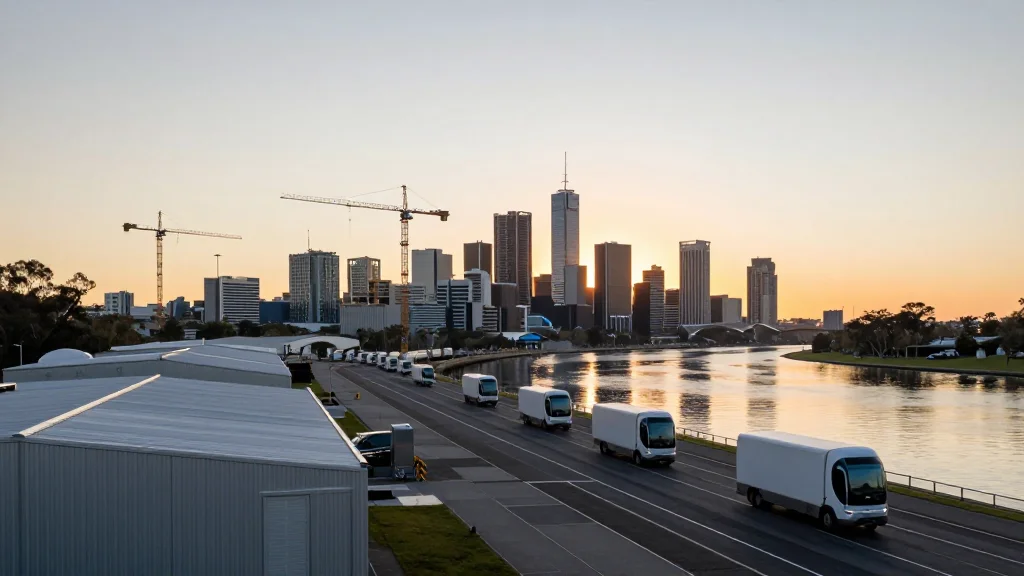
Enter Common Ventures’ proprietary AI photographer, B‑DOP. Built on a custom codebase that taps Google APIs, the tool translates a detailed art‑direction guide—covering colour palettes, lens specifications, lighting and industry nuances—into high‑resolution images of futuristic factories, supply‑chain corridors and smart‑city infrastructure. Unlike generic stock libraries, B‑DOP can re‑imagine existing image assets and generate bespoke scenarios that maintain visual consistency across dozens of touchpoints. This eliminates the costly, time‑intensive process of staging physical shoots for a city that doesn’t yet exist, while delivering a cohesive aesthetic that reinforces the campaign’s de‑risking message.
The broader implication for the infrastructure and real‑estate sectors is profound. As governments and private consortia launch multi‑billion‑dollar projects, the ability to visualize the end state with AI will become a competitive advantage, shortening fundraising cycles and enhancing stakeholder alignment. Moreover, the campaign’s laser‑focused B2B messaging—delivered through out‑of‑home, BVOD, digital audio and LinkedIn—demonstrates a shift away from consumer‑centric branding toward executive‑level value propositions. For investors, this tech‑enabled approach reduces informational asymmetry, making the promise of a new city feel as concrete as a finished skyscraper.
How do you advertise Australia’s first new city in 100 years? Common Ventures turns to tech to solve the ultimate B2B challenge
Comments
Want to join the conversation?
Loading comments...