
Key Takeaways
- •Book releases May 19, pre‑orders available now.
- •Focuses on legal tools to curb political deception.
- •Cites foreign anti‑lie legislation as models.
- •Argues civics education alone insufficient for accountability.
- •Seeks democratic safeguards while respecting First Amendment.
Summary
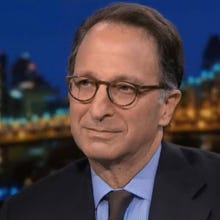
Andrew Weissmann announces his upcoming book, Liar’s Kingdom: How to Stop Trump’s Deceit and Save America, slated for publication on May 19. The work proposes concrete legal reforms to prevent habitual liars from holding elected office, drawing on anti‑misinformation statutes from France, Brazil, England, and Germany. Weissmann highlights that civic education alone cannot curb political deceit and offers a “playbook” that respects First Amendment protections. Pre‑order links, including signed copies from independent bookstores, are provided to gauge early demand.
Pulse Analysis
The surge of political misinformation has pushed many analysts to seek structural solutions beyond voter education. Weissmann’s Liar’s Kingdom enters the conversation by framing deception as a legal breach rather than merely a moral failing. By cataloguing how democracies such as France and Germany have codified penalties for false statements, the book offers a comparative roadmap that could inform U.S. legislators grappling with the limits of free speech and electoral fraud.
In the United States, the First Amendment creates a high bar for regulating speech, yet the book argues that targeted, narrowly tailored statutes can address the unique harm caused by elected officials who repeatedly lie. Weissmann outlines mechanisms like false‑statement disclosure requirements, enhanced penalties for fraudulently obtained campaign funds, and independent oversight bodies modeled after foreign watchdog agencies. These proposals aim to close the legal loophole that currently shields deceptive politicians while preserving core constitutional freedoms.
From a market perspective, Liar’s Kingdom taps into a lucrative niche of politically charged non‑fiction that resonates with an audience eager for actionable reform. Early pre‑order campaigns, especially signed editions from independent retailers, signal strong grassroots demand. If the book gains traction among policymakers and advocacy groups, it could catalyze legislative pilots at the state level, potentially reshaping the national discourse on truth, accountability, and democratic resilience.


Comments
Want to join the conversation?