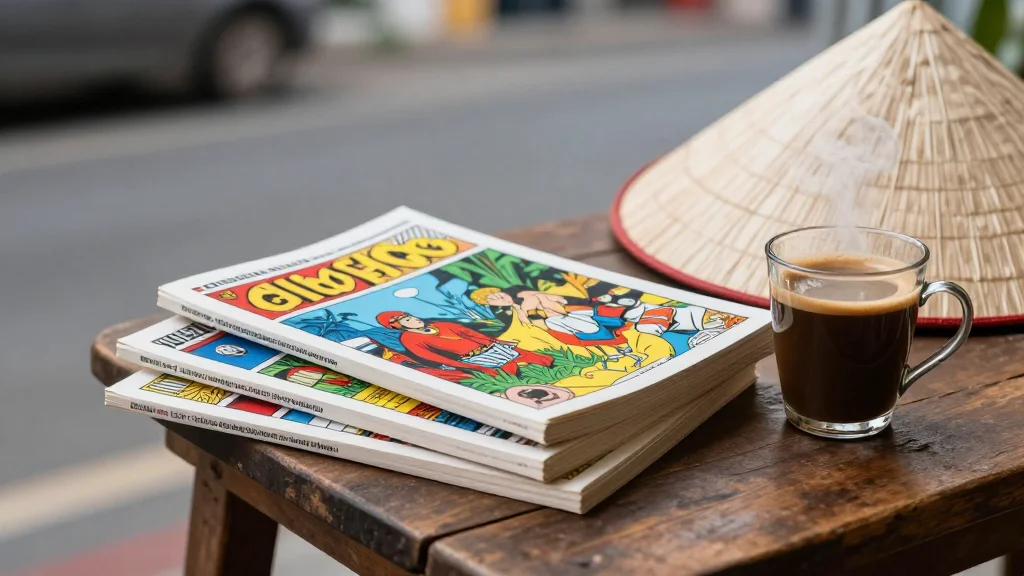
Vietnam's Comic Book Boom Hits New Heights with First Francophone Festival

Why It Matters
The rise of Vietnam's comic book industry reflects a broader shift in Asian publishing, where graphic narratives are gaining legitimacy as vehicles for cultural expression and historical reflection. By moving beyond child‑focused entertainment, Vietnamese creators are opening new revenue streams, attracting foreign investment, and fostering a creative economy that can compete with established markets in Japan, South Korea and Europe. The Francophone Comic Festival also illustrates how diplomatic cultural ties can accelerate industry growth. France’s support provides Vietnamese artists with translation resources and access to European festivals, potentially turning local stories into global best‑sellers and expanding the country’s soft power through popular culture.
Key Takeaways
- •Vietnam inaugurated its first Francophone Comic Festival in Ho Chi Minh City, backed by the French Embassy and the Ministry of Culture.
- •Than Trong Thanh Quynh of Du But Books notes a shift in parental attitudes toward comics as legitimate literature.
- •Nguyen Thanh Phong says the new generation of parents is reading comics with their children, breaking past stigma.
- •Clément Baloup’s 2025 graphic series explores diaspora identity, exemplifying the move toward adult‑oriented storytelling.
- •French partnerships promise translation grants and joint publishing deals, linking Vietnamese creators to European markets.
Pulse Analysis
Vietnam's comic renaissance is the latest chapter in a regional trend where graphic storytelling is being reclaimed as a serious literary form. Historically, the medium arrived in the country as an imported novelty—first European, then Japanese—serving as a low‑cost diversion for youth. The current wave, however, is homegrown, driven by entrepreneurs who see comics as a conduit for cultural memory and a profitable export commodity. This mirrors South Korea's early 2000s "webtoon" boom, where domestic platforms leveraged mobile distribution to create global hits.
The Francophone Comic Festival functions as a catalyst, providing a high‑visibility platform that validates the industry's artistic merit while unlocking foreign capital. France's involvement is strategic: it leverages its own rich bande dessinée heritage to nurture a market that can feed back into French publishing houses hungry for fresh voices. For Vietnamese creators, this partnership reduces translation costs and shortens the path to European bookshelves, a critical advantage in a market where domestic printing capacity remains limited.
Looking forward, the sector's sustainability will hinge on three factors: the ability to monetize digital formats, the development of a robust distribution network within Vietnam, and the cultivation of a critical mass of adult readers willing to pay premium prices for sophisticated graphic novels. If these conditions coalesce, Vietnam could emerge as a new hub for Southeast Asian comics, challenging the dominance of Japan and Korea and adding a distinct, diaspora‑focused narrative to the global comics canon.
Vietnam's Comic Book Boom Hits New Heights with First Francophone Festival
Comments
Want to join the conversation?
Loading comments...