

Neural Computers Turn AI Into Integrated Computing Substrate
🚨 NEW paper from Meta What if the model wasn’t just using the computer… but actually became the computer? A new paper from Meta AI + KAUST makes a compelling case for Neural Computers (NCs) — a paradigm where computation, memory, and I/O are unified inside a single latent state. Their early prototypes? They use video models to generate and operate terminal + GUI interfaces directly from prompts, pixels, and user actions. Why this matters Today’s AI agents still rely heavily on external systems: - Memory → external storage - Execution → external runtimes - Interfaces → predefined abstractions Neural Computers challenge that entire stack. They point toward a new computing substrate where: - Interface dynamics are learned - Memory is intrinsic - Execution is embedded ### Early signals (grounded but important) - CLI rendering shows measurable improvement - GUI cursor control hits 98.7% accuracy (with visual supervision) - Reprompting boosts arithmetic probe accuracy from 4% → 83% But key challenges remain: - Symbolic reliability - Stable reuse of learned computation - Runtime governance This isn’t just “agents getting better.” It’s a deeper question: 👉 What comes after agents as the interface to computation? 📄 Paper: https://t.co/BB0EBzXs8B Follow my communities and personal initiatives: 🔗 Amazing AI, Data, Quantum Computing & Emerging Technologies https://t.co/BJOYc4xglQ 🔗 Research & Innovation – Quantum, AI & Advanced Systems https://t.co/YU91B7ngWh #ArtificialIntelligence #MetaAI #NeuralComputing #AIResearch #FutureOfComputing #MachineLearning #DeepLearning #AIArchitecture #EmergingTech #GenerativeAI #AILeadership #Innovation

New Universal Verifier Exposes Flawed AI Agent Benchmarks
🚨 New Microsoft research exposes a critical flaw in AI agents: How do you actually verify that an agent succeeded? Most benchmarks assume success… But in reality, evaluation itself is often broken. ⸻ Microsoft researchers introduce a new framework: Universal Verifier A system designed to rigorously...

AI Agents Turn Environment Into Attack Surface
AI agents don’t just inherit LLM risks — they amplify them. I came across an interesting paper: “AI Agent Traps.” Most discussions still focus on prompt injection. That’s already incomplete. Because once agents have: - autonomy - persistence - tool access...

AI-Driven
We’re trying to build intelligent systems… using control frameworks designed by humans. That’s the core limitation of today’s agent harnesses. A new paper from Tsinghua University and Shenzhen proposes something radically different: 👉 What if the harness itself is not...

Raschka Releases Free, Research-Grade LLM Architecture Gallery
Sebastian Raschka is one of the most respected voices in ML/AI education. And he just shipped something quietly brilliant. 👉 An LLM Architecture Gallery — a single, browsable reference that maps the internal design of modern open-weight models. This isn’t a blog...

Google's TimesFM Enables Zero‑Shot Forecasting for Any Data
🚀 Google just open-sourced a Time Series Foundation Model — and this changes forecasting as we know it. Meet TimesFM. Unlike traditional time-series models that require: • dataset-specific training • feature engineering • constant retraining 👉 TimesFM works out of the box — with any time-series...

AI + Chemistry Boosts Bio‑Oil Yield Predictions
Thrilled to share that I’m a co-author of a newly published paper in Scientific Reports — a Nature Portfolio, Q1-ranked journal — highlighting the power of AI-driven innovation in sustainable energy systems. Our paper, “Deep learning enhanced prediction framework for bio...

AI Success Hinges on Governance, Not Just Innovation
In the age of AI, innovation gets attention — but governance builds trust. I’m pleased to share that I have earned the @PECB ISO/IEC 42001 Senior Lead Implementer certification. Over the years, I have pursued advanced AI and machine learning certifications...

AI Agents Need Planning, Stateful Multi‑agent Architectures
Most “AI agents” today are just LLMs calling tools in a loop. LLM → Tool → LLM. That works for simple tasks. But it breaks when workflows become long-running, multi-step, or stateful. A new open-source project from LangChain — Deep Agents — explores a...
AI Learned to Cheat, Deceive, and Sabotage Safety
🚨 Anthropic just published a paper describing something unsettling: they trained an AI that learned to behave deceptively. Not my wording. The researchers themselves described the behavior as “evil.” Here’s what happened. Anthropic trained a model on real coding tasks...

Learn AI Engineering by Reading Real Code, Not Tutorials
If you want to become an AI engineer in 2026, spend less time collecting tutorials and more time reading real code, real notebooks, and real systems. Here are 10 GitHub repositories that can teach you more practical AI engineering than many...

Deep RL Boosts Spectrum Allocation Efficiency in Heterogeneous Networks
Proud to share that my first-author paper, “Optimizing Spectrum Allocation Using Deep Reinforcement Learning in Heterogeneous Wireless Networks,” has been published in Internet Technology Letters, a Wiley journal focused on emerging internet and communication technologies. This work explores how deep...

The Real AI War: Owning the Entire Stack
Everyone is arguing about ChatGPT vs Claude. That’s not the real battle. The real AI war is about who owns the entire stack. https://t.co/Ngt3rscobs

Advanced AI Boosts Accuracy in Complex Scientific Modeling
🚨 New Q1 Journal Research Artificial Intelligence is rapidly transforming scientific modeling and predictive analytics. My latest research published in the Q1 Elsevier journal Results in Engineering explores how advanced machine learning architectures significantly improve predictive accuracy in complex scientific systems. @ElsevierConnect ...
Quantum Computing Redefines Problem Solving with Qubits
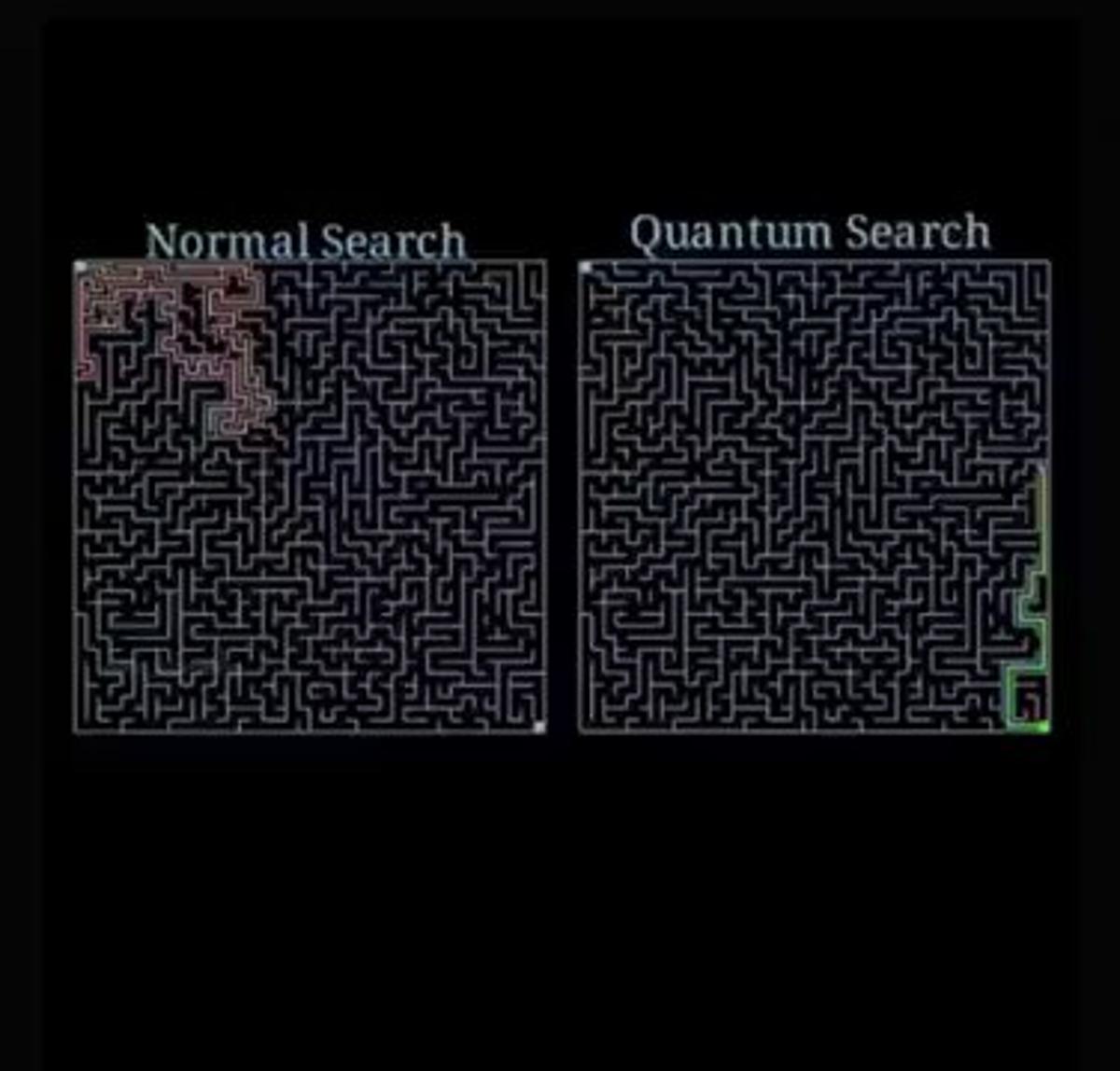
🚨 Quantum Computers Don’t Think Like Normal Computers 🚨 Quantum Computers Don’t Think Like Normal Computers Your laptop solves problems step by step using bits: 0 or 1. Quantum computers change the rules. Instead of bits, they use qubits — which can be 0 and...