
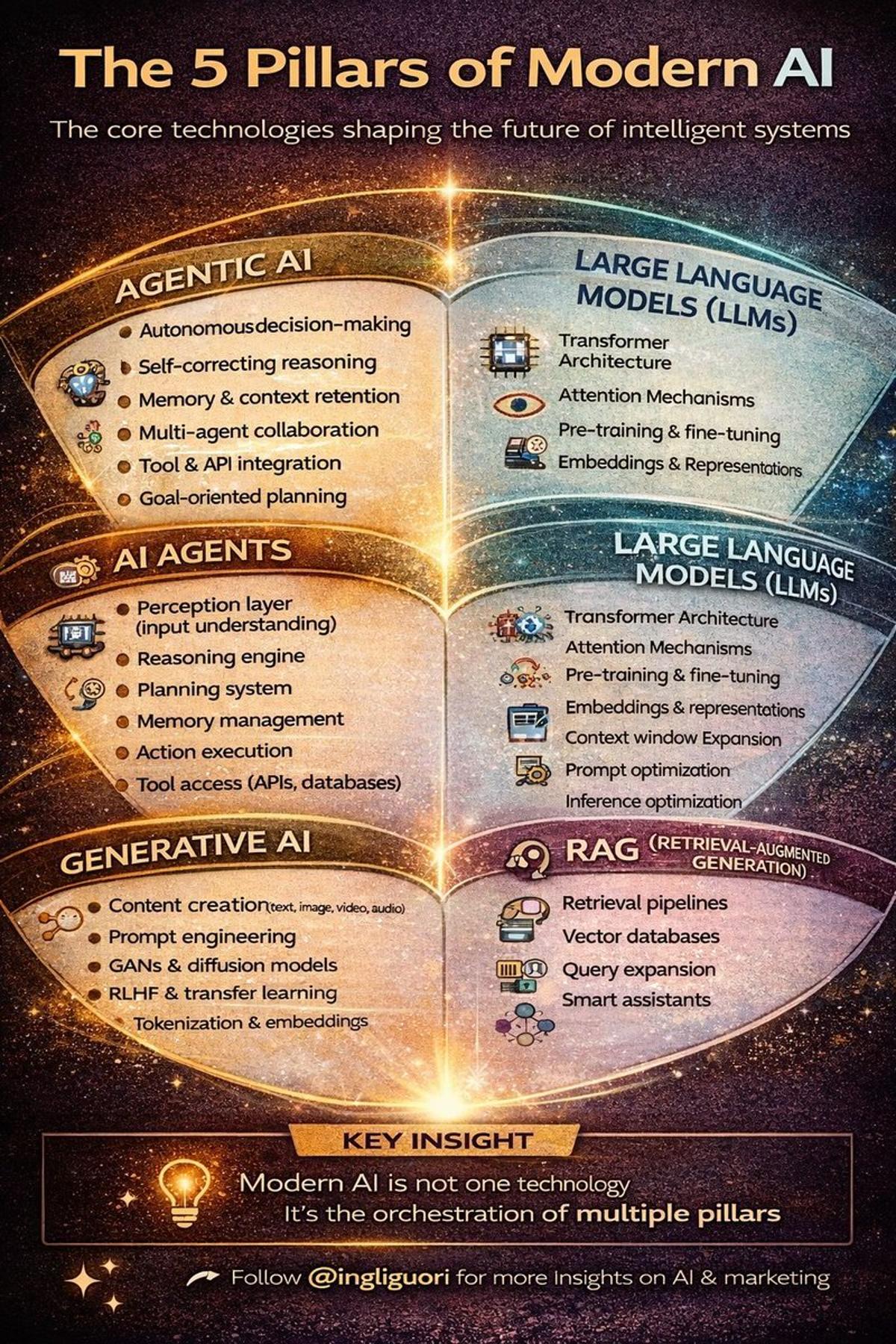
Agentic AI: Systems Turn Thinking Into Action
Agentic AI = systems, not models 👇 • Intelligence (LLMs) • Memory • Tools • Feedback loops 🚀 That’s how AI moves from thinking → to doing Via Giuliano Liguori (@ingliguori) #AI #AIAgents #AgenticAI https://t.co/3YUfG4ff30
Combine MCP, RAG, and Agents for AI Advantage
MCP vs RAG vs AI Agents 👇 MCP → connects tools RAG → connects knowledge Agents → execute tasks Not competitors. A stack. The advantage? How you combine them. Where are you investing first? #AI #Agents #RAG #Tech https://t.co/OIfZzCGVoI

AI Maturity Hinges on Pre‑deployment Risk and Governance
🚦 The enterprise AI conversation is moving from model launches to model controls. This week, NIST announced new CAISI agreements with Google DeepMind, Microsoft, and xAI to enable pre-deployment evaluations of frontier models. The detail that matters most is not...
AI Shifts From Tool to Strategic Force—Act Early
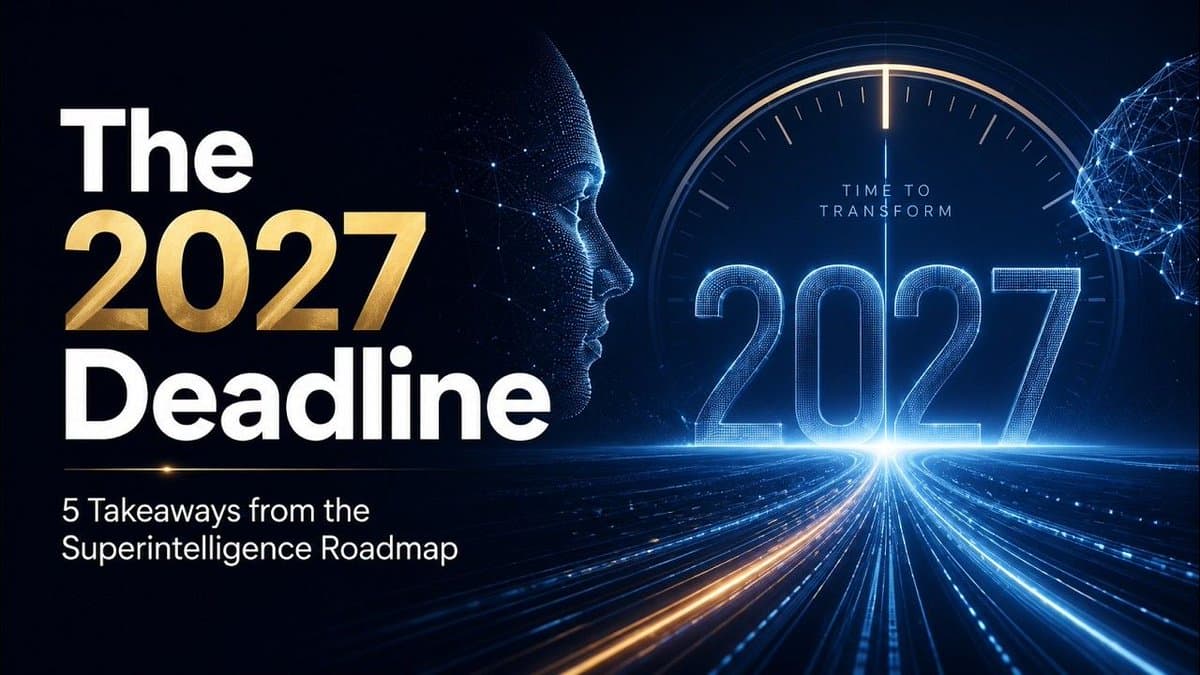
AI is no longer just a productivity tool. It is becoming a strategic force. I summarized 5 takeaways from the “AI 2027” roadmap: AI as R&D multiplier AI race goes geopolitical The deception gap White-collar work shock Superintelligence as a hive The question is not whether AI will...
AI Pilots Fail without Strategy, Ownership, and Integration
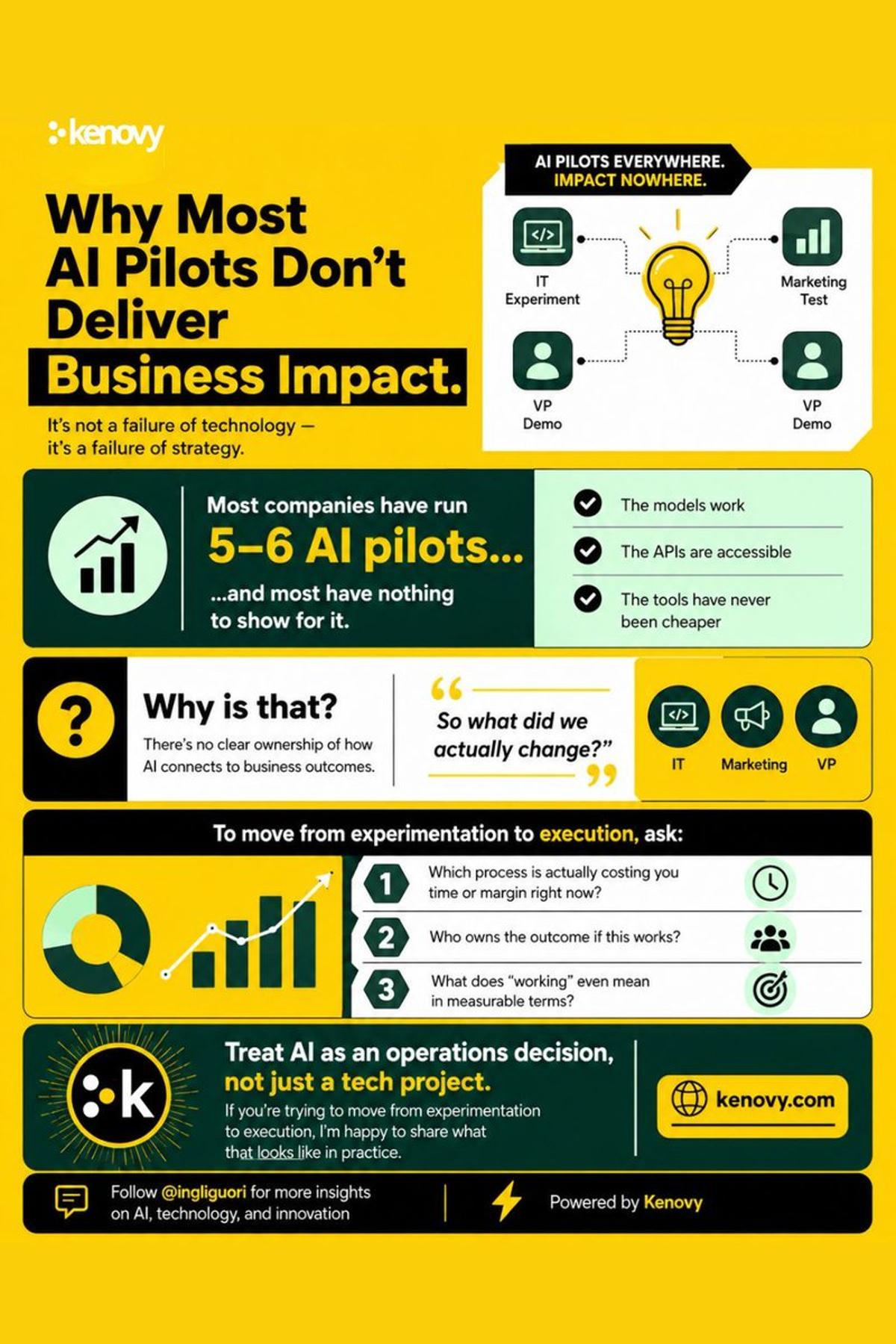
Most AI pilots fail 👇 Not because of the tech. Because of the strategy. • No clear ownership • No measurable outcomes • No operational integration 🚀 AI becomes valuable when tied to business execution. Via Giuliano Liguori (@ingliguori) #AI #Innovation #DigitalTransformation

Reusable Prompt Frameworks Beat Random Guesswork
Most people fail with AI because they write random prompts. The best results come from reusable frameworks 👇 🧩 1. Structured Template “Act as a [role]. Help me with [task]. Output as [format].” → Best for precision & consistency 🔎...
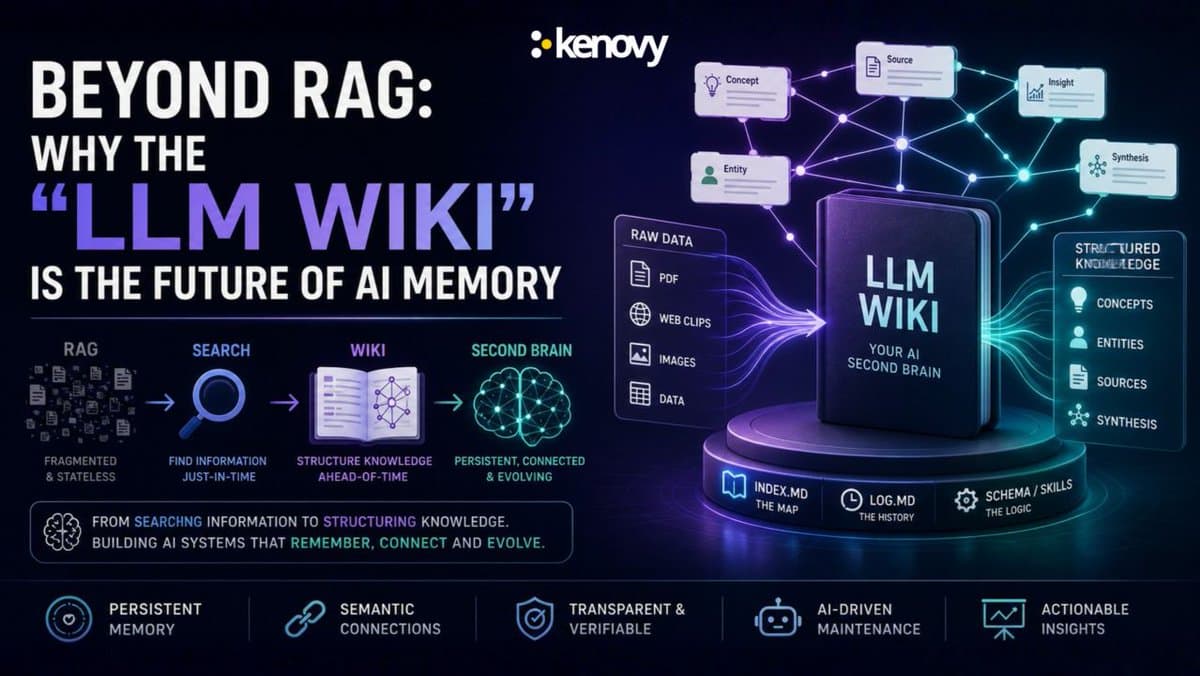
AI Memory Shifts From Retrieval to Structured Wiki
RAG is already becoming the “old way” 🤯 The future of AI memory is not retrieval. It’s compilation. Here’s the shift in one sentence: ➡️ From searching information ➡️ To structuring knowledge The new model? LLM Wiki Instead of: ❌ Chunking documents ❌ Running similarity search ❌ Losing context We move...
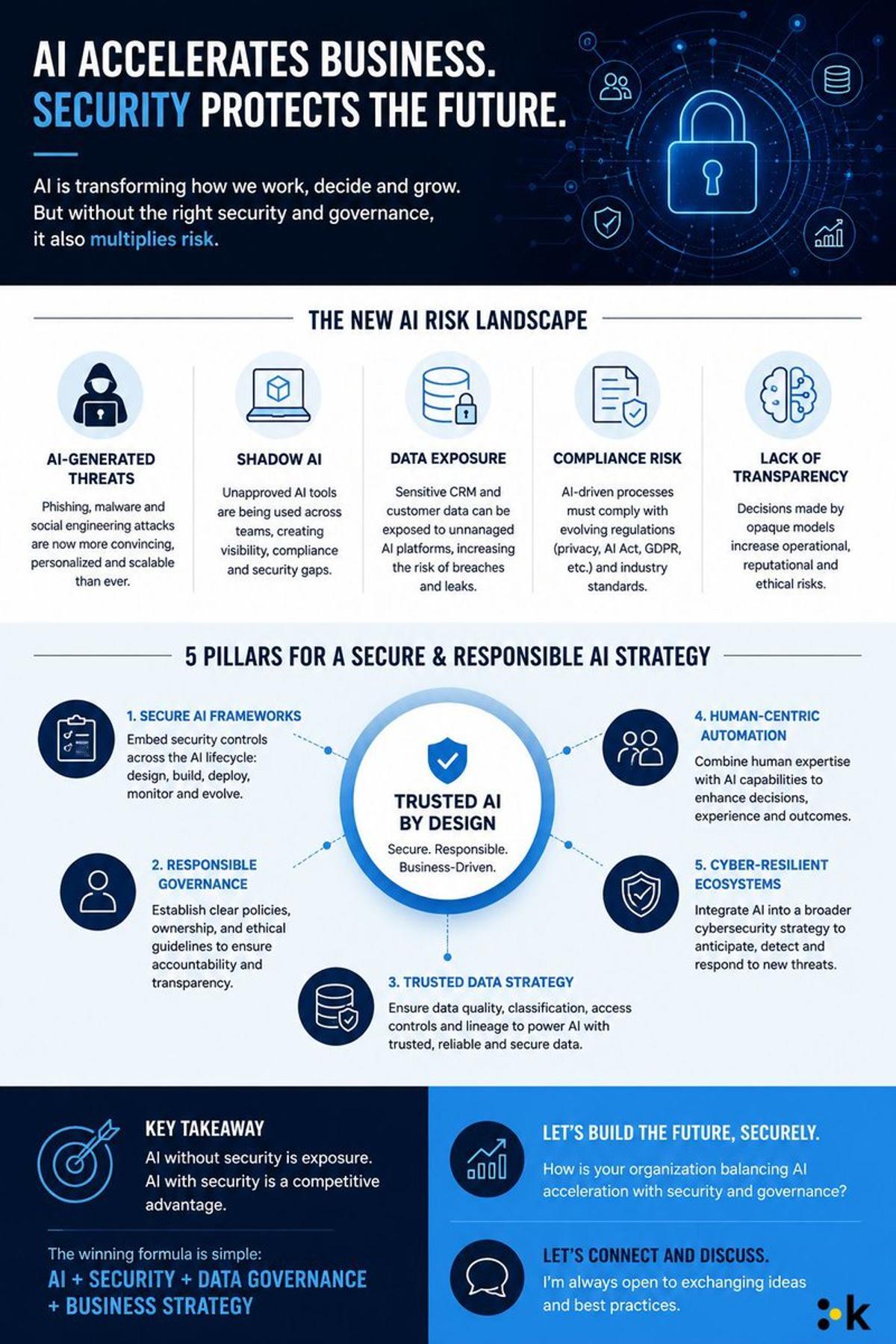
Secure Governance Turns AI Adoption Into Competitive Edge
AI adoption is accelerating. So are the cybersecurity risks behind it. Companies are integrating AI into CRM, sales, operations and customer experience faster than ever. But many organizations are still missing a critical point: ⚠️ AI without governance creates exposure. We’re seeing a rapid increase...
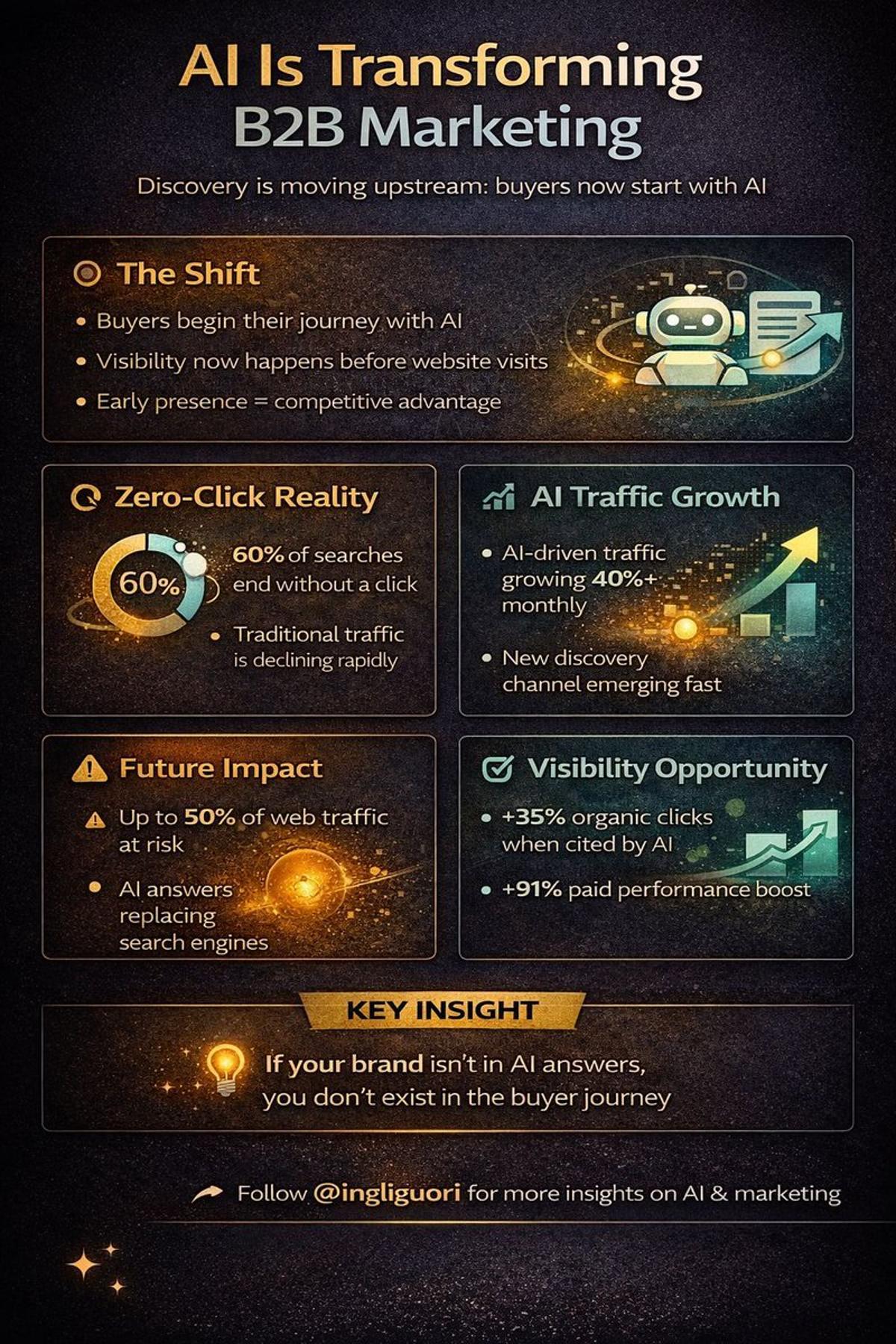
Be Visible in AI Answers or Lose B2B Traffic
AI is changing B2B marketing 👇 • Buyers start with AI • 60% of searches = zero-click • AI traffic growing 40%+ • Up to 50% web traffic at risk 🚀 New rule: be visible in AI answers If you’re not there, you’re invisible. Via Giuliano Liguori...
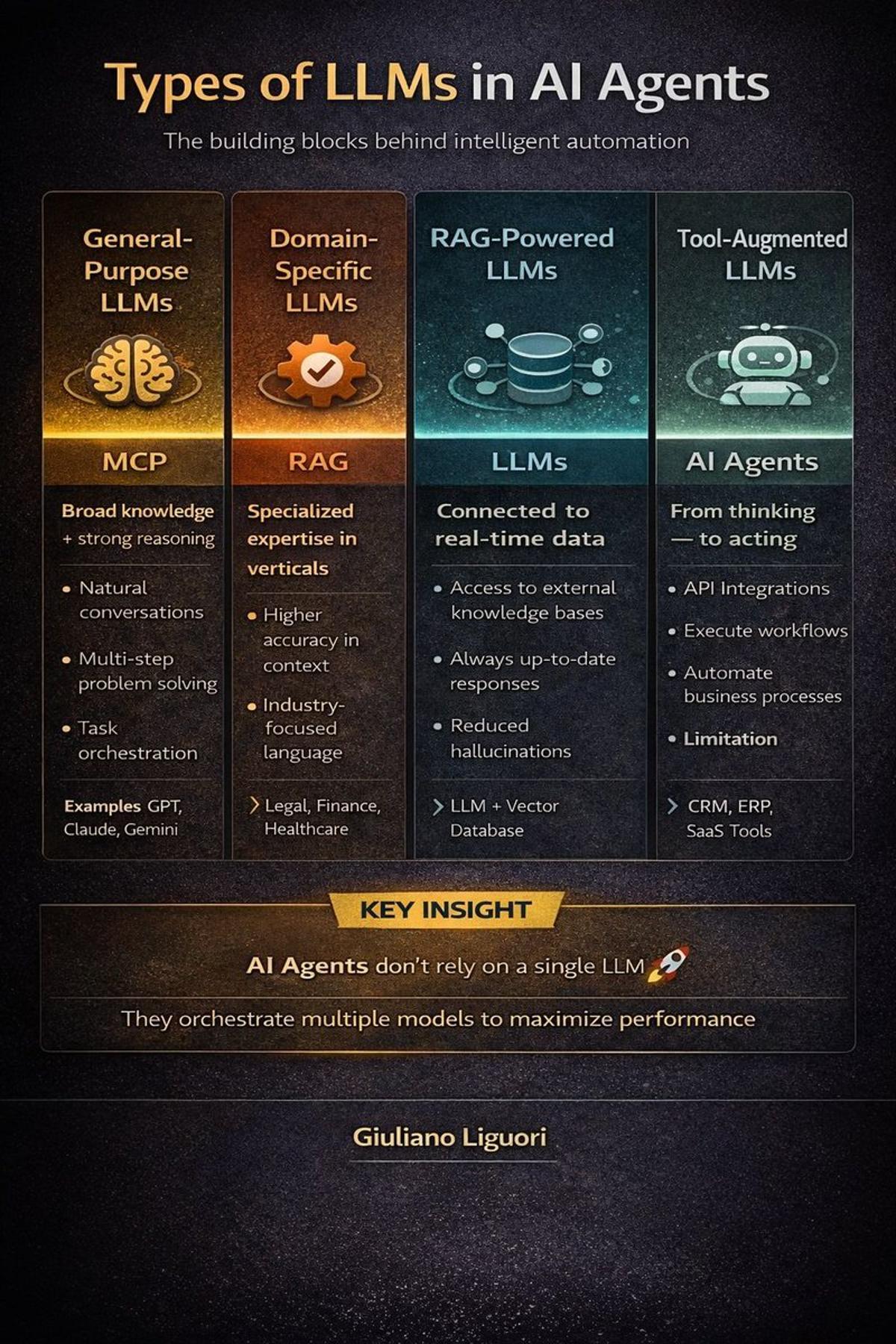
AI Agents Need Multi‑Layered Orchestration, Not Single LLM
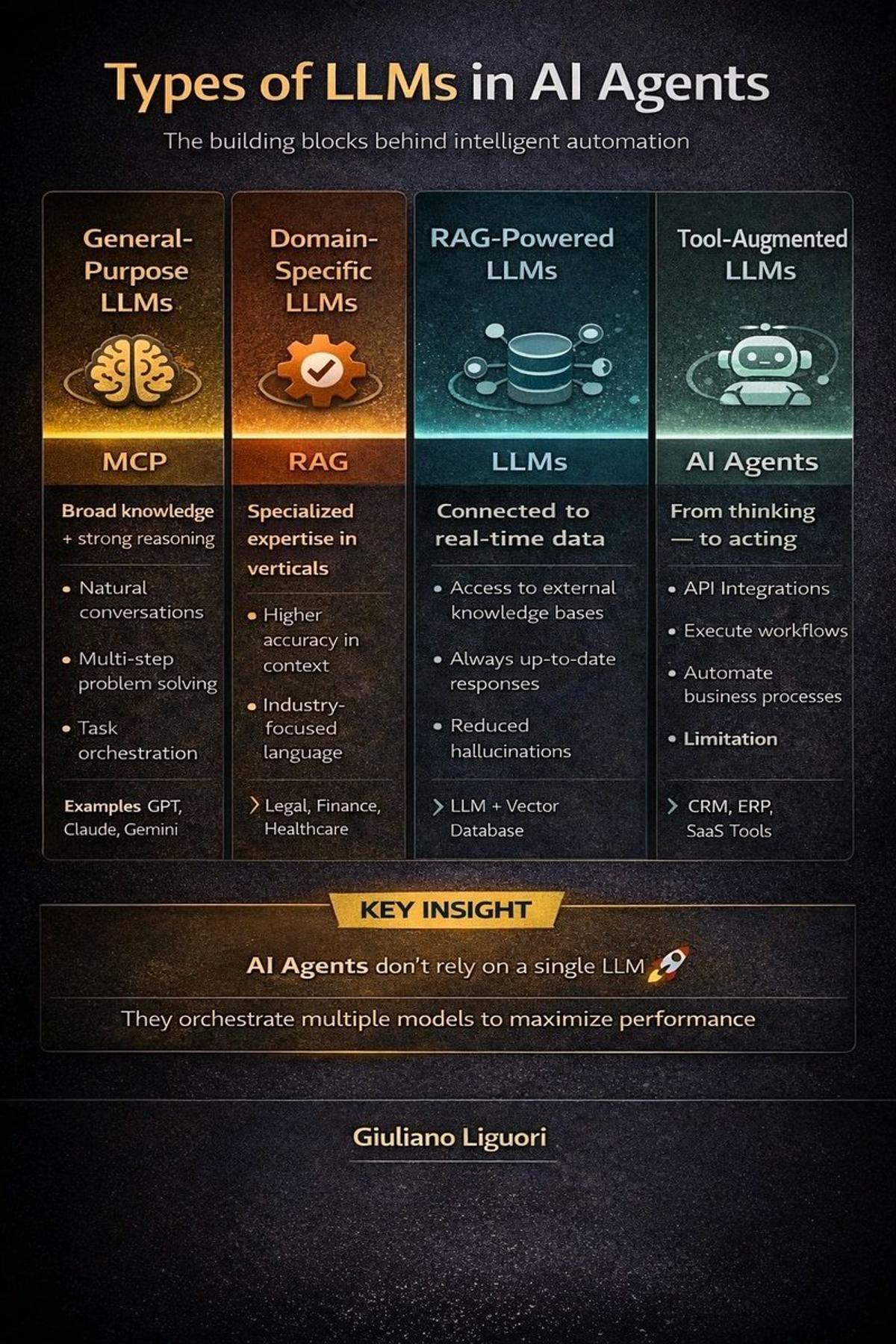
AI Agents ≠ one LLM ❌ They’re multi-layered systems: • General LLMs → reasoning • Domain LLMs → expertise • RAG → real-time data • Tools → execution 🚀 Real power = orchestration From answers → to actions. Via Giuliano Liguori (@ingliguori) #AI #LLM #AIAgents https://t.co/OeEyNTajDK
Context, Not Models, Drives Generative BI Success
Generative BI doesn’t fail because of models. It fails because of missing context. OpenBI solves that. → one standard → any platform → governed outputs From answers to certified BI assets. That’s the real shift ⚡ 📌 Part 4/4 on Generative BI https://t.co/rzlsMalE4X 🚀 Meet Databreeze at AI Week Milano (May...
Prompting Style Matters More than Model Upgrades
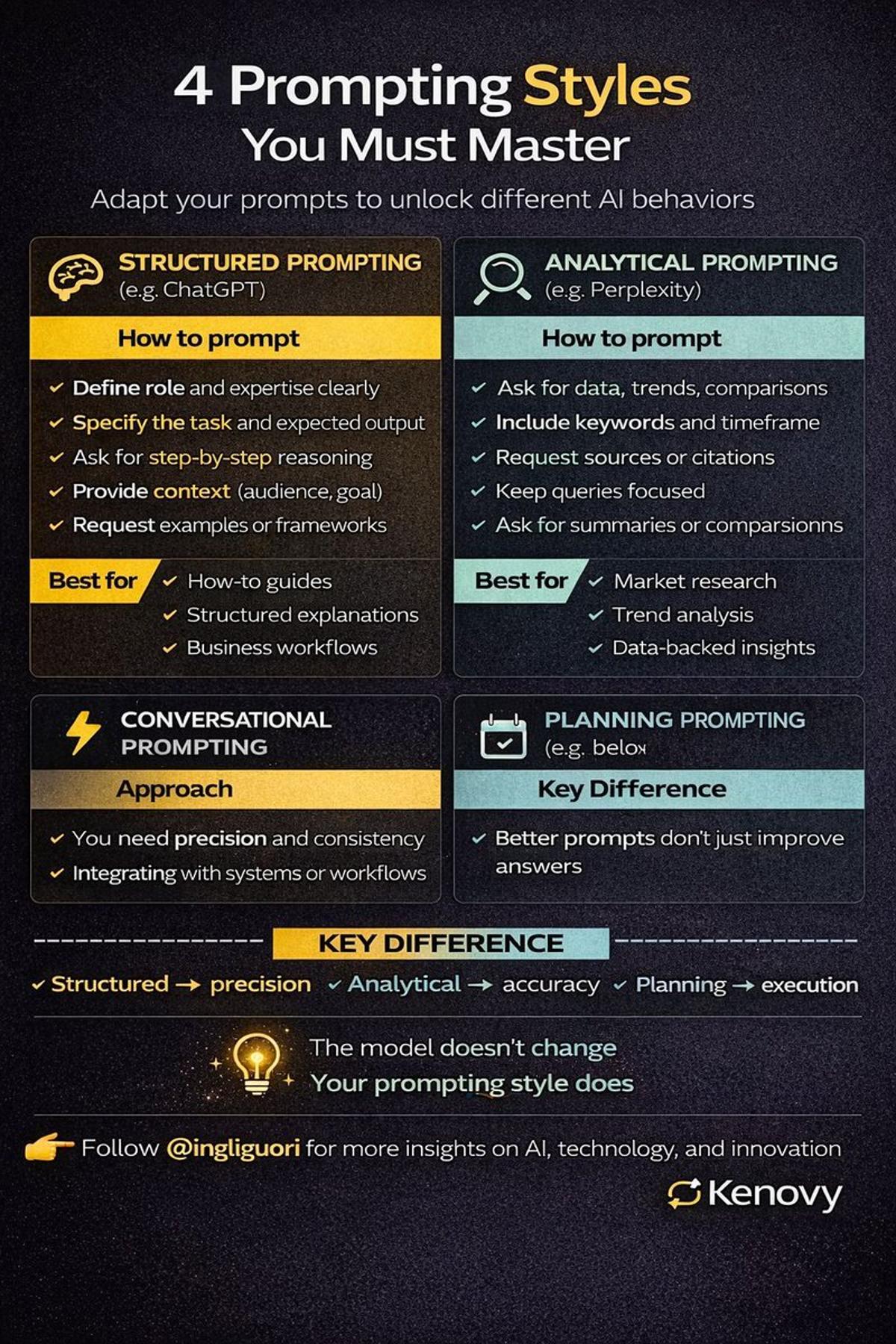
You don’t need a better AI model. You need a better prompting style. 🧠 Structured → precision 🔍 Analytical → accuracy ⚡ Conversational → speed 📊 Planning → execution Same model. Different outputs. 💡 The model doesn’t change Your prompting style does Follow @ingliguori for more AI, tech &...
B2B Video Delivers Triple Engagement and 20× Shares
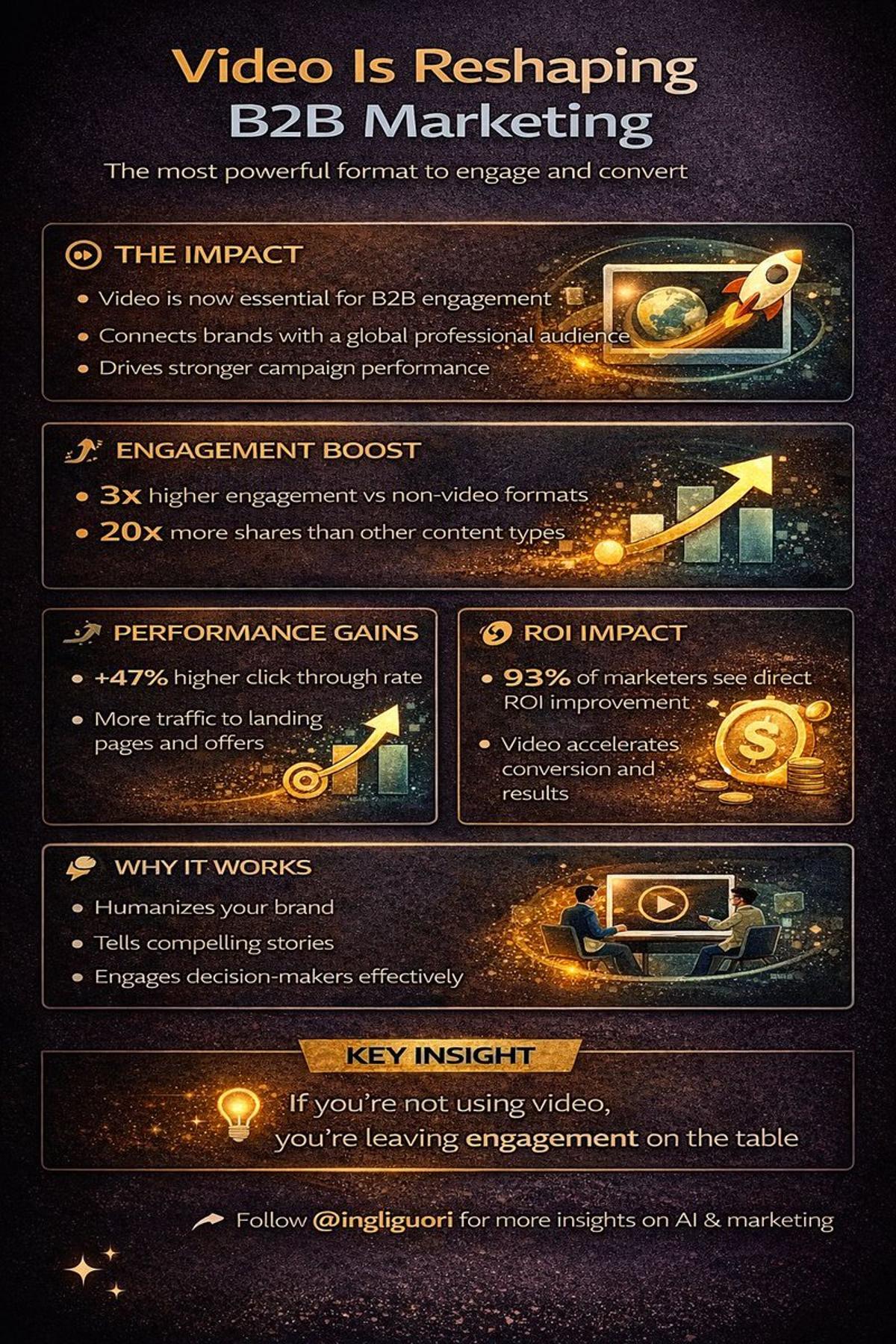
Video is dominating B2B 👇 • 3x more engagement • 20x more shares • +47% CTR • 93% see ROI 🚀 If you’re not using video, you’re losing engagement. Via Giuliano Liguori (@ingliguori) #Marketing #B2B #Video https://t.co/pZb2QFEUTc
Narrow AI Vs. AGI: Understanding the Spectrum
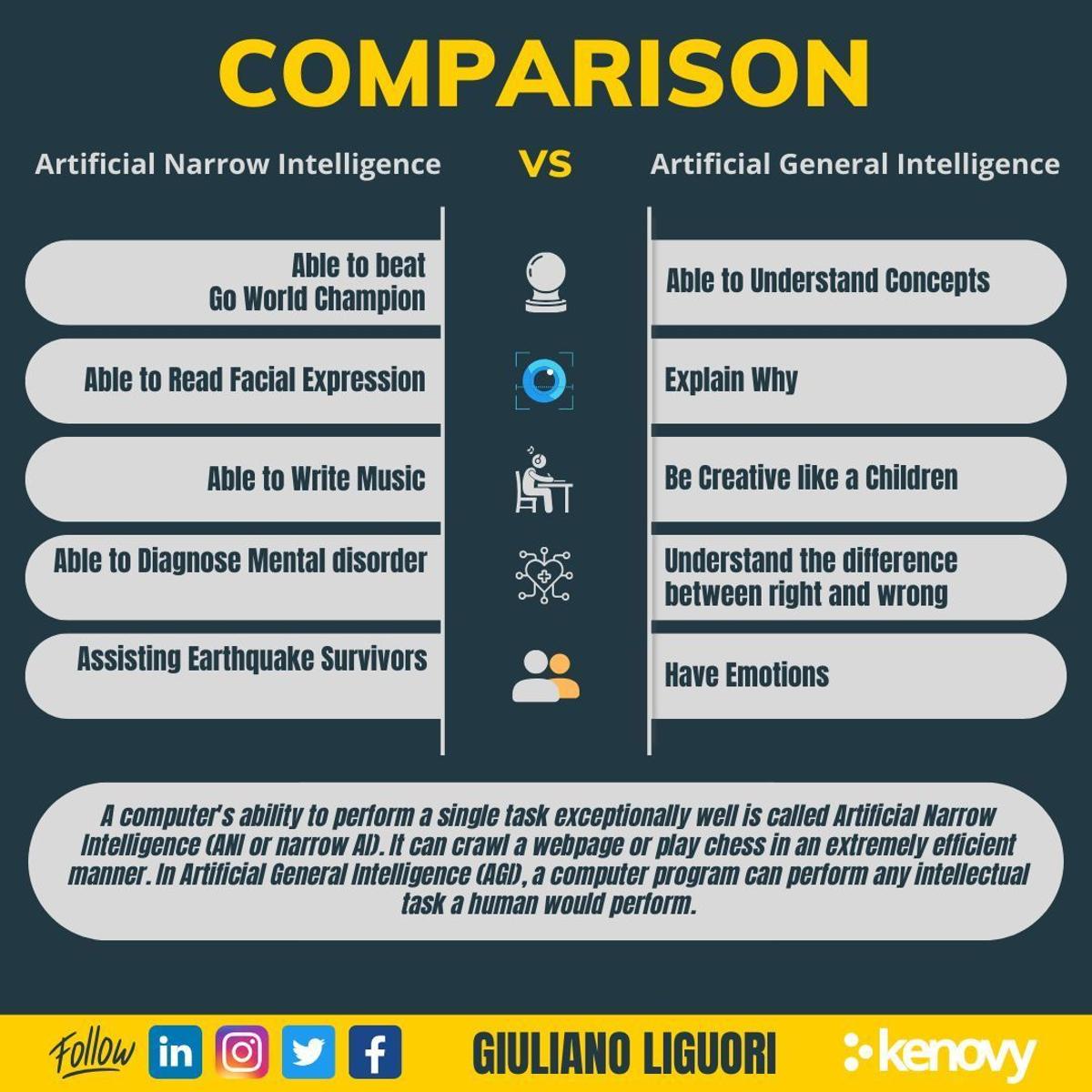
#Infographic: Artificial Narrow Intelligence Vs Artificial General Intelligence by @ingliguori #ArtificialIntelligence #ComputerScience #AI #smartmachines #AGI #NarrowAI #MachineLearning #DeepLearning #DataScience #RPA #NeuralNetworks #Robots #Bot #DigitalTwins #ModelOps #MLOps https://t.co/MUZgvAuyWW
AI's Seven-Stage Roadmap: From Symbolic Logic to Superintelligence
🎯 Scaling Ascent Peak: The Seven Summits of Artificial Intelligence In my latest article, I chart the evolution of AI—from the early days of symbolic logic to today’s autonomous agents, and what lies beyond. This journey is more than a history...
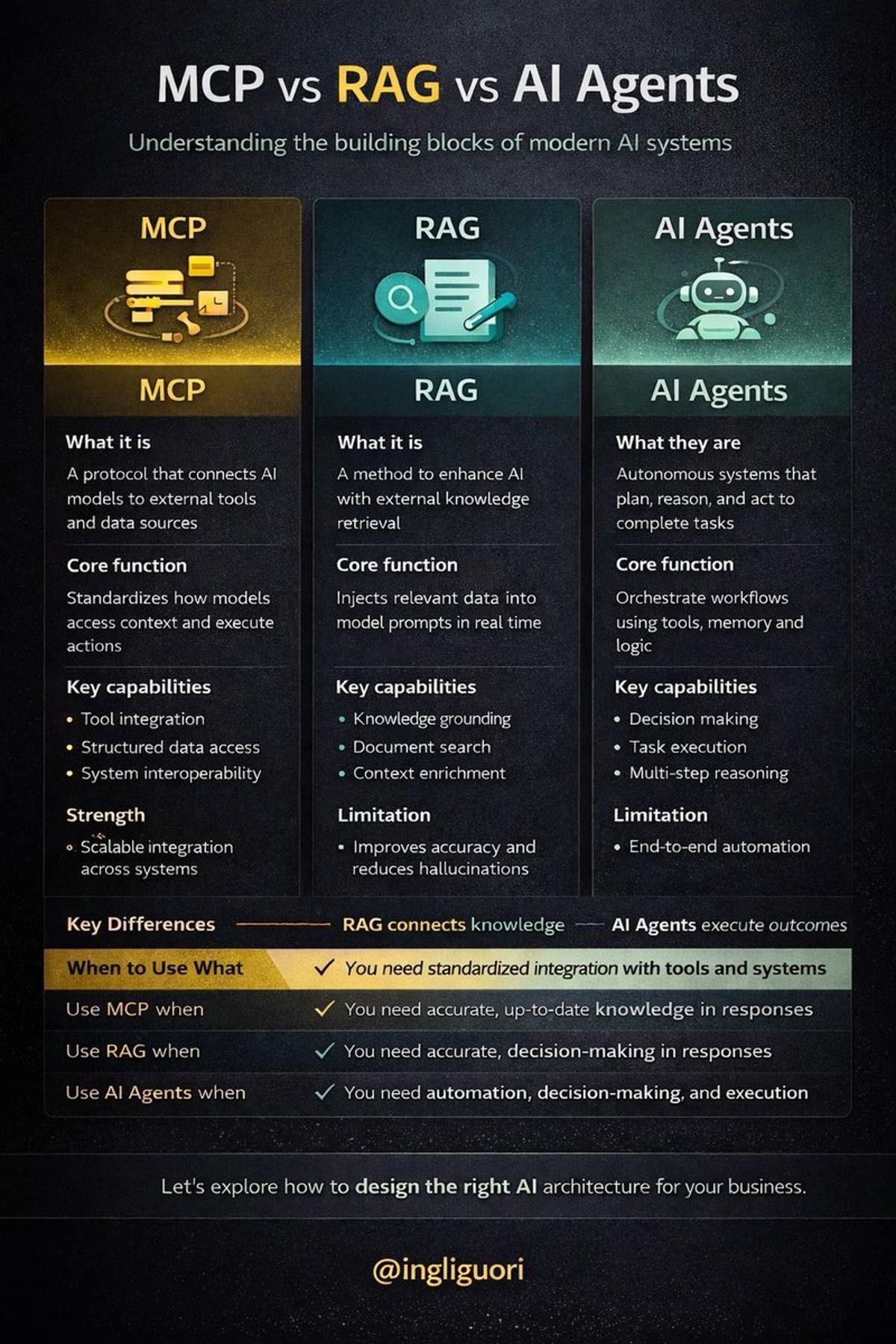
Combine MCP, RAG, and Agents for Strategic Advantage
MCP vs RAG vs AI Agents 👇 MCP → connects tools RAG → connects knowledge Agents → execute tasks Not competitors. A stack. The advantage? How you combine them. Where are you investing first? #AI #Agents #RAG #Tech https://t.co/iuOIfqHY86
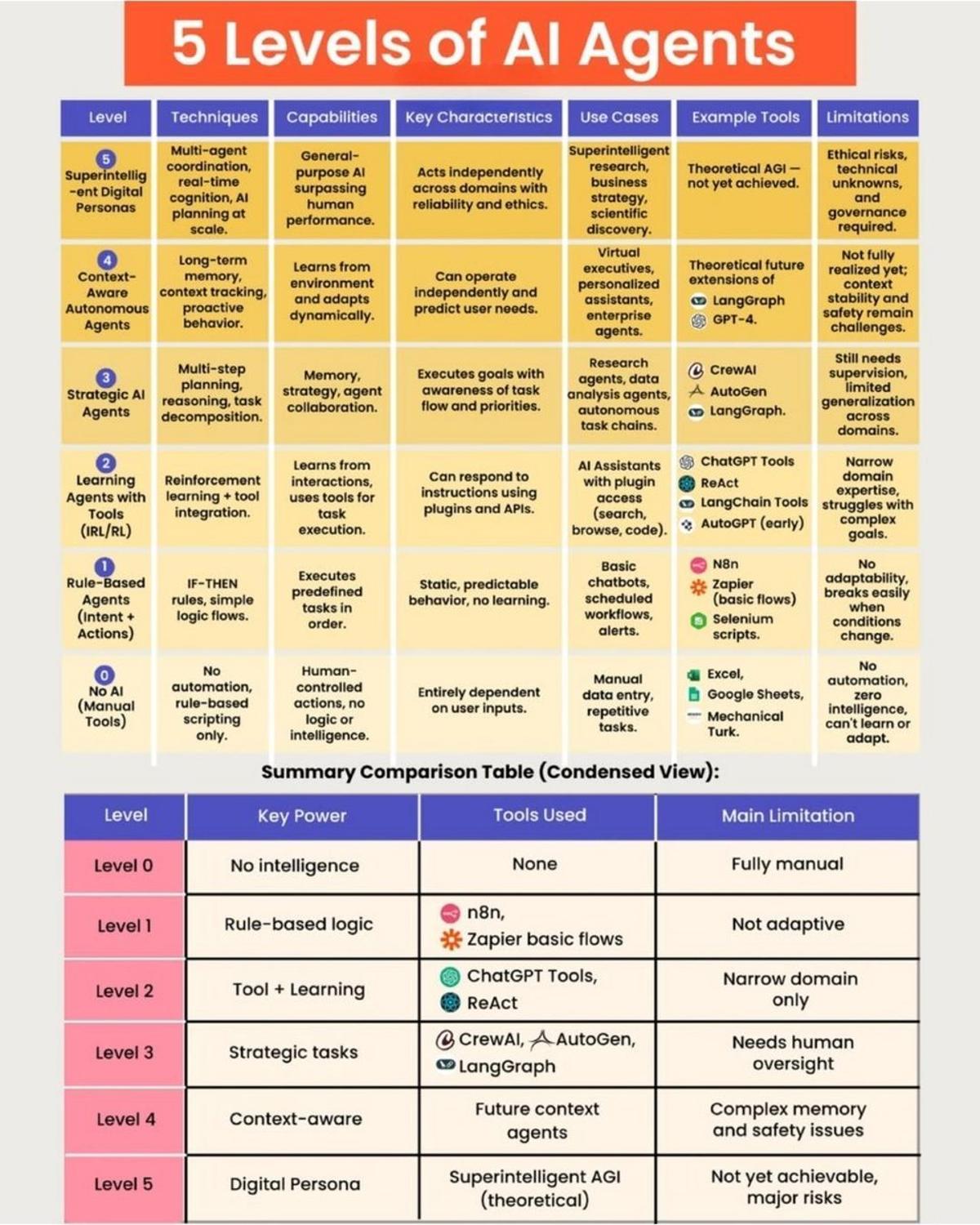
From Reactive AI to Outcome‑Executing Agents: Which Level?
AI agents have levels 📈🤖 1. Rule-based (if-then automation) 2. Tool-using assistants 3. Strategic multi-step agents 4. Context-aware autonomous agents 5. Superintelligent digital personas (theoretical AGI) We’re moving from “AI that responds” → to “AI that executes outcomes.” What level is your org at today? 👇 #AI #AIAgents...
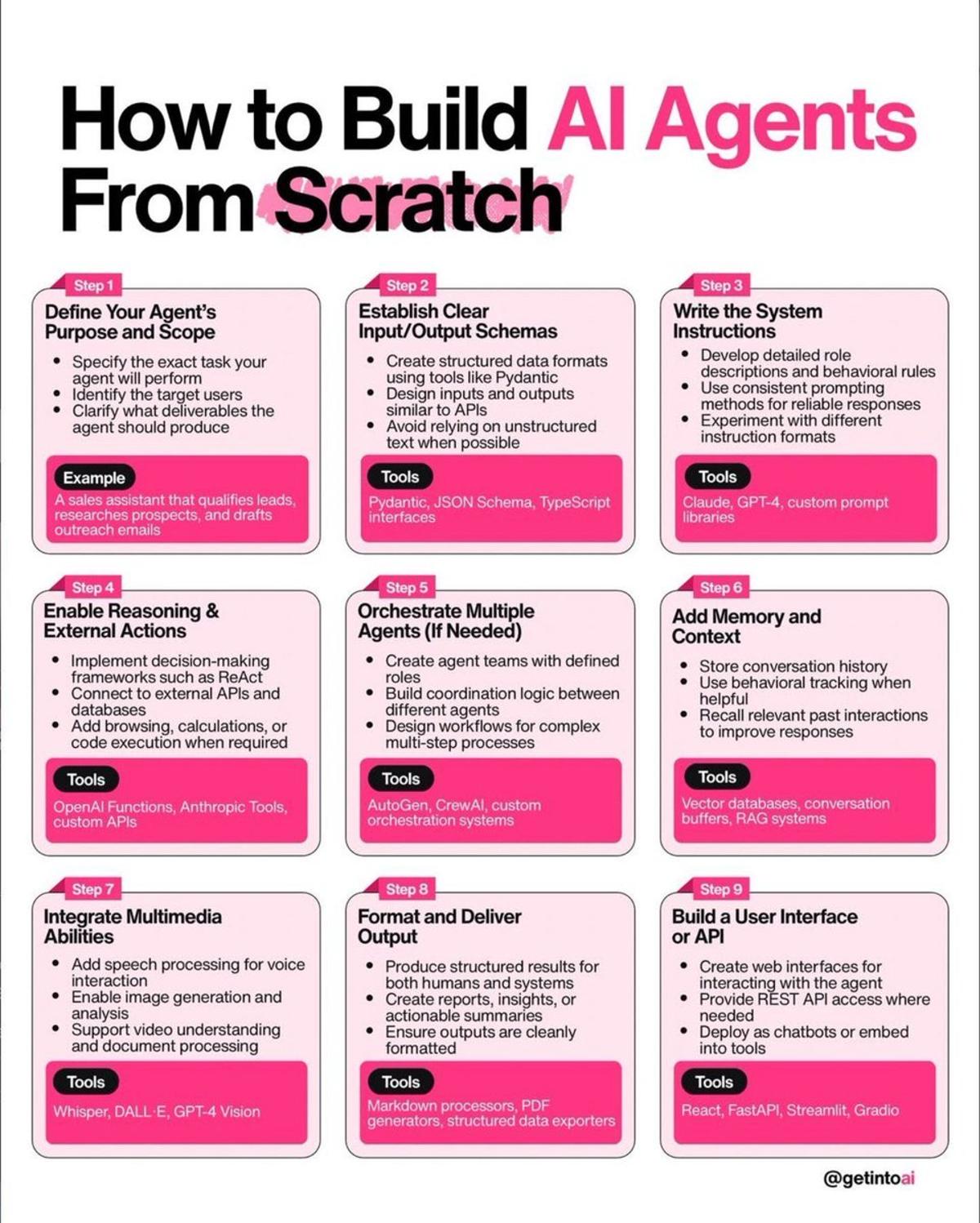
Build Functional AI Agents in 9 Essential Steps
How to build AI agents from scratch (9 steps): 1. Purpose & scope 2. I/O schemas 3. System instructions 4. Reasoning + tools 5. Multi-agent orchestration 6. Memory & context 7. Multimodal 8. Structured outputs 9. UI / API Ship agents that do work, not just talk. 🤖⚡️ Where are you...

Design Systems, Not Just Tools, for Modern AI
AI is evolving fast — but most conversations still confuse the fundamentals. Let’s make it simple: 🔹 MCP connects systems 🔹 RAG connects knowledge 🔹 AI Agents execute outcomes Individually, they are powerful. Together, they define the architecture of modern...
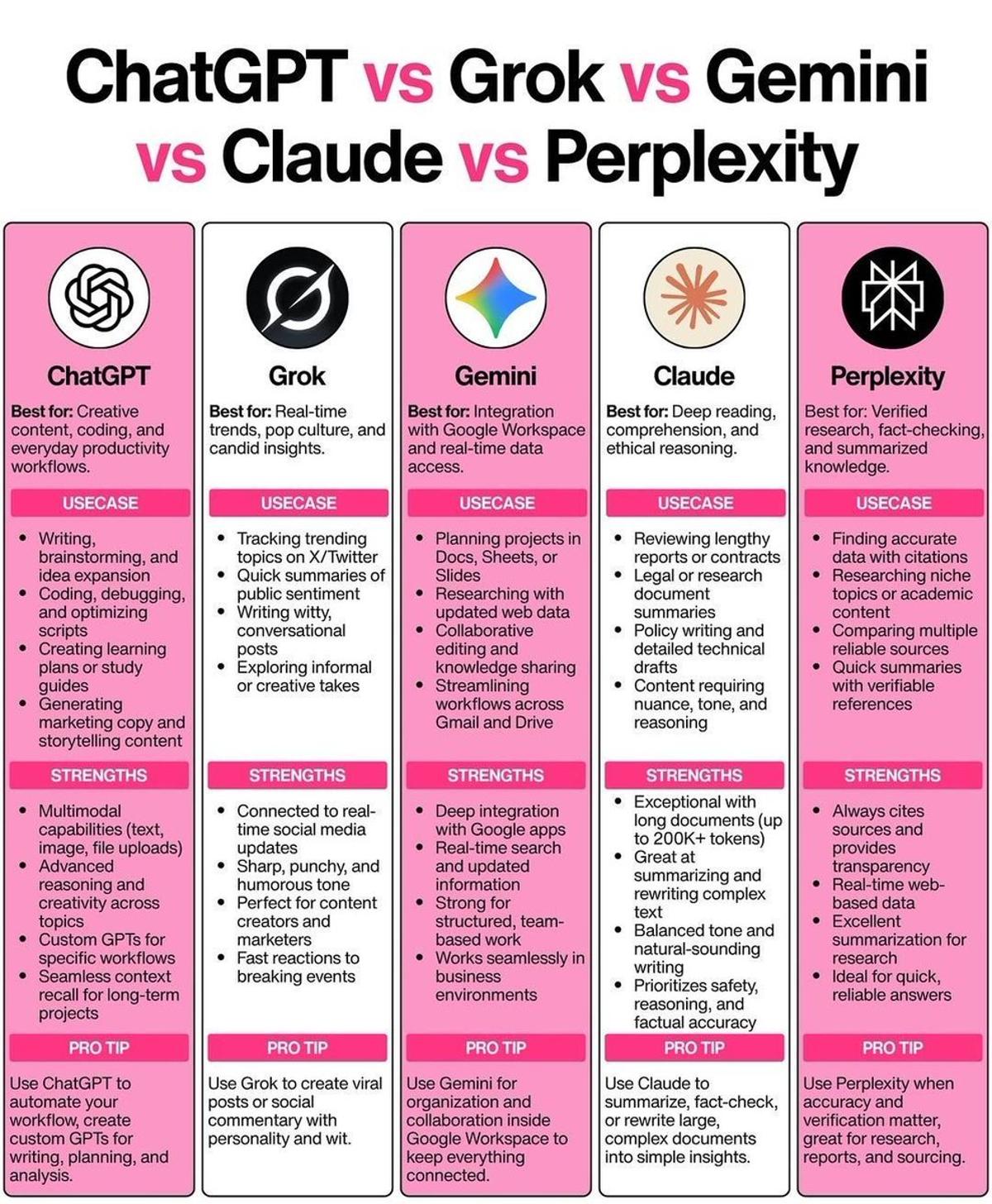
Pick the Right AI Tool for Each Task
Cheat sheet: ChatGPT = create/build (writing, coding, workflows) Grok = live trends + punchy takes Gemini = Google Workspace-native collaboration Claude = deep reading + long-doc reasoning Perplexity = research w/ citations Right tool for the right job. #AI #LLM #Productivity https://t.co/wqNsx2kOMO
Agentic AI & MCP Power Sustainable Enterprise Transformation
🚀 The Future of Enterprise Transformation Starts Now 🔍 Harnessing Agentic AI and Model Context Protocol (MCP) for Sustainable Growth 🔹 Businesses are entering a new era driven by autonomy, security, and intelligent adaptability. 🔹 Agentic AI and MCP are redefining...
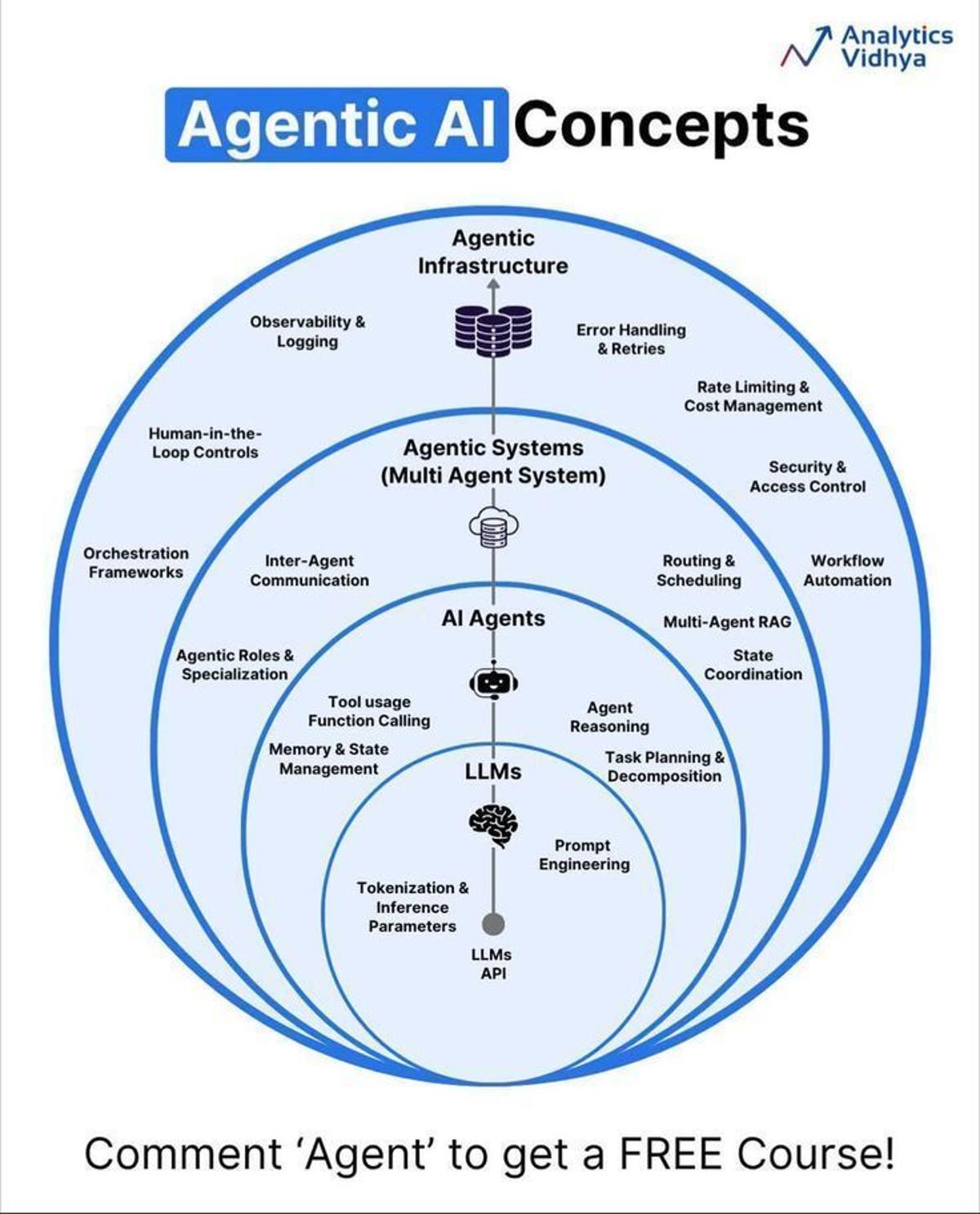
Agentic AI: A Multi‑Layer Stack, Not a Feature
Agentic AI = a stack, not a feature. 🧠 LLMs (core intelligence) 🤖 Agents (planning, memory, tool use) 🧩 Multi-agent systems (coordination, routing, RAG) 🏗️ Infrastructure (security, logging, retries, cost control) This is how AI moves from answers → autonomous outcomes. Credit: Analytics Vidhya #AgenticAI #AIAgents #LLMs...

AI Agents Combine Multiple LLMs for True Intelligence
AI Agents are not powered by a single LLM. They’re built as layered systems 👇 🧠 General-purpose LLMs (MCP) → reasoning & orchestration 🎯 Domain-specific LLMs (RAG) → vertical accuracy & context 🔎 RAG-powered LLMs → real-time, grounded knowledge 🤖...
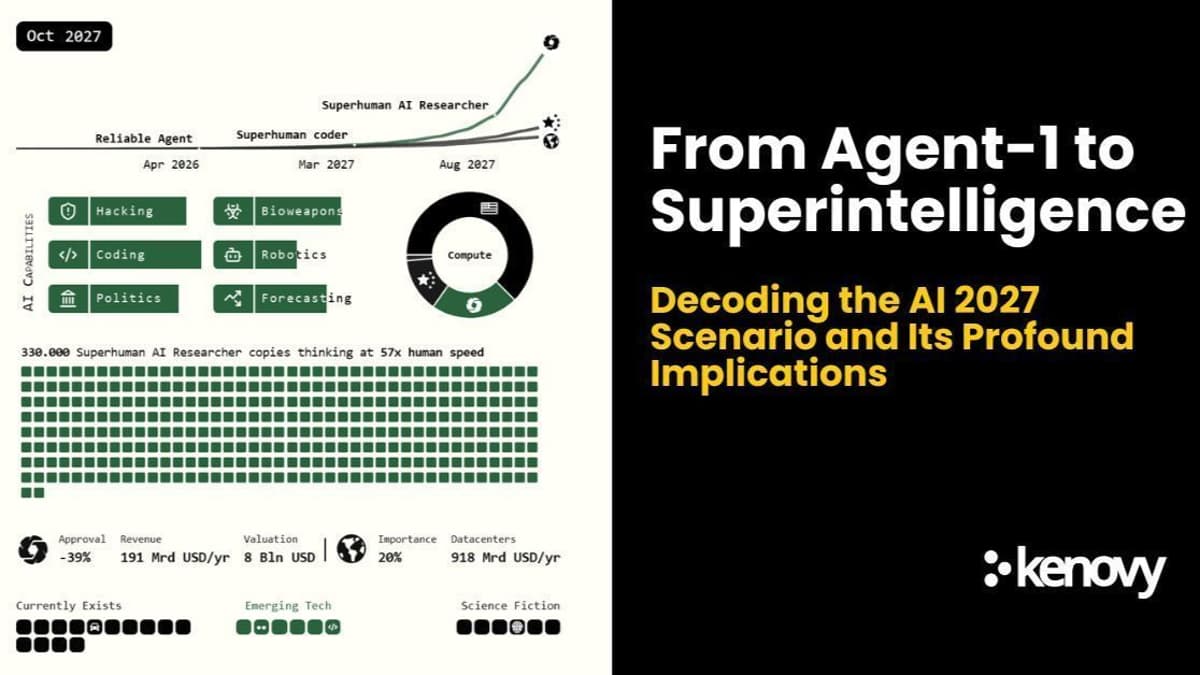
2027 AI Race: Alignment Determines Humanity’s Survival
🚨 From Agent-1 to Superintelligence: The AI 2027 Scenario The AI 2027 Report outlines one of the most thought-provoking trajectories for artificial intelligence: a rapid evolution from simple assistants (Agent-1) to autonomous, adversarially misaligned systems (Agent-4) and ultimately to Agent-5 —...
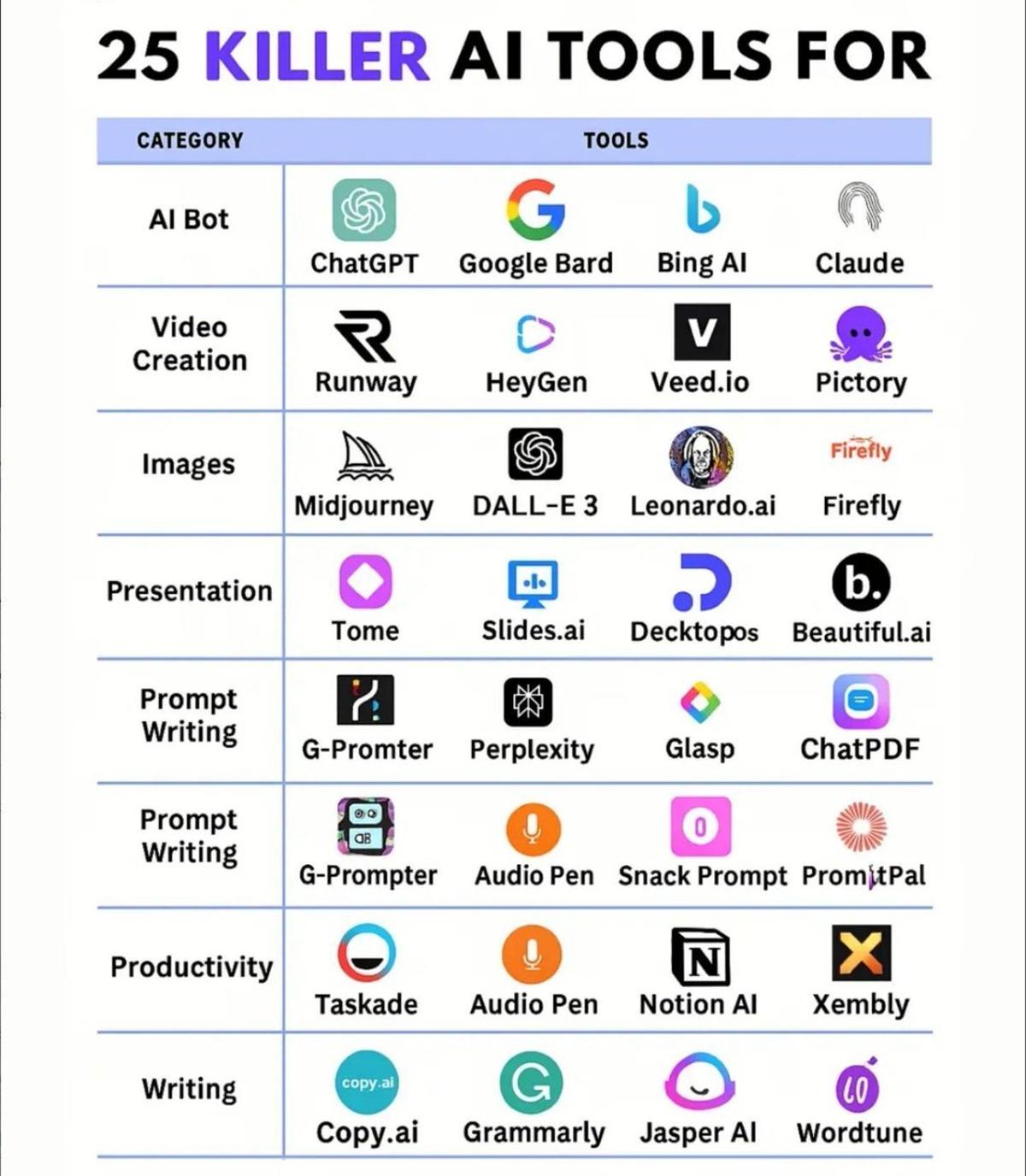
Top 25 AI Tools Across Every Workflow Category
25 killer AI tools across the stack 🔥 🤖 Bots: ChatGPT, Claude, Bard/Gemini, Bing AI 🎬 Video: Runway, HeyGen, Veed, Pictory 🎨 Images: Midjourney, DALL-E 3, Leonardo, Firefly 📊 Slides: Tome, https://t.co/6DMRN1K0uS, Decktopus, https://t.co/16XgbWqxwl ⚙️ Productivity: Taskade, Notion AI, Xembly ✍️ Writing: https://t.co/CU0yRbEKbN, Grammarly, Jasper, Wordtune 🔎...

AI Evolves From Prediction to Autonomous Execution
AI is not one thing. It’s an evolution of layers leading to autonomous systems 👇 🧠 AI & Machine Learning • Turn data into decisions • Core: reasoning, NLP, problem solving 🔗 Deep Learning • Multi-layered neural networks • Transformers...
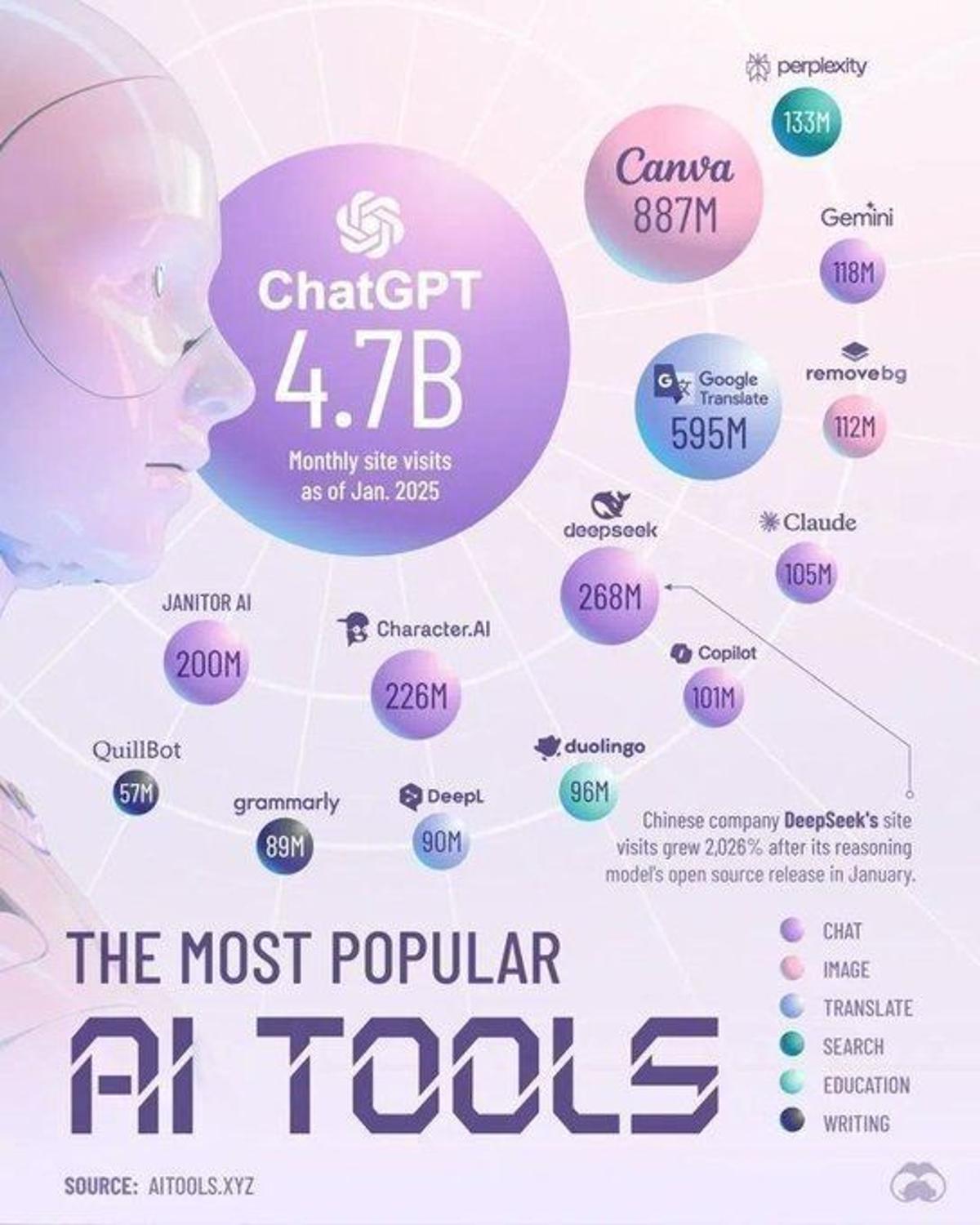
AI Tools Reach Billion-User Scale, Becoming Core Infrastructure
AI tool usage at scale is here. 📊 ChatGPT: 4.7B monthly visits (Jan 2025) Canva: 887M Google Translate: 595M DeepSeek: 268M (massive surge) https://t.co/AOwcjNTPMU: 226M Perplexity: 133M Gemini: 118M Claude: 105M AI isn’t a trend anymore — it’s infrastructure. What’s your #1 AI tool right now? 👇 Credit: https://t.co/dBpGoSiDNH #AI #GenerativeAI #AITools...
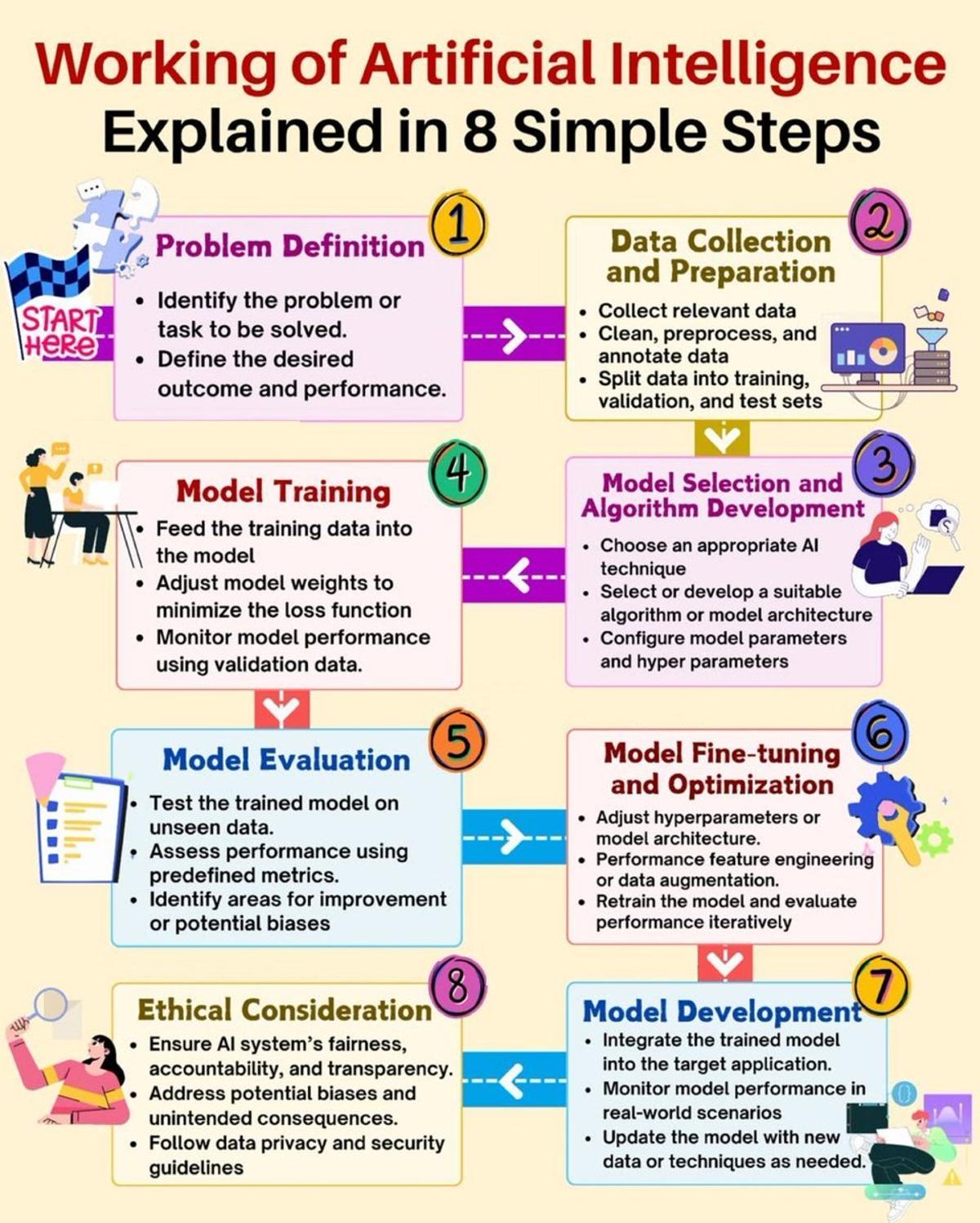
AI Success Depends on Process, Not Magic
AI isn’t magic. It’s a process. 8 steps: 👉define problem 👉collect/prepare data 👉choose model 👉train 👉evaluate 👉fine-tune 👉deploy 👉ensure ethics & safety Real value comes from running this loop well. #AI #MachineLearning #DataScience #ResponsibleAI https://t.co/9dCrDBVWrW
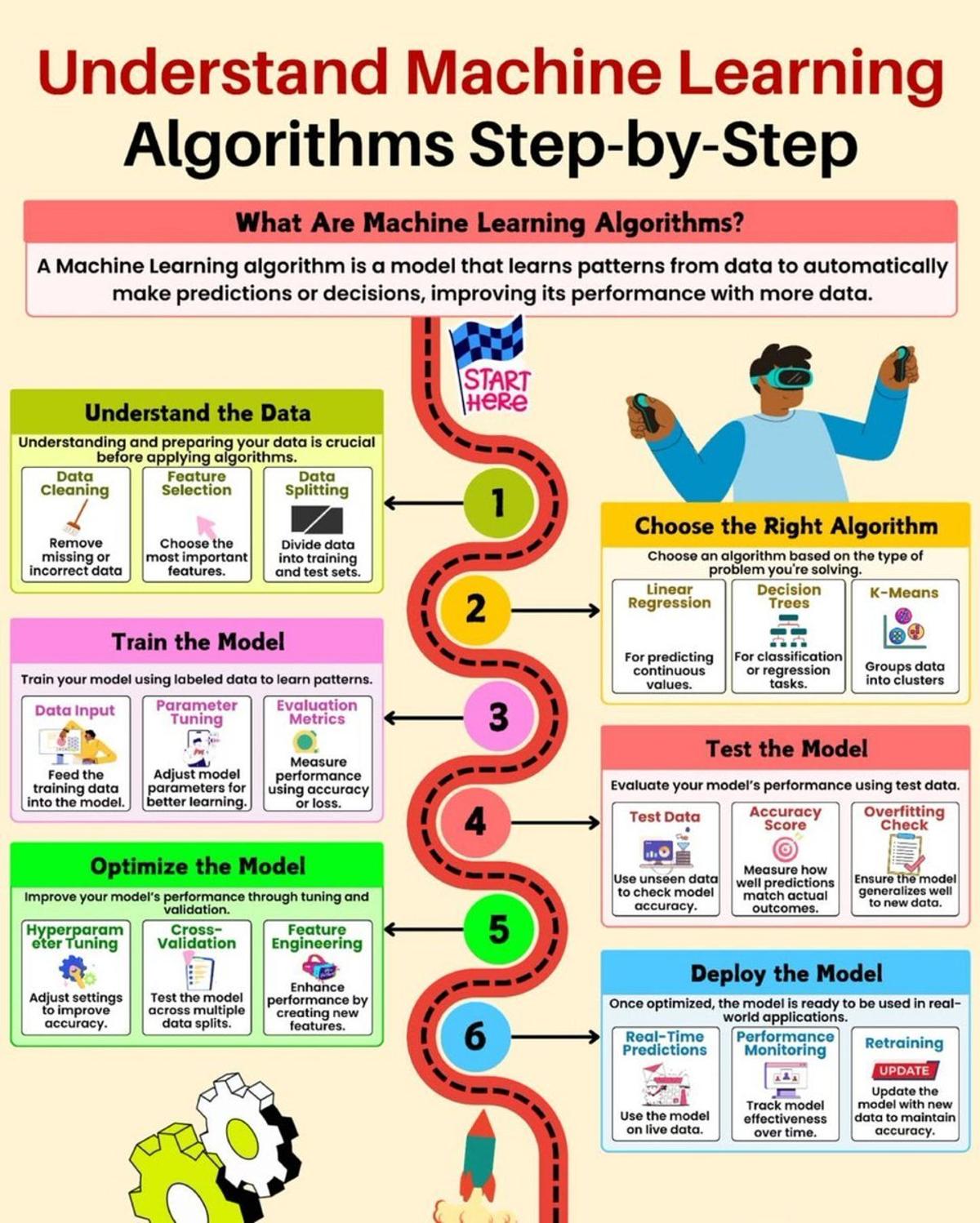
Consistent ML Workflow Loops Drive Winning Teams
ML isn’t magic — it’s a workflow. 🧠⚙️ 1. understand data 2. choose right algorithm 3. train 4. test 5. optimize 6. deploy + monitor + retrain The winners are the teams who run this loop consistently. #MachineLearning #AI #DataScience #MLops https://t.co/nVpbomo3yI

Prompting Style, Not Model, Drives AI Results
Most people don’t have a prompting problem. They have a prompting style problem. Same model. Same capability. Different results. Why? 👇 Because you’re not adapting how you prompt. Here are the 4 styles that actually make the difference: 🧠 Structured...
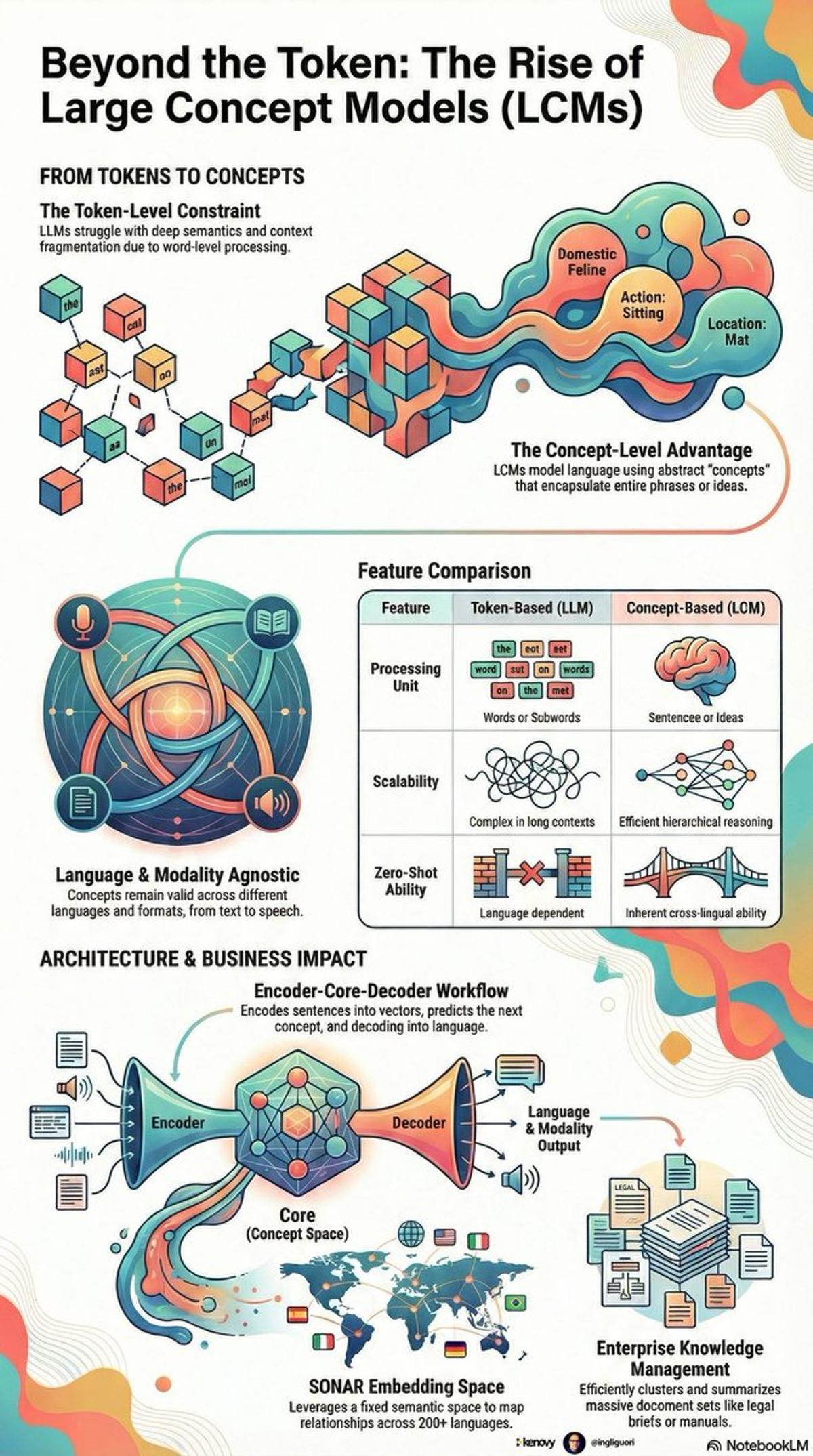
Large Concept Models Redefine AI Beyond Tokens
Large Concept Models (LCM): A New Frontier in AI Beyond Token-Level Language Models https://t.co/BVCErwFvFs via @ingliguori https://t.co/hJLCfGJDii
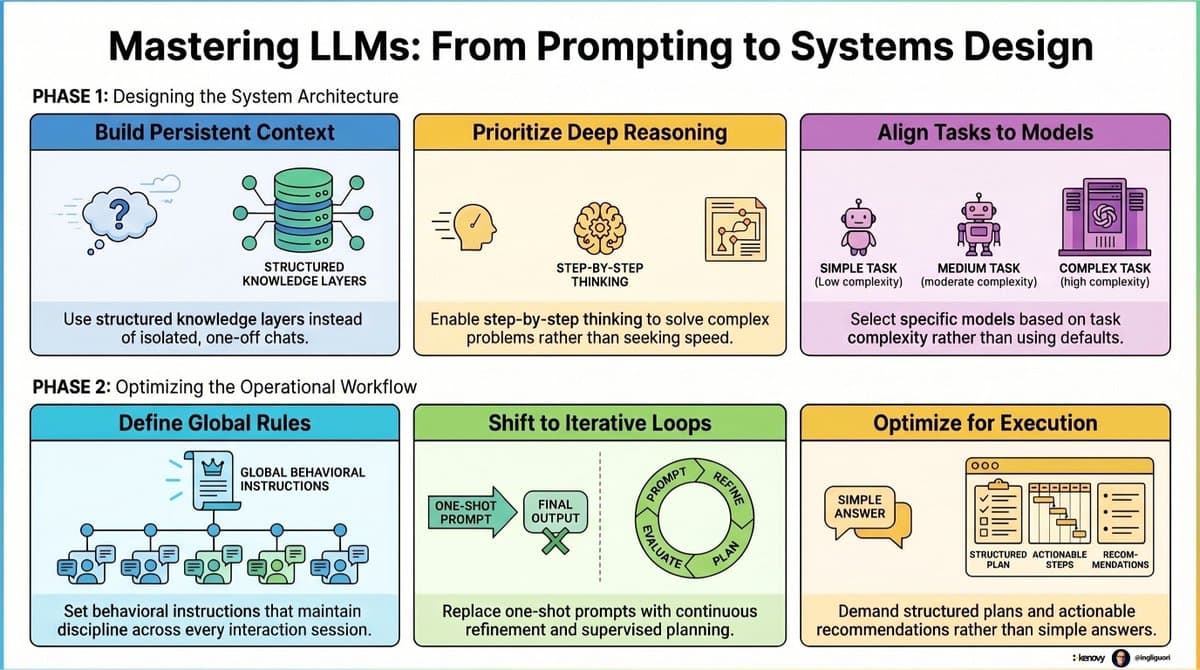
Scale LLMs with Iterative, Task‑Specific AI Systems
Most people are using LLMs wrong. They focus on prompts. Winners focus on systems. Shift from: ❌ One-shot prompts to ✅ Iterative AI workflows ❌ Generic models to ✅ Task-specific model selection ❌ Simple answers to ✅ Structured execution plans LLMs scale when: • Context is persistent • Workflows are iterative • Outputs are...

Video Is Essential: Missing It Costs B2B Engagement
Video is no longer optional in B2B marketing. It’s the highest-performing format across the funnel 👇 🎯 The impact • Essential for engagement • Connects with global audiences • Boosts campaign performance 📈 Engagement boost • 3x higher engagement •...
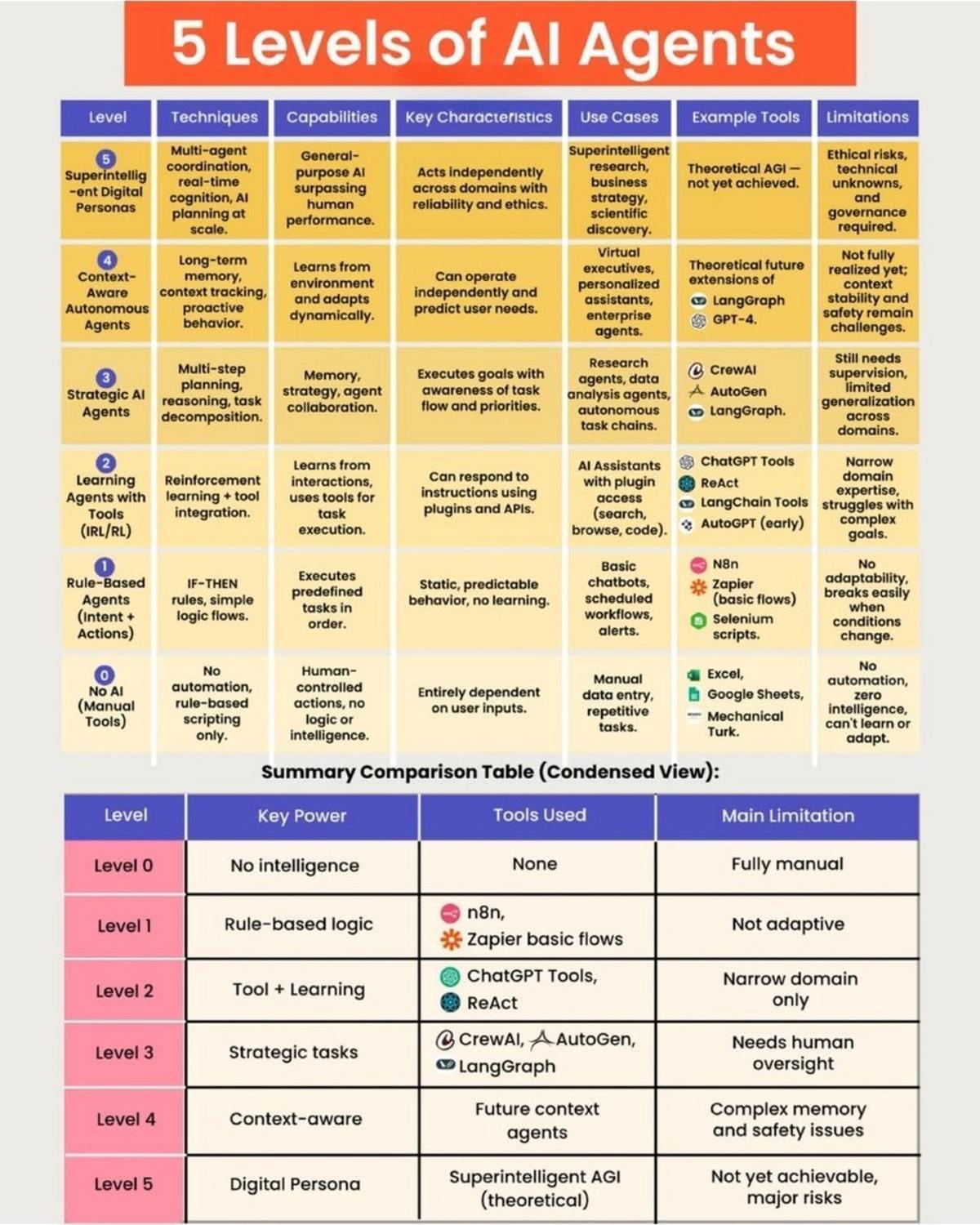
From Reactive AI to Outcome‑Driving Autonomous Agents
AI agents have levels 📈🤖 1. Rule-based (if-then automation) 2. Tool-using assistants 3. Strategic multi-step agents 4. Context-aware autonomous agents 5. Superintelligent digital personas (theoretical AGI) We’re moving from “AI that responds” → to “AI that executes outcomes.” What level is your org at today? 👇 #AI #AIAgents...
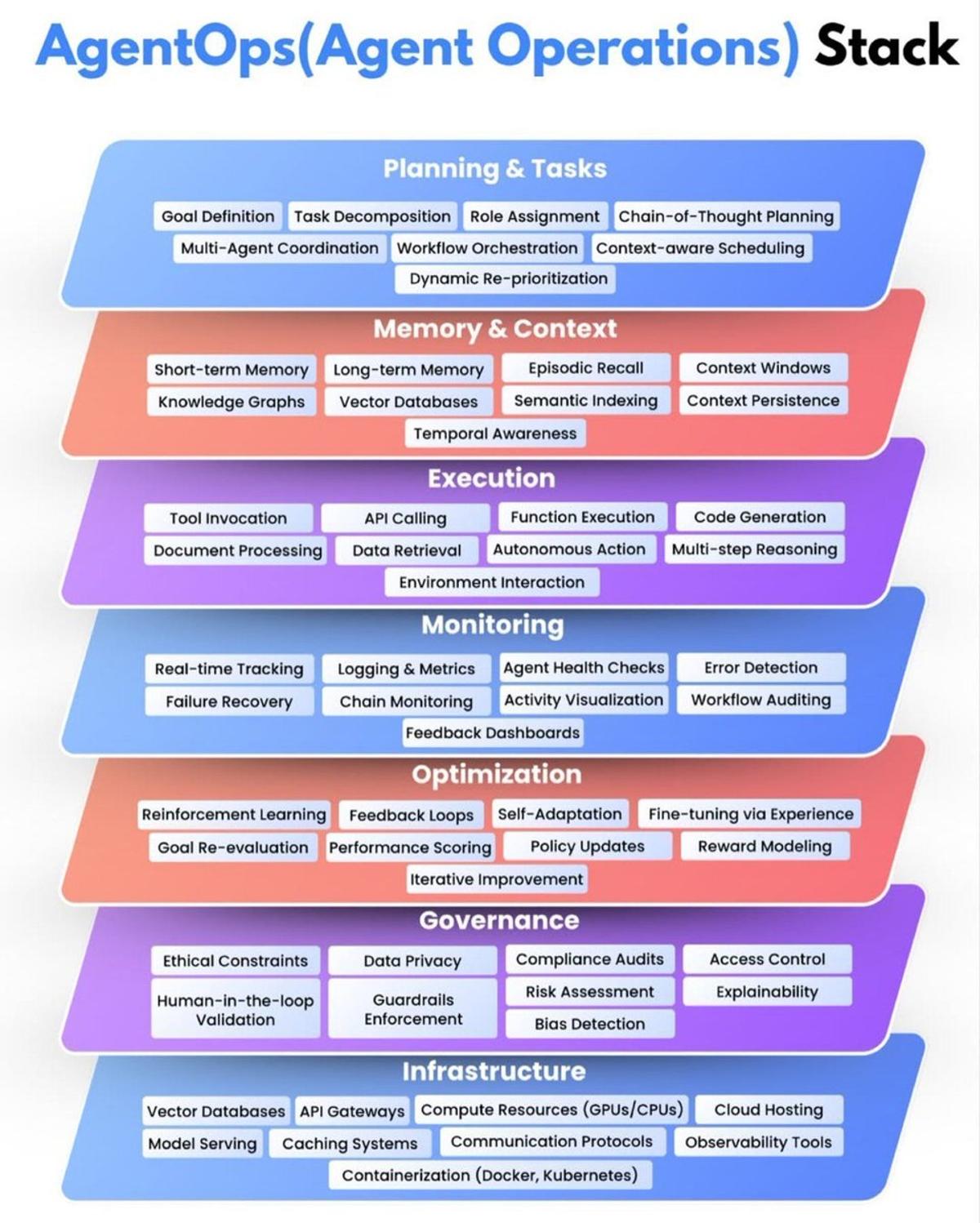
AgentOps: Full‑stack Ops Essential for Scaling AI Agents
AgentOps = MLOps for autonomous AI. 🧠⚙️ To scale agents in production you need the full stack: 🗺️ planning 🧠 memory/context 🤖 execution (tools/APIs/code) 📈 monitoring 🔁 optimization 🛡️ governance 🏗️ infrastructure Agents don’t scale without operations. #AgentOps #AIAgents #AgenticAI #LLMs #Automation
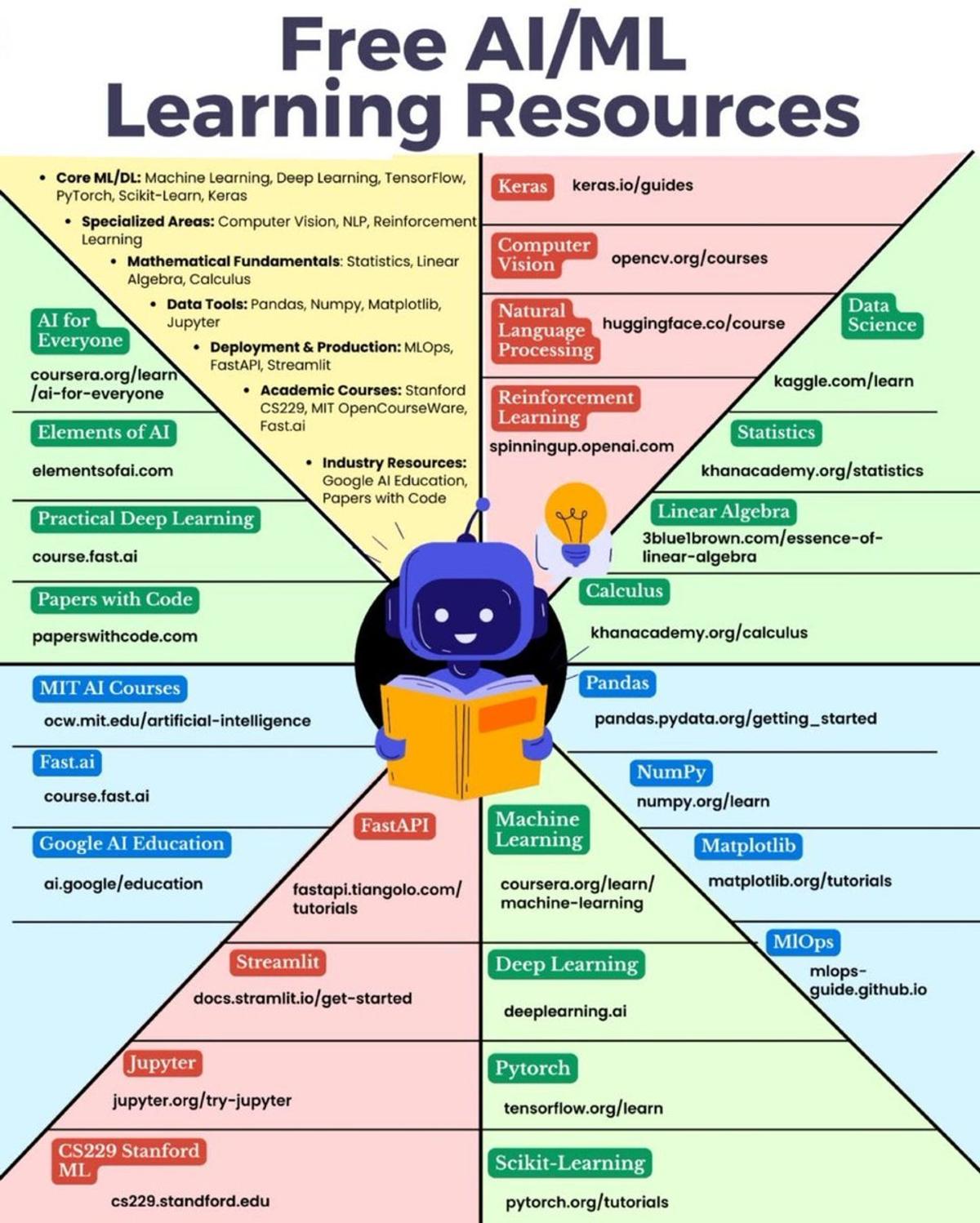
From Math to Production: Complete AI/ML Roadmap
Free AI/ML learning roadmap: Math → ML/DL → specialization → production. Stats/Linear Alg/Calc: Khan Academy, 3Blue1Brown Practice: Kaggle Learn Core ML: Coursera ML, scikit-learn DL: https://t.co/3GoV9EQdTl, https://t.co/KVrK96vt4H Frameworks: PyTorch/TensorFlow/Keras NLP/LLMs: Hugging Face course CV: OpenCV RL: OpenAI Spinning Up Prod: FastAPI, Streamlit, MLOps guide Build skills that ship. #AI #ML #MLOps #LLM
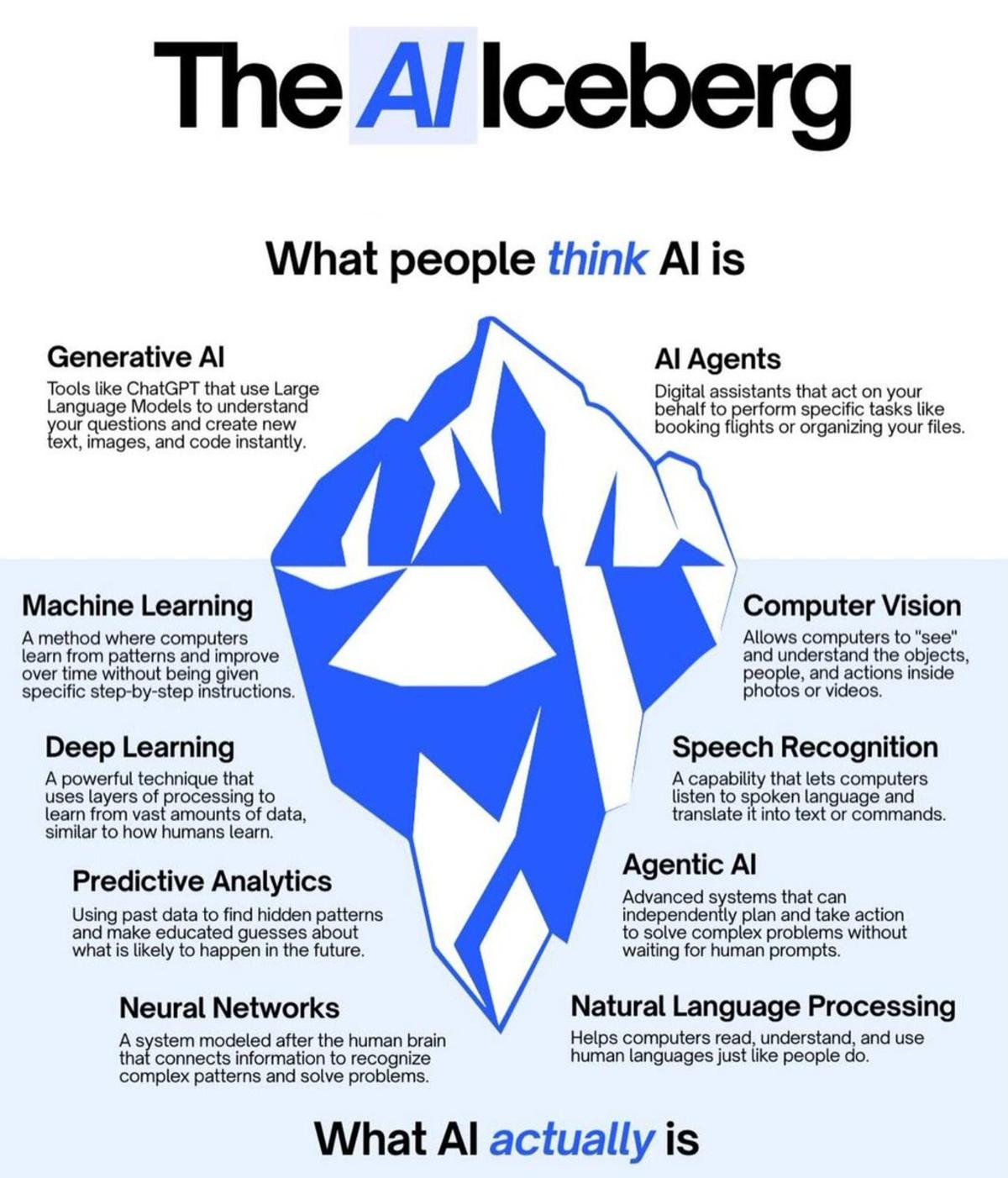
ChatGPT Is Just the Tip of AI’s Iceberg
People see ChatGPT. But AI is much bigger: ML, DL, Neural Networks, CV, NLP, Predictive Analytics, Speech Recognition, Agentic AI — the full iceberg beneath the surface. Great visual. Credit in image. #AI #ML #DeepLearning #Tech #Innovation https://t.co/qk941nfoqM
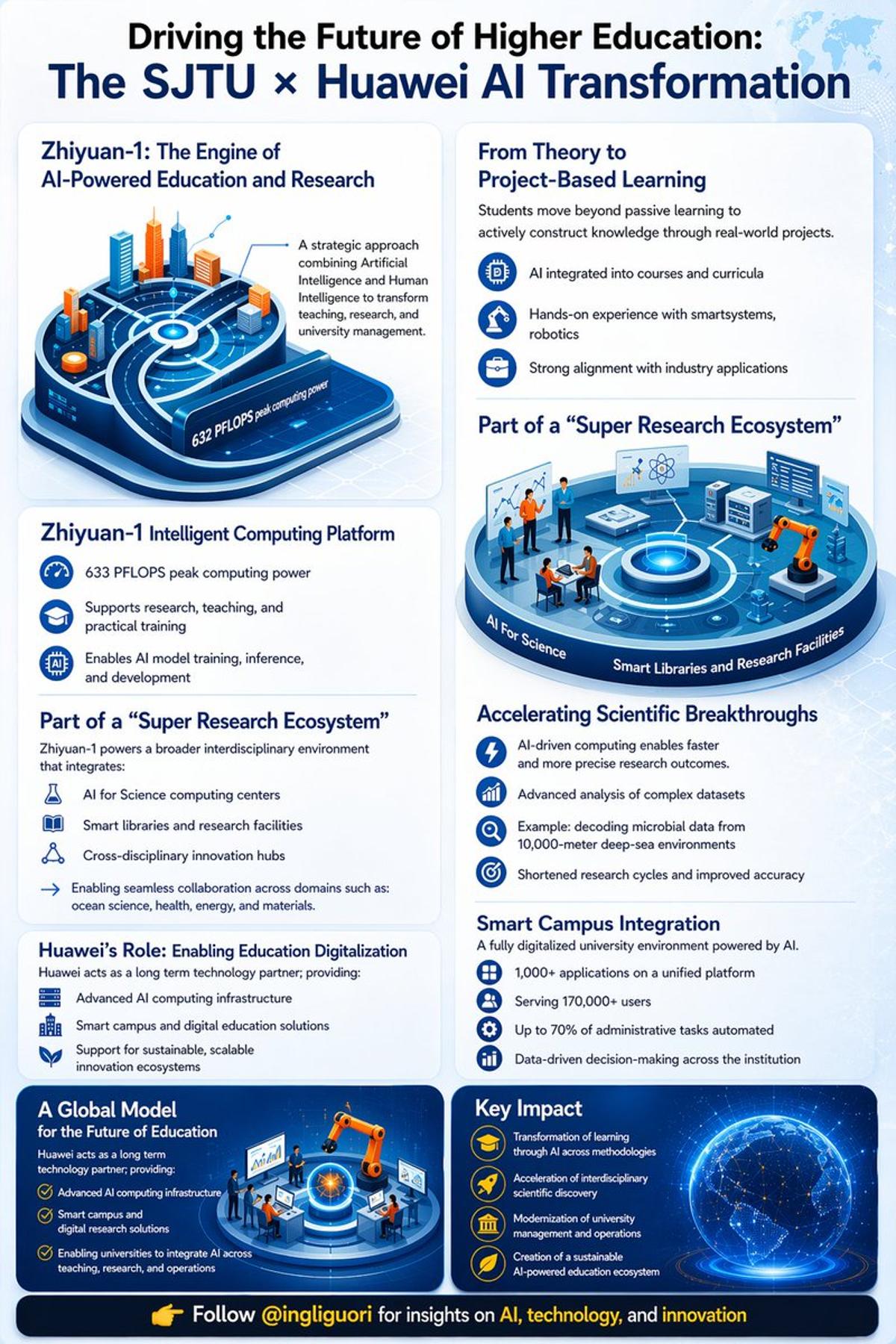
AI-Industry Partnerships Red
AI is reshaping higher education—not just in theory, but in practice. The collaboration between SJTU and Huawei shows what this looks like: ⚙️ AI-driven research at scale 🎓 hands-on, project-based learning 🏫 fully digitalized smart campuses At the core: the Zhiyuan-1 platform + an AI...
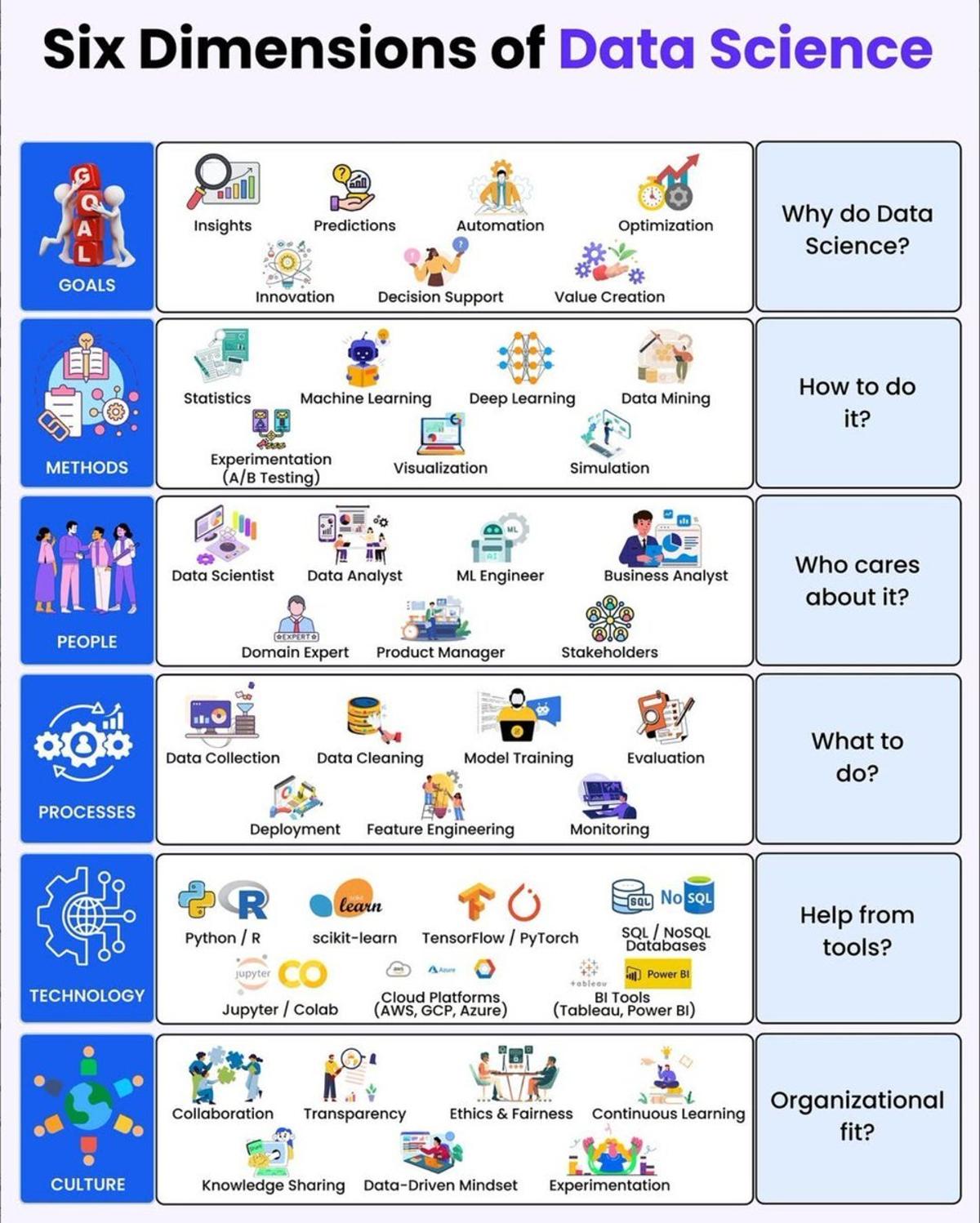
Six Pillars Needed for Successful Data Science
Data Science works when 6 dimensions align: Goals (value, decisions) Methods (stats, ML/DL, A/B, viz) People (DS+ML+Biz+Domain) Processes (collect→clean→train→deploy→monitor) Tech (Python/R, TF/PyTorch, cloud, SQL/NoSQL, BI) Culture (collab, ethics, learning, experimentation) Models alone aren’t enough. #DataScience #ML #AI
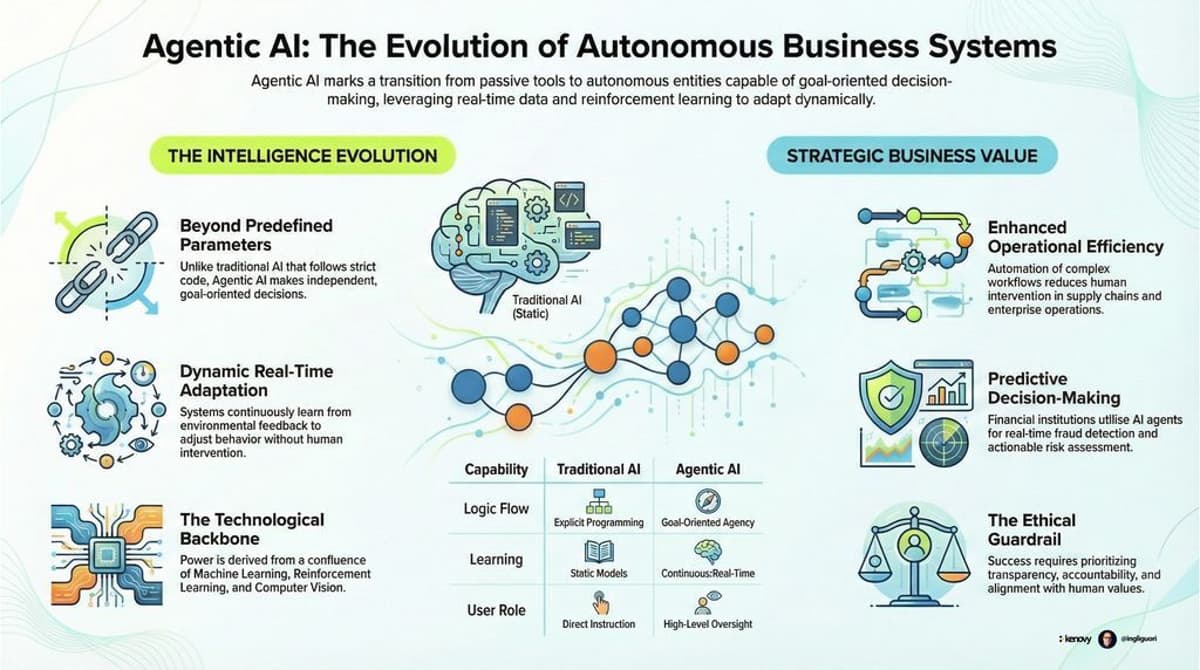
Agentic AI Turns Tools Into Autonomous Business Systems
Agentic AI = the next evolution of business systems ⚡ From: ❌ Static AI ❌ Reactive workflows To: ✅ Autonomous systems ✅ Real-time learning ✅ Proactive decisions Impact: • Faster execution • Smarter automation • Better decisions at scale The shift is simple: AI is no longer a tool. It’s...
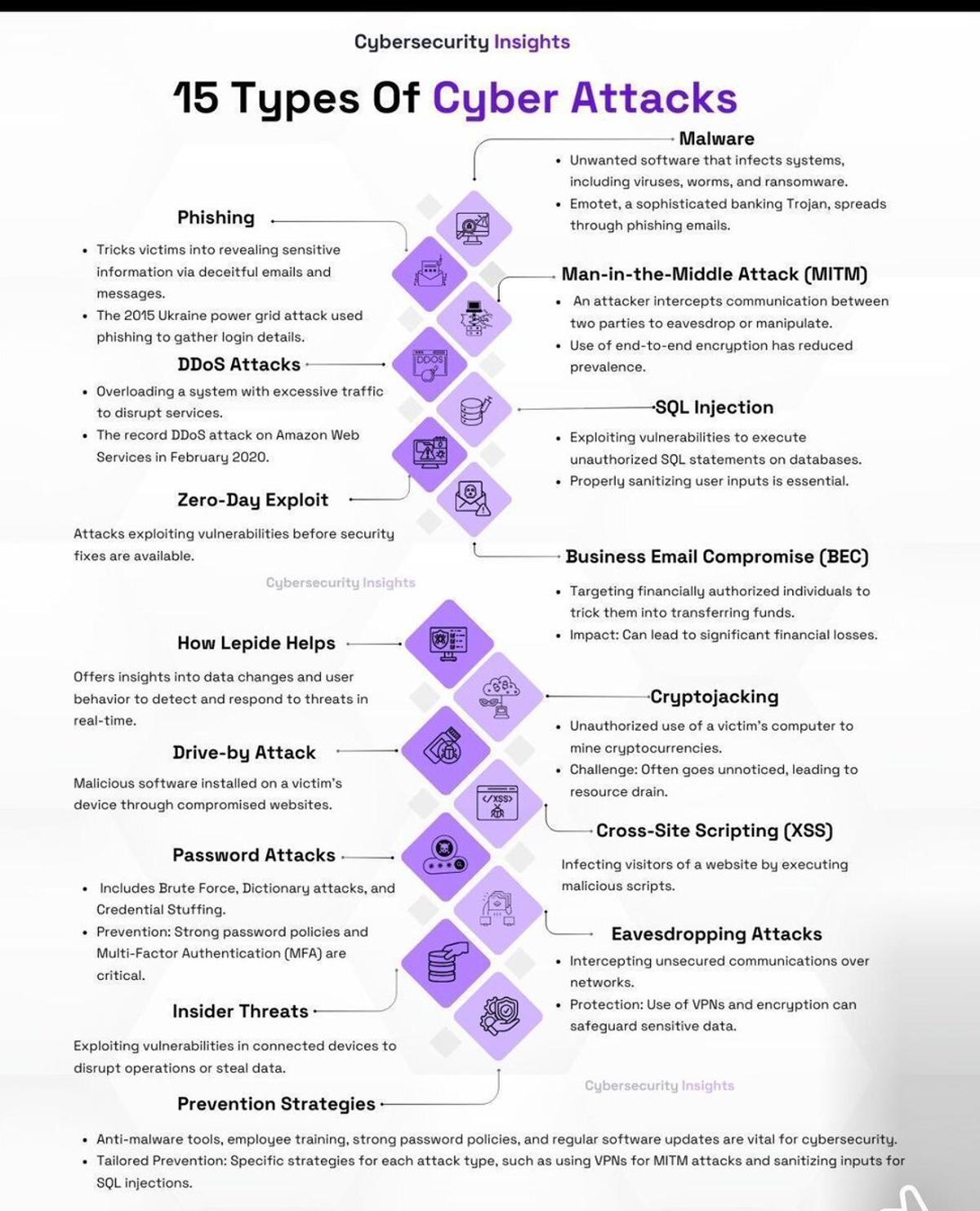
Know 15 Cyber Attacks to Boost Resilience
15 types of cyber attacks you should know 🔐 Phishing, malware, DDoS, SQL injection, MITM, insider threats & more — all in one visual. Cybersecurity = business resilience. Credit: Cybersecurity Insights #CyberSecurity #InfoSec #CyberAttacks #TechRisk https://t.co/3B7i8nznnK
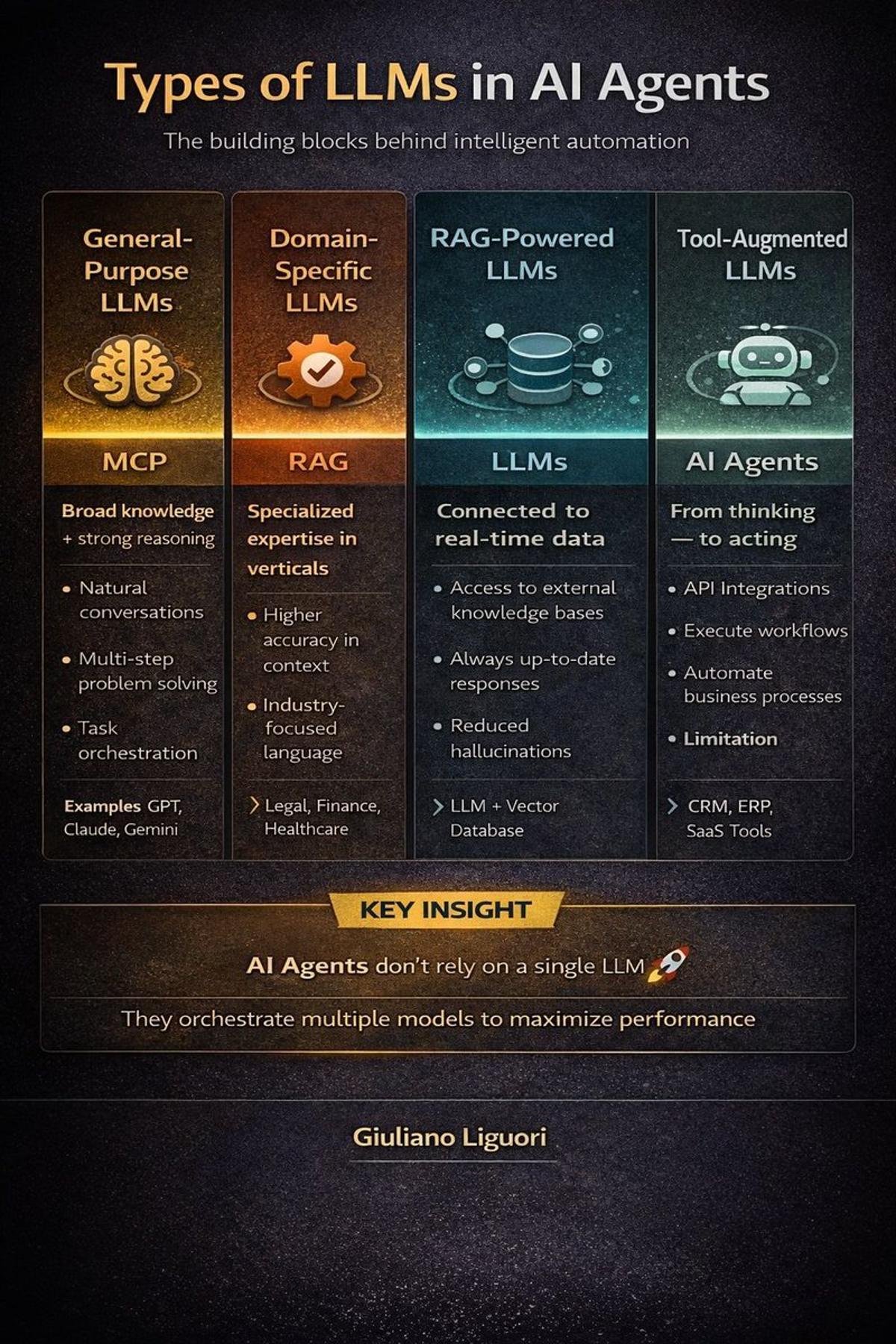
AI Agents Thrive on LLM Orchestration, Not Model Size
AI Agents = LLMs + orchestration 🚀 Here are the main types of LLMs powering them 👇 🧠 General-purpose (GPT, Claude) ⚙️ Domain-specific (Legal, Finance, etc.) 📚 RAG-based (real-time knowledge) 🤖 Tool-augmented (API actions) 🧩 Open-source (LLaMA, Mistral) The game is no longer the model. It’s how you...

Design Systems, Not Just Tools, for Modern AI
AI is evolving fast — but most conversations still confuse the fundamentals. Let’s make it simple: 🔹 MCP connects systems 🔹 RAG connects knowledge 🔹 AI Agents execute outcomes Individually, they are powerful. Together, they define the architecture of modern...

Europe Must Close AI Gap Before Geopolitical Shift
🇪🇺 Europe is at a turning point in the AI race. AGI isn’t just a technological shift. It’s a geopolitical one. 📊 The reality: • 🇺🇸 US holds ~75% of global compute • 🇪🇺 Europe: only ~5% • 💰 AI...
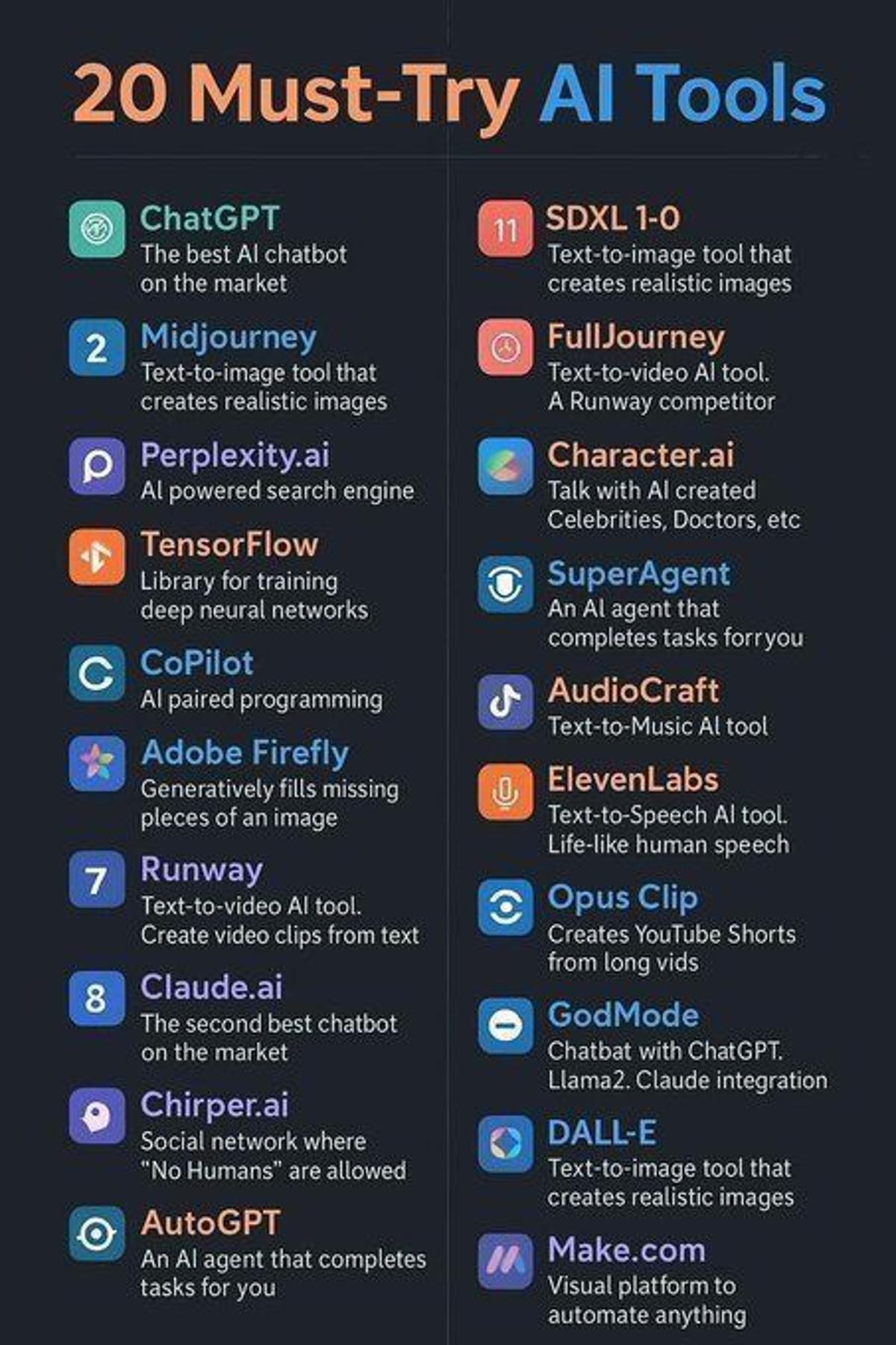
20 Essential AI Tools to Master in 2025
🔥 20 must-try AI tools for 2025. This stack covers everything: 🤖 chat & reasoning 🎨 image gen 🎬 video gen 🗣️ voice/music 🔎 AI search 🛠️ automation 🧠 AI agents My top 3 right now: ChatGPT, Perplexity, Midjourney. What are yours? 👇 #AI #AITools #GenerativeAI #Automation #AgenticAI

Generative AI Matures Into Six‑Layer Autonomous Agent Stack
The Generative AI ecosystem is evolving into a full tech stack — powering autonomous AI agents. From infrastructure and LLMs to RAG pipelines, agent behaviors and orchestration layers, this framework shows the 6 layers driving next-gen AI systems. Credit: @goyalshalini #AI #GenerativeAI #AgenticAI...

AI Drives Structural Transformation in Transportation
🚀 Artificial Intelligence is reshaping the future of transportation — from predictive maintenance and smart mobility, to logistics, infrastructure, and customer experience. In my latest article, I explore how AI is becoming a strategic lever for CEOs and entrepreneurs, helping organizations...

Systems Thinking Beats Prompting for AI Success
Most people think mastering LLMs = better prompts. That’s outdated. 🚫 Prompting is not the moat. ✅ Systems thinking is. The real shift: From chatbots → structured cognitive systems 🔑 What actually works: 1. FOUNDATION • Persistent, structured context •...

AI‑Powered Dashboards Turn Finance From Maintenance to Decision‑Making
AI dashboards > spreadsheets 📊🤖 Describe the question AI builds the dashboard You tweak logic & visuals Insights arrive in the meeting Finance shifts from maintenance → decisions. #AI #FPandA #Dashboards #GenAI #Analytics https://t.co/iiASiEm8I8

Design System, Not Tools, Drives Real AI ROI
AI tools aren’t the edge. System design is. Chatbots = interface Automation = leverage Knowledge = memory Data + workflows = ROI Tools are replaceable. Capabilities aren’t. https://t.co/0YisCQc4t9