

AI Speeds Site Building, but Can't Replace Strategic Judgment
Building a website with AI is faster than it has ever been. That speed exposes a problem most people miss. The reasons websites fail are rarely technical, and AI does not fix the underlying ones. At Crazy Egg, we built a site end to end using modern AI tools. Domain, brand, pages, SEO, analytics. We followed the same steps a real business would, without shortcuts or clever prompt hacks. What became obvious is simple. AI accelerates execution. It does not supply judgment. If you have not done the work to decide what makes you distinct, what the site needs to accomplish, and how someone actually decides to act, AI just helps you arrive at the wrong answer sooner. This guide documents the entire process, including where AI creates real leverage and where it quietly makes outcomes worse. If you are building a website this year, this is the foundation I wish more teams started from. https://t.co/z8iMkN7xFd

Invite the Right Stakeholder Early to Solve Problems
Most work problems are easy to solve once they reach the right person. The trouble starts when they don’t get there directly. I was on a call yesterday where a small, solvable issue had already picked up unnecessary weight. I’ve...

Burnout Arises From Unrealistic Work, Not Just Workload
Burnout is often framed as too much work. In practice, it comes from work that never meets reality. Teams stay active, calendars fill up, but nothing is tested. That gap creates slow burnout.

AI Speeds Momentum, but Direction Now Matters Most
AI compresses the time between action and visible results. Momentum becomes cheaper, faster, and more fragile. You can get moving instantly, but direction matters more than ever.

Stop Parenting Your Startup; Treat It as an Organization
Your business is not your baby, child, or another human you are in a relationship with. It is an organization. That distinction matters more than founders want to admit. Organizations exist to convert decisions into outcomes at scale. They rely on clear...

Real‑World M&A Lessons: Offer Private, Objective Guidance
I’ve been around long enough to see how most M&A paths actually unfold. Some work exactly as hoped. Others resolve quietly. A few fall apart late for reasons that never make it into a postmortem. I’ve been on the acquiring side, the...

Productive Meetings Require Pre‑existing Context, Not Just Discussion
Meetings feel productive when they recreate context. They move the business forward only when that context already exists.

AI Erodes Speed Advantage, Judgment Now Matters Most
AI removed the natural friction that used to separate thinking from output. Writing, design, analysis, code, and planning now move fast enough that effort is no longer a credible signal. When anyone can produce something quickly, speed stops being impressive. What...

Top Operators Guard Conviction Like Capital Preserves Cash
The best operators conserve conviction the way capital allocators conserve cash.

When a Product Becomes Daily Habit, Users Market It
Products move through people before they move anywhere else. They spread in passing comments, side conversations, and offhand recommendations that were never planned. That only happens when a product alters daily behavior enough that omission feels strange. The improvement becomes...

Tags Trump Folders: Let Meaning Emerge via Search
Scott wrote this and it finally clicked for me. Credit where it’s due. “Gen Z is right to not care about folders.” The reason this is correct has nothing to do with age. It’s about how information actually behaves. Folders force premature certainty....

When Execution Is Cheap, Judgment Becomes the Bottleneck
Execution is no longer the constraint. As building gets cheaper, judgment becomes the scarce resource. Models can generate options endlessly. What they don’t accumulate is lived consequence. They don’t carry the memory of failed bets, abandoned paths, or tradeoffs that only made...

AI Accelerates Mediocre Ideas, Reveals True Judgment
AI changes how fast mediocre ideas get shipped and how quickly real judgment is exposed. There’s no hiding behind effort anymore.

Outsourcing Thought to AI Erodes Your Judgment
The more you outsource thinking, the more expensive it becomes to get it back. The AI model will keep going day by day, happily producing plausible answers and polished reasoning. It will never say when you’re slowly losing the ability...

Scale AI by Embedding Feedback Loops, Not Flashy Demos
In 2025, a lot of teams treated AI like a feature multiplier. Bolt it on, ship a demo, call it progress. The hard work of designing systems that learn, degrade gracefully, and hold up under real usage was quietly discounted....

Sales Need Marketing Copy to Align Teams
If sales can’t reuse your marketing verbatim, alignment is broken.

Setbacks Shape Founders by Their Meaning, Not Reality
Most first-time founders believe the hardest part is the situation they’re in. A missed deadline. An investor who passed. A launch that didn’t move numbers. A hire that didn’t work out. In the early days, progress gets interrupted in small, unglamorous ways...
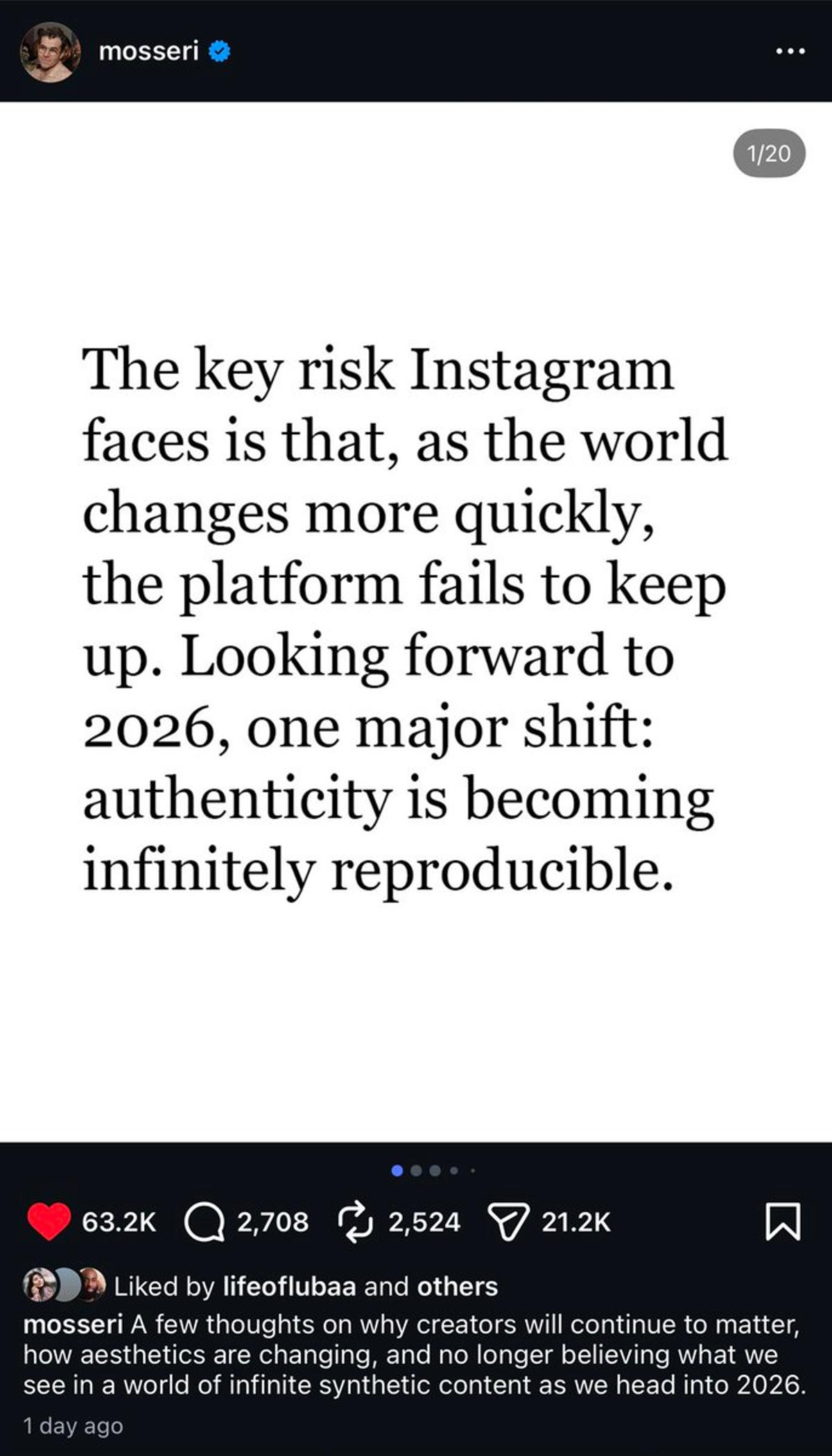
Instagram’s Memo Signals Shift From Growth to Control
Adam Mosseri just shared a twenty-slide year-end memo on Instagram. If you skim it, it sounds like familiar talk about AI, authenticity, and creators. If you read it closely, it lands very differently. This isn’t really about growth. It’s about control. The memo...

Stop Predicting, Start Acting: Build, Write, Think Publicly
I keep seeing people try to predict their way out of uncertainty. That instinct is understandable. It’s also misplaced. What landed for me here is the shift away from prediction theater toward agency, intuition, and learning through action. When speed is...

Prioritize Learning Over Being Right to Empower Teams
The most important thing a founder can give a team is confidence that learning is valued more than being right. That single belief changes how people act when no one is guiding them.

Focus, Not Imagination, Has Become the New Bottleneck
I’ve been noticing a drop in focus. Not in any one person, but across systems and conversations. There was a time when a meeting could hold many ideas at once. We could explore tangents, test half-formed thoughts, and let unexpected connections...

Treat Your Roadmap as a Hypothesis, Ship to Validate
A product roadmap is a hypothesis about user behavior. Shipping is how you interrogate it.

Founder-Led Sales Succeed when Commitment Outlasts Quick Fixes
Founder-led sales works when the founder sounds like someone who will still be there when the easy answers stop working.

Understanding AI Wrappers: Real‑World Examples Demystified
AI wrappers explained IRL

Messaging Debt Escalates Faster than Technical Debt
Messaging debt compounds faster than technical debt.

AI Erases Friction, Amplifies Polished Mediocrity Everywhere
AI makes mediocre taste catastrophic. For most of history, mediocre taste had limits. It cost something to produce, took time to distribute, and required someone to stand behind it. Friction filtered a lot of junk. AI removes the friction and...

AI Reveals How Strong Our Judgment Really Is
AI is a stress test for judgment.

Scaling Founders Excel at Editing, Not Just Creating
Founders who scale well are better editors than creators.

Founder Advice Misses the Emotional Burden They Bear
Most founder advice fails because it ignores what the founder must emotionally carry.

Startups Now Dictate the Standards for Incumbents
This is how it used to be between startups and incumbents. Now the smallest player can shape the environment the incumbent is judged inside. https://t.co/R7sbpfhGV0

Consequences Hide at Scale Until Speed Exposes Them
Most leadership arguments are framed as disagreements about priorities or execution. They’re usually disagreements about where consequence lives. At early stages, consequence is obvious. Decisions land on the people who make them. At scale, consequence spreads, and the system keeps working well...
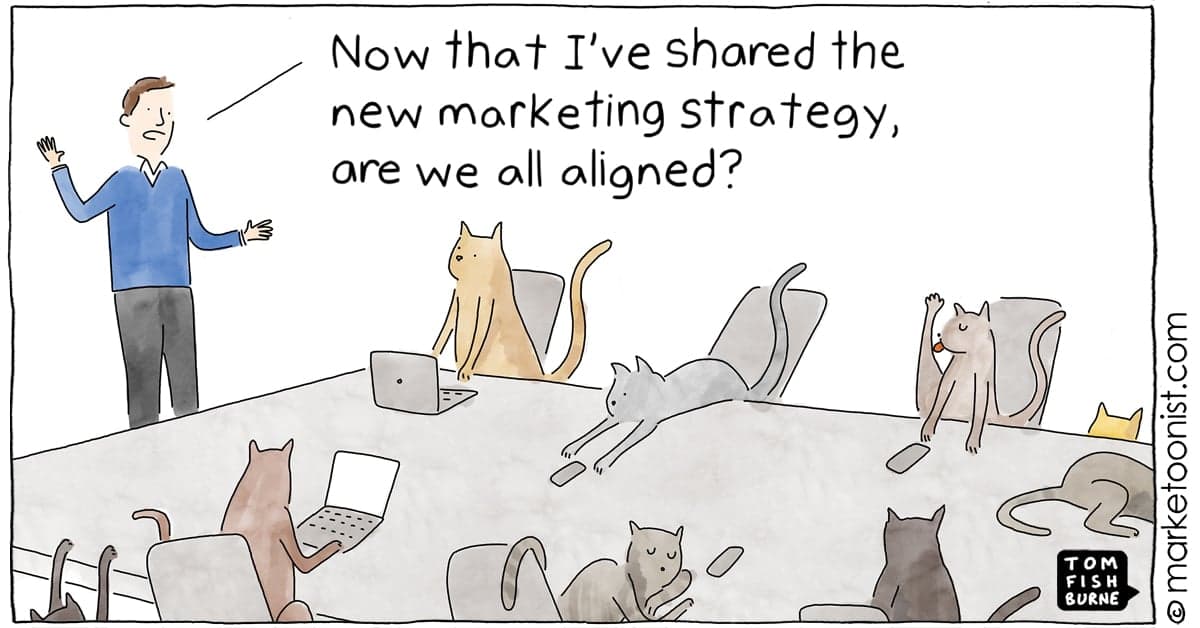
Alignment Doesn't Guarantee Shared Understanding
“Alignment” usually means everyone saw the same slide. It almost never means everyone understands the same thing. https://t.co/YICBdph7Fb

Vision Obsession Masks Avoidance of Concrete Details
Founders who obsess over vision usually do it to avoid specifics.

Learning Shows When Teams Adapt: Design Pressure, Own Outcomes
The fastest way to tell whether a team is learning is to look for moments where someone had to revise their view because reality contradicted it. If those moments are rare, the system is insulated. It may be busy, but it...

Deep Customer Insight Gets Punished by Organizational Incentives
One more layer that’s worth naming. Even when teams talk to customers with good intent, most companies structurally make understanding hard to sustain. The incentives quietly punish it. Deep understanding creates friction. It slows momentum and introduces ambiguity right when leadership wants certainty. So...

Agency, Not Tools, Drives Real Impact
Agency is the scarce resource. Tools are abundant. Information is cheap. Coordination is easy. None of that changes reality by itself. Agency does. Agency is deciding when there is no proof, acting when outcomes are unclear, and remaining accountable after the result shows...

Creation Demands Accountability, Not Just Clever Talk
To create is to take responsibility for a piece of reality. When you create, something exists tomorrow that did not exist yesterday, and you are accountable for how it behaves in the world, not how it sounded in a room....

Founders' Decision Speed Limits Startup Growth, AI Highlights
Every startup eventually hits the same wall. The company can only move at the speed the founder is willing to make irreversible decisions. AI exposes this because everything else can move instantly.

Guard Your Focus: Turn It Into a Competitive Asset
Focus used to be a habit. Now it’s an asset that must be defended. AI constantly invites expansion. Founders who don’t guard focus end up running a portfolio instead of a company.

Speed of Insight Delivery Determines Organizational Progress
Progress is constrained by how fast information moves. It has nothing to do with raw intelligence. Ambition does not fix it. Neither do longer hours. Information has to travel. It has to reach the people who can decide, and it...

Seek Evidence, Not Consensus, to Shrink Startup Risk
Founders often wait for consensus when they should be waiting for evidence. Agreement feels safer, but it does not reduce risk. Evidence does. Risk shrinks fastest when opinions are forced to meet the real world.

Fix Fundamentals Early; Growth Won’t Hide Inefficiencies Later
Growth hides inefficiency the way adrenaline hides pain. It feels good while it lasts. When growth slows, everything surfaces at once. Teams that fix fundamentals early experience fewer emergencies later.

Narrative Gives Meaning to Shipping; Otherwise It's Noise
Shipping answers the question “what changed.” Narrative answers “why this matters.” Without the second, the first just feels like noise.

Truth Latency Drains Energy, Compounds Problems Faster than Metrics
Every organization has a truth latency. The longer it takes for bad news to reach the people who can fix it, the more energy gets spent managing impressions instead of solving problems. That delay compounds faster than any metric.

Dashboards Deliver Data, Not Decisions, Undermining Trust
Dashboards are everywhere now. Nearly every product ships with analytics. What used to signal maturity has become table stakes. From CRMs to design tools to HR software, dashboards show up whether users asked for them or not. And yet, most of them...

Assuming Continuity Costs Companies; Change Arrives Unannounced
The costliest habit in a growing company is assuming tomorrow will resemble yesterday. Change rarely announces itself politely.

Decision Owners Drive Speed; Committees Kill Execution
Speed emerges when decisions have owners. It disappears when decisions have committees. Team size and sign-off count quietly define your execution ceiling.

Clarity Is the Ultimate Leverage for Inevitable Execution
Founders often search for leverage in tools, hires, or tactics. The deepest leverage is clarity. When people know exactly what matters and why, execution stops feeling heroic and starts feeling inevitable.
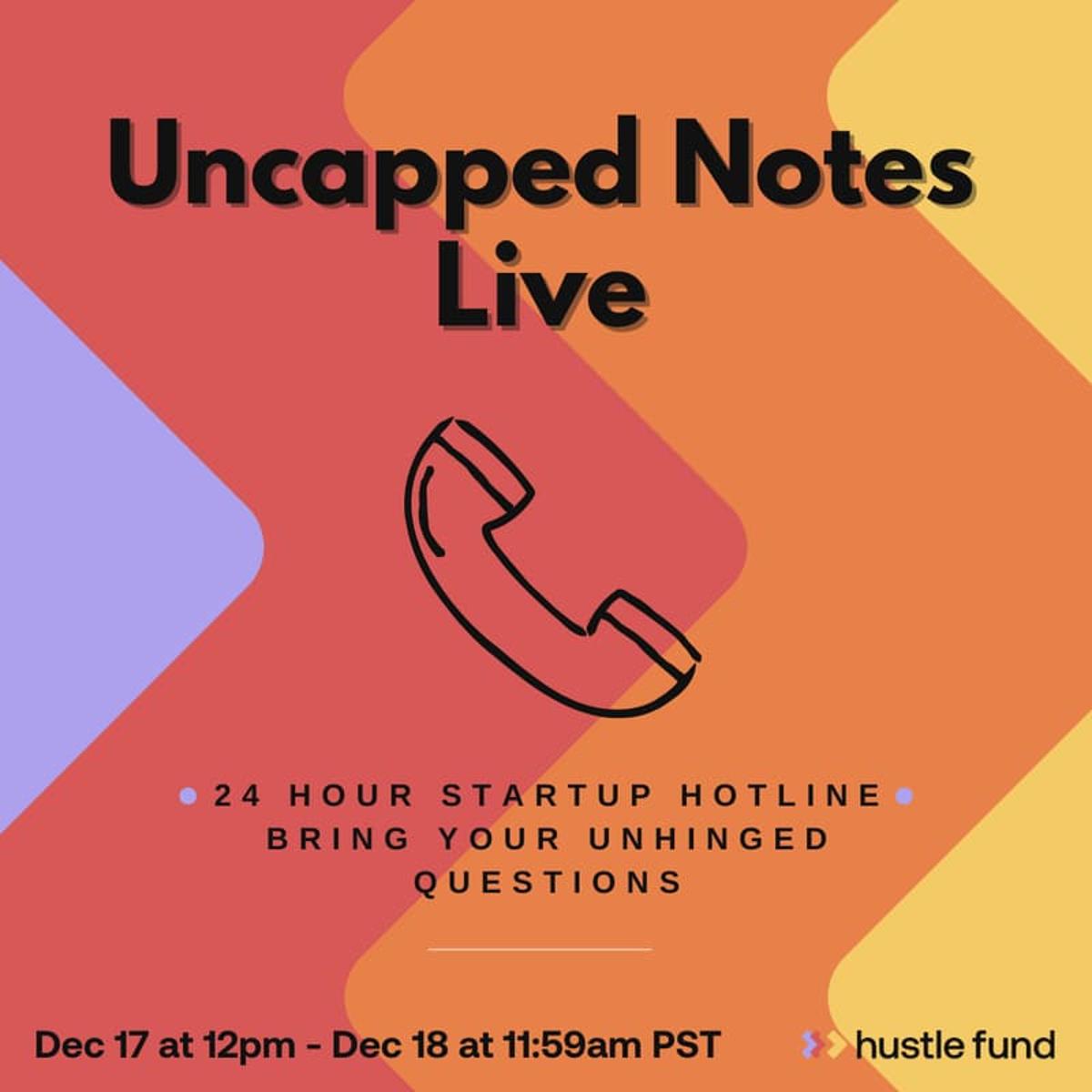
Get Real-Time Founder Advice Before Decisions Harden
Most advice fails for a simple reason. It shows up too late. By the time founders ask for help, the decision has already hardened. Positions are entrenched. Narratives are locked. The cost of being wrong has gone up. Uncapped Notes Live is designed...

How Companies React to Mistakes Reveals Their Priorities
You can learn a lot about a company by watching what happens after a mistake. Do people rush to explain it away, or do they slow down to understand it. One path protects egos. The other protects the future.