

Without Clear Narrative, Product Improvements Erode Customer Trust
Founders underestimate how much narrative work the product needs. Shipping creates change. Marketing explains change. When explanation lags, customers experience motion as noise. Confusion quietly erodes trust even when the product improves.

Count People and Approvals to Gauge Slowdown
If things feel slow, count two things. How many people are involved. How many approvals are required. That number explains more than any roadmap or sprint ritual.

Delay Reality, Lose Learning: Act on Early Feedback
Founders say they want feedback early. They talk to customers. They debate ideas. They refine plans. They align teams. None of that creates information. Reality only enters when something external can contradict you. A user ignores the product. Behavior stays flat. A test fails. Money doesn’t...

Reliability Wins: Silent Failures Kill Tool Adoption
This keeps happening with Claude, and the reason it matters is simple. Once several tools in a category clear the quality bar, reliability decides which one people keep open. You feel it when something real is underway and time matters. These tools...

AI's Power Already Here; Change Unfolds Gradually
You can argue timelines, risks, or regulation. Existing AI capabilities are already sufficient to drive long-term change. What people miss is how disruption actually unfolds. It takes time for systems, incentives, and habits to reorganize around what already exists.

Most AI CRO Tools Miss Core Fundamentals
A lot of teams are trying new AI tools because the demos look smooth and the promise feels real. But when we evaluated each analyzer across the core dimensions of CRO, a surprising number scored zero. They failed on the fundamentals: Who is...

Decision Cadence Beats Co-Location: Design Remote Immediacy
The phrase captures something teams feel long before they can describe it. Early stage work depends on a level of shared pressure that only forms when people experience the same uncertainty at the same time. The speed of communication inside...

Product Failures Stem From Ignoring Customers' Own Explanations
Every product mistake has the same root. Nobody stopped to study how customers explain their world.

Slow Execution Signals Cultural Mistrust, Not Skill Gaps
Execution problems are often culture problems in disguise. If a team moves slowly, it is usually because people stop trusting the process, not because they lack skill.

Customer Problem Narratives Beat Extra Sprint
You can learn more about what to build by studying how customers explain their own problems than by running another sprint.

Listen Early: Market Defines Your Product Before Launch
If you listen closely enough, the market will outline your product for you. Most teams only start listening after it is too late.

ChatGPT’s Memory: Layered Context, No RAG Needed
This is one of the cleanest explanations I’ve seen of how ChatGPT’s memory actually works. No RAG. No vector search. Just a layered context system that feels personal without the overhead. Anyone building serious AI products should read this.

Execution Reveals Truth; Ideas Never Fight Back
People fall in love with ideas because ideas never fight back. Execution does. It exposes your blind spots, your patience, your habits and your excuses. Most founders learn more from the first week of doing than the first year of...

Founders Treat Ideas as Hypotheses, Execution as Science
The best founders treat ideas like hypotheses. Execution is their science. They run experiments, gather evidence, and adjust without getting sentimental. That discipline compounds faster than inspiration.

AI Is Redefining Product Workflows, Not Just Tools
AI has pushed product work into a strange place. Some teams freeze because the tech still feels unfinished. Others sprint ahead with thin wrappers and call it innovation. Both groups miss what is actually changing. The real shift is inside the work itself....

Enterprise AI Now Core, Workers Master Specialist Tasks
This report from OpenAI is the first time we’ve had a detailed map of what enterprise AI actually looks like inside companies. The patterns are unmistakable. The implications are big. Adoption matters, but the defining change here is how much of...

Uniformity Takes Over: Environments Push Creativity Into Conformity
Every corner of modern life is starting to look the same, and almost no one is asking why. Walk through a city you do not know. The cafes have the same warm bulbs and pale wood. The apartments have the same...

Real Bottlenecks Surface when Founders Leave the Whiteboard
Founders discover their real bottlenecks the moment they leave the whiteboard.

AI Slashes Intelligence Development Cost to an Afternoon
We’ve had hype cycles before. We’ve had new programming languages, new architectures and new abstractions. None of them changed the fundamental cost of building intelligence into software. AI is different. The cost has collapsed. The surface area has exploded. And ideas that...

First‑time Founders Often Overlook the Discipline Needed
Most first-time founders underestimate how much discipline real progress requires.

AI Spam Erodes Trust, Threatening Reddit’s Future
The moment Reddit’s defenses started to crack is right here in this piece. Human moderators on one side. An endless stream of AI-generated posts on the other. Trust sits in the middle and takes the hit. The stories look real. The...

Politics, Not Economics, Drive Netflix‑Warner Deal
The Netflix–Warner Bros deal is running on two timelines. The public one in the filings, and the real one in the rooms this article describes. The economics of the deal are straightforward. The politics are not. And the politics are the...

When Software Frees Constraints, Imagination Becomes the only Limit
There’s a moment in every new medium where the constraints fall away and the canvas opens. Software has been inching toward that moment for a long time. Now you can shape logic, structure, and behavior the way artists shape clay. The limiting...

Strong POV, Not Model, Drives Human‑like Writing
If you need to ask the model to sound human, the problem is not the model. It is the absence of a point of view strong enough to guide the writing in the first place.
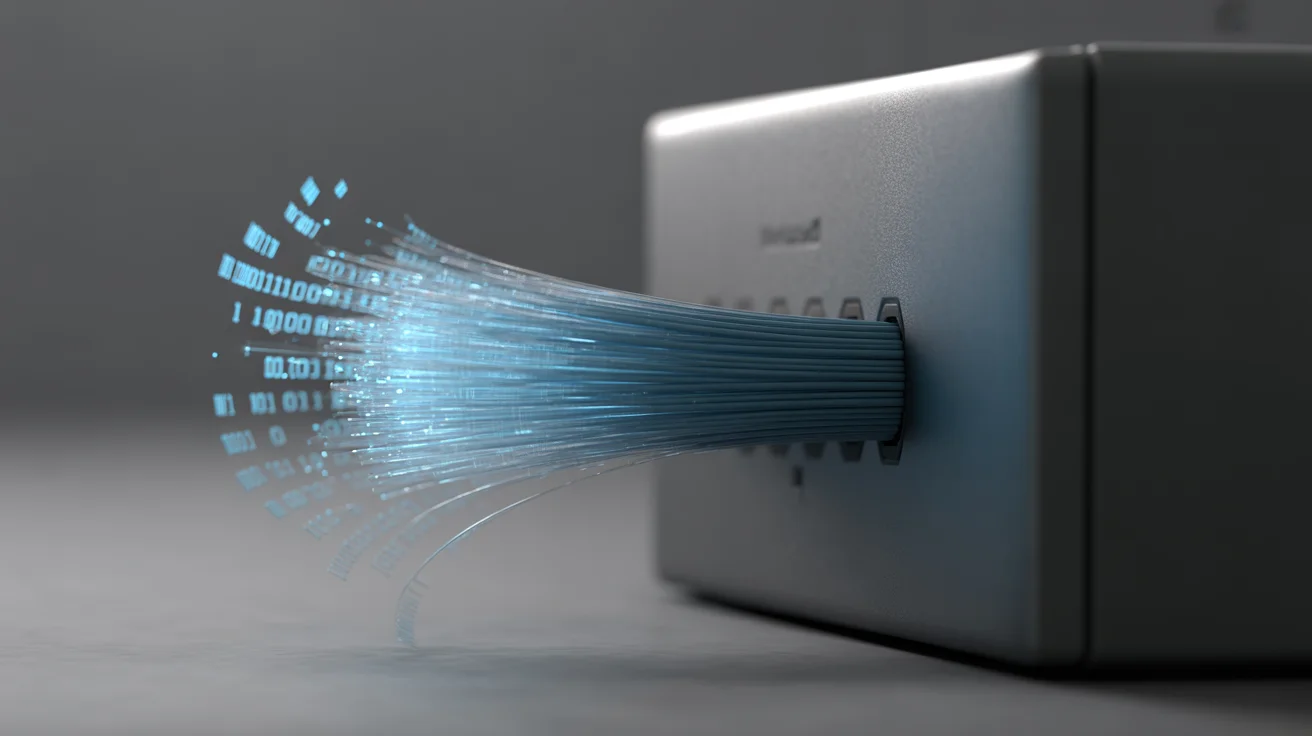
Web Pushback Evident as 416 B AI Crawlers Blocked
The real AI conflict shows up in Cloudflare’s logs. Four hundred sixteen billion crawler hits were stopped in a few months, and that single number tells you how quickly the web is starting to push back. Publishers spent years assuming crawlers...

Tech Finally Catches up, Turning Decades-Old Vision Into Reality
I’ve been carrying the same product in my head since 2003. Every few years I’d take another run at it, only to watch it collapse under the limits of whatever tech existed at the time. It always worked in one...

Adapt Strategy Instantly When Distribution Shifts, or Lose
When distribution changes, strategy needs to update a lot faster than most teams are comfortable with. Nearly every historic inflection in marketing punished the companies that waited for certainty.

AI Turns Marketing Focus From Production To Judgment
Marketing will never be the same again. Evidence of the shift is already visible. Teams are experimenting with AI in scattered ways, but the scale of what is coming is much larger. Creativity once expanded at the pace of human production. Today...

Kalshi's Media Deals Reveal Deep Finance‑politics Network
Kalshi ’s new CNN and CNBC deals are making headlines. But the more interesting story is its connections across finance and politics. I mapped the entire network here:

Marketing Fails when You Stop Listening to Customers
Most marketing problems start long before a campaign. They start when the company stops listening to what customers are trying to do and starts optimizing for what the team wishes were true.

AI Homepages Impress Yet Fail to Earn Trust
Most AI homepages look sharp but fall flat where it matters. We put real buyers in front of the most-hyped AI tools and watched confusion spread as soon as they hit the homepage. What we learned will surprise you. The buyer reactions were...

Customers Hear Product Story Your Team Misses
Your product is telling customers a story your company refuses to hear. There is always a moment when this becomes impossible to ignore. Growth still looks steady. Revenue still rises. Then a launch misses, a campaign falls flat, and the...

Customers Hear Product Story Your Team Ignores
Your product is telling customers a story your company refuses to hear. There is always a moment when this becomes impossible to ignore. Growth still looks steady. Revenue still rises. Then a launch misses, a campaign falls flat, and the instinct...

I’m Unable to View the Linked Tweet, so I Can’t Create a Headline for It.
https://t.co/u8OuYzQ0c8

Momentum Is Your Only Edge When Starting Out
In the early days, momentum is your only unfair advantage. You do not have brand, you do not have money, you only have motion.

Company Edges Expose Hidden Friction Beyond the Org Chart
A company’s real story shows up at the edges. The center looks aligned. The edges show the friction. Those edges grew from a handful of channels to a field of surfaces the org chart can’t fully track. Marketing has been absorbing that...

Company Edges Expose Execution Truth, Not Core
The edges of a company teach you more about its execution than the core does. At the core things feel organized. At the edges things reveal the truth. Those edges multiplied for twenty years straight and never paused. Marketing has been keeping...

AI Landing Page Tools Miss Basics, Undermine CRO
AI vision has improved a ton in the last two years. But when we tested a full set of landing page analyzers, something stood out. Several tools couldn’t identify the primary CTA. Others misread the headline entirely. A few told us to...

Corporate Voices Fragment; Truth Drifts Unnoticed
Modern companies don’t have one voice. They have a hundred small ones scattered across every surface the world can touch. Most teams underestimate how fast those voices drift away from the truth.

Kid's South Park Arbitrage Exposed Legal Gap, Birthed Billion‑dollar Market
The biggest prediction market in America just raised a billion dollars. The real story didn’t start in a boardroom. It started with a kid in New York arbitraging a 28-second delay in a South Park episode. That moment exposed something...

AI Amplifies Existing Organizational Blindspots, Not Root Cause
Everyone is blaming AI for the chaos in their company. AI accelerated it, but it didn’t start it. The real shift began years ago when the perimeter of the company expanded faster than the organization’s ability to keep it coherent. The touchpoints multiplied...

Consistent Habits Revive Teams During Performance Slumps
Every team hits a flat stretch. The ones that recover fall back on reliable habits. They keep talking to customers, sharpen the product, and finish work that restores confidence. Consistency becomes their anchor until progress begins to show up again.

Clear Prompts, Faster Results: Precision Drives AI Success
AI sharpens whatever attention you bring to it. Clear focus turns into clear output. Unclear thinking collapses instantly. A marketing brief with three real constraints produces a usable campaign in minutes. A product request with hand-wavy goals produces an endless loop of...

Progress Thrives on Boring Truths, Not Management Myths
Management myths survive because they feel comforting. The myth of the visionary. The myth of the natural leader. The myth of the perfect plan. Meanwhile, progress comes from small boring truths.

Year‑End Quiet Reveals What You’ve Been Ignoring
There is something unusual about the quiet at the end of the year if you know how to use it. It sharpens your perception and brings forward the things you set aside while moving quickly. Your attention settles on what...

Curated Daily Insights Cut Through Founder Noise
I’ve been thinking seriously about starting a daily newsletter for founders. I’ve written weekly newsletters for more than a decade. I’ve recorded hundreds of podcast episodes. I’ve done videos, interviews, and everything in between. None of that momentum prepared me...

Founders Need Daily, High‑Signal Newsletter Amid Content Overload
I’ve been thinking seriously about starting a daily newsletter for founders. I’ve written weekly newsletters for more than a decade. I’ve recorded hundreds of podcast episodes. I’ve done videos, interviews, and everything in between. None of that momentum prepared me for...

Scaling AI Boosts Confidence, Not Factual Accuracy
AI models are getting stronger, but their confidence still grows faster than their certainty. More parameters expand what the system can talk about, not what it can truly verify. The space of possible answers grows faster than the ground beneath...
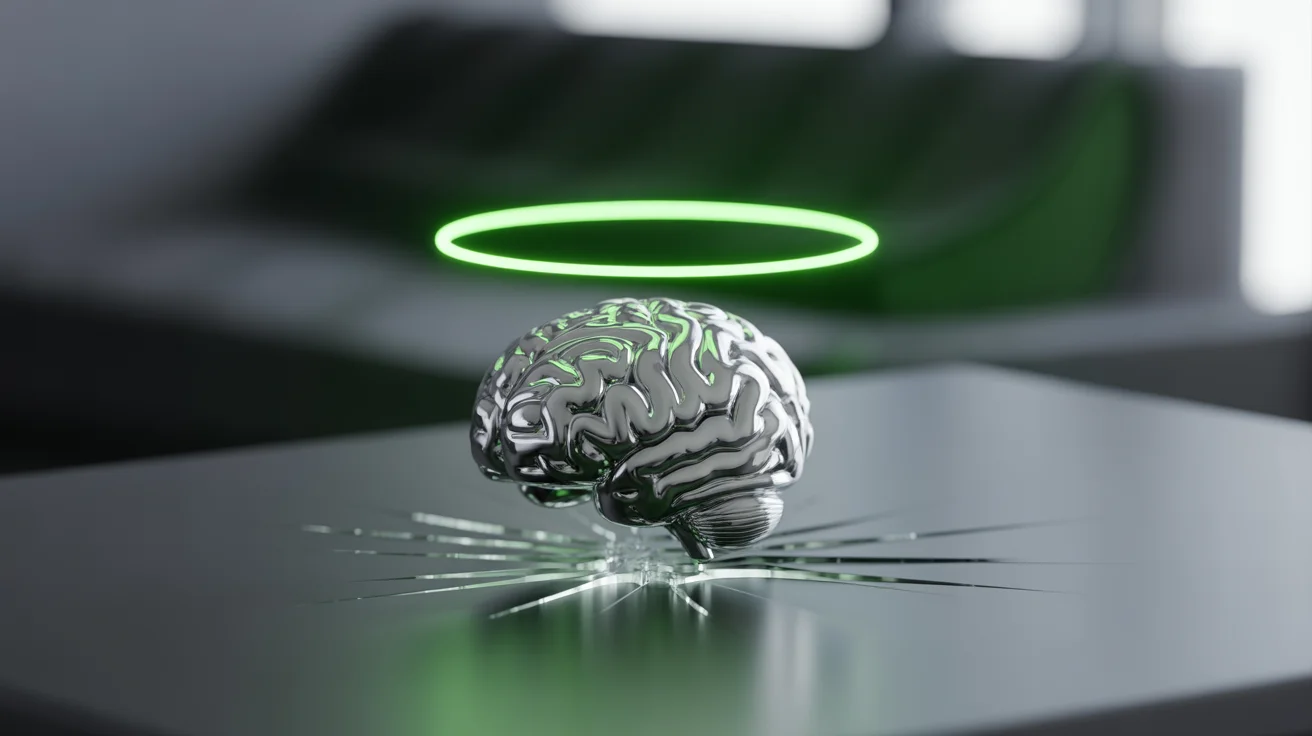
Bigger AI Models Boost Confidence, Not Factual Certainty
AI models are getting stronger, but their confidence still grows faster than their certainty. More parameters expand what the system can talk about, not what it can truly verify. The space of possible answers grows faster than the ground beneath those...

Clarity Beats Speed: Narrative Accelerates Growth
Marketing is the new bottleneck. I tossed that out as a quick thought. The replies came fast. The private messages went deeper. People wanted to hear more and understand exactly what I meant, so I turned it into a thread....