
Spain's Power Grid Turns Renewable Majority by 2026
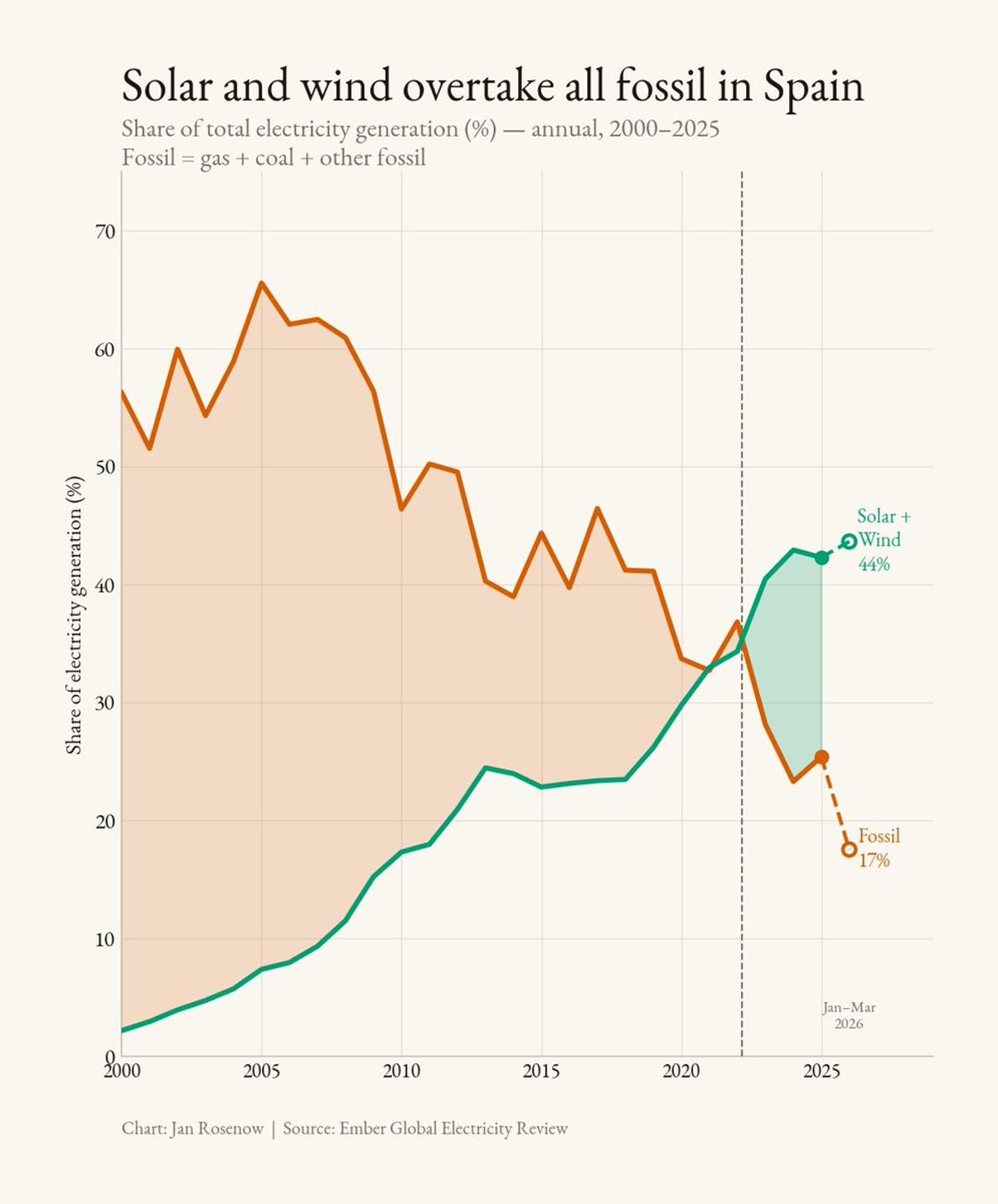
🇪🇸 Spain's electricity in 2000: 56% fossil, 2% solar & wind. By 2026: 44% solar & wind, just 17% fossil. The crossover came in 2023. Gas now sets the price only 15% of the time vs 89% in Italy. More in my forthcoming Substack newsletter 👇 https://t.co/In5lBaF2ox https://t.co/Cg0ONbwVvd
Industrial Fossil Dependence Exposed; 90% Could Go Electric
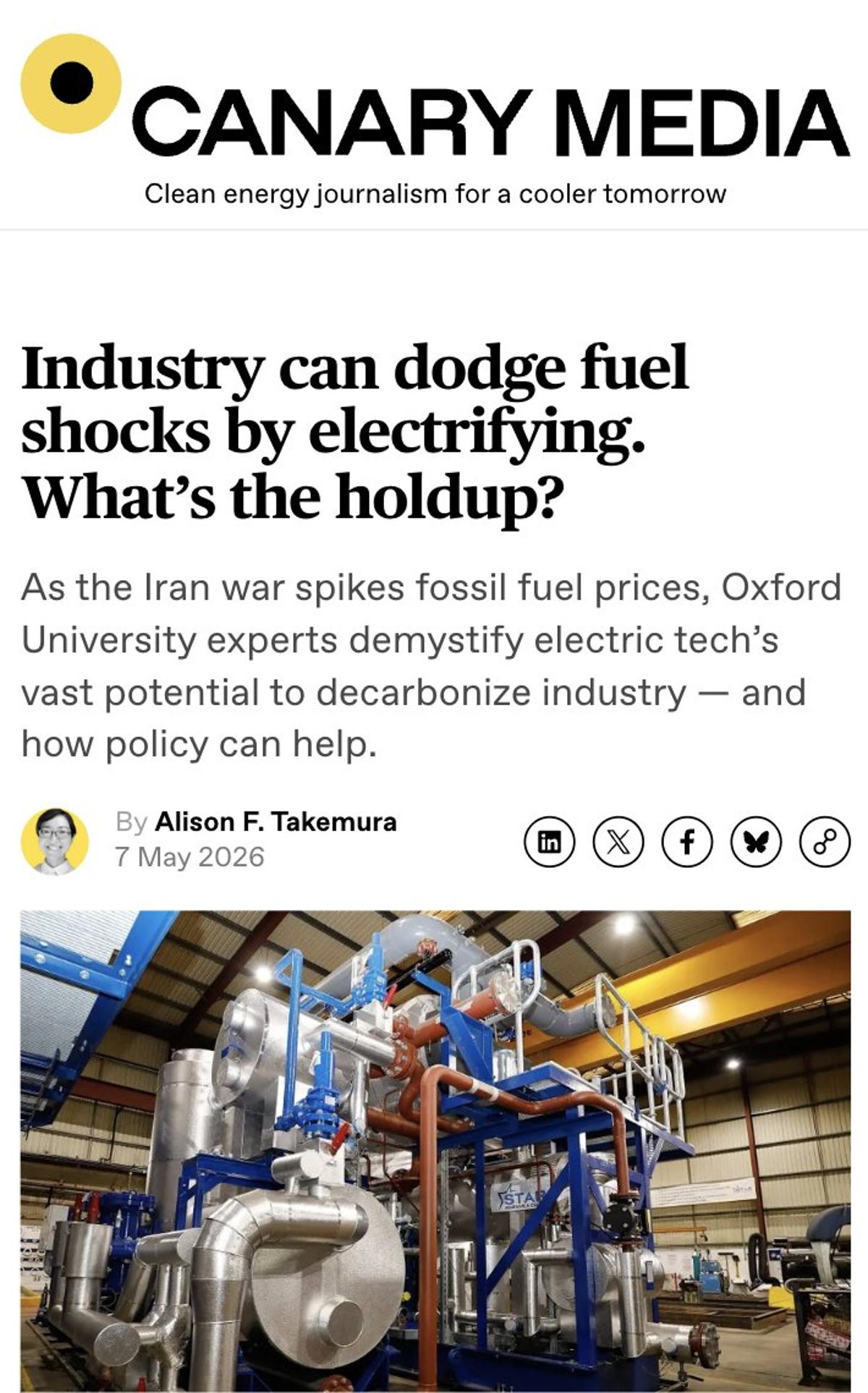
Fuel shocks keep exposing the same structural weakness: industry hooked on fossil fuels has nowhere to hide when supply is disrupted. @CanaryMediaInc covers our High Voltage report showing up to 90% of industrial energy demand could be electrified.. https://t.co/COOap1S5DF https://t.co/64Y1YG9UqI
EU Electricity Decarbonizes, yet Overall Energy Remains Fossil‑dependent
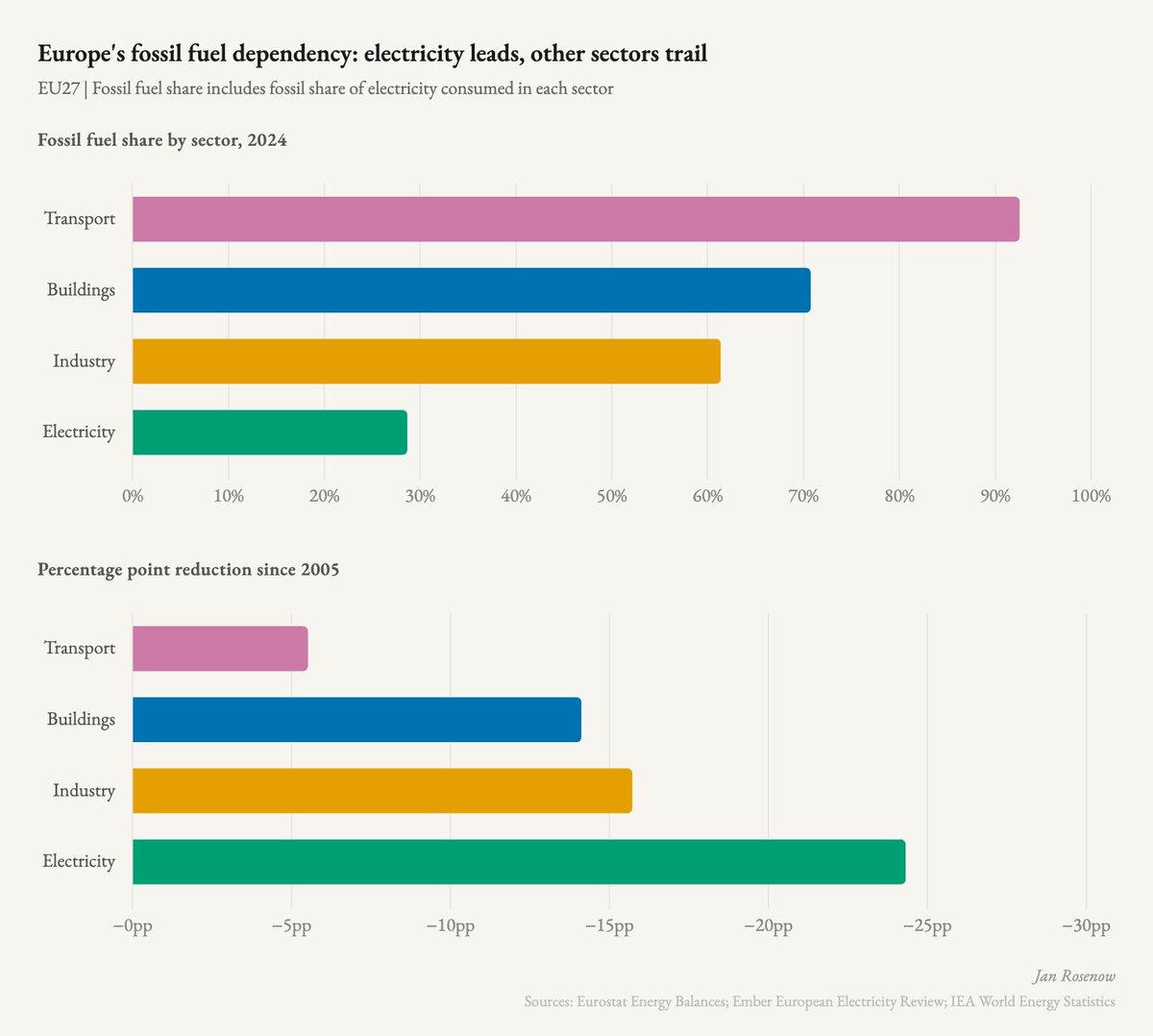
Europe's electricity: 29% fossil fuels in 2024, down from 53% in 2005. But electricity is only 23% of total energy. Buildings: 71% fossil. Industry: 61%. Transport: 93%. And 95% of EU oil and 88% of gas still imported. More in my Nature...
European Heat Pump Sales Surge Amid Rising Fossil Fuel Costs
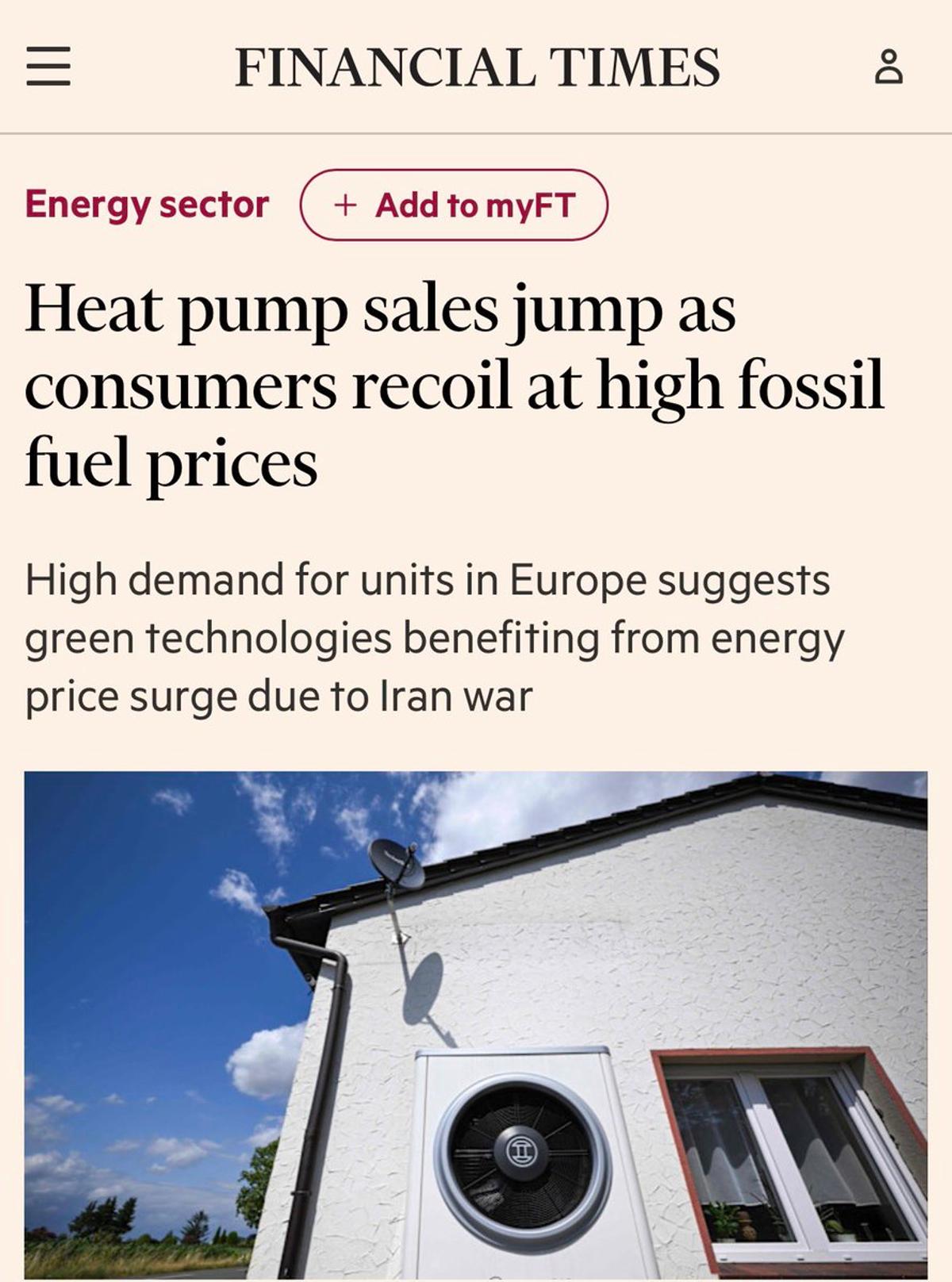
🚀 Heat pump sales are surging across Europe and high fossil fuel prices appear to be a key driver. Q1 2026 data from the European Heat Pump Association shows: 🇩🇪 Germany: +34% 🇫🇷 France: +21% (300,000+ units in just one quarter 🇫🇮 Finland:...
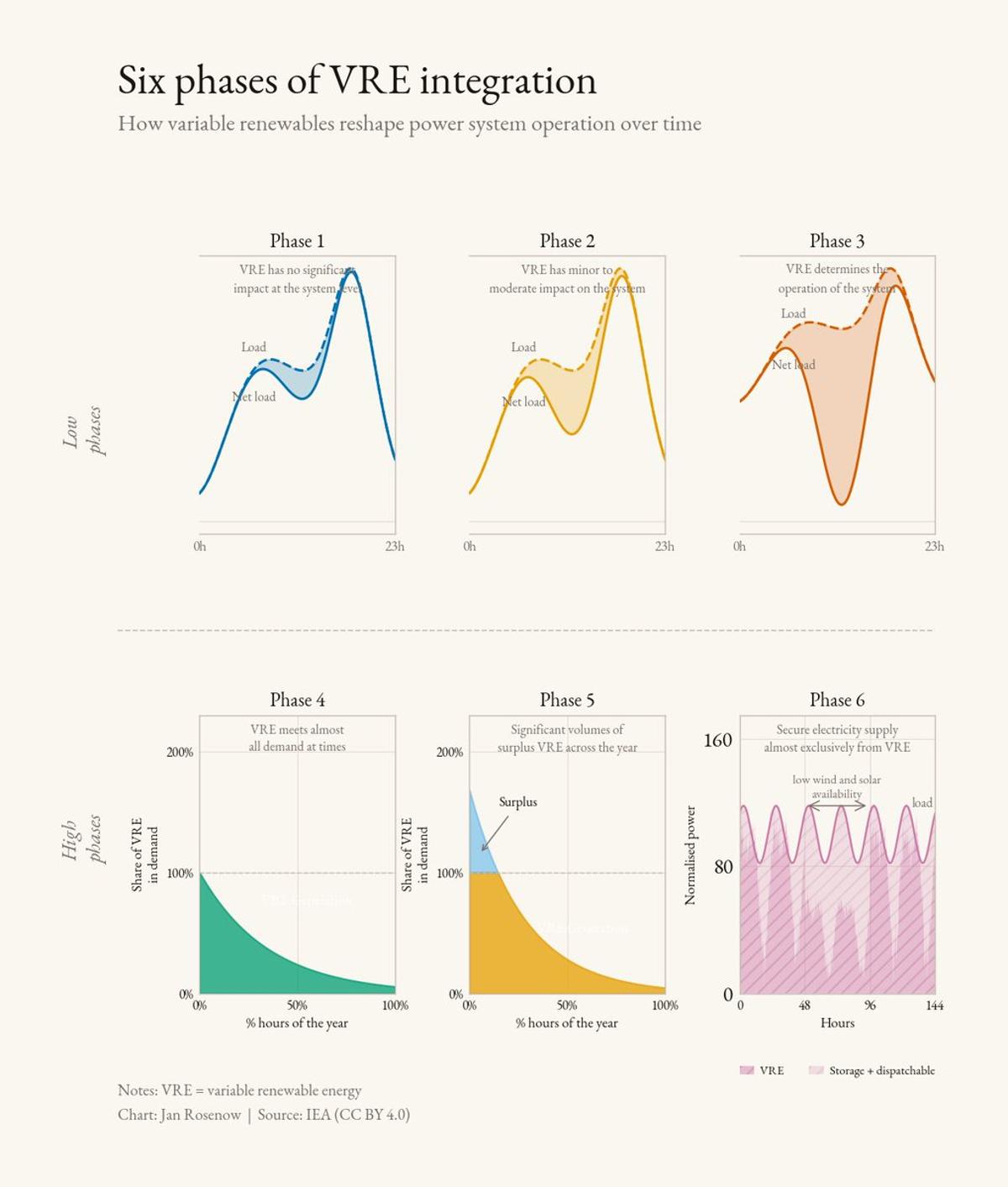
Countries Advancing to Smart Grid Phases 4‑6 in Renewable Integration
6 phases of renewable energy integration: @iea.org lays out typical challenges and how countries are solving them. Several are already in the high phases (4–6), where grids go from "building enough" to "operating smarter". A useful mental map to understand where countries...
Renewables Ensure Energy Security Beyond Gulf Turmoil
Once renewables are built, they deliver power regardless of what happens in the Gulf. Energy security and clean energy are the same argument. 🎙️Was on Al Jazeera's Counting the Cost this week on how the Iran war is reshaping global energy. https://t.co/aCqud4oP8x
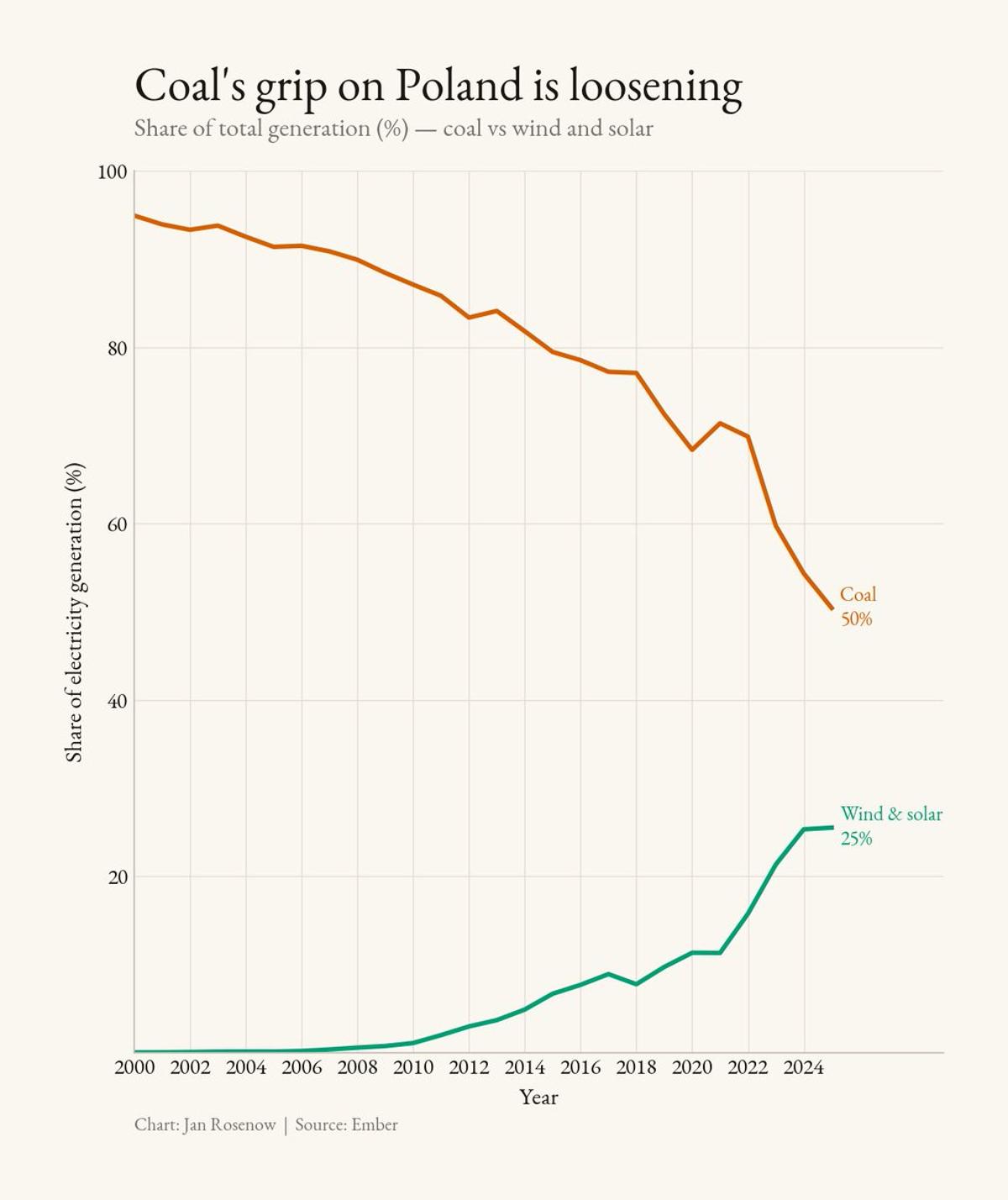
Poland Cuts Coal Power to Half, Renewables Rise
Poland is often seen as Europe's coal stronghold. In 2000, coal generated 94% of its electricity. But something remarkable is happening: Coal's share has fallen to 50%. Wind+solar now generate 1/4 of electricity. More in my newsletter: https://t.co/In5lBaF2ox https://t.co/udhBwAzxTC
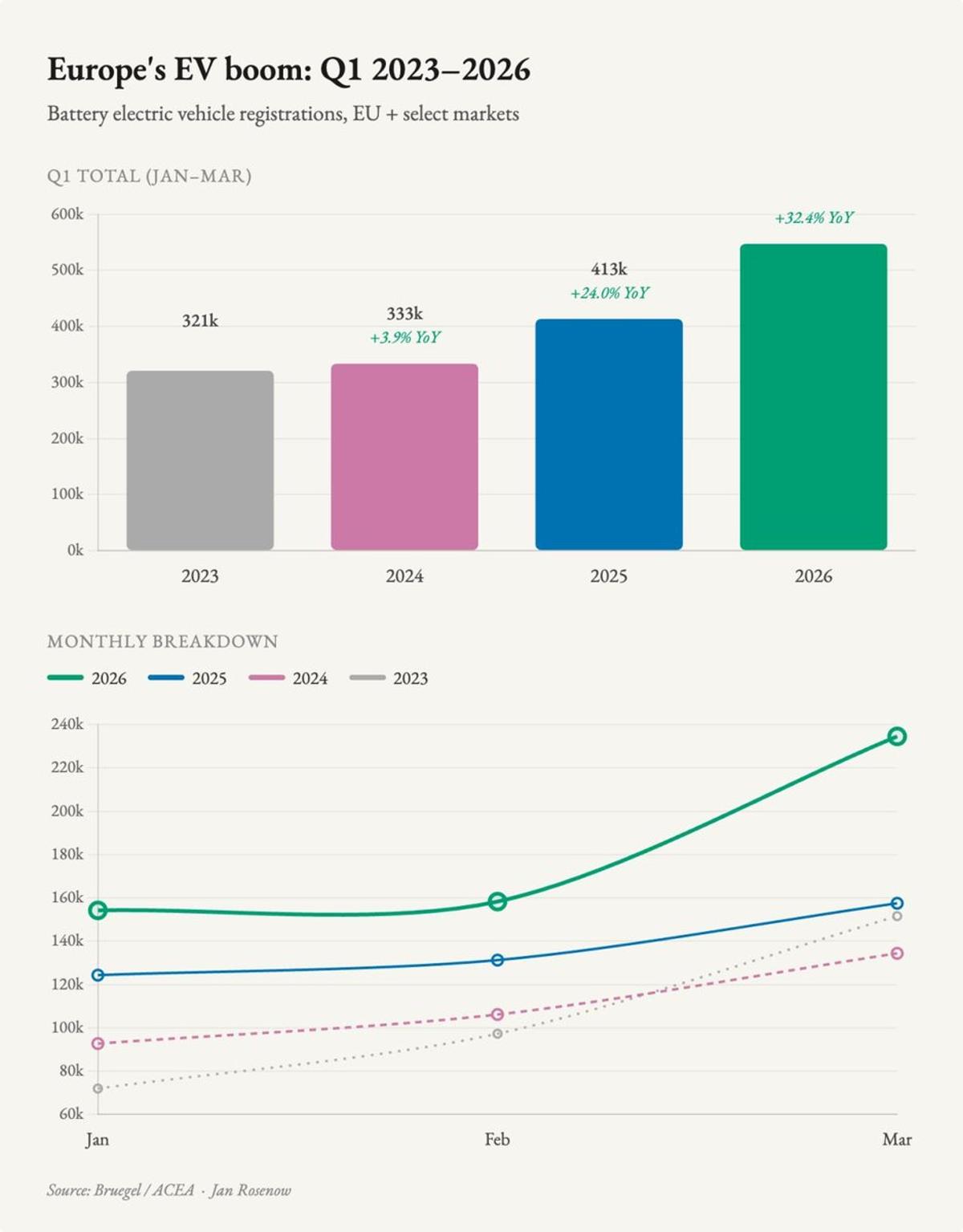
Europe EV Registrations Surge 50% YoY in March
Since the Middle East war began Europe's EV market has been accelerating sharply. Q1 2026 registrations hit 547,000 — up 32% on the same period last year. But the real story is March 2026 with almost 50% more than in...
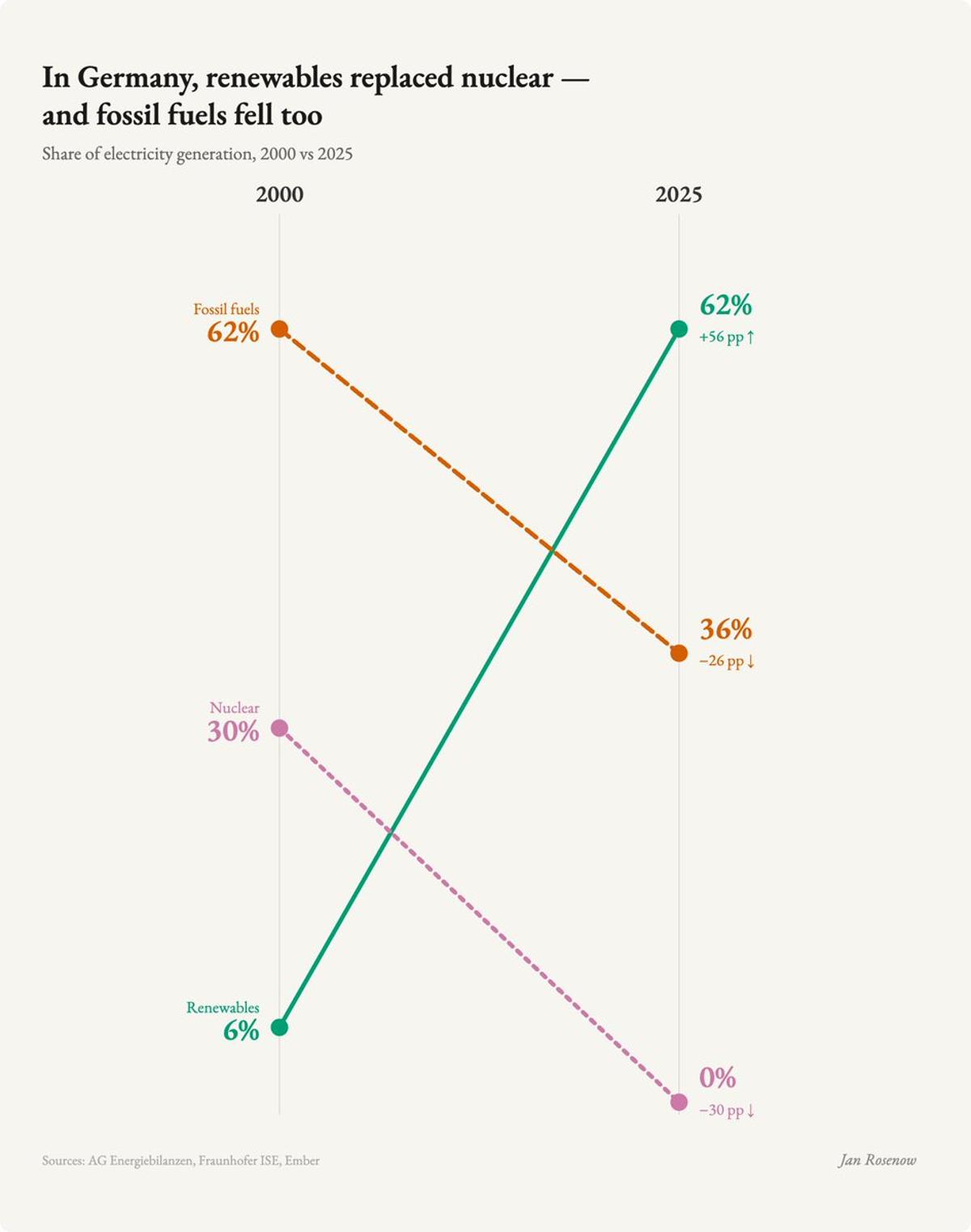
Germany Replaces Nuclear with Renewables, Cuts Fossil Share
Germany's electricity mix, 2000 vs 2025: Renewables: 6% → 62% Fossil fuels: 62% → 36% Nuclear: 30% → 0% Nuclear's exit was filled by renewables, not coal or gas. Want more of this content + more detail and links to sources? Subscribe to my Substack:...
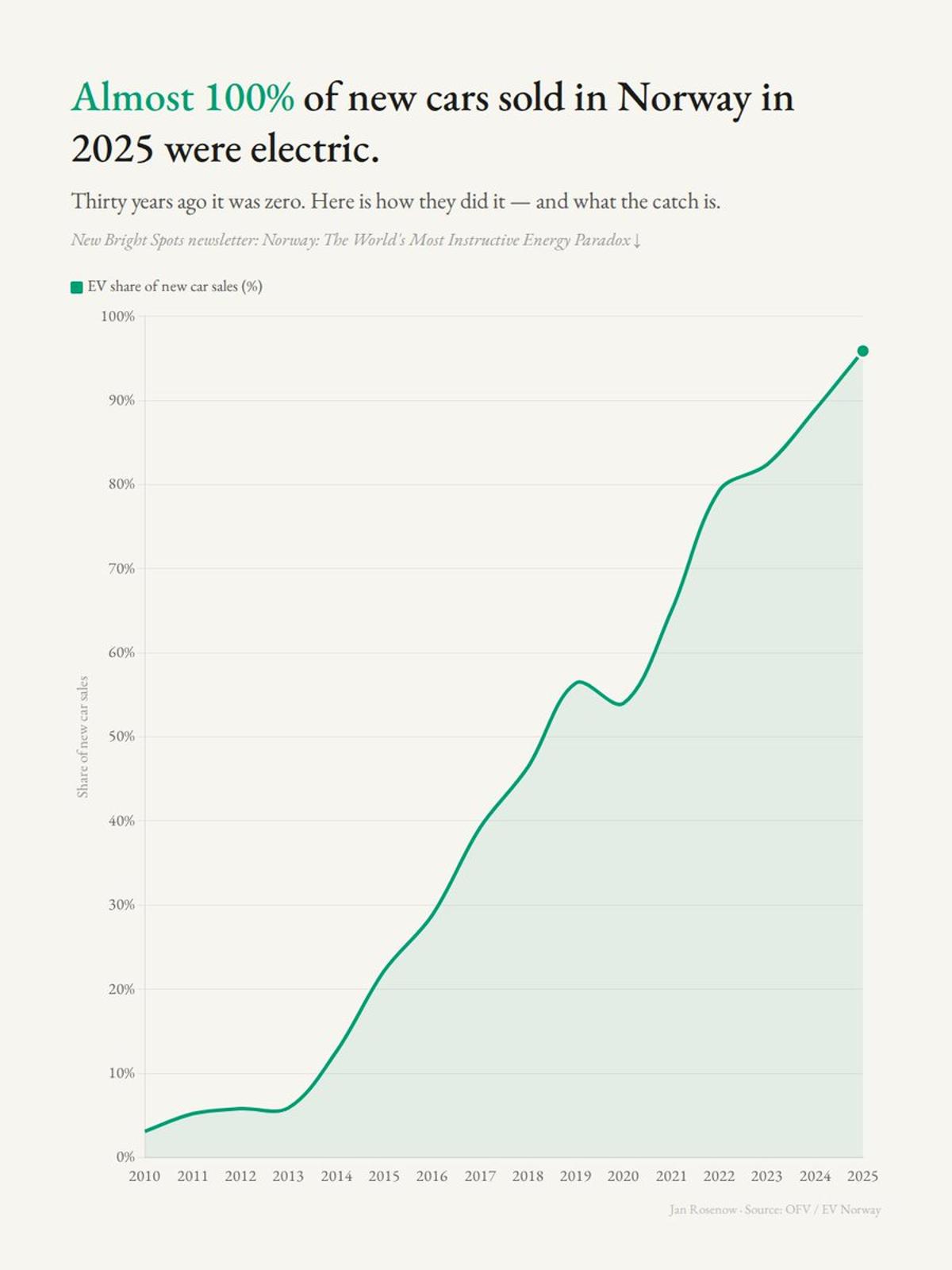
Norway’s Near‑Total EV Adoption Driven by Policy, Not Oil
Almost 100% of new cars sold in Norway last year were electric. Not just because of oil wealth. Because of carbon taxes, EV incentives, and thirty years of consistent policy. New newsletter: Norway: The World's Most Instructive Energy Paradox https://t.co/C28R4nPhww https://t.co/ob3Qw4x01u
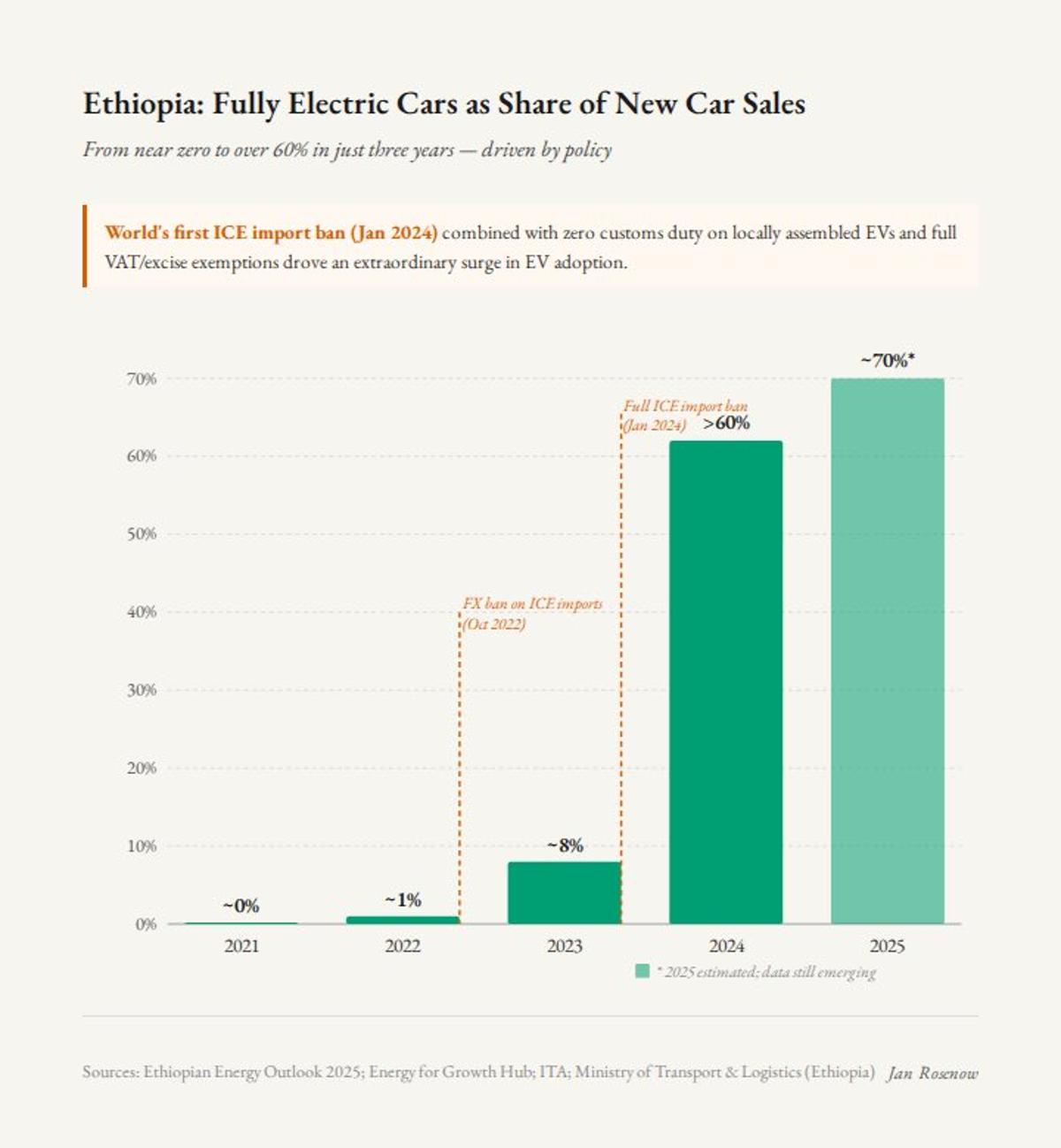
Ethiopia Surpasses Europe: 60% New Cars Are Electric
In 2024, more than 60% of new cars sold in Ethiopia were fully electric. That’s not a typo. Ethiopia is one of the world’s least motorised countries. It now ranks alongside global EV leaders by share of new car sales. Ahead...
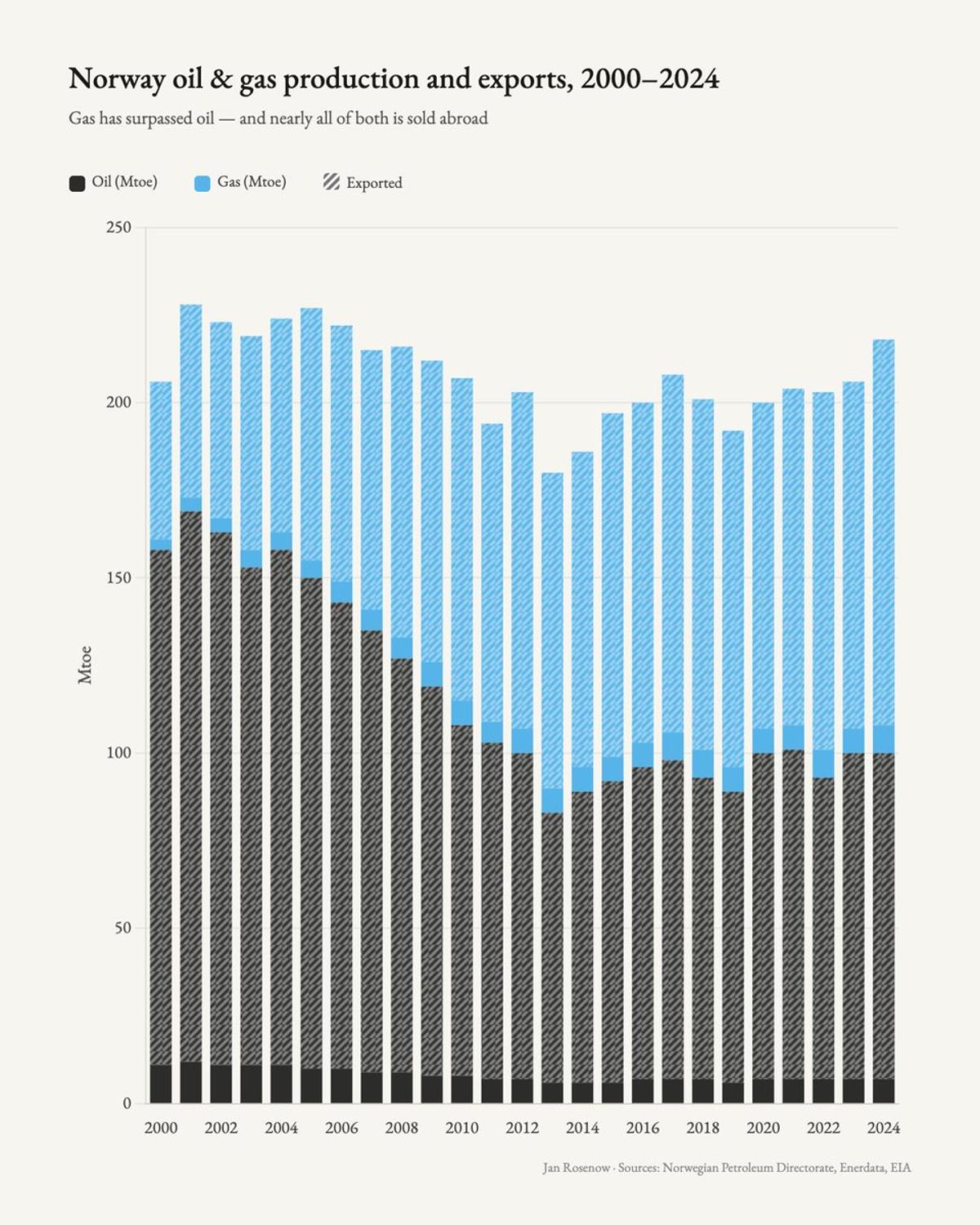
Norway's Green Image Masks Massive Fossil Fuel Exports
Norway: close to 100% EV share. Near-zero carbon grid. Heat pumps everywhere. Also Norway: still exporting 2 million barrels of oil a day & gas exports have more than doubled since 2000. This chart shows the contradiction. Newsletter dropping soon 👇 https://t.co/nBMZPS4HTp...
Geopolitical Turmoil Directly Raises UK/EU Household Energy Bills
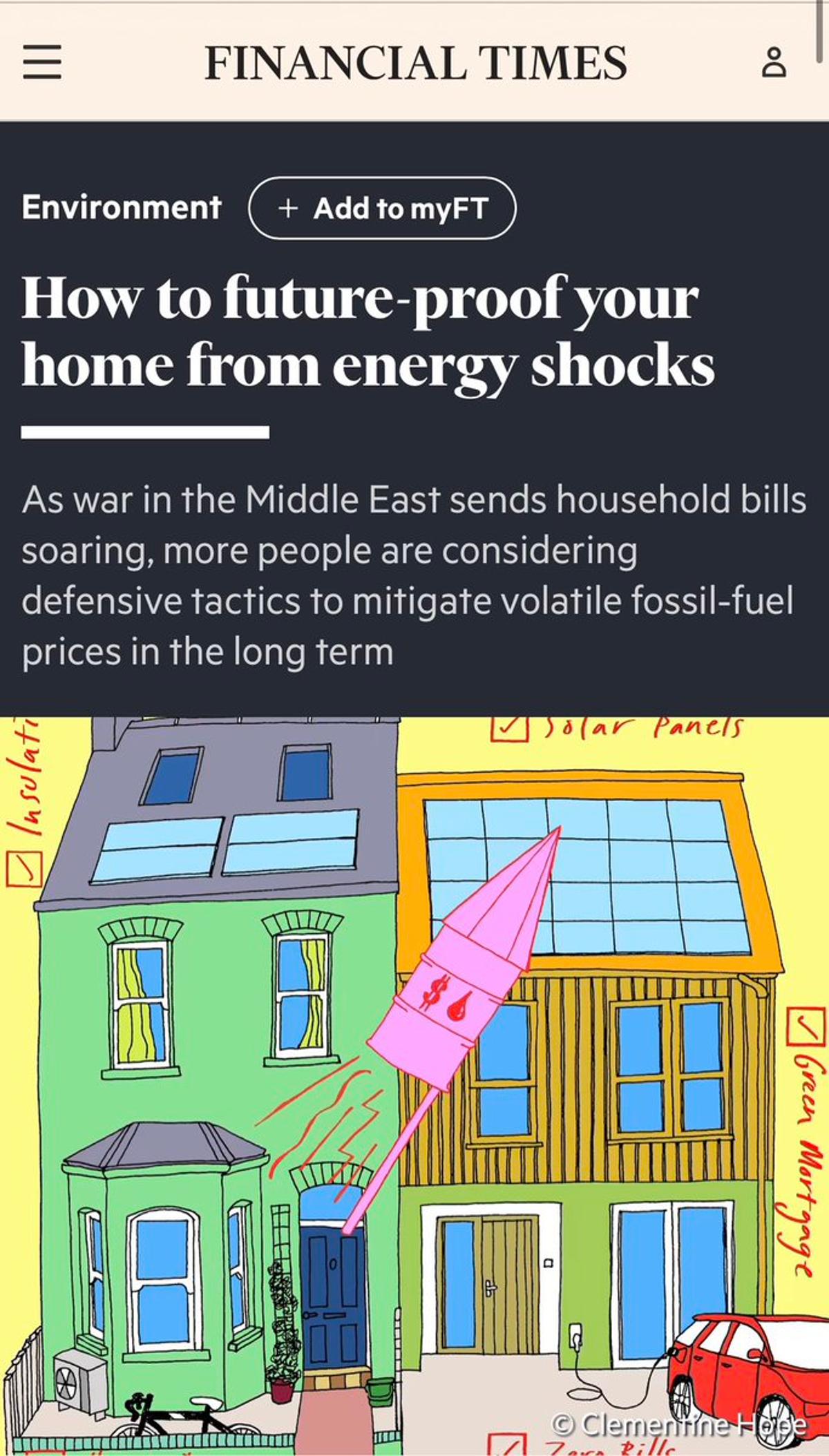
Me in FT today: “Given that around 80 per cent of UK and European energy still comes from fossil fuels and a large share of that is imported, every geopolitical shock becomes a household bill shock.” More below. https://t.co/qH7tYyZDBT
Celebrating 500 Subscribers to Bright Spots Substack
I just hit the first 500 subscribers to my new substack 'Bright Spots'. Bright Spots is about finding the places where the transition is actually working and asking why. Subscribe here for more: https://t.co/nBMZPS4HTp https://t.co/1NPsCqVu8g
Norway Powers Ahead: Two‑Thirds of Homes Use Heat Pumps
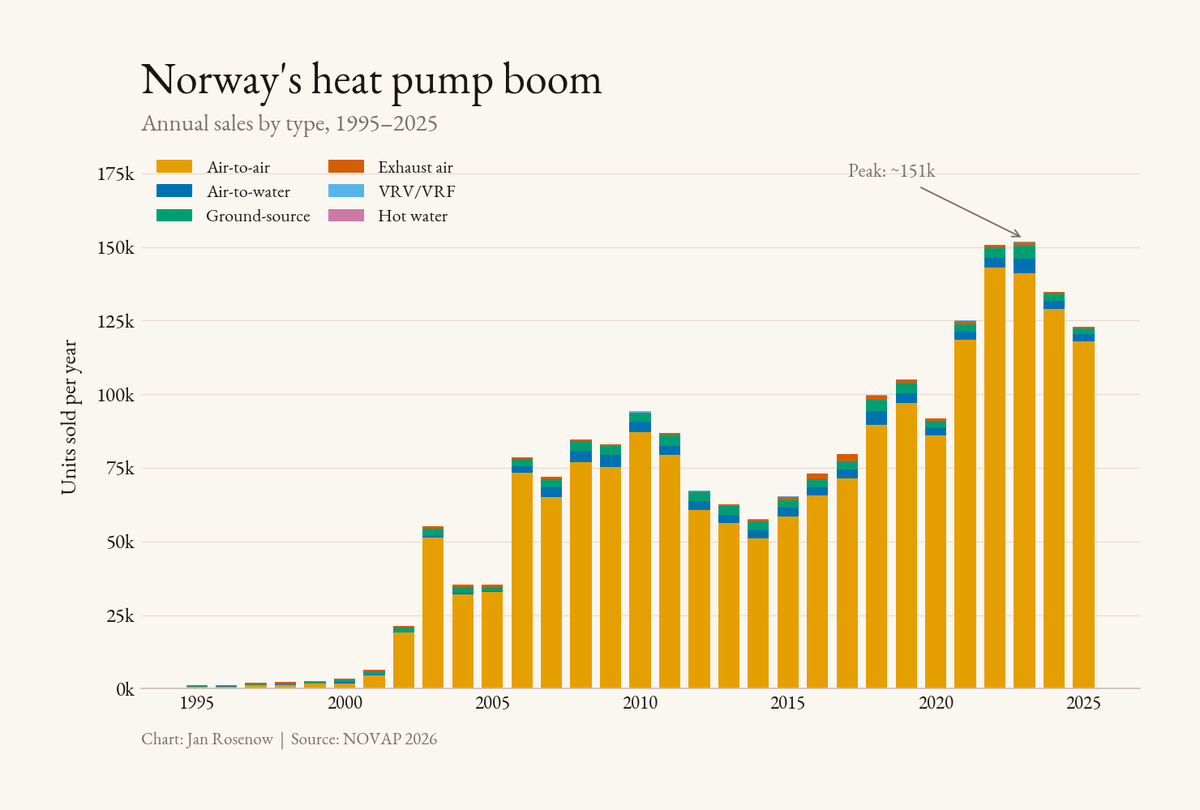
Norway is the heat pump king of the world. They achieved the highest penetration of heat pumps anywhere in the world with now 2/3 of all homes using heat pumps. More in my next Bright Spots substack newsletter. Sign up here...
Renewables Cut Spain’s Wholesale Power Prices by 40%
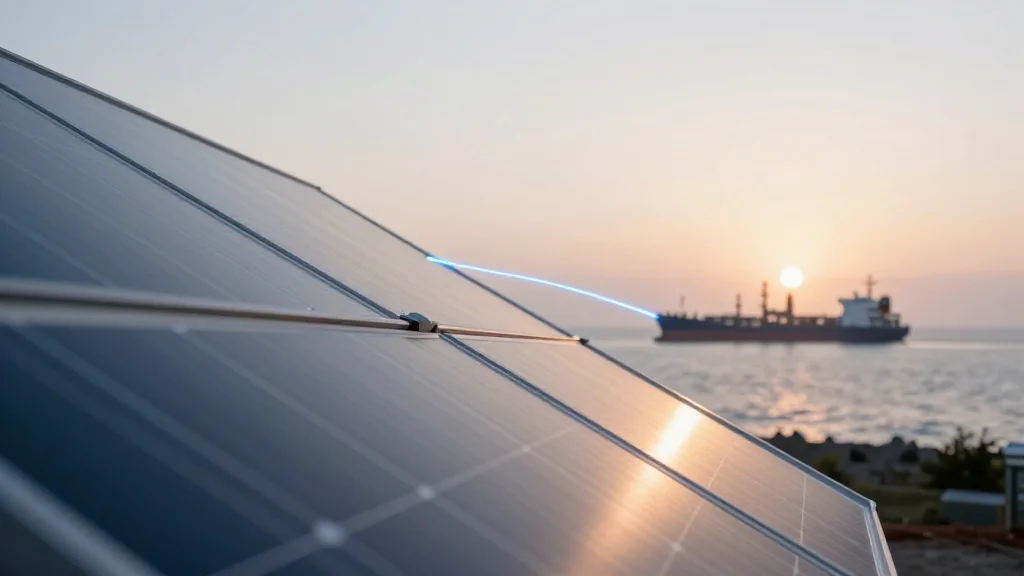
Quoted in @guardian: A year ago Spain's grid collapsed. Solar was blamed, return to fossil predicted. Investigations found voltage failures. Then Hormuz closed. Spain was shielded as renewables cut wholesale prices by 40%. https://t.co/O5YBLqWtCI
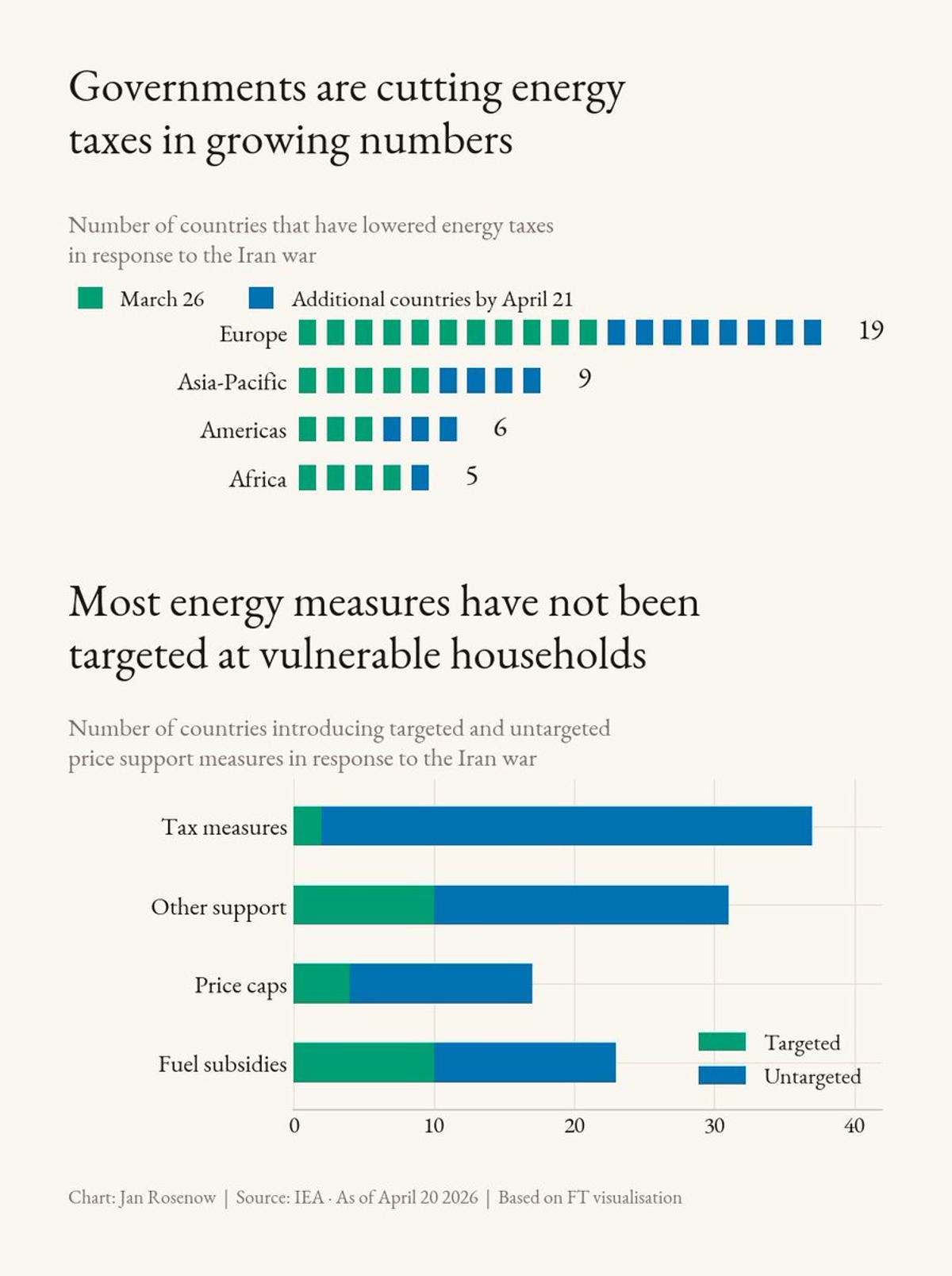
Untargeted Energy Subsidies Raise Costs, Stifle Alternatives
39 countries cut energy taxes after the Iran war. Politically popular but self-defeating: untargeted subsidies blunt the price signals, lead to higher demand, cost the tax payer significantly more and provide less incentive to invest in alternatives. https://t.co/KoAEnXNhOy
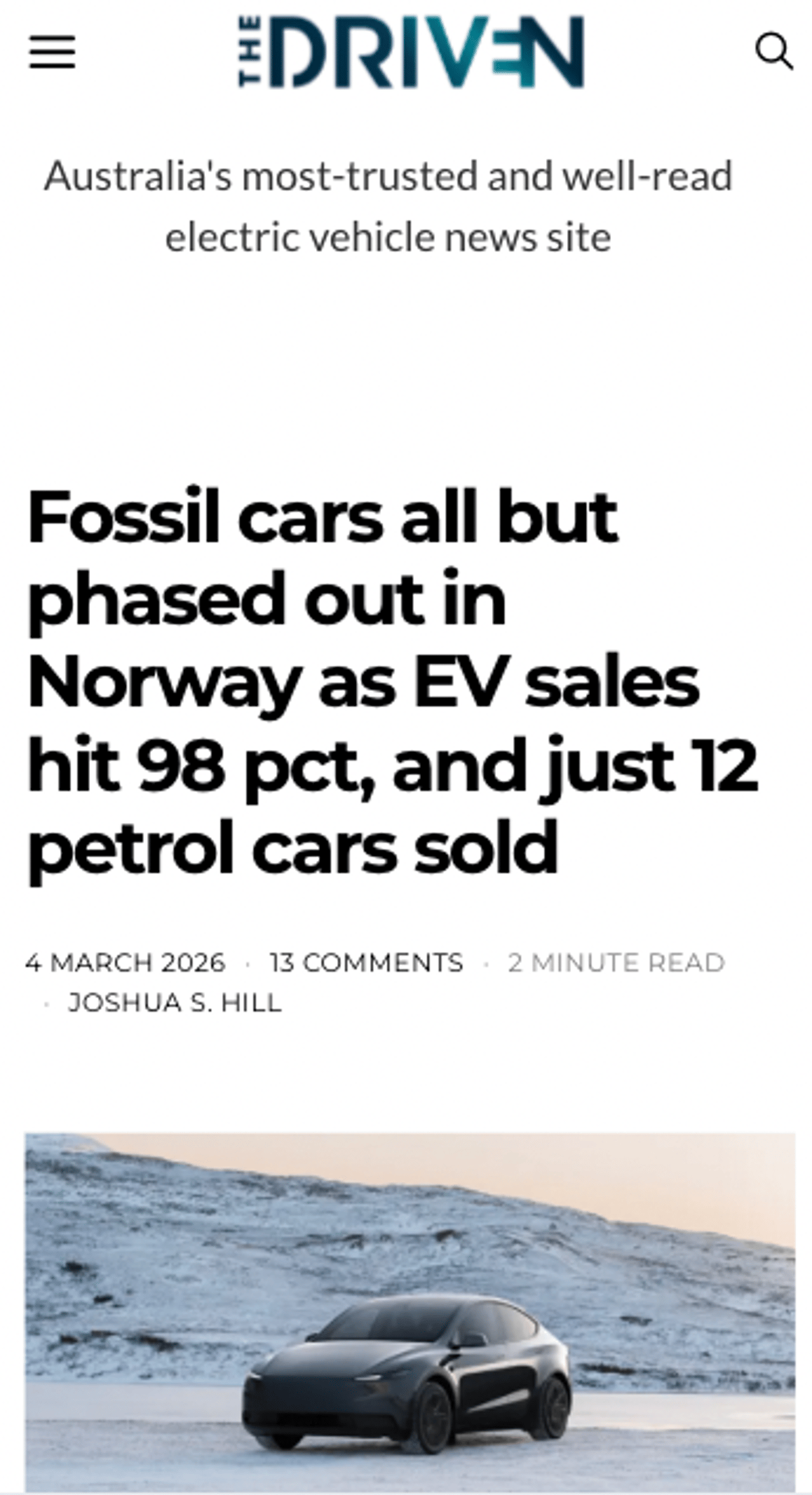
Norway Registers 98% Electric Cars, only 12 Petrol Sold
Norway sold 12 petrol cars in February 2026. Out of 7,272 new passenger car registrations, 98% were fully electric. Just 67 diesel & 12 petrol cars were registered. More in my new Substack newsletter coming out every 7 days. Sign up here:...
Free Weekly Energy Transition Newsletter Launches with Bright Spots
I just launched a Substack newsletter. Every week I'll be writing about the energy transition. The first issue is out today. I include a section called Bright Spots — good news from the transition every week. Please subscribe - it is completely...
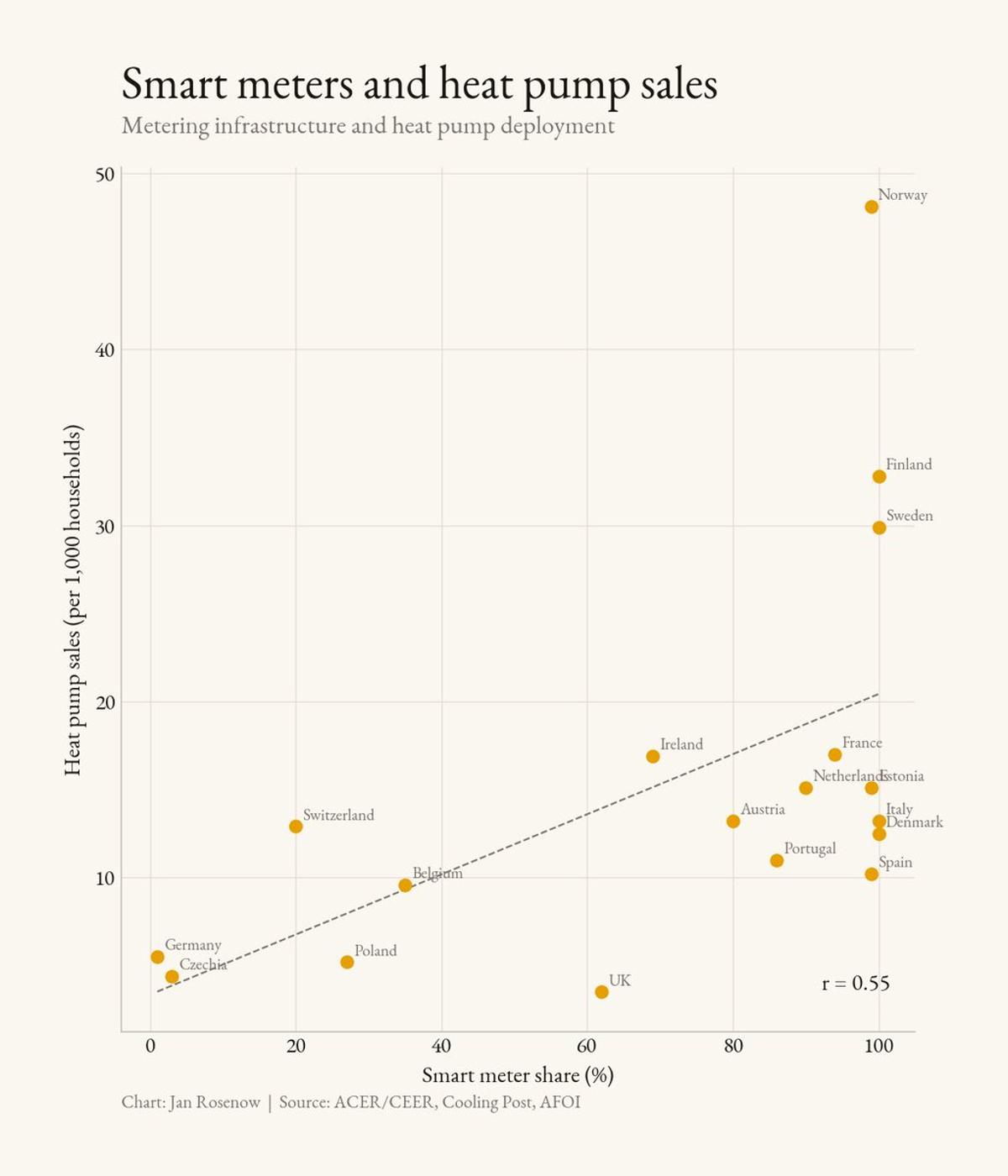
Smart Meters Boost Heat Pump Adoption via Cheaper Tariffs
Countries with more smart meters sell more heat pumps. There are many other factors. Correlation does not mean causation. But smart meters matter for heat pumps: time-of-use tariffs make running heat pump cheaper if run smartly. From our recent paper https://t.co/TZNlDZwmhE https://t.co/mIurezQBZc
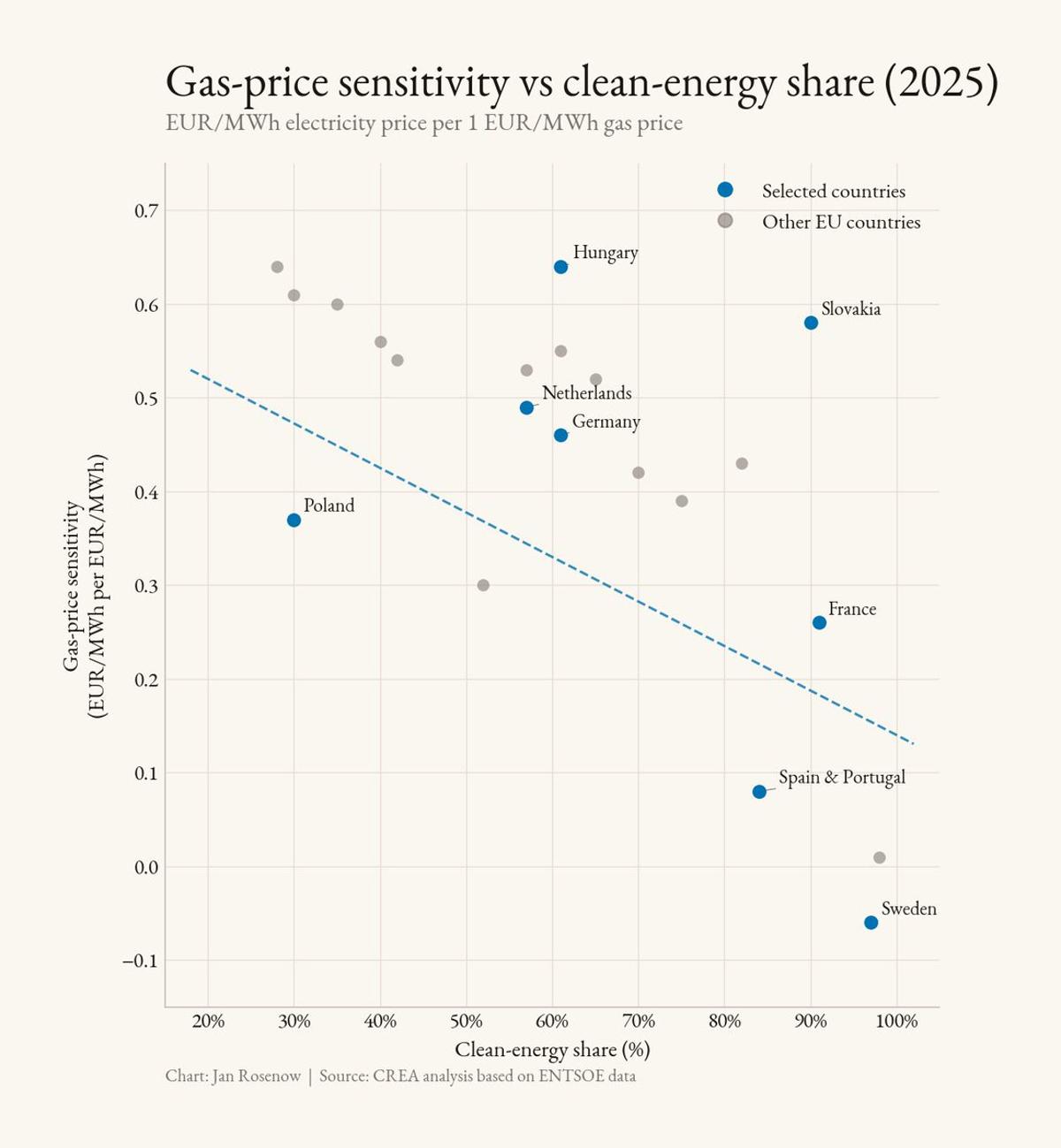
Clean Energy Buffers EU Electricity Costs During Gas Spikes
The more clean energy a country has, the less it pays when gas prices spike. The chart shows electricity price sensitivity per €1/MWh rise in gas across EU countries in 2025. @CREACleanAir https://t.co/izKNUNPQwJ https://t.co/l6HAQKC1fi
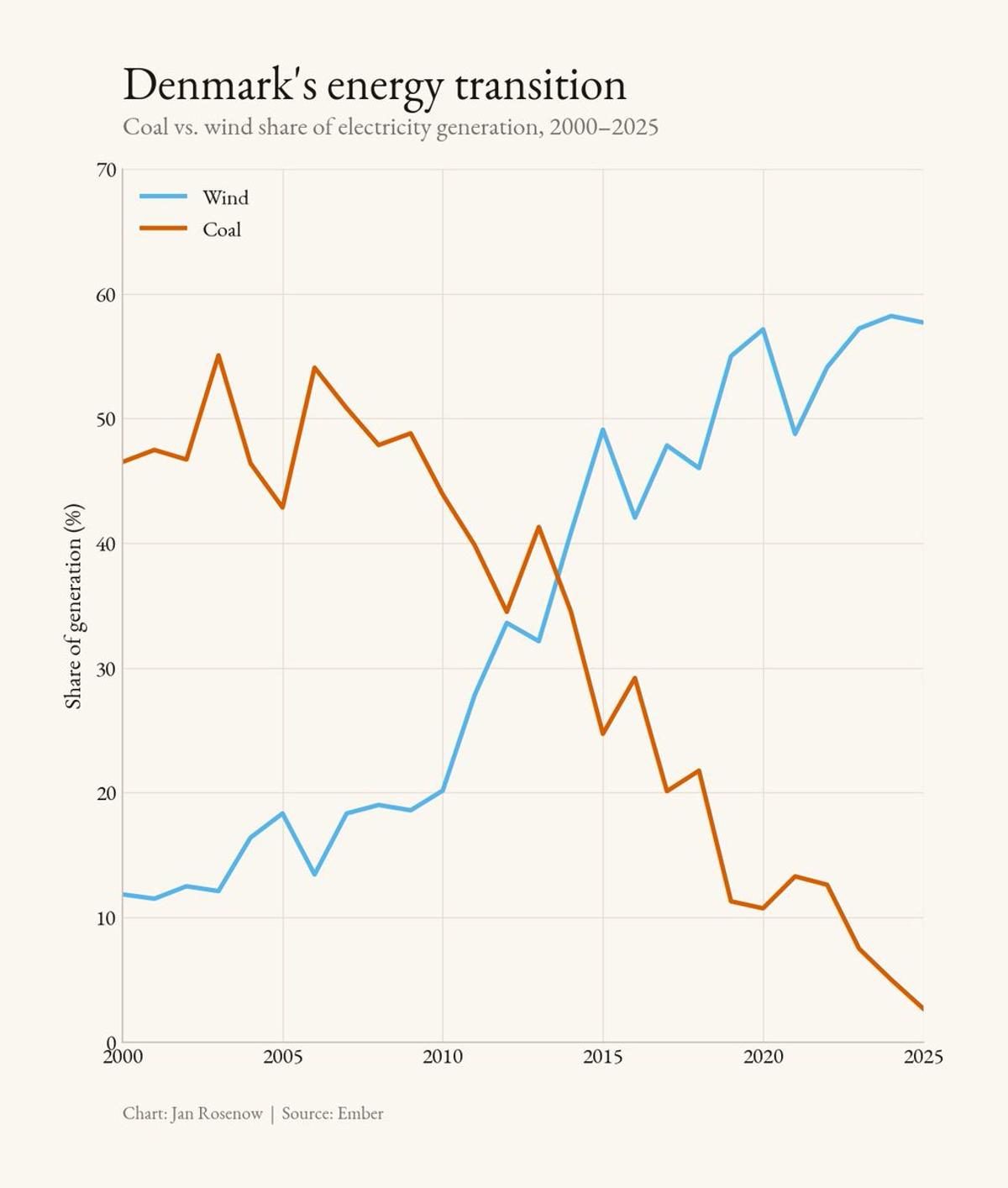
Denmark Swaps 90% Coal for 60% Wind
Denmark's coal-to-wind transition is one of the most dramatic energy transformations of the past three decades. In 1990, coal provided 90% of Danish electricity. Today it is under 3%. Wind now covers roughly 60% of electricity generation. https://t.co/vfwOET4gUg
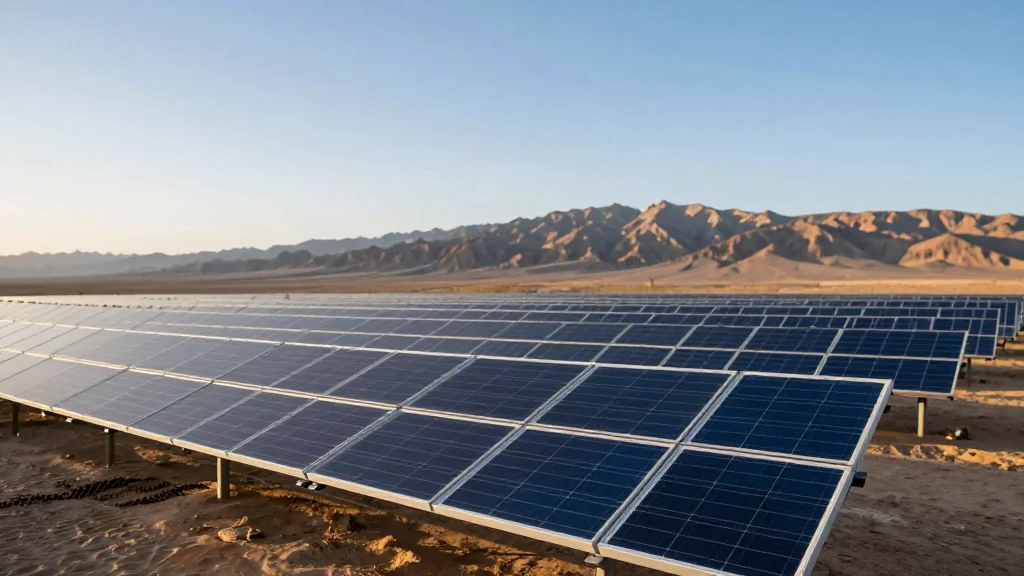
Pakistan's Solar Surge Becomes Nation's Top Power Source
Pakistan went from near-zero solar to its single biggest electricity source in a decade. The current energy crisis will further accelerate the transition across the globe. Quoted in @news.rte.ie on this. https://t.co/7FQod74JeP

French PR Exec Uses FB Network to Discredit Heat Pumps
REVEALED: A French PR executive with gas industry ties linked to a coordinated Facebook network spreading heat pump misinformation. Always the same playbook: manufacture doubt, delay the transition, protect the incumbents. https://t.co/2361C6GUYY
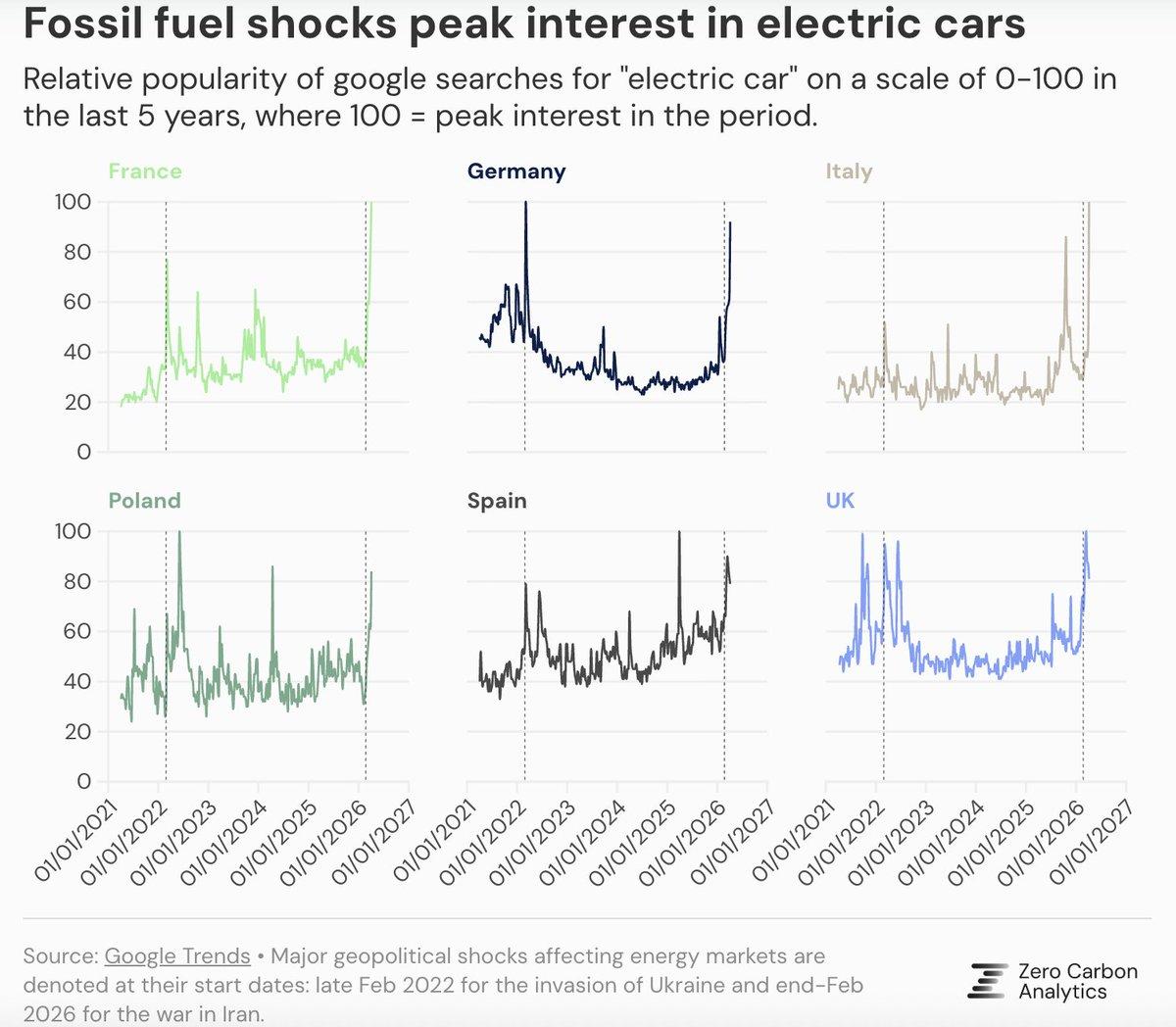
Fuel Price Shocks Accelerate Europe's Shift to EVs
Every fossil fuel shock drives Europeans toward EVs. Ukraine 2022. Iran 2026. Same pattern. When prices hurt, people look for the exit. https://t.co/VRFYzjBHSG https://t.co/78BnIebvjZ
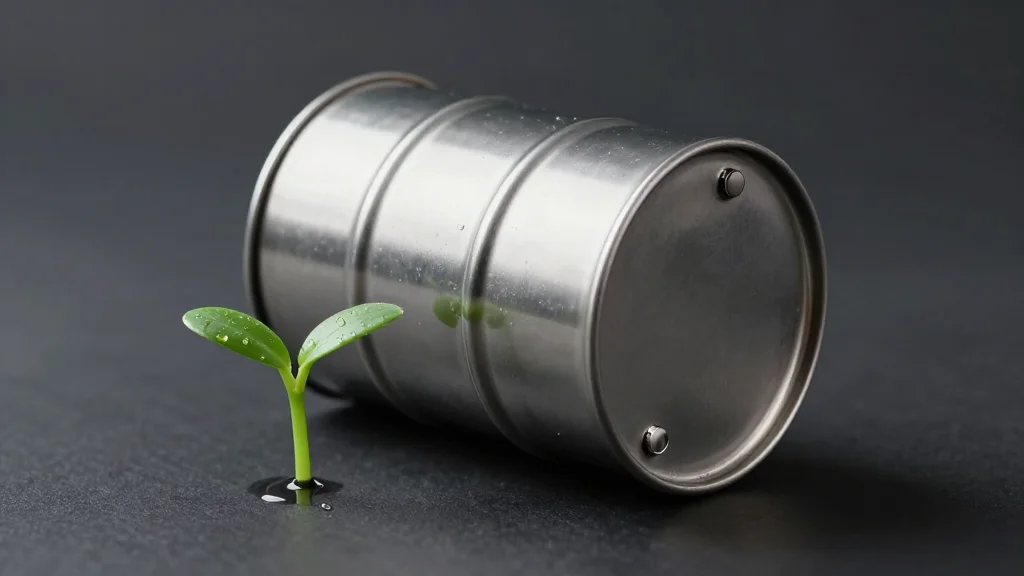
Cutting Demand, Not Just Supply, Solves Energy Crisis
Was on @France24_en last night discussing the energy crisis and the scramble for alternatives to Gulf oil. My take: supply substitution alone won't cut it. The only durable answer is fossil fuel demand reduction. https://t.co/JO1XUPfYB2
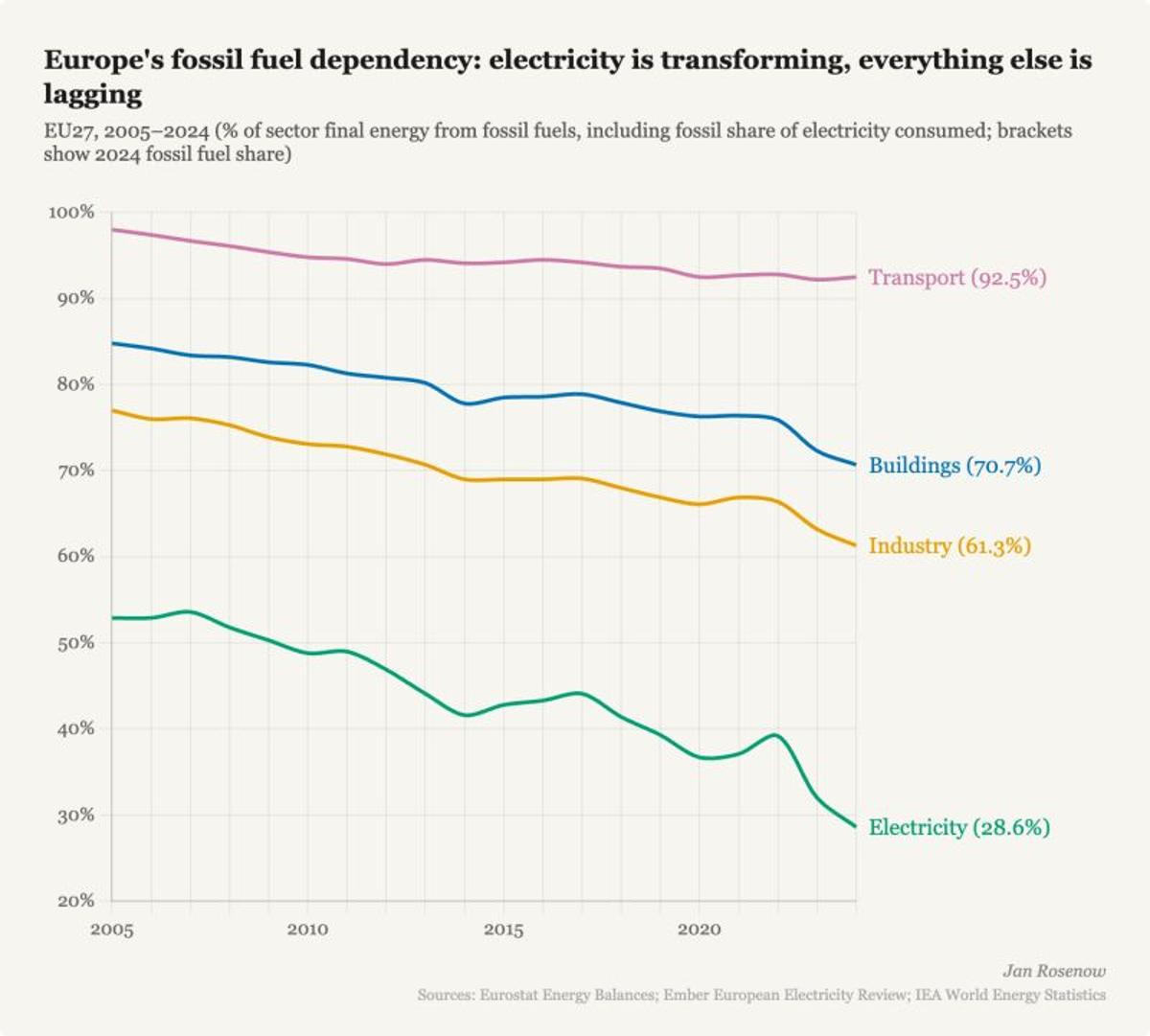
EU Electricity Decarbonizes; Transport, Buildings Still Fossil‑heavy
EU electricity: 29% fossil fuels in 2024, down from 53% in 2005. Progress. But transport 92% fossil. Buildings: 71%. Industry: 61%. 95% of EU oil & 88% of gas imported. Switching suppliers doesn't fix this. Electrification and efficiency do. More here: https://t.co/E9K3RV8NMT https://t.co/yEWP6Cu3Gp

Rising Fuel Prices Boost Solar, EV, Heat Pump Demand
🎙️ Just on @AlJazeera on war & clean energy. Double-edged sword — but I'm optimistic long-term. High fuel prices make clean energy more economic than just weeks ago. Demand for solar, EVs and heat pumps is surging. https://t.co/3WP8kG7awM
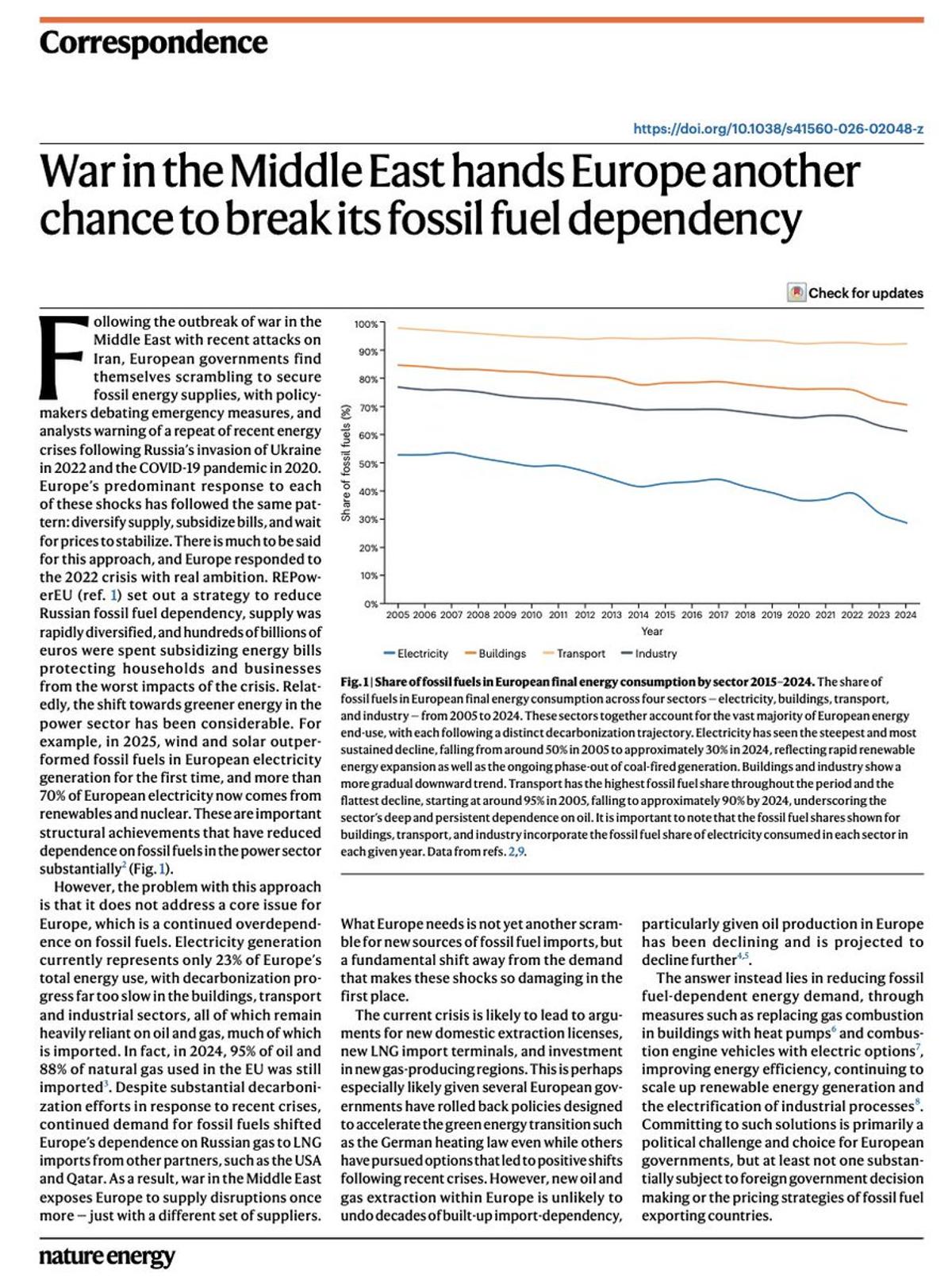
Europe Must Cut Fossil Demand, Not Chase New Suppliers
NEW ANALYSIS: My new article in @NatureEnergyJnl argues Europe keeps responding to energy crises by changing supplier. 95% of EU oil and 88% of gas was imported in 2024. The structural fix: reduce fossil fuel demand through electrification + efficiency. https://t.co/vA5UUg9a5z https://t.co/MNqLOFQREr

Policy, Not Technology, Limits Industrial Electrification Potential
NEW RESEARCH: Up to 90% of industrial energy demand could be electrified with existing & emerging tech. Under high-ambition policy, 51% by 2050 is achievable. 84% under the most enabling assumptions. The technologies exist. The key constraint is policy. https://t.co/eorr67N5hc https://t.co/KjtKeKGc0g
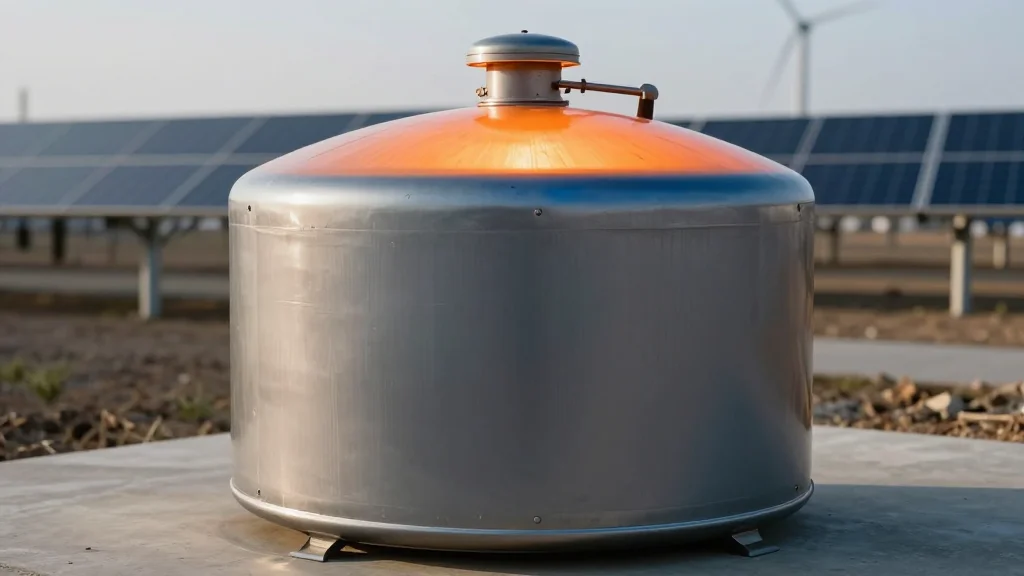
Electro‑thermal Storage Surges to $2.5 Bn Industry
Electro-thermal storage is on a roll 🔥 My take for @Reuters: Five years ago: a handful of pilots. Today: a $2.51bn industry with dozens of companies across multiple use cases. https://t.co/ZAFC3nyvfV
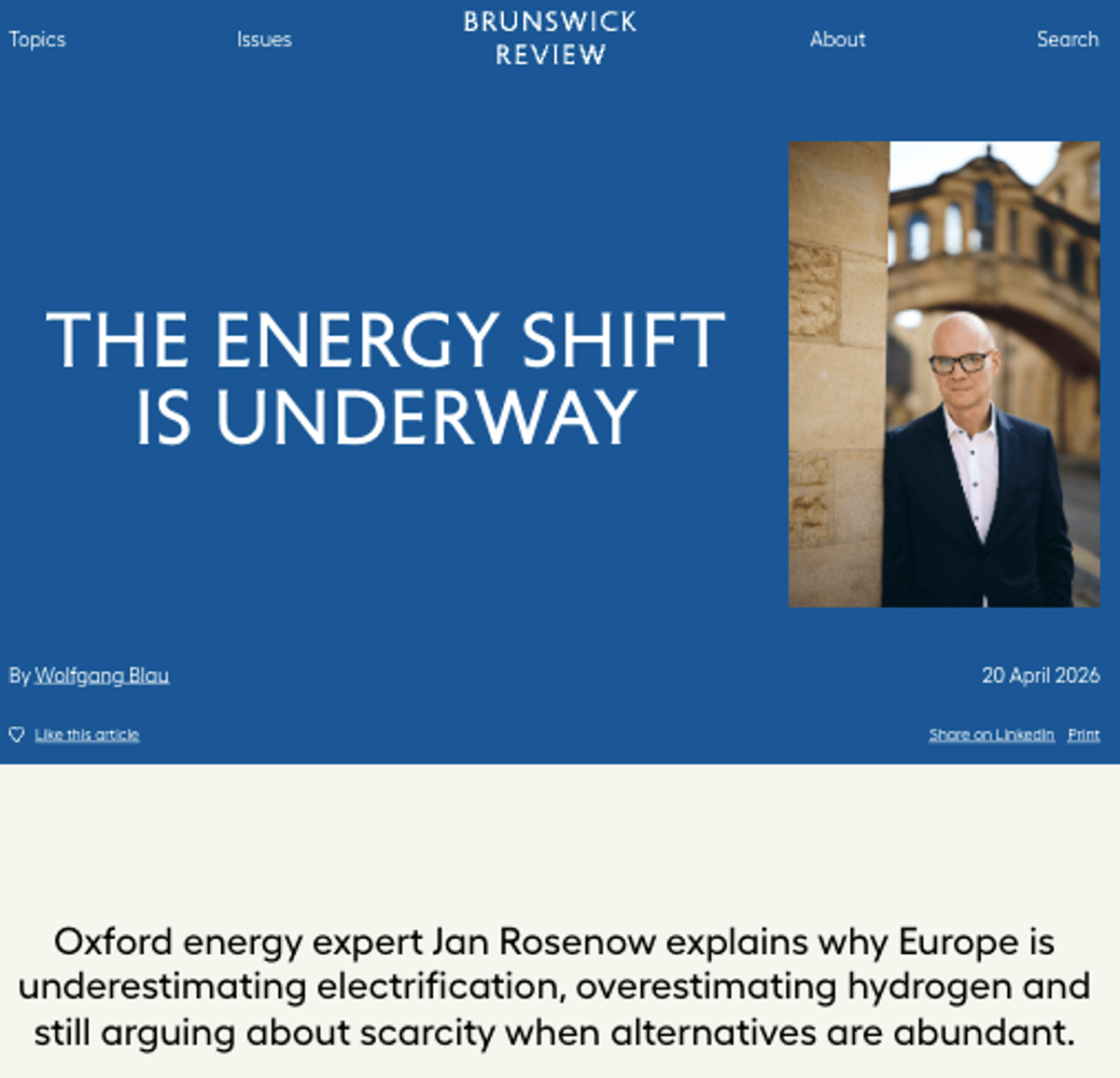
Europe Misreads Energy Future: Overhype Hydrogen, Underuse Electrification
Energy disinformation is the new climate denial. New interview with @wblau of @BrunswickGroup on why Europe is underestimating electrification, overestimating hydrogen & arguing about scarcity when alternatives are abundant. https://t.co/o5P7pucVAl https://t.co/t5QJGQLG5S
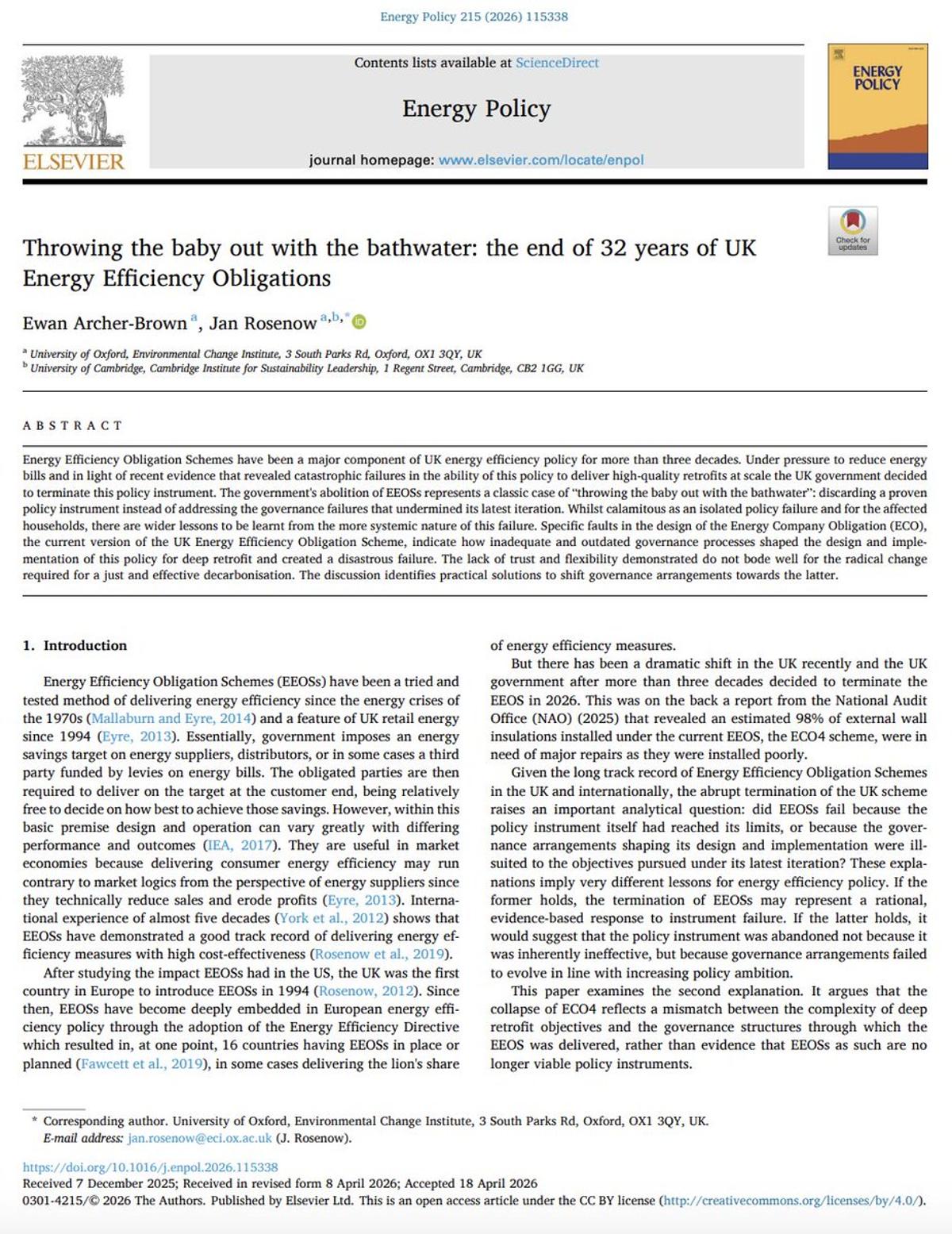
ECO4's Demise Blamed on Governance, Not Policy
New paper out 🎉 The UK just ended 32 years of Energy Efficiency Obligation Schemes. We argue it's a classic case of throwing the baby out with the bathwater — ECO4 failed due to governance failures, not instrument failure. https://t.co/4nb2f6M2rK https://t.co/j2c2tMw7lG
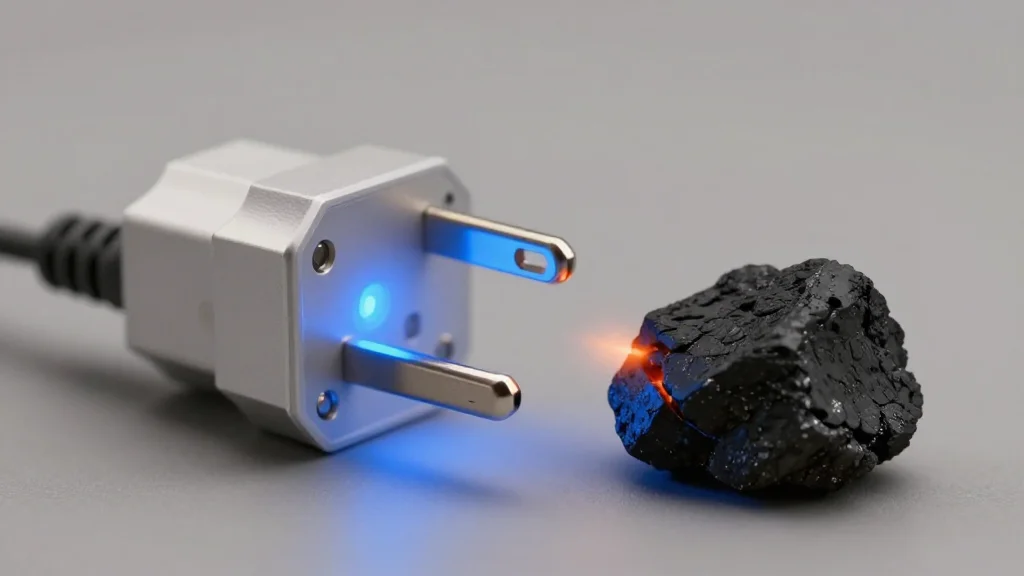
Full Electrification Could Halve Global Energy Demand
NEW PODCAST: Electricity is just 20% of global energy. The other 80% — heating, transport, industry — still runs on fossil fuels. Full electrification could cut total energy demand in half. That's the starting point for my conversation with @FullyChargedUK...

Legacy Companies Driving Energy Transition From Within
The energy transition is often told as a story of new entrants displacing incumbents. But it also depends on incumbents making the shift themselves. Visited @vaillantuk factory today, founded 1874, now making heat pumps. 150 years of heritage, transforming from within. https://t.co/UlrquZB5lE
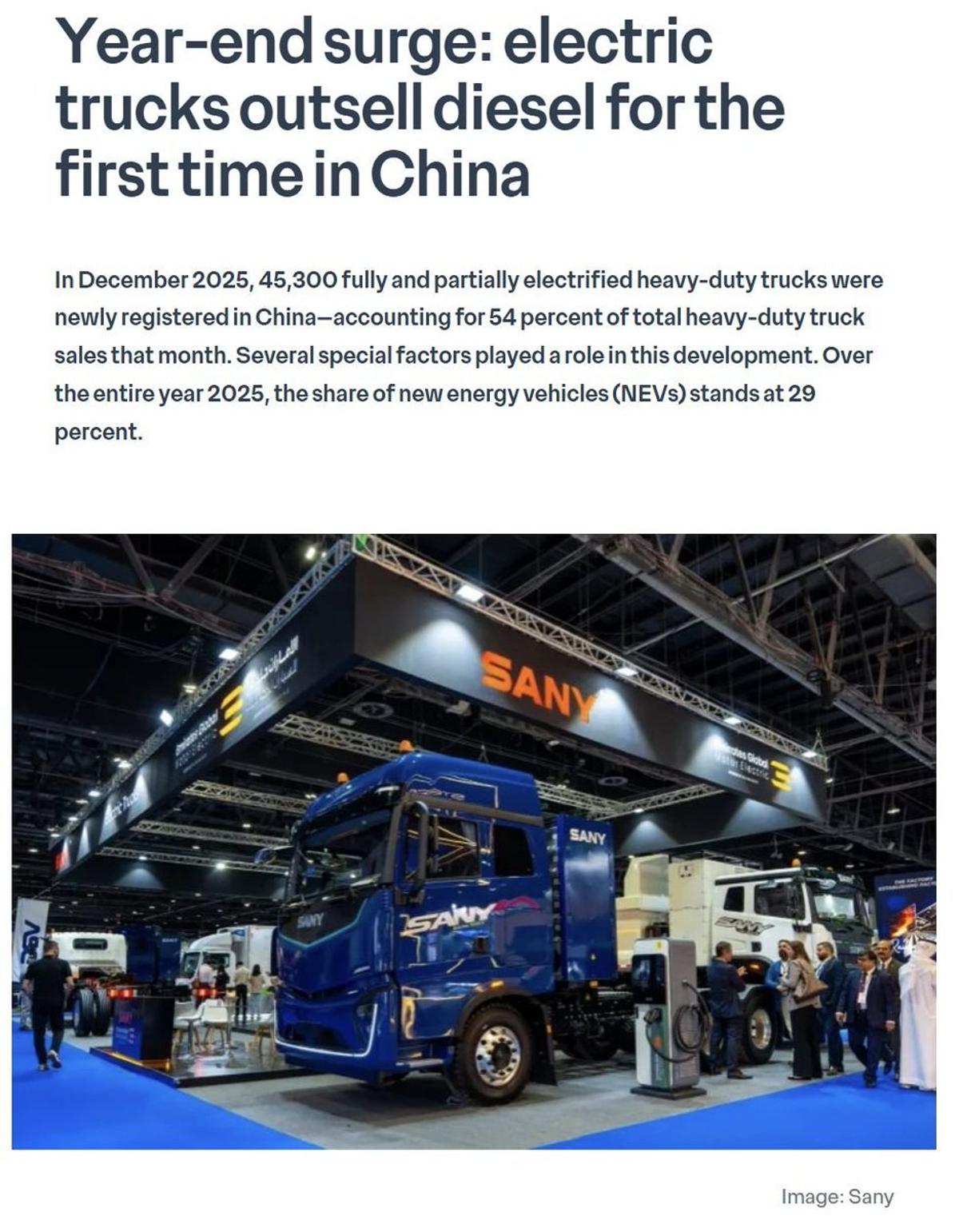
China's EV and Hybrid Trucks Surpass Diesel Sales
In China battery electric trucks and hybrid trucks now outsell diesel trucks for the first time. https://t.co/iprDfUBNG9
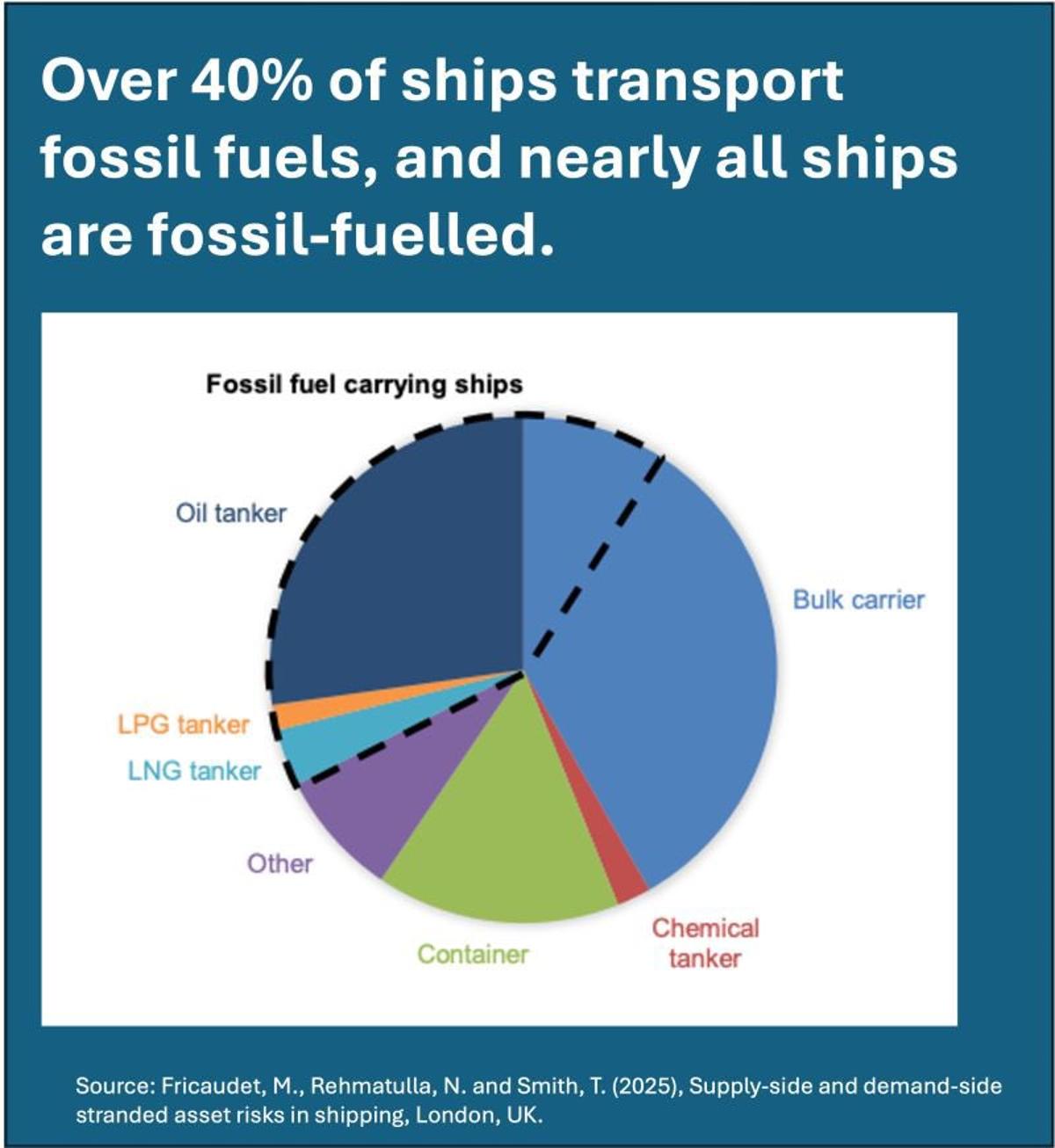
Over 40% of Ships Haul Fossil Fuels, Run on Them
More than 40% of ships globally transport fossil fuels. Nearly all of them run on fossil fuels too. https://t.co/8Ma1on6zVW
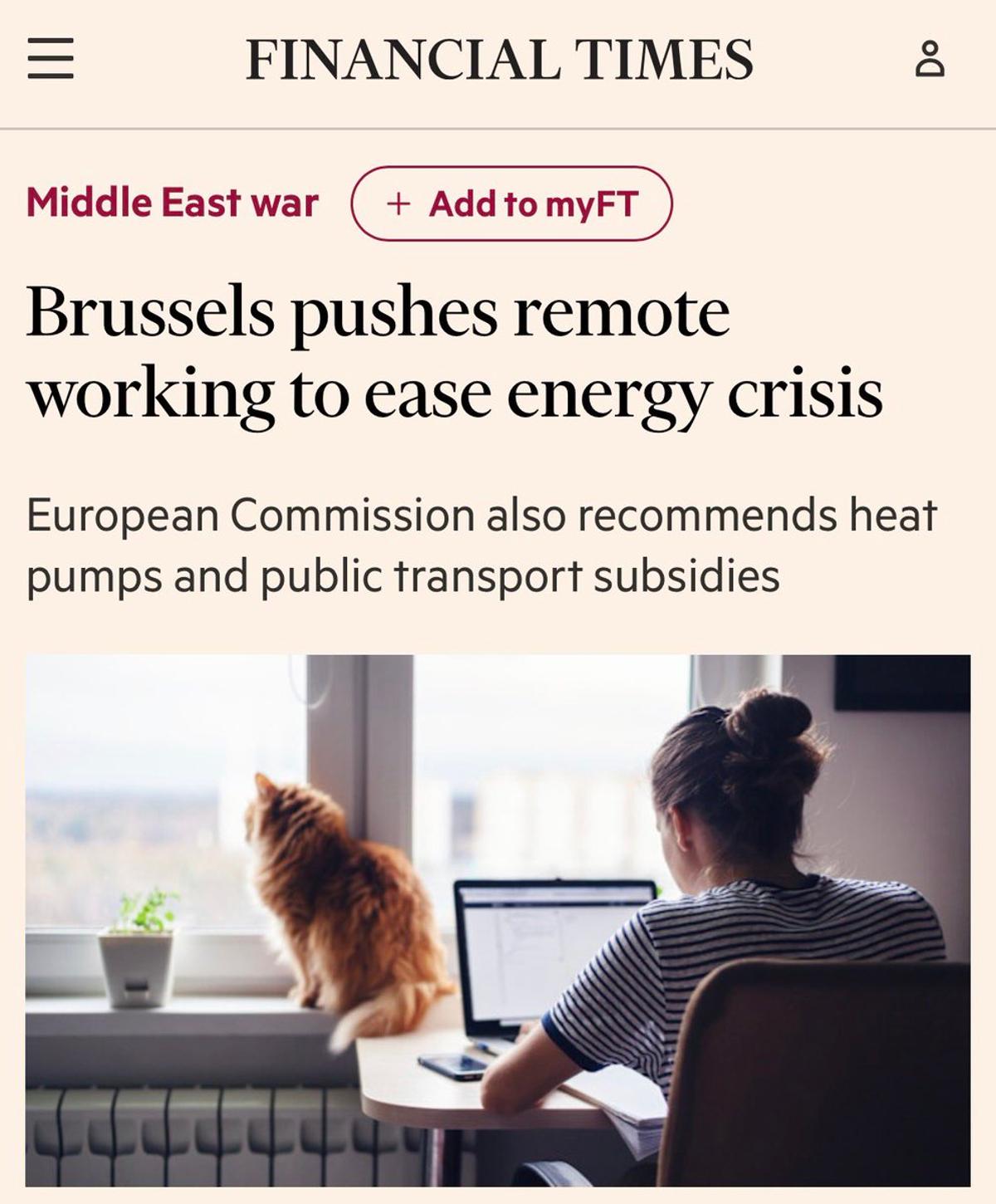
EU Expands Energy Crisis Plan: Remote Work, EVs, Heat Pumps
EU’s energy crisis response is broader than expected: remote work mandates, heat pump subsidies, EV leasing schemes — plus electrification targets and new laws to tax electricity below fossil fuels. https://t.co/vcy8KFcbHi
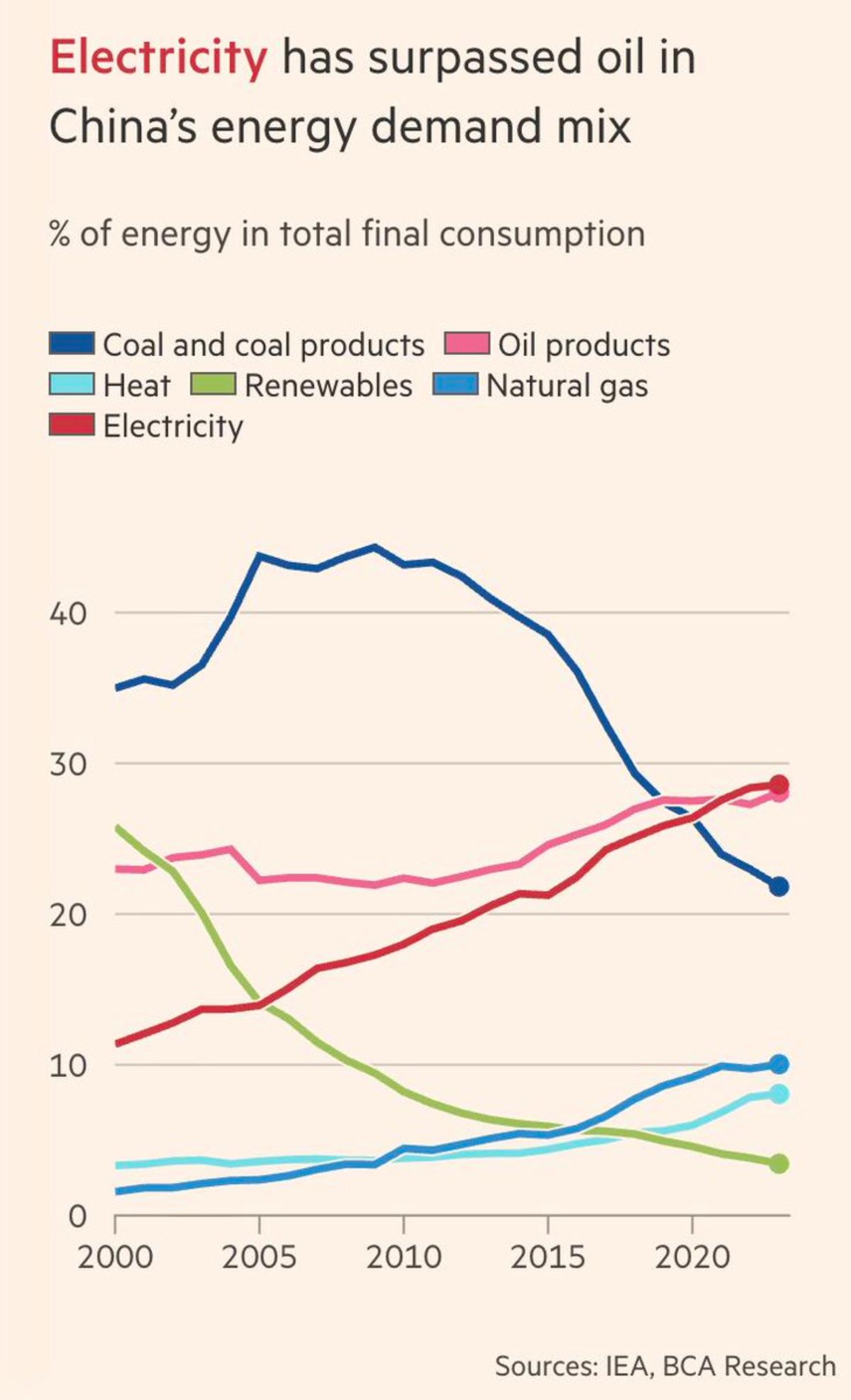
China’s Electrification Shields It From Oil Price Shocks
China's electrification bet is paying off. Electricity now accounts for 30% of its energy consumption - 50% higher than US or Europe. With 1/3 of global renewable energy capacity installed, China is structurally more insulated from rising oil prices than most...
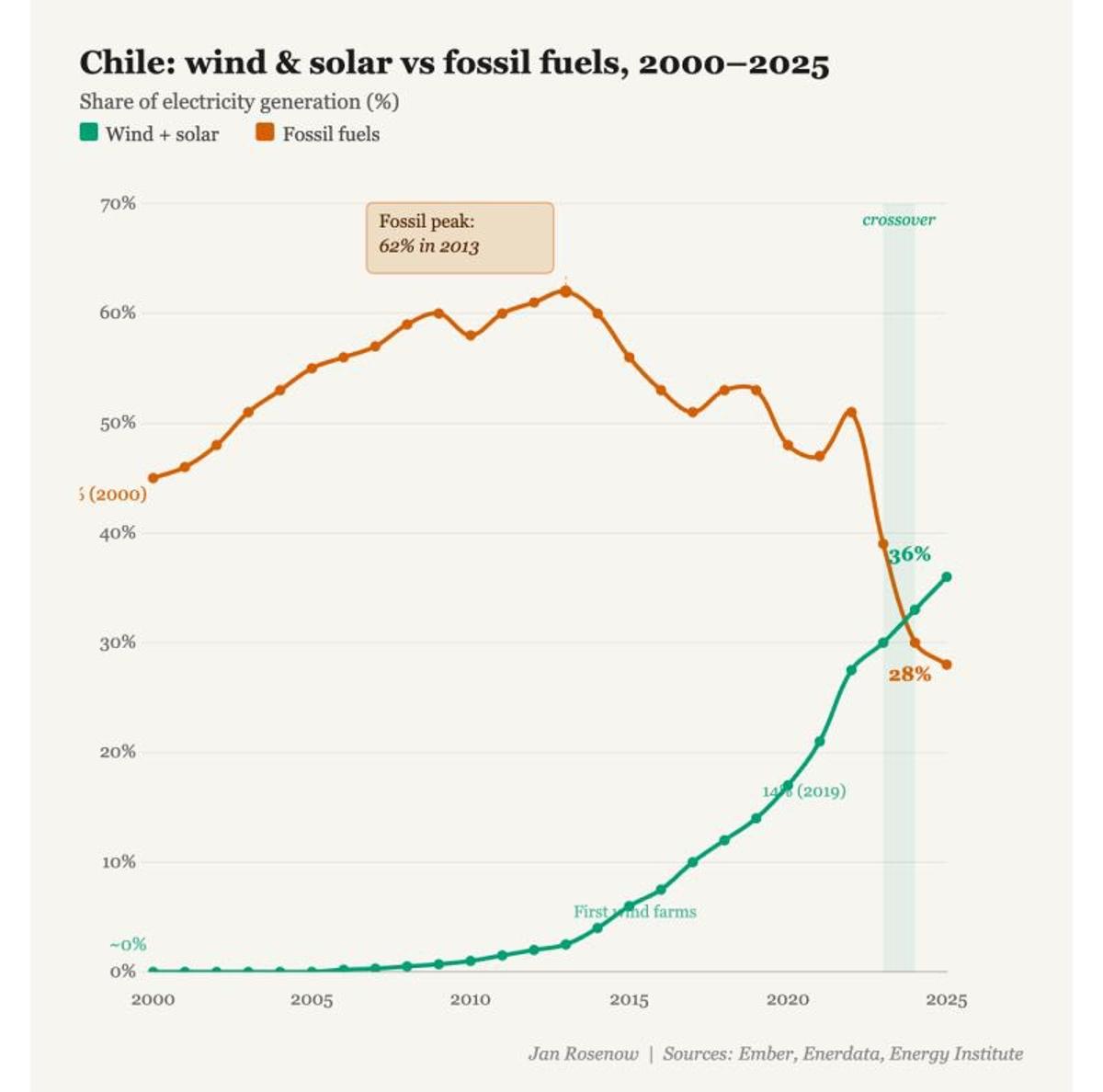
Chile's Renewable Surge Overtakes Fossil Power
In just over a decade, Chile went from no utility-scale wind or solar at all to having more electricity from these sources than from all fossil fuels combined: 2000: wind+solar provided 0% of Chile's electricity, fossil fuels 45% 2025: wind+solar 36%, fossil...
Energy Crisis Fuels Rapid Adoption of Clean Tech
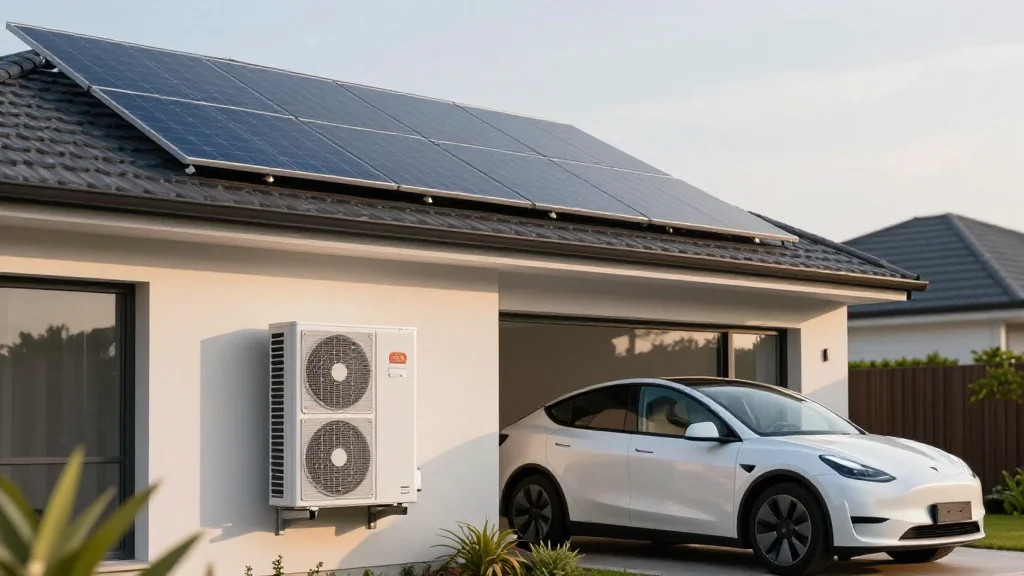
Heat pump orders up 2x in a month. Solar panel inquiries up 250%. EV leases up 85%. Iran crisis has made energy security feel personal. I understand why: I have solar panels, a heat pump & EV on a flexible tariff shielding...
Keynote at Power Summit 2026 After Finnish President
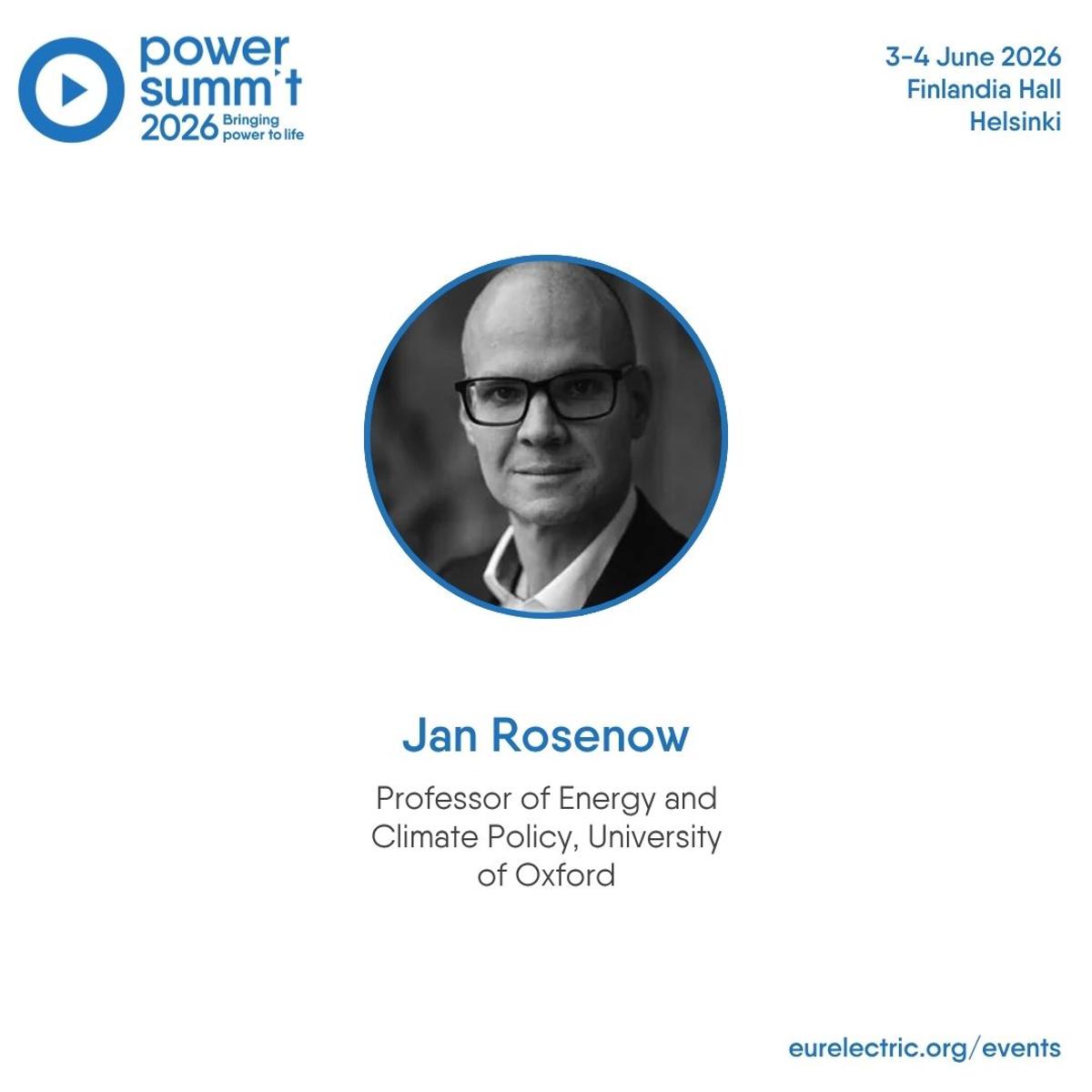
One of my top speaking gigs this year: the scene-setting keynote at #PowerSummit2026 in Helsinki, 3-4 June — directly after President of Finland, Alexander Stubb opens the conference with 700 industry leaders. Programme is live, registrations open 👇 https://t.co/om48hsUNwv https://t.co/0hyj9VF6UL

No Shortcuts: Europe Must Electrify, Expand Renewables, Storage
EU Climate Commissioner Wopke Hoekstra is being refreshingly blunt: there is “no workaround” for Europe’s energy price crisis. Hoekstra’s message? The only way out is through: more electrification, more solar, more wind, more storage, more grid interconnection. https://t.co/oTWydw6WTj
Whisky Distillery Uses Stored Green Power for 1200°C Steam
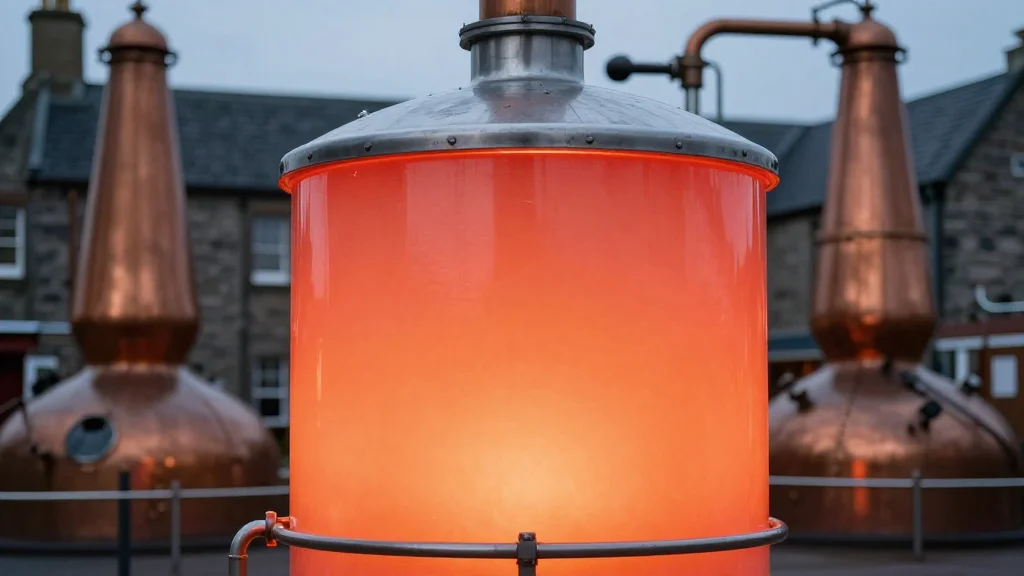
Heat batteries delivering up to 1,200C using off peak electricity: A Scottish whisky distillery just claimed a world first — producing high-temperature steam for distilling using stored green electricity instead of fossil fuels. https://t.co/1A1cS5hLUt
Heat Pumps Harvest Ambient Energy, Bypassing Oil Dependence
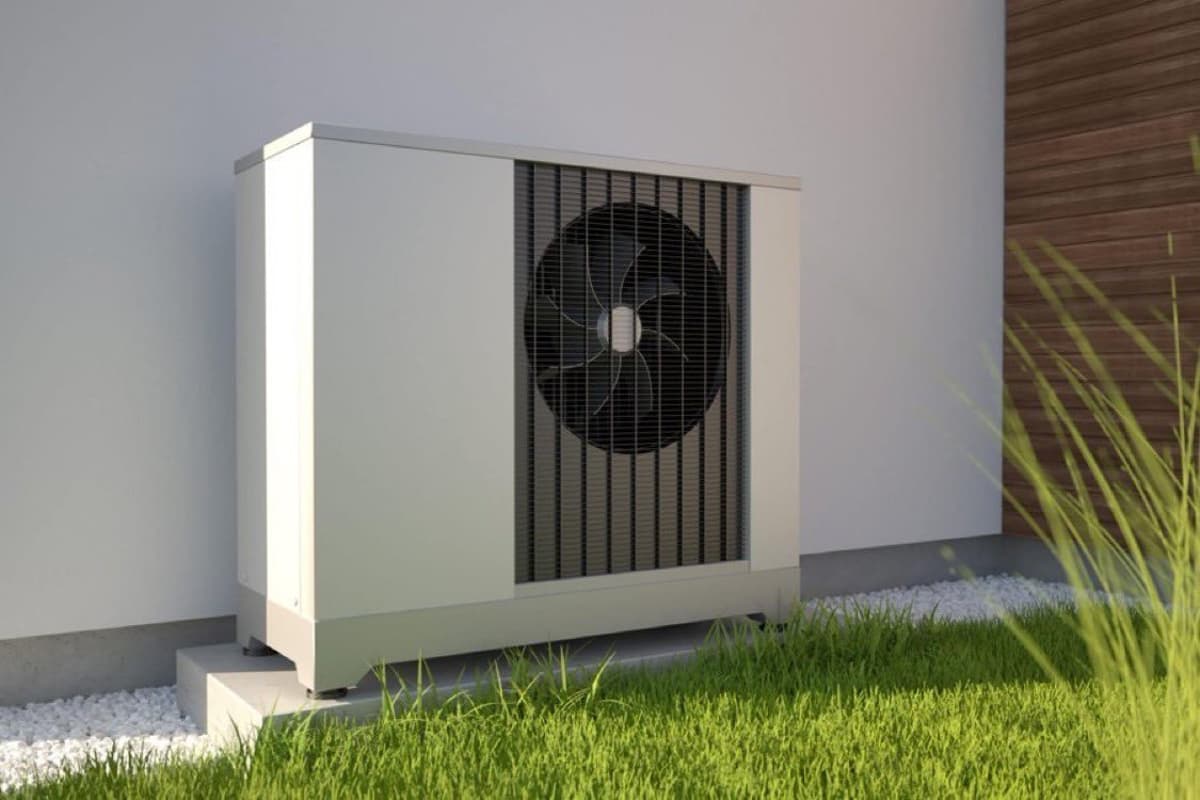
Heat pumps are the most efficient heating technology ever invented. They harvest and compress pre existing heat in the air, ground or water and transport it where it is needed. That energy is all around us. And it...

EU Leaders Unite to Electrify Europe for Energy Security
Spent yesterday in Brussels amongst the who-is-who of the EU energy bubble providing the opening remarks for the High-Level Roundtable: Electrify Europe for Energy Security hosted by @GRA_Renewables @Elec_All What an event - this is the spirit we need in times...
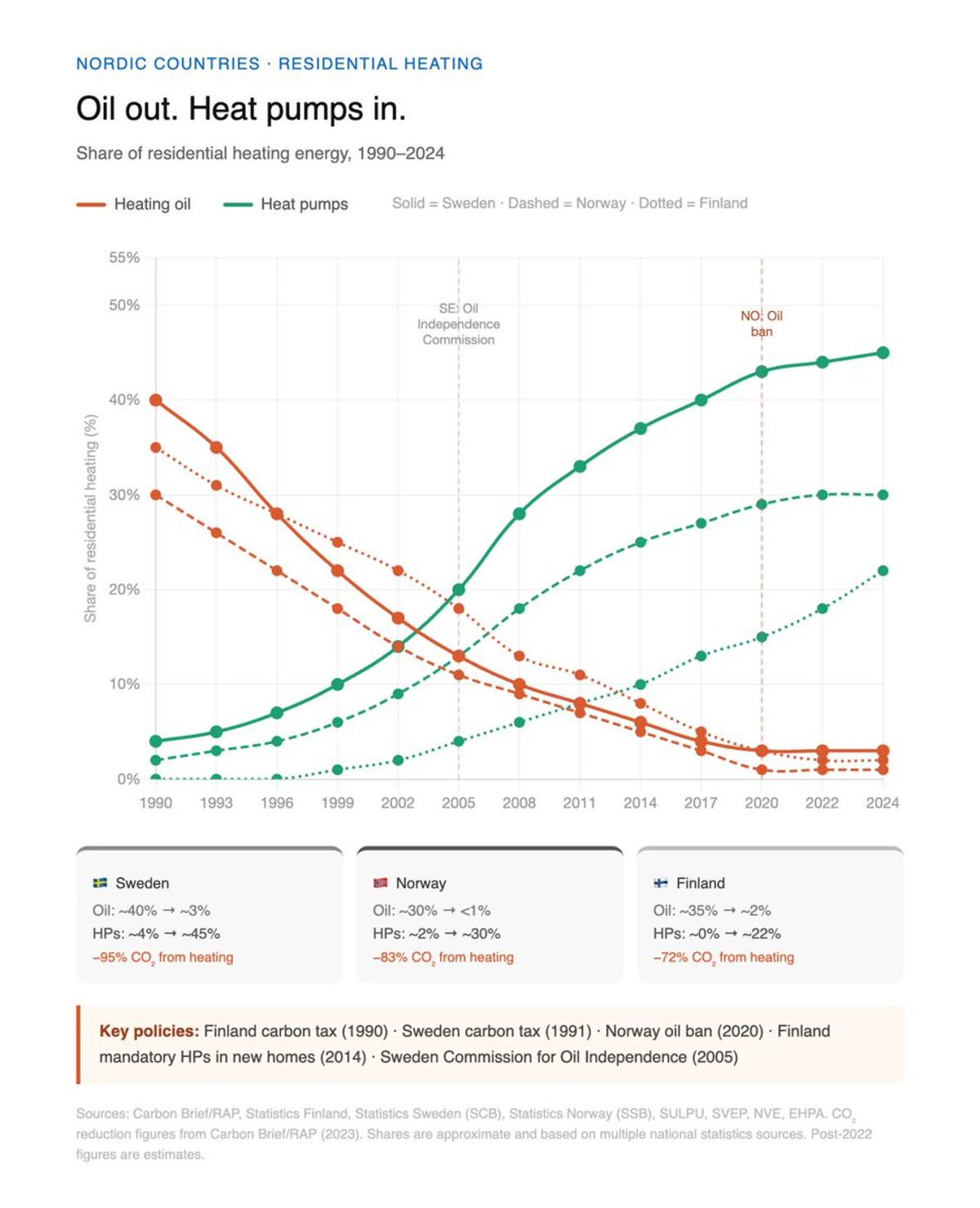
Nordics Lead with Heat Pumps, Ditching Heating Oil
Heating oil prices are sky-rocketing around the world. The Nordics have understood the risks of using fossil fuels for heating early on and transitioned away from heating oil almost entirely whilst phasing in heat pumps. https://t.co/gvLYlMORck
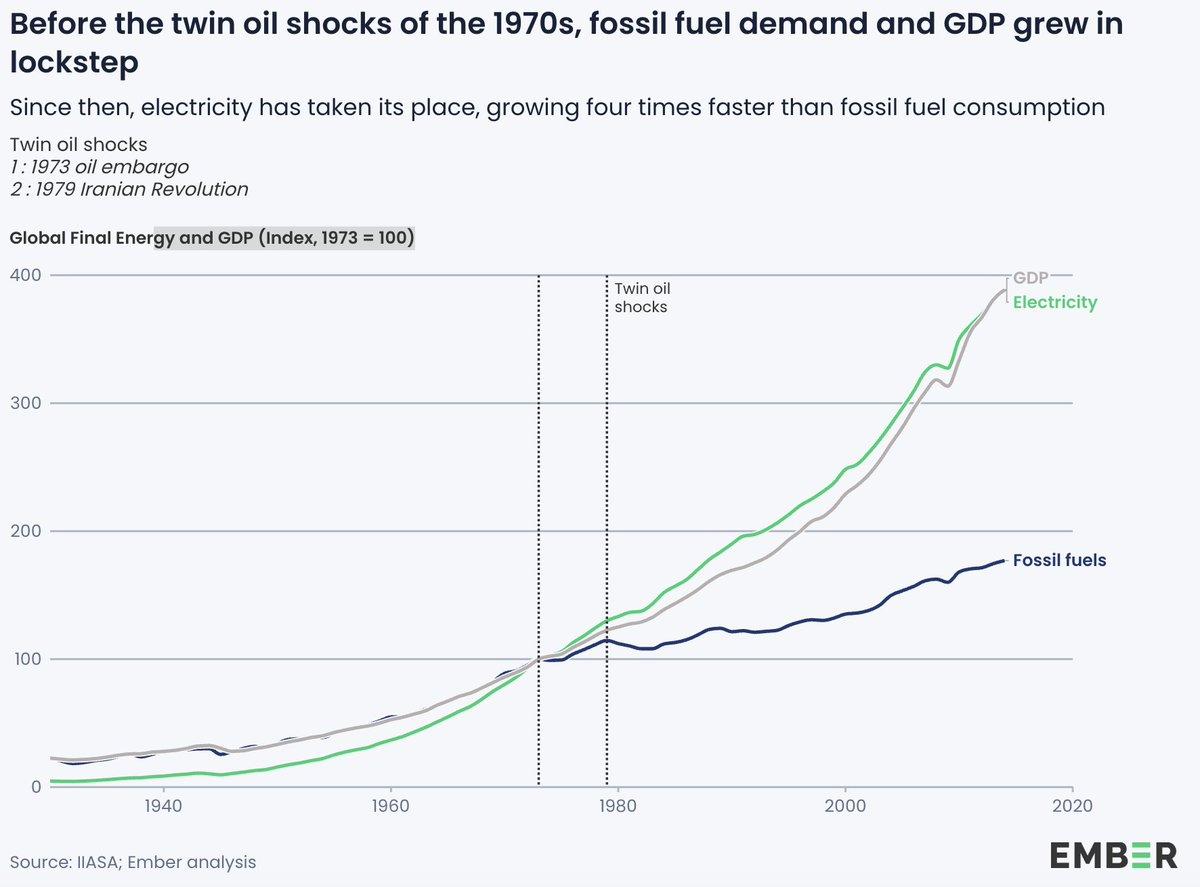
1979 Oil Demand Peak Decoupled Growth From Fossils, Not Power
NEW ANALYSIS: @ember_energy just dropped new report on how the 1970s energy crises decoupled economic growth from fossil fuels but not from electricity. Global oil demand per capita peaked in 1979 and has never recovered. Makes for a fascinating reading. https://t.co/Ehd4UR5bJl https://t.co/Z1XLOJcrkK

Energy Efficiency Cuts EU Energy Costs by 31%
Without energy efficiency, the EU would need — and pay — 31% more for energy today. Since 2000, efficiency has removed 265 Mtoe of demand from the market entirely. The best protection against a price shock is not...
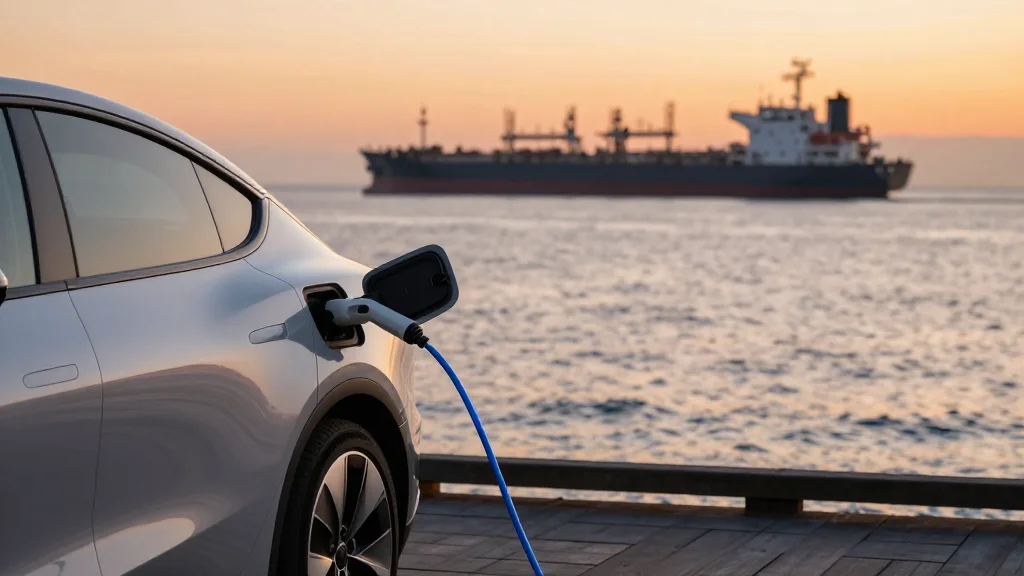
Geopolitical Crisis Finally Drives Mass EV Demand
The Strait of Hormuz crisis is doing something a decade of subsidies and mandates struggled to achieve: making millions of people want an EV who previously discounted them. https://t.co/q4BJ7iKHE3