

IKEA’s One-Line Reply Turned Viral Monkey Craze Into Sales
IKEA sold out a $19.99 stuffed monkey in 3 markets within days. eBay listings hit $355. A zoo gave a real monkey a stuffed animal to cling to, the internet lost its mind, and all IKEA did was post one line. Could your brand have moved that fast? THE MOMENT Punch is a 7-month-old baby macaque in Japan. Abandoned by his mother, raised by staff. When they reintegrated him into the troop, they gave him an IKEA plushy to cling to. Videos of him running back to his stuffed animal after getting scolded by other monkeys hit 30M+ views. It was covered everywhere: • CNN • TMZ • WaPo • The Guardian All before IKEA said a word. THE RESPONSE IKEA made one post. "We're ALL Punch's family now." • No campaign • No hashtag • No product push Just a line that matched the moment without trying to own it. THE FUNNEL → TOF: 30M+ views across TikTok and Instagram. Global press piles on before IKEA responds. → MOF: One post + restock alerts drive direct product page traffic. Every restock update is a new traffic event. → BOF: Sold out across 3 markets. eBay secondary market at 17x retail. Malaysia conservation tie-in drives a second purchase wave from a different buyer type entirely. THE TAKEAWAY That’s the power of a brand that moves quickly. If IKEA wasn’t ready, this wouldn’t be a story right now. Reactive posts run through the same chain as campaign content. > Legal > VP sign-off > 3-week process > Window closed Who on your team can post something unplanned right now without approval? If the answer is nobody, that's what to fix. You can't manufacture a Punch. But you can set the policy before the moment arrives.

Follow These Experts to Boost Your 2026 Brand
Accounts you should to follow to help grow your brand in 2026: Retention Expert: @EricRausch Retention Strategy: @Ferastotle Growth Strategy: @KFragoulias $25M Raised: @MaloneyTyler

Hire the New Role That Didn't Exist in 2023
Just published a new newsletter: "The highest-leverage hire right now didn't exist as a job title in 2023." Check it out and subscribe to get everything new. https://t.co/PShJDZjqv3

Physical Stores Amplify Digital Efficiency, Not Replace It
Meta CPMs up 22.58%. Google CPA up 17.25% ...and suddenly every DTC brand wants a pop-up shop. The majority of brands aren't even testing physical. They're testing Amazon and wholesale. And almost every time they look at those channels as...

Discovered a Winning Ad and Offer Simultaneously
Found a new winning ad and a new offer on the same day 🚀🚀 https://t.co/6IHT9GoF1L

Recalculate ROAS: Tariffs Shift Break‑Even Targets
Your ROAS target is wrong. Tariffs keep changing, so you need to know your break-even math. A brand that needed 3.0x to break even might need 2.3x. That's the difference between cutting spend and scaling aggressively. Run this audit before making...

High ROAS May Mask Lack of New Customers
Strong ROAS in Ads Manager doesn't mean you're acquiring new customers. You might just be really good at selling to repeat customers. We killed a campaign last month because of exactly this. The campaign looked clean. • ROAS was holding • Conversions were consistent •...

Beyond CTR: Track ATC to Validate Creative Success
If you're only looking at CTR and CPM and calling it a day, it's pretty obvious why your creatives fail. CPM and CTR tell you how your ad is competing in the auction and whether people are clicking. That's it. They do...

Big Meta Spend? Audit These 5 Critical Inputs
Spending $50K+/month on Meta ads doesn't always mean your account is set up right. It could mean you're scaling the wrong inputs faster. Here are 5 things to audit in Ads Manager this month:

Stop Wasting $50K on Remarketing, Add Prospecting
The most expensive mistake I'm seeing on Meta right now: → $50–70K/month in ad spend → 90% of it running to remarketing → Zero prospecting. Zero incremental lift. Just recycling brand content to existing audiences The brand thought Meta wasn't working. Their agency...

Meta Penalizes Similar Ads; Diversify Creative to Lower CPM
Meta doesn't care how many ads you're running. It cares how different they are. You can’t keep blaming the same old things when CPM rises. → More competition in the auction → Post-holiday budget shifts → Algorithm changes Those things are real....

Blended ROAS Hides SKU Performance; Track Collections, Monitor SKUs
Your blended ROAS is masking which products are actually carrying your account. We don't run SKU-level campaigns unless a brand has very few SKUs. We go collection-level. But we're always monitoring SKU data on the backend: https://t.co/Kha62DwjUl

Most Audits Reveal Hidden Audience Exclusion Errors
99% of accounts I audit have broken audience segment exclusions, and the brand has no idea.

Fast, Collaborative Founders Drive 120% YoY Growth
After 9+ years of working with DTC brands, the majority of the ones that stay with us longer than 6 months all have these things in common: • they respond within 24 hours, every time • the founder is in the room,...

Meta's AI Analyst Can't Grasp Business Fundamentals, Risks Spend
Meta just dropped a $2B AI agent inside your Ads Manager. Everyone's asking if they should test it. • It pulls reports • Does audience research • Analyzes campaign data But it can’t: • Create campaigns • Change bids • Touch your budget It's an analyst sitting...

Stop Overpaying Agencies: Cut 60% TOF Spend
The number of 7 & 8 figure brands that we audit whose agencies are running clicks / leadgen and very very TOF metrics is mind boggling to me. Yes these events “can” have their place as a % of your budget...

Meta's New Ads Breakdowns Overstate True Performance
Meta rolled out two new breakdowns in Ads Manager, and I strongly suggest taking them with a grain of salt. More data does not always mean more truth. They give you a cleaner look at new vs. returning customer splits,...

Scale Beyond $1M: Test, Evolve, Listen, Adapt
Worst ways to scale past $1M/month: - Protecting the winning formula instead of evolving it - Launching brand-new creative directions without testing them first - Ignoring what your customers are actually telling you - Refusing to test new offers, promotions, or products - Being so...
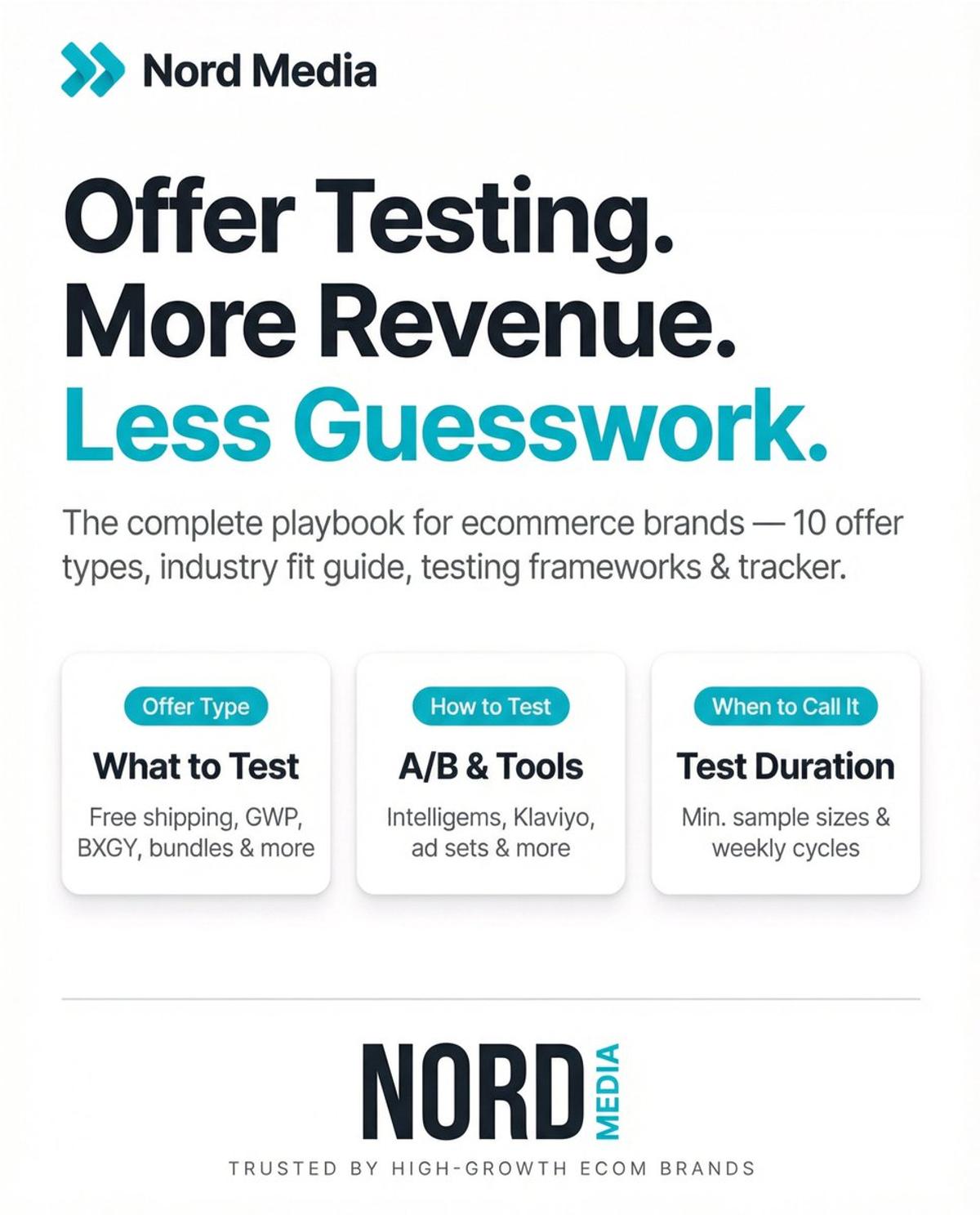
Master Offer Testing to Scale Beyond Seven Figures
Scaling your brand past 7 figures in revenue requires mastering offer testing. Retweet and Comment "OFFER" and I'll send you my new guide for how to structure and properly test offers. *** Must be following for me to DM ***...

Icon AI's Downfall: Bad Execution, Ignored Feedback
What caused this? To early? Poor execution? Bad leadership? A bit of everything IMO. We tried it and used it - it was a mediocre product at times and was okay other times. But their support and unwillingness to implement feedback is what killed them. I...

Leverage Ads to Scale Your Meta Success
Every time I read something like this. I just think. That's great.... and massive congrats to you, but what could you have done if you ran ads. Take what's working and apply it to Meta.

Scale Winning Ads to Transform Your Brand
Finding winning ads that can scale and change a brands entire trajectory 🫡
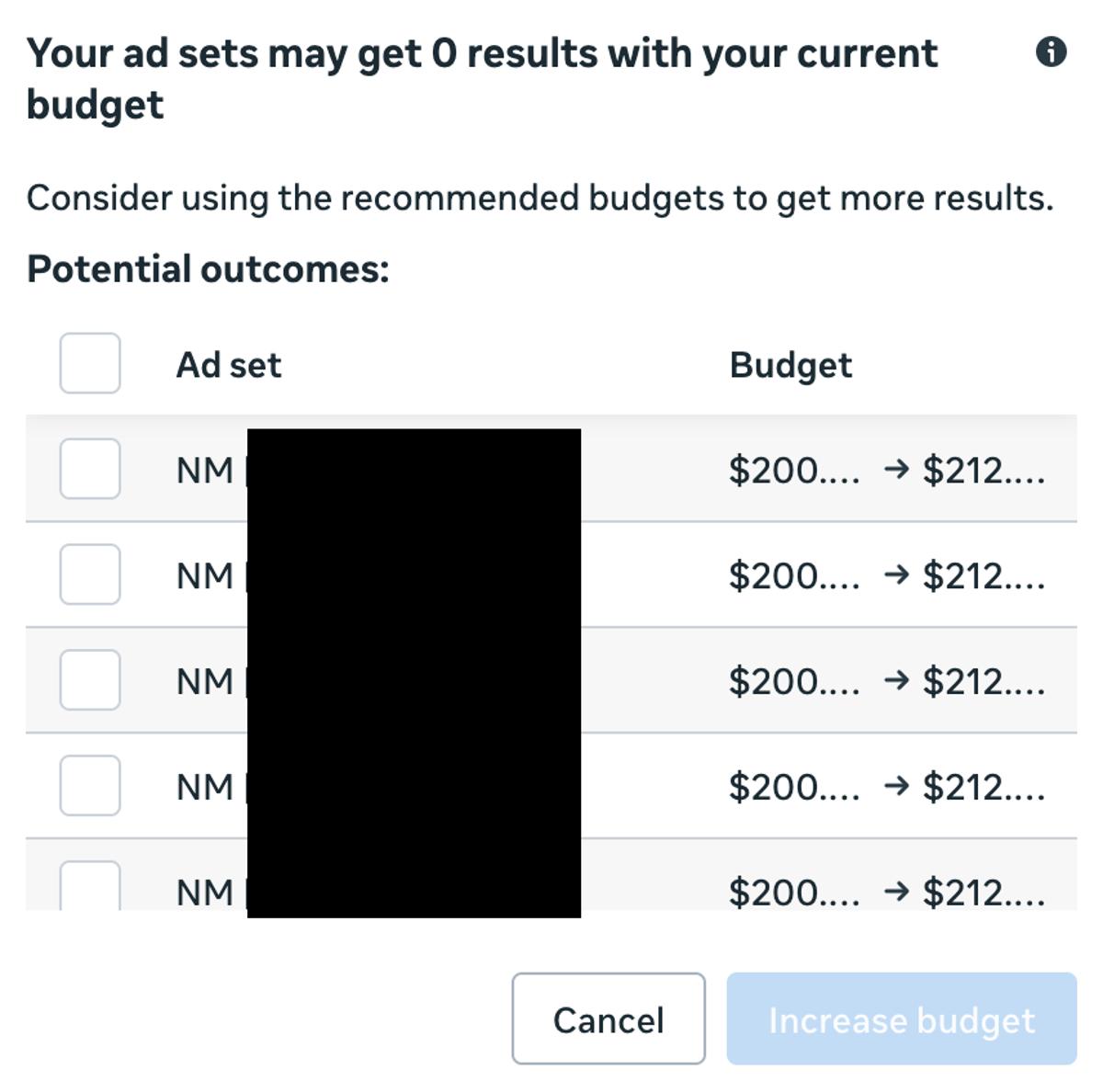
Meta Forces One‑click Upsell for New Campaign Budgets
Meta is really pushing these one-click upsells. Launching a brand new campaign and Meta says it needs more budget. https://t.co/qnK7Xxz5sa

Profit‑First Strategy Beats Campaign Management in 2026
Two years ago, targeting expertise was a job that Meta now offers for free. The best agencies today are helping brands understand their true profitability, build offers that actually resonate, and create content that supports both. The button pushing comes in...

Blend AI and Human Creativity for Optimal Results
You don’t need to go all AI or NO AI with your creatives… leaning too far either way means wasting budget on low-quality output or falling behind brands launching faster. The smarter approach sits in the middle. We use AI as a...

Meta's New Metrics Overstate ROAS; Focus on Profit
Meta quietly rolled out two new breakdowns in Ads Manager. 1. First time vs. repeat purchase conversion data. 2. Visibility into how much of your performance is being driven by their AI. It’s worth pulling, but not worth trusting blindly. We've seen...

Continuous Testing Breaks Growth Ceilings, Not Past Successes
The thing that got you to $1M won't get you to $10M. What got you to $10M won't get you to $50M. Brands hit a ceiling when they stop testing. They find a winner and protect it instead of building...
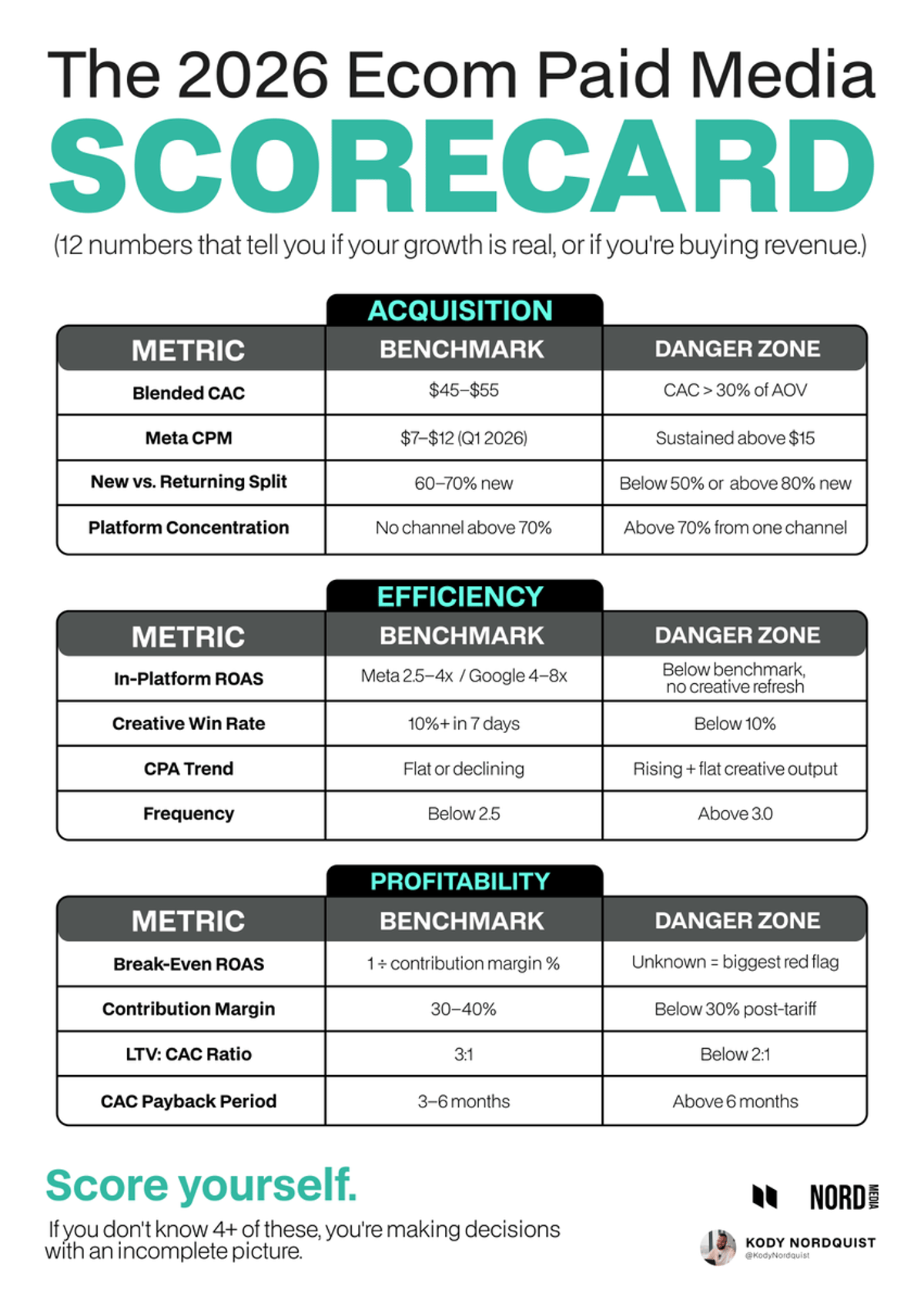
Know Your 12 Key Ecom Metrics or Fail
Ecom operators are surrounded by data meant to guide them, yet they’re still operating in the dark. Plenty of brands know their ROAS. Far fewer know their: - Break-even ROAS - Blended CAC against contribution margin - CPMs relative to 2026...

Creative Diversity Drives Reel Reach, Prevents Rising CPMs
3 reels a week and 10 variations of the same concept is not a creative strategy that will save you from rising CPMs. Andromeda processes 10,000x more ad variants in parallel than Meta's old system. It has more creative combinations...
Meta's AI Will Automate Entire Ad Campaigns
If your value lives in media buying mechanics, Meta is already building your replacement. Mark Zuckerberg has confirmed that Meta is testing a system where a brand will enter a product URL and a budget, and the platform will build an...

Choosing Between a $2,100 Burst or $2,100 Spread
Would you rather spend $700 / day for 3 days or $100 / day for 21 to test a new campaign (creative)?

Tariffs Spike Costs, Crashing DTC ROAS
Your ad account looks fine: - ROAS is holding - CPMs are manageable - Conversions are flowing But your spreadsheet is screaming. As of February 2026, the average US tariff rate sits at 17% on all imports. For DTC brands...
New Brand Boosts Profitability, Prepares March Scale
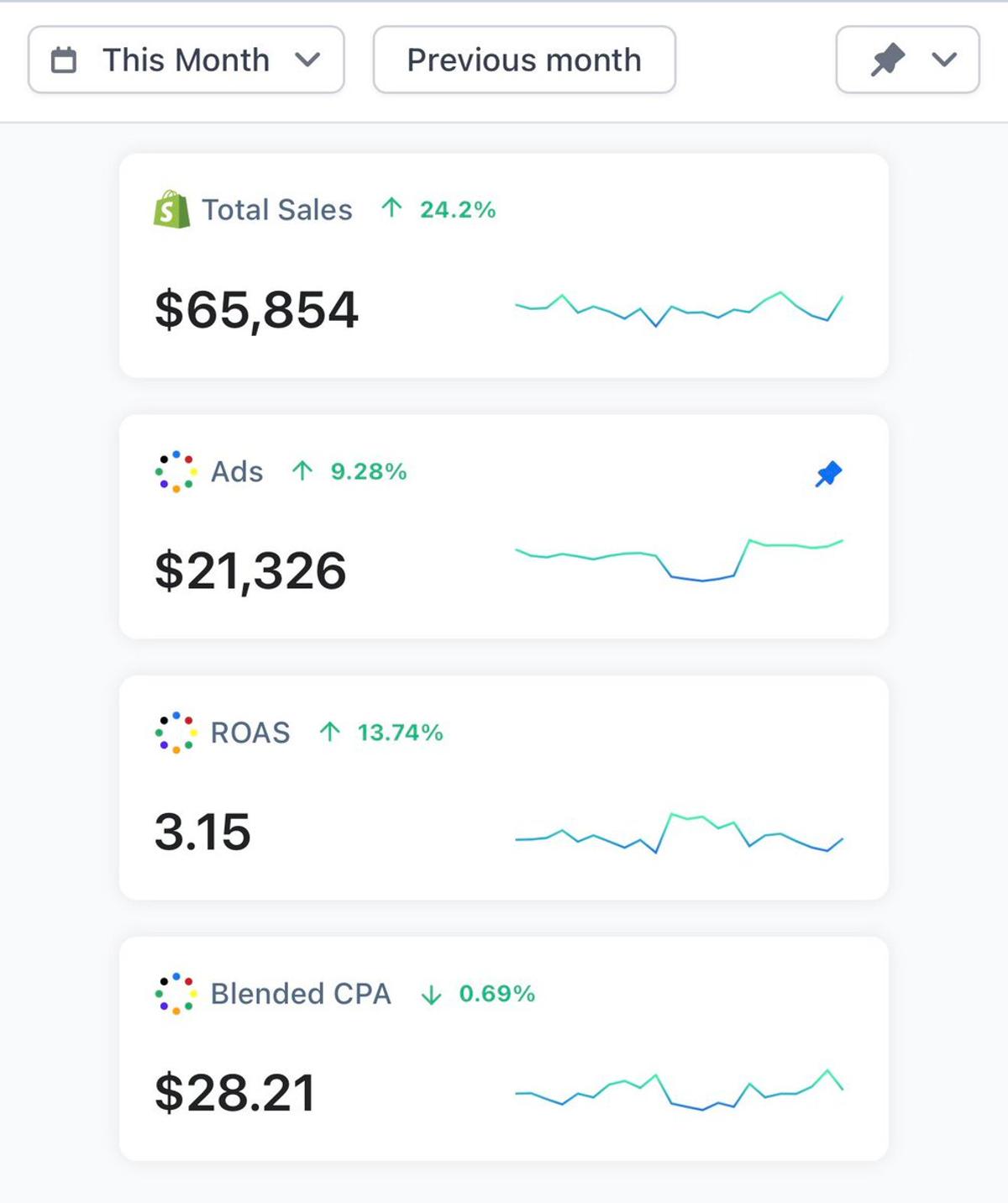
First month on with a new brand - already improving profitability overall and looking to scale moving into March. New Offer + New account Strategy. Next week we launch first round of UGC we curated and first large batch of ad creative....

In‑house Shifts Often Raise Costs, Lower Revenue—Keep Agency Insights
One of our brands we've been working with long-term moved to an internal person last month but they kept us on view access of the account(s). Since they took over? CPA is up 48% ncCPA is up 109% Spend is up 32% Revenue is down...
Meta Predicts Lower CPA Before Any Spend
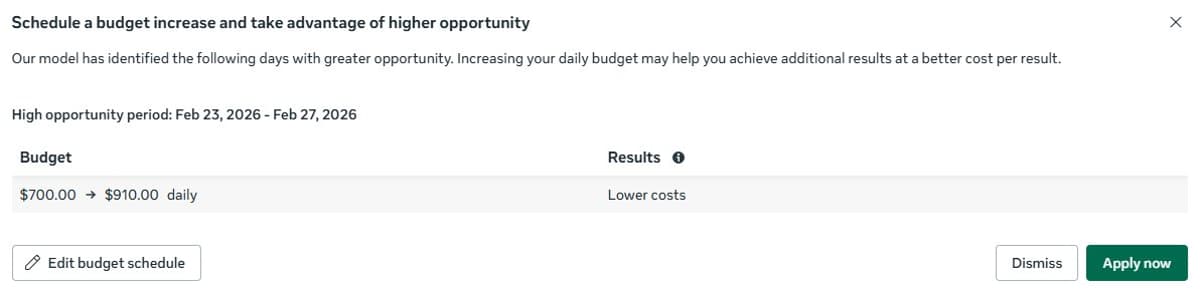
Got this one click pop-up after publishing a new campaign today. Spend more & get I get lower CPA? Wow... campaign hasn't even spent a dollar yet and Meta knows so much about it already🤯 https://t.co/sBqVkF3uUB
Monetize Your Thank‑You Page with One‑Click Upsells
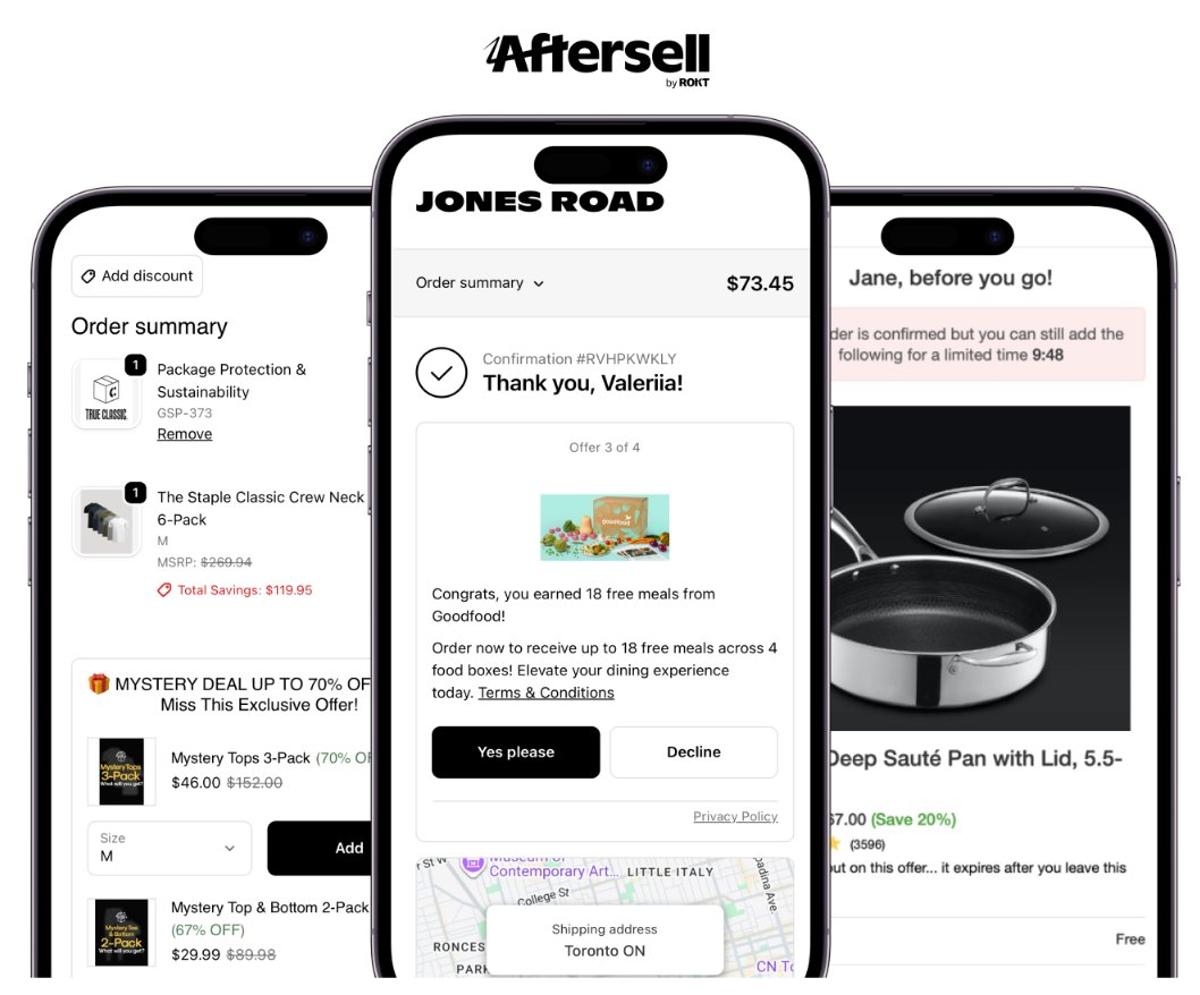
Brands will spend $50 to get a customer to checkout and then show them a generic Shopify thank-you page… Make it make sense. That page has a 100% view rate. Higher than: → Your homepage → Your landing pages → Every ad you've ever run It's...

Ensure Auditors Have Full Data Before Trusting Their Feedback
Be careful of getting "audits" This comes from someone whose agency does 10-15 audits a week for prospective clients. It's very "easy" to find things wrong or find improvements if you don't have all the data, learnings, or inside info. Make sure...

Tariffs Spike Costs—Recalculate Your Break‑Even ROAS
Your ROAS looks fine, but your margins are bleeding. Why? Because tariffs jumped COGS 20-30% while your break-even ROAS stayed the same. You’re still trusting a dashboard number that’s been outdated for months. Recalculate your break-even, and thank me later.
Google Kills Excuses: PMax Now Mandatory
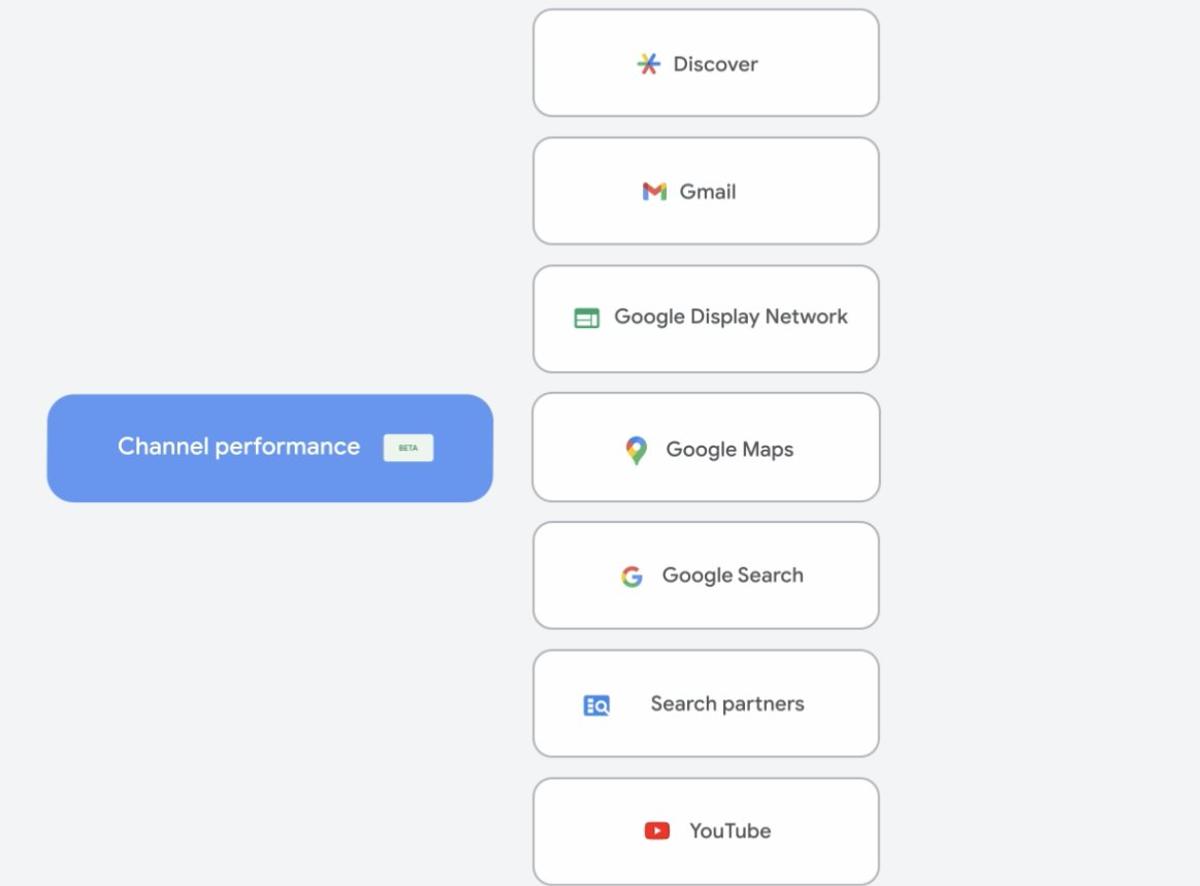
Google just killed every excuse you had for ignoring PMax. Full reporting. Negative keywords. Real split tests. This thread is your wake-up call 🧵 https://t.co/FqYcvnZVbf

Focus on 4 Metrics, Not 50, to Drive Profit
You’re deluding yourself into thinking you’re organized by staring at a dashboard with 50 metrics... … and somehow, you're completely missing the only 4 that actually matter: MER (Marketing Efficiency Ratio): This is your early-warning alarm. If MER dips 10-15% below target, something's leaking....

Never Plan Promos Blindly—Track Competitors Constantly
Planning promos based on internal calendars, with 0 insight into what competitors are doing that week is an easy death sentence. To protect margins, you need to be monitoring competitor activity like a hawk. For that, you need a system. Here’s what...

Turn Organic Content Into High‑Performing Ads
If you want to make better ads internally. Start creating organic content. From what we've seen with a wide range of testing is that some of top spending ads at the moment are really good pieces of organic content. Not a guarantee but...

Recover Lost Shoppers, Turn Wasted Ad Spend Into Revenue
Your ad budget is on life support, and you don’t even know it yet. Let me explain how you’re losing money on things you THINK are working: Let’s say you spend $50K on ads… …leading you to drive 12,000 visitors at $4 CPC… …but...

Prioritize Message, Then Structure, Before Optimization
If you say your team is "testing constantly", then why isn’t your performance improving? I’ll take a guess: You have new landing pages, audience targets, offers, and creatives every week. Changing everything at once isn’t a “strategy”. Nothing can be isolated, nothing...

Top Accounts to Follow for Business Growth
Accounts you should to follow to help grow your business: Retention Expert: @EricRausch Retention Strategy: @Ferastotle Growth Strategy: @KFragoulias $500M Founder: @YDaftary CRO Systems: @brianschmitt_

Nurture Leads for 12 Months, Book More Clients
This is soooo true My lead funnel is a solid 12 month of nurturing. 75% of the clients we booked in January found out about us over 6-9 months ago. They just kept getting nurtured and given free info. Scale into your lead gen...

AI Assists, but Human Judgment Drives Brand ROI
Cooked? We've already restructured for this. AI handles our creative asset generation for brands with bulky products or no in-house studio. We use it for double-checking spreadsheets and finding growth targets from long data sets too. It’s great for forecast...

Profit‑First Ad Rules Drive $200M+ Results
If you want to generate $200M+ in client results, these are the 50 rules to live by. Steal them. Save them. Print them out. 1. Creative strategy > media buying. 2. If Meta spends money on your ad, there's a...

Balance Cost Caps with Creative Diversity for Optimal Spend
Good take but depends on the structure. 100% cost control / bid cap? 900 ads is fine - more creative diversity = more opportunities to spend. 100% in lowest cost? Likely hemorrhaging data and money

AI Forecasts Can Fabricate Data—Always Verify Insights
Noticed this a few months back. Certain AI tools that we were using for projections/forecasting/data it was completely making up and generating false data. It was essentially creating scenarios that it thought we wanted to see. And not what was accurate. Always double-check...