From Theory to Reality: Evaluating the U.S.-Ukrainian Minerals Deal
The United States and Ukraine have launched a U.S.–Ukraine Reconstruction Investment Fund, injecting an initial $150 million to develop Ukraine’s critical mineral assets. The fund is governed by a six‑member board—three Americans and three Ukrainians—aiming to channel private and public capital into mining, processing and related infrastructure. While critics have dismissed the agreement as neocolonial, its joint‑control structure mirrors many of the strategic goals outlined in J.C. Ellis’s earlier proposal for shared access and economic benefit. The deal stops short of a broader multilateral framework but establishes a concrete partnership for mineral security.
The Folly of Seizing Kharg Island
President Donald Trump is weighing a bold move to seize Iran’s Kharg Island, the hub for roughly 90% of Tehran’s oil exports, as leverage to force the reopening of the Strait of Hormuz. The United States already has over 50,000...
China’s AI Is Spreading Fast. Here’s How to Stop the Security Risks
Chinese open‑weight AI models surged from 1% to 30% of global workloads between late 2024 and 2025, with Alibaba’s Qwen family alone reaching over 700 million downloads. These models are freely available, but their developers are bound by China’s National Intelligence...
The Most Important Deterrent That NATO Needs Is Creativity
NATO’s 2025 Rapid Adoption Action Plan mandates fielding new military technology within 24 months, shifting focus from procurement speed to human adaptability. The authors argue that creativity, taught through programs like Project Mercury, is the decisive deterrent against adversaries. Real‑world trials...
The Arsenal as the Battlefield: The War on Iran and the Return of Counter-Industrial Targeting
The United States’ Operation Epic Fury has moved beyond striking Iranian combat units to systematically destroy Iran’s missile and drone manufacturing facilities, aiming to cripple its ability to replenish weapons. This counter‑industrial approach revives a World‑II‑style strategy in a modern context, reflecting...
The U.S. Military Risks Letting Contractors Define How It Sees the Battlefield
The U.S. military’s integrated command platforms now rely on proprietary ontologies—vendor‑owned definitions of threat, readiness, and escalation—rather than government‑controlled standards. While modular open‑systems policies ensure technical interoperability, they leave the semantic layer unchecked, allowing contractors to reshape how the battlefield...
The Cost of Hesitation: Why “Finishing the Mission” Is Imperative in Iran
U.S. forces are conducting Operations Epic Fury and Roaring Lion to dismantle Iran’s nuclear and ballistic missile capabilities, after intelligence revealed roughly 440 kg of uranium enriched to 60 percent—near weapons‑grade. Representative Sheri Biggs argues that sanctions such as the 2025 Solidify and Enhanced Iran Sanctions Acts...
Successes and Setbacks
Russian military leaders are publicly acknowledging that their forces are losing momentum and suffering mounting casualties in the Ukraine conflict. Commander Oleksandr Khodakovsky warned that Russia’s traditional strengths—sheer weapon stockpiles, industrial capacity, and manpower—are no longer guaranteeing superiority. The article...
Every Soldier a Software Builder: Governing the Army’s New Digital Workforce
The Army is turning its soldiers into software builders by leveraging accredited digital platforms such as Army Vantage and GenAI.mil, allowing rapid creation of mission‑critical tools without new cybersecurity approvals. To prevent duplication and abandoned projects, the author proposes a...
The Pentagon Wants Dual-Use Innovation. Patent Law Might Punish It.
The Delaware federal court rejected Moderna’s claim that Section 1498 immunity shielded its COVID‑19 vaccine sales, holding that the statute only protects products that directly benefit the government. The ruling coincides with a $2.25 billion settlement between Moderna and Arbutus, including a...
Hellscape Taiwan: A Porcupine Defense in the Drone Age
The Center for a New American Security proposes a "Hellscape" defense that layers cheap, autonomous drones and unmanned systems to stop a Chinese amphibious invasion of Taiwan. The concept expands the traditional "porcupine" strategy into four zones—from mid‑Strait saturation attacks...
A Torpedo in the Trade Lanes: Naval Warfare Returns to the Indo-Pacific
A U.S. Navy Virginia‑class submarine fired a Mark 48 heavyweight torpedo that sank the Iranian Moudge‑class frigate IRIS Dena about 40 nautical miles south of Sri Lanka on March 4. The strike killed at least 87 crew members, left 61 missing and rescued...
How Are Iran’s Partnerships with Belarus and Russia Holding Up During War?
Russia’s reliance on Iranian‑designed drones has grown, while Belarus has become a pivotal production hub. The two allies announced a joint facility capable of churning out up to 100,000 drones per year and have already stepped up component manufacturing for...
Your Defense Code Is Already AI-Generated. Now What?
AI‑assisted coding tools now write a substantial share of software used in defense procurement, with estimates that 20‑30% of code in major repositories originates from AI. The lack of provenance tracking makes it impossible for governments to enforce bans on...
Five Wargames Every Force Design Process Needs
In 2019 Marine Corps Commandant Gen. David Berger mandated a force‑planning push that placed wargaming at its core, executing more than 20 major games to shape Force Design 2030. The effort highlighted a gap: the Department of Defense lacks a...
Proxy Pressure on Iran: The Promise and Pitfalls of Arming the Kurds
The Trump administration, backed by Israel, explored arming Kurdish fighters in Iraq to open a second front against Iran. Proponents argued that Kurdish experience against ISIS and their border networks could pressure Tehran with minimal U.S. troop commitment. However, a...
Follow the Money: Finance and the Future of Allied Economic Statecraft
Finance is emerging as the core instrument of modern economic statecraft, linking public priorities with private capital to shape critical sectors such as defense, infrastructure, manufacturing, and AI. The generative‑AI boom highlights how massive, capital‑intensive projects—like a one‑gigawatt data center...
Why Did the United States Lift Sanctions on Assad’s Chemical Weapons Scientists?
The Trump administration’s June 2025 sanctions overhaul removed 266 employees of Syria’s Scientific Studies and Research Center from the U.S. Specially Designated Nationals list. These scientists had been targeted in 2017 after the Khan Sheikhoun sarin attack and were central to the...
Countering Drones and the Pace of Modern War
The episode "Countering Drones and the Pace of Modern War" brings together leaders from AeroVironment, Epirus and Hidden Level to discuss how proliferating unmanned aerial systems are reshaping battlefield tactics. Their companies showcase a spectrum of counter‑drone tools, from RF...
Islamic State Containment Is Collapsing in Syria
Less than a month after lifting Caesar Act sanctions, Syrian president Ahmad al Sharaa launched a rapid offensive that drove the Kurdish‑led Syrian Democratic Forces from roughly 80% of their northeast holdings. The assault triggered Arab tribal defections and forced the...
Syria and the Islamic State: Analyzing America’s Departure
Thanassis Cambanis revisits his 2024 call for a U.S. pullout from Syria, noting that the recent American withdrawal has sparked chaos and a power vacuum. The Syrian regime swiftly reclaimed the Kurdish‑held enclave, while the fate of high‑risk Islamic State...
Military Operational Thinking in an Age of Artificial Intelligence
The article examines how artificial intelligence is reshaping military operational art, highlighting a growing tension between traditional analytical frameworks and judgment‑based thinking. It identifies three historic traditions—Anglo‑American center‑of‑gravity, German Auftragstaktik, and Soviet deep‑battle—and shows how AI naturally aligns with the...
Double-Edged Swords: How Military Purges Shape Authoritarian Appetite for War
China’s defense ministry announced the investigation of top general Zhang Youxia, marking the latest in a wave that has seen Xi Jinping remove five of six Central Military Commission generals since 2022. The article argues that military purges create a...
Bailing Out Russia for “Peace” Is a Losing Proposition
In February 2026 Russia unveiled the “Dmitriev package,” a $14 trillion economic reintegration proposal that promises sanctions relief, Western market access and joint energy ventures. The article argues the plan is unrealistic and overlooks Russia’s war‑driven economy, where defense and security...
Takeaways From China’s National People’s Congress Meeting
China’s 2024 Two Sessions highlighted a paradoxical policy mix as Beijing seeks to revive a slowing economy. Leaders stressed boosting domestic consumption while simultaneously ramping up state‑led investment in advanced manufacturing and strategic technologies. The 15th Five‑Year Plan reinforced this...
How Does the Iran War Affect China’s Energy Security?
China imports over 10% of its oil from Iran, most of it routed through the Strait of Hormuz, and the ongoing Iran‑U.S. conflict threatens to choke that corridor. While oil accounts for less than one‑fifth of China’s total energy consumption,...
Investing in Women Is Investing in the Future
Ukrainian officer Stepan Barna left politics to command a drone unit in the 10th Mountain Assault Brigade, noting that the war has become a technology‑driven battlefield dominated by unmanned systems. He warned that the conflict will be prolonged and framed it...
The Danger of Vibe Patriotism in Defense Tech
The article argues that labeling civilian work in defense technology as “service” conflates market‑driven entrepreneurship with military duty. It traces how firms like Palantir and Anduril use service language to win government contracts and attract talent, while highlighting the moral...
Don’t Count Launches: Misreading Iran’s Drone Capacity
Recent Pentagon briefing reported an 83% drop in Iran’s one‑way attack drone launches during the first ten days of the air campaign. Analysts contend that this figure reflects launch tempo, not a confirmed reduction in Iran’s drone stockpiles or functional...
Southeast Asia’s Nuclear Blind Spot: Latent Pathways and Explicit Pressures
Southeast Asia’s nuclear‑weapon‑free status is being eroded by a convergence of nuclear‑adjacent forces. The deployment of nuclear‑powered submarines by China and the United States, alongside a regional push for civilian nuclear power, creates latent pathways to weapons capability. Simultaneously, a...
Magazine Breadth — Not Just Depth — Is Key to Munitions Industrial Base Resilience
The United States faces renewed munitions shortfalls after intensive use in Iran, Ukraine and other theaters, prompting officials to stress that stockpile depth alone will not ensure resilience. Recent Pentagon initiatives, including the 2025 Munitions Acceleration Council and $25 billion FY‑2026...
Testing Denial: The Philippine Alliance in America’s First Island Chain Strategy
The Pentagon’s new National Defense Strategy emphasizes a “strong denial defense” along the First Island Chain, shifting credibility from forward troop presence to the ability of allies like the Philippines to sustain resilient, repairable infrastructure under fire. Manila’s geographic position...
How China Views the Cognitive Element of a War for Taiwan
China has institutionalized artificial intelligence within its military doctrine, branding the effort as “intelligentized warfare.” Recent PLA publications show AI is now embedded in decision‑support, situational awareness, and unmanned systems, while the more speculative mind‑control concepts remain largely theoretical. Disinformation...
Indonesia’s Blue-Water Ambition Requires Sustained Overseas Deployments
Indonesia is rapidly expanding its navy with larger combat ships, I‑class frigates and Arrowhead 140 frigates, aiming for blue‑water status. While new platforms boost capability, true blue‑water power depends on sustained, long‑range deployments. A decade‑long UN mission in Lebanon gave the...
Fighting for Relevance Isn’t Everything
Russian forces are altering Shahed drone tactics, moving strikes closer to Ukraine’s front lines due to long‑range control difficulties and stronger air defenses. The new approach could see 1,000‑2,000 drones attacking a narrow sector in waves, threatening to overwhelm command...
A Worst-Case Scenario for the War with Iran
The article outlines a worst‑case scenario in which U.S. and Israeli strikes trigger the collapse of Iran’s central authority, sparking a multi‑faction civil war. Ethnic Kurdish, Baloch, Arab and Azeri groups would vie for territory, while competing militias seize oil...
AI-Ready Biodata Is America’s Next Strategic Infrastructure
The article argues that AI‑ready biodata is a strategic national infrastructure essential for U.S. leadership in AI‑enabled biotechnology. While competitors, especially China, are building coordinated bio‑data ecosystems, the United States relies on fragmented, underfunded, and insecure repositories. Gaps in data...

AI and the New Blueprint of Terrorism
AI is lowering the barrier for small, non‑state groups to conduct targeted violence by pairing advanced models with affordable robotics, sensors, and energy tech. Open‑source and open‑weight models, while less powerful than proprietary systems, can run locally on modest hardware...
As War With Iran Rages, the Axis of Resistance Is in Survival Mode
The Iran‑backed “axis of resistance” has shifted from a coordinated expansion strategy to a fragmented survival mode as sustained U.S. and Israeli decapitation strikes erode its leadership and coherence. While groups such as Hezbollah, Iraq’s Popular Mobilization Forces, and the...
The Adversarial: War in Iran Shapes Adversaries’ Calculations
On Feb. 28 the United States and Israel launched coordinated strikes against Iran, hitting senior officials, missile sites and naval assets. Iran’s air defenses proved porous, allowing Israeli aircraft weeks of unchallenged sorties and resulting in more U.S. friendly‑fire incidents than...
Why a $1.5 Trillion Defense Budget Request Might Slow the Pentagon’s Reform Efforts
President Trump announced a $1.5 trillion defense budget request for FY 2027, roughly a 50 percent jump from the FY 2026 proposal and far above the $839 billion base level. The request comes amid an ongoing Iran conflict, raising concerns that operations and maintenance spending...

The Bay of Bengal Flank: India’s Three-Front Dilemma and Its Implications for Taiwan
India’s strategic calculus is being reshaped as Bangladesh abandons Indian defence deals and pivots toward China and Pakistan, creating a potential three‑front dilemma for New Delhi. The shift follows the 2024 ouster of Bangladesh’s long‑time prime minister, sparking public anti‑India sentiment...

Fighting an Economic War Without Fused Intelligence
The United States is fighting an economic war while its intelligence and business sectors operate in silos. Adversaries exploit supply‑chain, capital‑flow, and technology dependencies, yet private‑sector leaders lack access to classified intelligence that could reshape risk assessments. The author argues...

What Recent Military Operations Signal About Trump’s Grand Strategy
Joshua Rovner revisits his 2025 analysis of Donald Trump’s flexible grand strategy as the United States launches a new bombing campaign against Iran. He argues that the administration’s ambiguous objectives—ranging from pre‑emptive defense to regime change—expose a strategic flaw when...
The Velocity Gap Between Pakistan and India
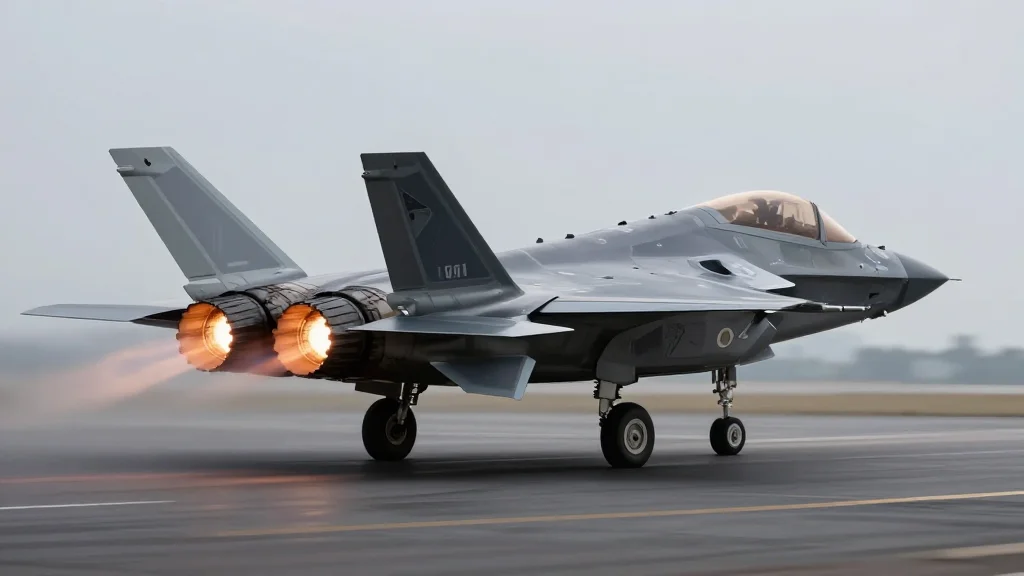
Recent analysis argues that speed of decision‑making, execution, and narrative framing—collectively termed “velocity”—determines outcomes in South Asian limited wars more than raw military size. Pakistan’s post‑2025 reforms, including a Chief of Defence Forces and an Army Rocket Force Command, compress...
The Burden That Should Not Be Theirs: How Congress Turned the Military Into the Last Check on Illegal War
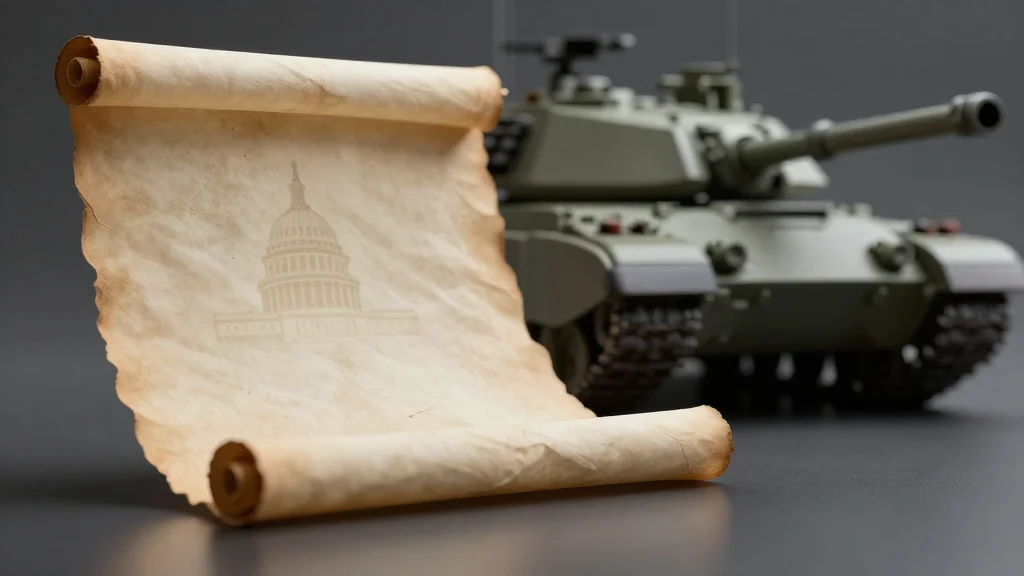
The post argues that Congress has effectively shifted the responsibility for stopping unconstitutional wars onto the U.S. military, turning the armed forces into a last‑ditch constitutional safeguard. It cites recent examples such as hypothetical invasions of Greenland and the Trump‑initiated...

In Brief: Increasing Tensions Between China and Japan Create Risks for the Region
Tensions between China and Japan have escalated after Japanese Prime Minister Sanae Takaichi’s November statement linking Japan’s response to a potential Chinese attack on Taiwan. Japan’s recent electoral win has enabled a surge in defense spending, while China signals willingness...
Foundry, Fleet, and Fight: Hedging the U.S. Navy
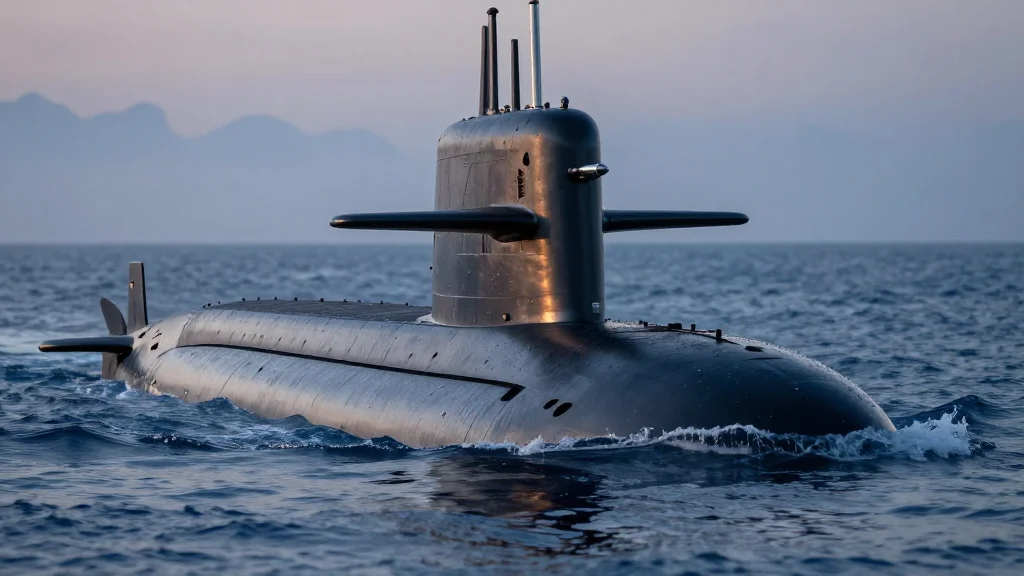
The U.S. Navy has issued new Fighting Instructions under Admiral Daryl Caudle, outlining a three‑pillar strategy—foundry, fleet, and fight—to modernize force structure amid fiscal pressure and great‑power competition. The plan emphasizes revitalizing the industrial base, improving ship‑maintenance readiness, and adopting...

Missed Signals and Middle East Shockwaves
Viktor Taran’s February 2026 analysis charts Ukraine’s military evolution from a hollowed‑out force in 2014 to a near‑two‑million‑strong, technologically advanced army by 2026. The transformation was driven by rapid mobilization, NATO‑aligned training, decentralized command, and a surge in indigenous missile and...

Washington Built the AI Infrastructure AUKUS Needs — Then Locked Allies Out
The United States has built the Genesis supercomputing platform, giving American AI firms structured access through Cooperative Research and Development Agreements, but it excludes AUKUS partners. While Australia and the United Kingdom pour billions into quantum and autonomous defense technologies,...