World Trade Organization (WTO) - Latest News and Information
Technology Pulse
EMAIL DIGESTS
Daily
Every morning
Weekly
Tuesday recap
EMAIL DIGESTS
Daily
Every morning
Weekly
Tuesday recap

The WTO unveiled its 2026 Global Trade Outlook at a Geneva press conference, highlighting a stark slowdown in world merchandise trade after an unexpected 4.6% surge in 2025. Director‑General Dr. Goio Konjjoa and chief economist Robert Tiger warned that regional conflict in the Middle East and a cooling AI investment boom are the primary headwinds for 2026, with baseline merchandise trade growth projected at 1.9% and services trade at 4.8%. Key data points show that the 2025 trade boom was driven by two one‑off forces: a front‑loading of North American imports ahead of U.S. tariff hikes and a rapid expansion of AI‑related goods, whose import intensity can reach 70‑90%. Both are unlikely to recur, and sustained higher energy prices from the Middle East conflict could shave another 0.5 percentage points from merchandise trade, pushing growth to 1.4%. Services trade faces a similar drag, potentially falling to 4.1%. The DG emphasized that despite the turbulence, 72% of global merchandise trade still moves under MFN tariff terms, underscoring the resilience of the rules‑based system. He noted, “the rules‑based system may be battered, but it’s far from broken,” and highlighted the concentration of AI imports in a handful of economies—U.S., Taiwan, South Korea, Netherlands, Japan, and China—illustrating supply‑chain vulnerabilities. The outlook signals that WTO members must prioritize predictable trade policies, bolster supply‑chain resilience, and keep food‑trade corridors open to mitigate the conflict’s impact on fertilizer and food security. With the MC14 ministerial conference looming in Yaoundé, these forecasts will shape negotiations on reforms aimed at preserving multilateral trade benefits for all members.

The video outlines the agenda for the World Trade Organization’s 14th ministerial conference (MC14) in Yaoundé, Cameroon, emphasizing trade‑and‑development issues. It stresses that special and differential treatment (SDT) remains central to the WTO’s mandate, and that ministers have tasked the...

The video highlights the rapid expansion of digital trade, noting that digitally delivered services now top $4.6 trillion—about 25% of global commerce—and that artificial intelligence is further accelerating this shift. It frames the discussion within the World Trade Organization’s electronic commerce...

The video outlines the WTO’s landmark fishery‑subsidies agreement, which came into force in September 2025, marking the first multilateral trade pact centred on environmental sustainability. It obliges members to eliminate subsidies that drive overfishing, protect marine ecosystems, and safeguard the food...

Since its 1995 founding, the World Trade Organization has promoted open, fair trade to boost living standards, jobs, and sustainable development. Yet rapid technological shifts and new geopolitical risks have exposed outdated rules, prompting members to declare reform urgent and...
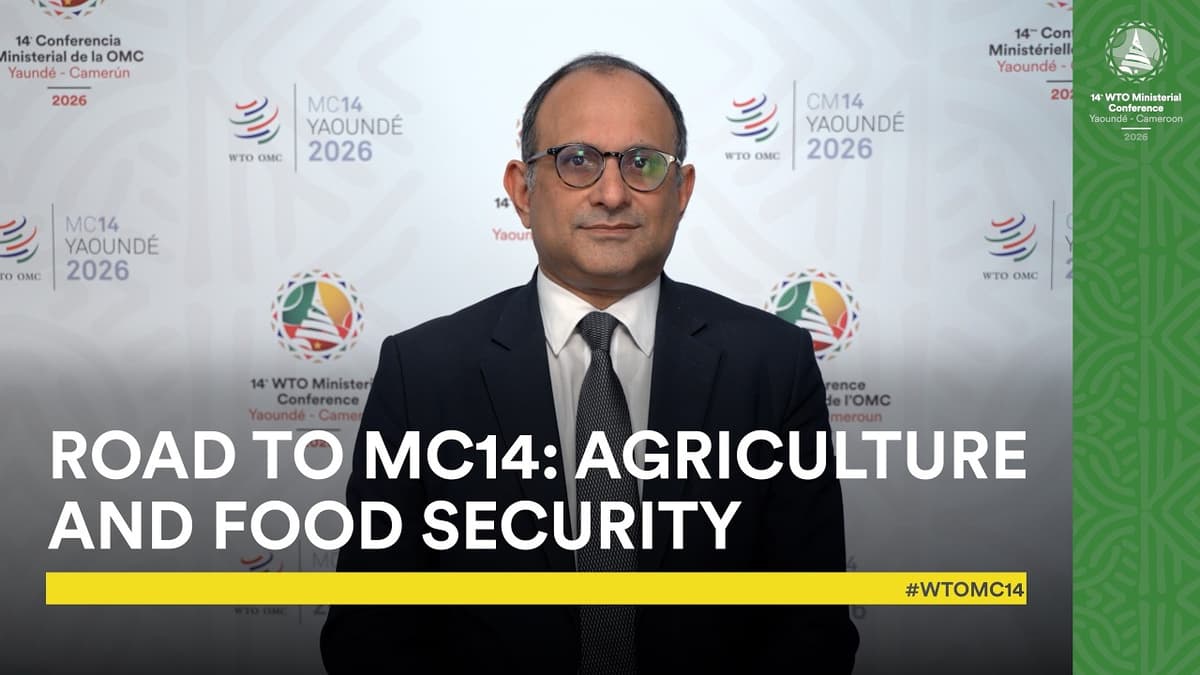
World Trade Organization ministers will meet in Yaoundé at the end of March for MC14, with agriculture elevated to a core agenda item as members seek to demonstrate the WTO’s relevance amid mounting strains on the rules-based system. Delegates are...


