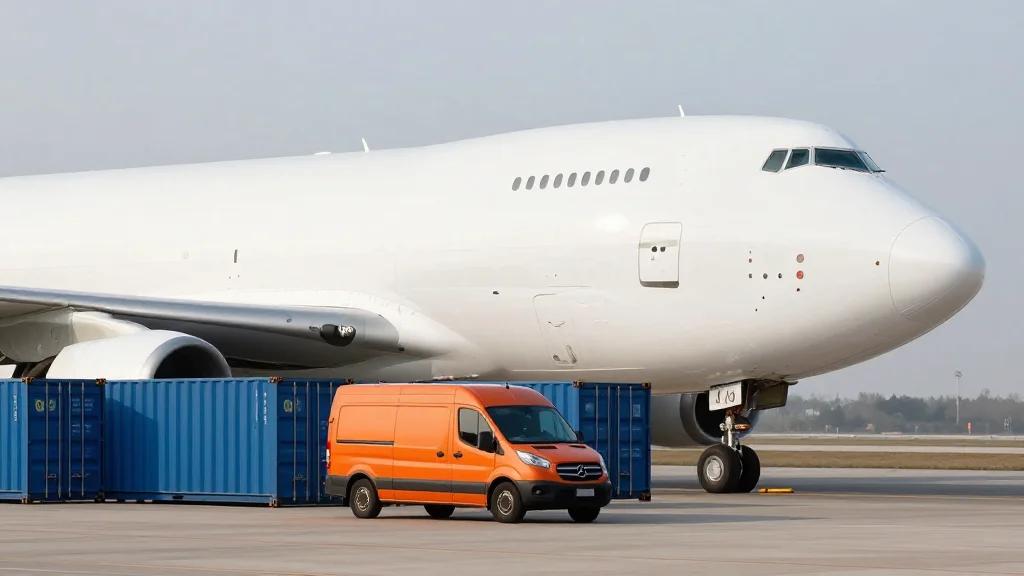
Amazon Launches Amazon Supply Chain Services, Leveraging 80,000 Trailers and 100+ Aircraft

Companies Mentioned


Why It Matters
Amazon’s logistics platform could lower barriers for midsize manufacturers and brands that previously relied on multiple carriers, potentially compressing margins for traditional freight firms. By offering end‑to‑end visibility and a single billing relationship, ASCS may accelerate the shift toward integrated supply‑chain management, a trend already evident in cloud‑based services. The move also gives Amazon a new revenue stream that is less dependent on retail sales, diversifying its business model amid tightening margins in the core e‑commerce segment. For retailers, the ability to tap Amazon’s massive network could translate into faster inventory turnover, reduced stock‑outs and more reliable delivery promises—key factors in retaining customers in an increasingly speed‑driven market. Conversely, carriers that cannot match Amazon’s scale or technology may need to specialize or form alliances to stay competitive.
Key Takeaways
- •Amazon Supply Chain Services launched, offering freight, warehousing and parcel delivery to any business
- •Platform leverages >80,000 trailers, 24,000 intermodal containers, 100+ aircraft and 250 daily flights
- •Early adopters include Procter & Gamble, 3M, Lands’ End and American Eagle Outfitters
- •Peter Larsen (VP, Amazon Supply Chain Services) likens the model to AWS cloud services
- •Todd Bairstow (Founder, Finer Form) praises the end‑to‑end value added by Amazon
Pulse Analysis
Amazon’s decision to commercialize its logistics backbone is a logical extension of a strategy that has already turned internal capabilities into market‑dominant platforms, most notably AWS. The logistics arm benefits from years of investment in automation, AI‑driven routing and a sprawling fulfillment footprint that rivals the combined assets of many traditional carriers. By bundling transportation modes—air, ocean, rail and ground—into a single API‑driven service, Amazon reduces the friction that has historically forced shippers to juggle multiple contracts and disparate tracking systems.
The competitive impact will likely be uneven. Large enterprises with high volume can negotiate favorable rates and may adopt ASCS quickly, while smaller firms might still prefer local carriers for niche routes or specialized services. FedEx and UPS, which have long‑standing relationships and a broader global reach in certain regions, will probably respond by sharpening their own technology offerings and exploring partnership models. In the short term, Amazon’s pricing remains opaque, but the promise of cost efficiency and speed could force a price war that squeezes margins across the freight industry.
Looking ahead, the success of ASCS will hinge on Amazon’s ability to balance internal demand with external customers, especially during peak seasons when its own retail fulfillment needs surge. Capacity allocation, service reliability and data security will be under scrutiny. If Amazon can maintain high service levels while scaling external volume, it could set a new benchmark for integrated logistics, further entrenching its role as the de‑facto infrastructure provider for the digital commerce ecosystem.
Amazon Launches Amazon Supply Chain Services, Leveraging 80,000 Trailers and 100+ Aircraft
Comments
Want to join the conversation?
Loading comments...