PepsiCo Deploys AI-Powered Digital Twins of Manufacturing Facilities to Test Expansion Plans
Companies Mentioned
Why It Matters
The initiative cuts costly redesign cycles and accelerates capacity expansion, giving PepsiCo a decisive edge in a high‑growth, supply‑chain‑intensive market.
Key Takeaways
- •AI twins detect up to 90% issues before build
- •Throughput rose 20% on initial deployment
- •Capital expenditures cut 10‑15% via virtual validation
- •Near‑100% design validation speeds design cycles
- •PepsiCo plans global rollout of digital‑twin strategy
Pulse Analysis
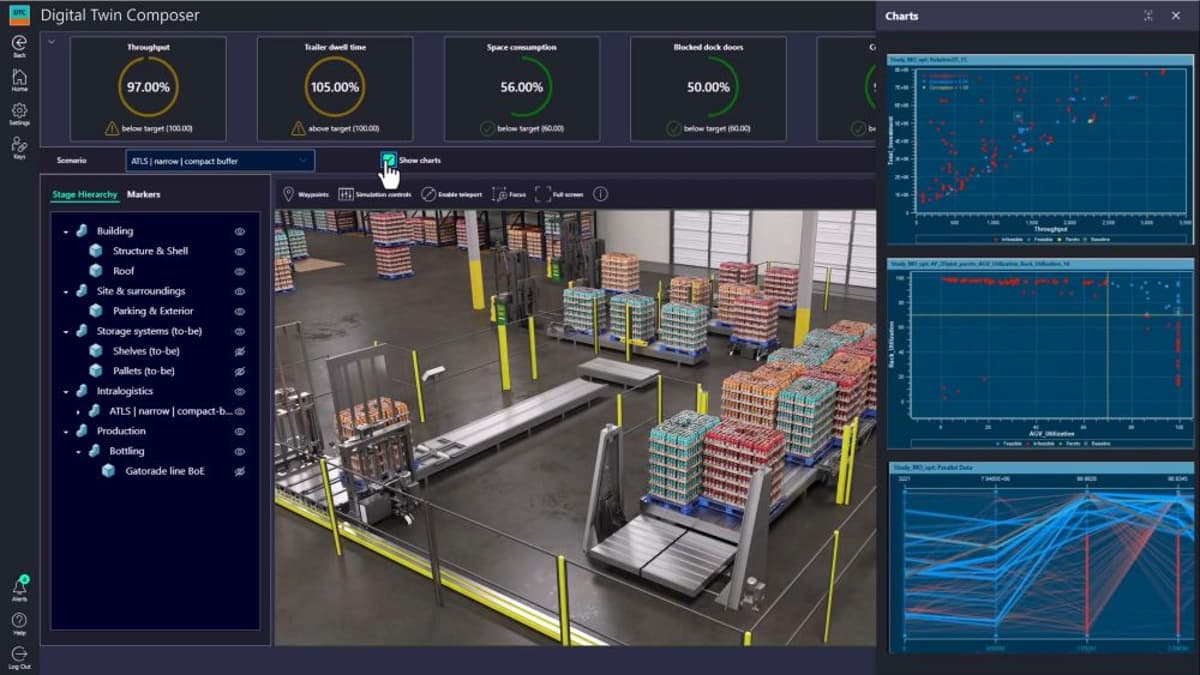
The convergence of AI and high‑fidelity digital twins is reshaping how heavy‑asset companies design and operate physical plants. By leveraging Nvidia’s Omniverse platform and Siemens’ Digital Twin Composer, PepsiCo can recreate every conveyor, robot and operator path with physics‑level accuracy. This granular modeling enables autonomous AI agents to run thousands of what‑if scenarios, identifying bottlenecks, safety risks, and capacity constraints long before a single bolt is tightened. The technology moves planning from a static CAD view to a dynamic, data‑rich simulation environment, dramatically reducing guesswork.
Operational gains are already evident. In the pilot facilities, the AI‑augmented twin identified hidden throughput opportunities, delivering a 20% increase in output while virtually eliminating design rework. Capital spend fell 10‑15% as engineers validated equipment layouts and material flows in the virtual realm, avoiding costly retrofits. Near‑perfect design validation—approaching 100%—shortens the time from concept to construction, a critical advantage as consumer demand for beverages and snacks surges. The approach mirrors early adopters in retail, such as Lowe’s and Orangetheory, but marks the first large‑scale deployment in food‑and‑beverage manufacturing.
Looking ahead, PepsiCo’s global rollout signals a broader shift toward digital‑first supply‑chain strategies across the industry. As AI agents become more sophisticated, they will not only test physical configurations but also optimize energy usage, predictive maintenance schedules, and real‑time response to market volatility. Companies that embed digital twins into their core planning processes can expect faster time‑to‑market, lower capital intensity, and a more resilient operational footprint—key differentiators in an increasingly competitive consumer goods landscape.
PepsiCo Deploys AI-Powered Digital Twins of Manufacturing Facilities to Test Expansion Plans


Comments
Want to join the conversation?
Loading comments...