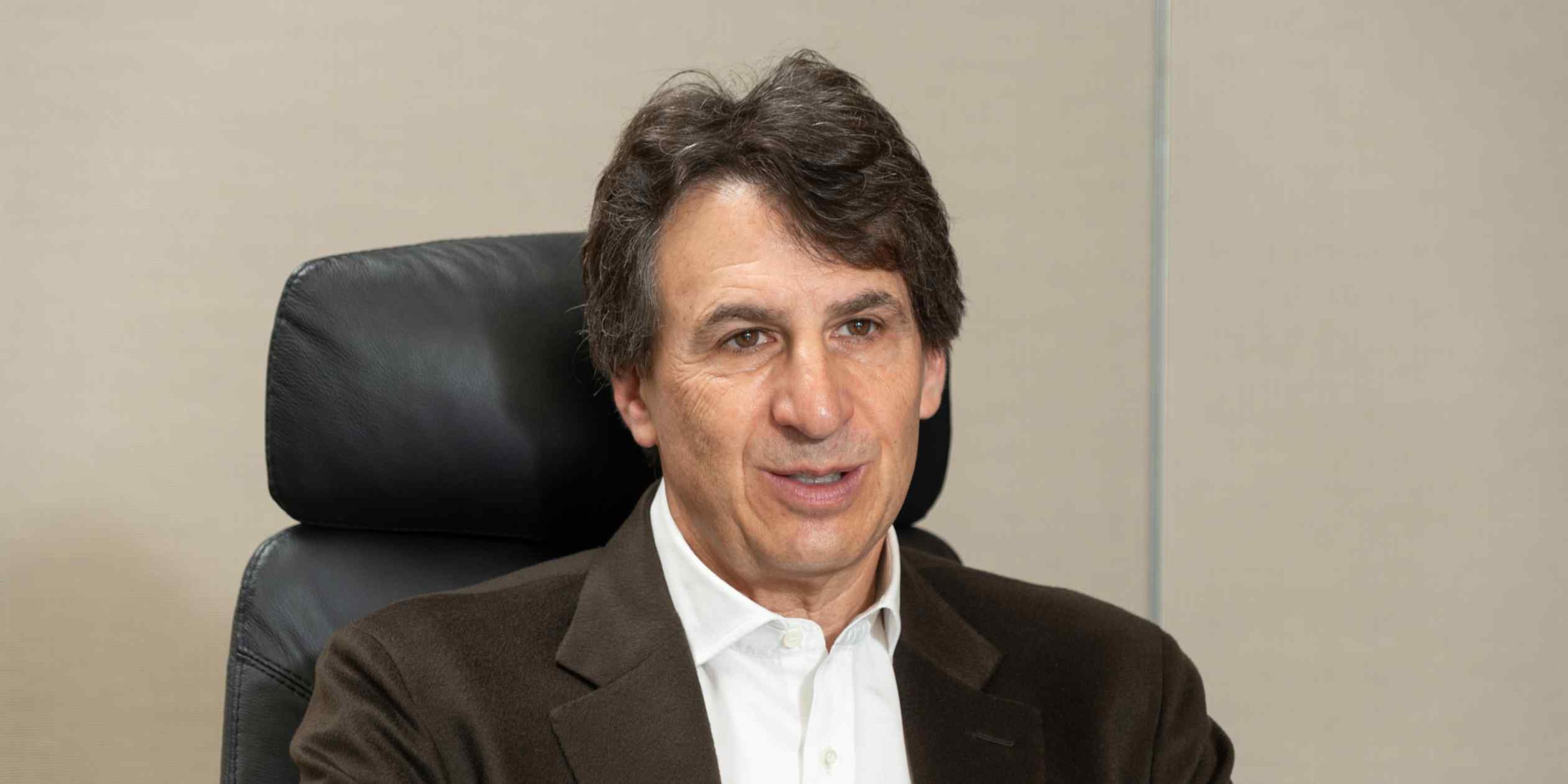
Japanese Market 'More Dynamic' Than London, Says Apollo CEO
•February 20, 2026
0
Companies Mentioned

Why It Matters
The shift signals a broader acceptance of alternative financing in Japan, opening new revenue streams for asset managers and diversifying capital sources for Japanese corporates.
Key Takeaways
- •Apollo expands private‑credit in Japan.
- •Japanese firms seek long‑dated financing.
- •Private credit rivals bank loans and equity.
- •First private‑credit funded Japanese acquisition: Air Lease Corp.
- •Retail investors eye inflation‑beating private assets.
Pulse Analysis
Japan’s financial ecosystem is undergoing a subtle but significant transformation. Historically, corporations relied heavily on short‑term bank loans and equity issuances, a pattern reinforced by a conservative corporate culture. Recent governance reforms and the Tokyo Stock Exchange’s emphasis on capital efficiency have nudged CFOs toward longer‑term, non‑bank funding solutions. This environment creates fertile ground for private‑credit providers, who can structure multi‑year loans tailored to capital‑intensive sectors such as renewable energy, advanced manufacturing, and defense.
Apollo Global Management is leveraging this momentum by positioning itself as a disciplined private‑credit partner. The firm’s participation in the $7.4 billion Air Lease Corp. deal—financed partly by its insurance arm—demonstrates a willingness to blend proprietary capital with external investor funds, offering Japanese sponsors a proven alternative to traditional debt. Apollo’s track record with investment‑grade corporates like AT&T and Air France‑KLM adds credibility, while its focus on “skin in the game” aligns interests with borrowers. By expanding product suites for retail investors, Apollo aims to capture a growing appetite for assets that can outpace inflation and deliver higher risk‑adjusted returns than public equities.
For investors, the rise of private credit in Japan presents both opportunity and risk diversification. Retail participants, increasingly comfortable with private‑market exposure, can access longer‑duration yields that complement existing portfolios dominated by ETFs and index funds. Meanwhile, the contrast Rowan draws between a “dynamic” Japan and a “less dynamic” London underscores a geographic shift in capital‑raising trends, suggesting that asset managers may prioritize Asia‑Pacific markets for future growth. As private credit gains traction, it could reshape the competitive landscape, prompting banks to innovate and regulators to adapt to a more varied financing ecosystem.
Japanese market 'more dynamic' than London, says Apollo CEO
By Shiko Ueda · February 20 2026 13:57 JST
TOKYO — Apollo Global Management is looking to expand its private‑credit business in Japan, CEO Marc Rowan told Nikkei, calling the country an “ascendant” market that is opening up to this alternative funding source.
“Most of what we lend is long‑dated,” Rowan said in an interview. “If we think about what is needed here — infrastructure, energy, energy transition, next‑generation manufacturing, defense, AI, data, robotics — almost everything is very long‑dated.”
Typical bank loans for Japanese companies have terms of three years or less, Rowan said. Apollo is able to extend long‑term financing that will address complex funding needs.
Japanese companies’ attitude toward private credit is changing, according to Rowan, who said corporations relied heavily on bank loans and stock issuance to raise funds because they thought that “private is risky and public is safe.”
Apollo has a track record of providing financing to investment‑grade corporations, such as AT&T and Air France‑KLM Group, said Rowan. Japanese companies are learning that private credit carries the same risks as traditional funding methods, such as stocks and bonds, he added.
“In the [Japanese] corporate world, CFOs really have embraced private as a tool,” said Rowan.
Rowan praised the progress of corporate governance in Japan, as well as the Tokyo Stock Exchange’s call for businesses to be more mindful of capital costs.
“Japan has become more dynamic,” said Rowan, while London has become “much less dynamic.”
Apollo was involved in the $7.4 billion acquisition of U.S.-based Air Lease Corp., agreed on in September by a consortium led by Japanese trading house Sumitomo Corp. A portion of the purchase was financed by Apollo’s insurance arm, marking the first time that private credit was used in an acquisition by Japanese companies. The consortium also included Canadian asset manager Brookfield and SMBC Aviation Capital, a subsidiary of Sumitomo Mitsui Finance and Leasing.
Rowan said Apollo is focused on discipline when funding targets, and mixes its own funds together with capital from outside investors. Apollo provides private credit with “skin in the game,” he said.
Apollo also plans to expand product offerings for retail investors in Japan, where there is demand for investments that can keep up with inflation. Rowan said private assets held long term can offer higher returns than public stocks and bonds.
Because of the shift toward passive asset management, such as exchange‑traded funds, only a handful of companies make up the majority of trading on the U.S. stock market.
“If you’re not in the S&P 500, I don’t know why you’re public because … no one cares,” said Rowan.
“There’s not an active market the way there used to be, and fewer and fewer active managers are there to trade and support your stock,” he added.
Even in Japan, retail investors are increasingly turning to private markets, according to Rowan.
“It does not surprise me that private markets are growing faster than public markets.”
0
Comments
Want to join the conversation?
Loading comments...