What to Expect From the U.S.-China Summit
In this brief episode, Ariana Salvatore of Morgan Stanley outlines modest expectations for the U.S.-China Summit in Copenhagen, noting that discussions will likely center on trade, Taiwan arms sales, and the Iran conflict rather than sweeping policy shifts. She anticipates phase‑one‑style trade commitments, limited tariff relief, and no major unilateral U.S. tariff cuts, while highlighting the strategic importance of maintaining higher tariffs on China. On Taiwan, Salvatore sees little room for change without a significant Chinese concession, and she flags the uncertainty around U.S. requests for Chinese assistance in reopening the Strait of Hormuz and potential rare‑earth and semiconductor negotiations. Investors should watch the summit’s tone and any language about future technology cooperation, as these signals will shape market risk premiums more than immediate concrete outcomes.

China, the Iran War, and the US
In this episode, economist Diana Choileva discusses how the great‑power rivalry between the United States and China is fracturing globalization and reshaping global finance. She reviews the accuracy of her decade‑old forecasts, noting that the US‑China trade and tech wars,...

Trump Flies to Beijing — But Who's Actually Desperate?
The episode critiques former President Donald Trump's recent trip to Beijing, arguing that his diplomatic overtures are empty promises that can be reversed overnight. It highlights how Trump's erratic, business‑first approach undermines U.S. credibility, especially in negotiations like those with...

Andrew Bridgen on NZ-India FTA, Migration and COVID-Era Policies
In this episode, Andrew Bridgen warns that a pending New Zealand‑India free‑trade agreement will hand over immigration control and key technologies to India, undermining national sovereignty and sparking unchecked migration. He links the deal to broader globalist agendas, including digital ID...
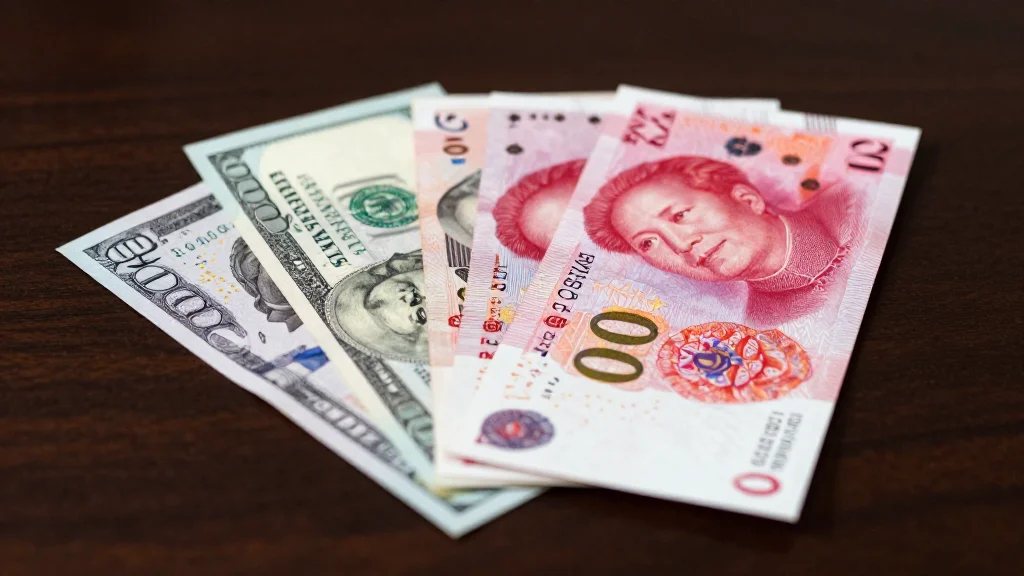
Sterling's Resilience and China’s Tactical Game
In this episode of the Currency Exchange podcast, NatWest Markets’ G10FX strategist Paul Robson explains why sterling has remained surprisingly resilient despite Middle‑East turmoil, citing safe‑haven flows, historic UK‑GCC links, and limited fast‑money pressure. He then assesses the impact of...

EM Fixed Income: Parsing Peace Talks and Payrolls
In this episode of Emerging Market Fixed Income, JPMorgan strategists Aneska Christovova, Ben Ramsey, and Tanya Escobedo dissect the latest Middle East cease‑fire talks, U.S. non‑farm payroll data, and their ripple effects across EM FX, sovereign credit spreads, and local...

213. Ups and Downs at the Port of Los Angeles
In this episode, host Chad Bowne tours the Port of Los Angeles with executive director Gene Soroka, exploring the port’s massive scale, its role in moving roughly $1 billion of cargo daily, and its critical impact on the U.S. economy—supporting about...

Trump Announces 25% Tariffs on Cars From the EU
The episode examines President Donald Trump's announcement of a 25% tariff on European cars and trucks, arguing the move stems from perceived EU non‑compliance with a recent trade deal, especially over steel and aluminium disputes. BBC correspondents and EU officials...
The Iran Conflict: Outlook for Negotiations
In this episode, RAINN analyst Kristen Ronzi outlines the current stalemate in U.S.-Iran negotiations, highlighting the fragile cease‑fire, the U.S. port blockade, and Iran’s intermittent attacks on the Strait of Hormuz. She explains that the core negotiating hurdles are Iran’s...

Trump's Real Plan: It Was Never Just About Iran
In this episode Amber Duke examines three major stories: the UAE’s departure from OPEC, which she frames as a strategic pivot toward the United States and Israel to counter Iran and China’s influence; the controversial $8.7 million federal funding of the...
In Conversation with Treasurer Jim Chalmers
In this 41‑minute interview, Australian Treasurer Jim Chalmers outlines his long‑term economic philosophy: steering Australia through frequent global shocks by building a "fourth economy" powered by clean energy, technology and social mobility. He warns that mismanaging this transition could deepen...
EM Lens: Investors Aren’t Packing Their EM Bags Just Yet
In this episode of Emerging Markets Lens, senior EM fixed‑income manager Araf Joshi discusses how the Iran‑related oil shock is tightening LNG supplies and pressuring Asian and African economies, leading to higher bond spreads and fiscal stimulus measures. He contrasts...
Are Investors Underestimating Emerging Markets?
In this episode, Andrew Van Sickle talks with Charles Gillings, manager of the Utilico Emerging Markets Trust, about why investors may be undervaluing emerging markets and the fund’s sector‑focused, infrastructure‑centric approach. Gillings explains that the recent EM rally was driven...

Boom! United Arab Emirates Exits OPEC
In this episode, Patrick Wood explains how the United Arab Emirates' withdrawal from OPEC on May 1, 2026 signals the collapse of the petrodollar system and the rise of a new technocratic trade architecture centered on asset tokenization and the...
212. America's Semiconductor Policy and the AI Race with China
In this episode, host Chad Bowne and guest Dan Kim—former chief economist of the U.S. Commerce Department’s CHIPS Program and veteran of Qualcomm and SK Hynix—explore America’s aggressive semiconductor policy amid the AI race with China. They trace the historical...