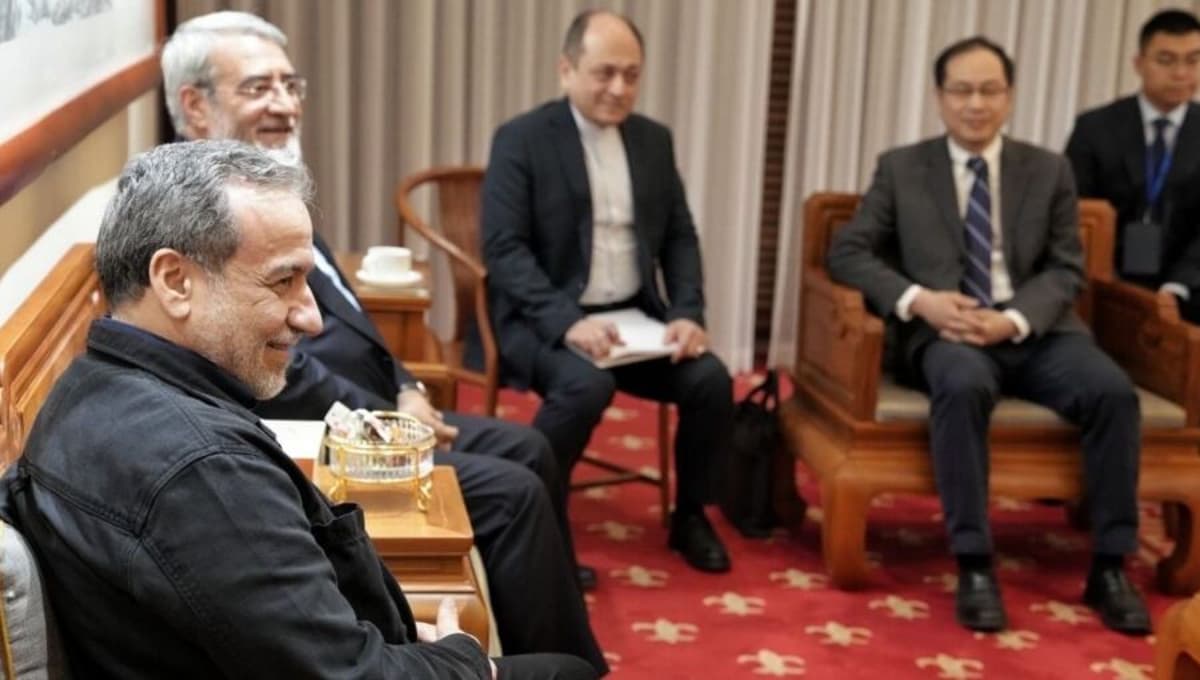
Beijing Becomes the Chessboard as Iran Pre-Empts Trump-Xi Summit
Why It Matters
The pre‑emptive Iranian push could limit Washington’s leverage over Beijing, complicating U.S. efforts to curb Iranian oil revenues and affecting global energy markets. It also highlights China’s willingness to act as a mediator, reshaping great‑power dynamics in the Middle East.
Key Takeaways
- •Iran’s envoy visited Beijing 14 days before Trump‑Xi summit
- •Tehran warned U.S. deals ignoring Iran risk Strait of Hormuz stability
- •China refuses to use sanctions on Iran as bargaining chip
- •Dual strategy blends diplomatic pressure with Gulf military deterrence
Pulse Analysis
Iran’s high‑level diplomatic sortie to Beijing was no coincidence; arriving 14 days before President Trump’s meeting with Xi Jinping, Foreign Minister Abbas Araghchi sought to set the parameters of any future US‑China accord. By foregrounding Tehran’s post‑war military consolidation and its role as a regional power, Iran aimed to ensure its oil exports and strategic corridors are factored into the great‑power dialogue, effectively turning Beijing into a negotiation board rather than a passive host.
The timing also intensifies the already fraught U.S. sanctions regime. Washington hopes to pressure China into curbing Iranian crude shipments, using the threat of steep tariffs on Chinese goods as leverage. Beijing, however, views Iranian oil as a cornerstone of its energy security—over half of China’s industrial fuel passes through the Persian Gulf and the Strait of Hormuz. Iranian officials highlighted the strait’s stability, warning that any attempt to choke off Tehran’s oil flow could ripple through global markets and jeopardize China’s growth trajectory, making a hard‑line U.S. stance less attractive to Beijing.
Beyond immediate energy concerns, the episode signals a broader shift in geopolitical calculus. China’s refusal to become a bargaining chip in U.S. anti‑Iran efforts underscores its desire to act as a stabilizing mediator, a role it previously demonstrated in the Iran‑Saudi rapprochement. For the United States, Iran’s dual strategy—combining diplomatic outreach in Beijing with a credible military deterrent in the Gulf—creates a more complex bargaining environment, potentially limiting Washington’s leverage and reshaping the balance of power in the Indo‑Pacific and Middle East.
Beijing becomes the chessboard as Iran pre-empts Trump-Xi summit
Comments
Want to join the conversation?
Loading comments...