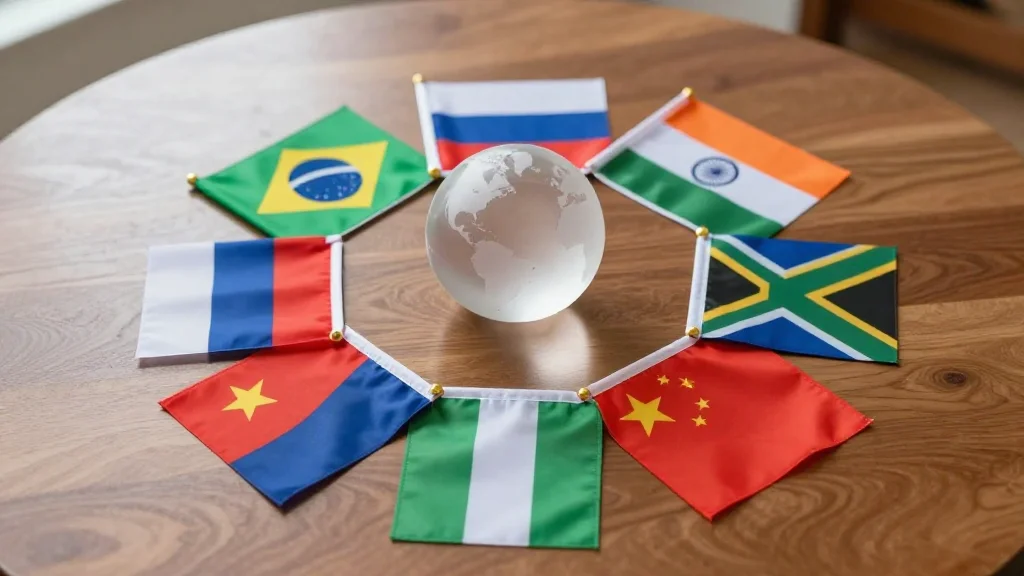
BRICS Foreign Ministers Split in New Delhi Over Iran-UAE Rift, No Joint Statement

Why It Matters
The split at the New Delhi summit highlights the limits of BRICS as a cohesive political force. As the bloc seeks to position itself as an alternative to Western‑led institutions, internal disputes over regional security threaten to undermine its credibility and bargaining power in global forums such as the IMF and World Bank. A fractured BRICS also complicates coordinated action on issues like trade finance, currency swaps, and development financing, which are critical for emerging economies facing volatile capital flows. Moreover, the Iran‑UAE confrontation underscores how Middle‑East geopolitics can spill over into broader multilateral settings, pulling emerging‑market coalitions into disputes that are traditionally managed by security alliances. The inability to produce a joint communiqué may embolden rival powers to exploit these fissures, potentially reshaping trade routes, investment flows, and diplomatic alignments across Asia, Africa and Latin America.
Key Takeaways
- •BRICS foreign ministers' meeting in New Delhi ended without a joint communiqué due to Iran-UAE tensions.
- •Iranian FM Abbas Araghchi accused the UAE of supporting U.S. and Israeli aggression, citing attacks on Emirati soil.
- •UAE Minister Khalifa Shaheen Al Marar rejected Iran's claims, emphasizing sovereign rights and principled positions.
- •Members reiterated calls for reform of the global financial system, but no concrete agreement was reached.
- •The deadlock raises doubts about BRICS' ability to act as a unified counterweight to G7 economic policies.
Pulse Analysis
The New Delhi impasse is a litmus test for BRICS' strategic coherence. Historically, the bloc has leveraged its collective weight to negotiate better terms with the IMF and to promote the New Development Bank. However, the Iran-UAE spat reveals that regional rivalries can quickly eclipse shared economic interests. If the bloc cannot reconcile such disputes, its leverage in multilateral finance negotiations will likely erode, leaving member states to pursue bilateral arrangements that may dilute the BRICS brand.
From a market perspective, investors watch BRICS cohesion as a proxy for emerging‑market stability. The lack of a joint statement may trigger short‑term capital outflows from economies that rely on BRICS-backed financing, especially in sectors like infrastructure and renewable energy where the New Development Bank has been a key funder. Conversely, the public disagreement could also open space for China to assert greater leadership, positioning itself as the stabilising force within the group.
Looking ahead, the Johannesburg summit will be a decisive moment. If member states can compartmentalise the Iran-UAE issue and focus on financial reforms—such as expanding the BRICS Reserve Currency or deepening the New Development Bank's capital base—they may restore confidence in the bloc's relevance. Failure to do so could accelerate a drift toward parallel institutions led by the United States or the European Union, reshaping the emerging‑market landscape for the next decade.
BRICS Foreign Ministers Split in New Delhi Over Iran-UAE Rift, No Joint Statement
Comments
Want to join the conversation?
Loading comments...