Cambodia Leverages 60% Renewable Power and ASEAN Grid Links to Hedge Against Global Shocks

Companies Mentioned
Why It Matters
Cambodia’s renewable‑energy surge demonstrates how a small, export‑dependent economy can use clean power to reduce vulnerability to oil price spikes and geopolitical risk. By cutting import dependence to single‑digit levels, the country shields households and businesses from external price shocks, preserving consumer spending and industrial competitiveness. Moreover, its emerging role in the ASEAN power grid creates a new avenue for regional trade, potentially turning energy surplus into a balance‑of‑payments asset. For investors and development partners, Cambodia offers a proof‑of‑concept that targeted public‑private partnerships—exemplified by the National Solar Park—can accelerate decarbonisation while delivering economic returns. The model may inspire similar strategies across Southeast Asia, where many economies still rely heavily on imported fossil fuels.
Key Takeaways
- •Renewable electricity share exceeds 60% in Cambodia, per ADB.
- •Import dependence on fossil fuels fell from 64% (2011) to ~10% today.
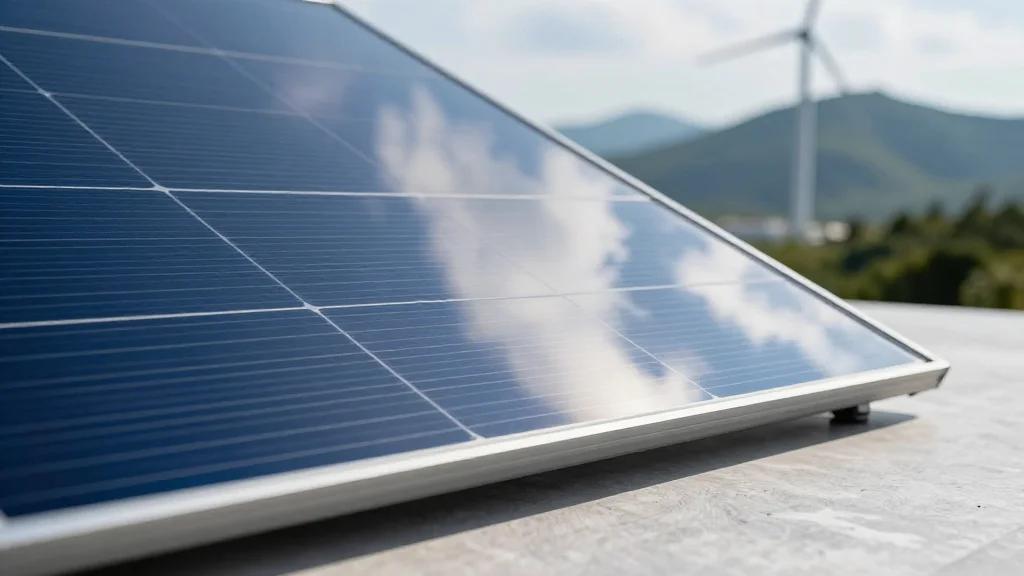
- •National Solar Park (100 MW) supplies ~25% of Phnom Penh’s power and cuts 150,000 t CO₂ annually.
- •Cambodia aims for 70% renewable electricity by 2030.
- •Integration into ASEAN power grid slated for early 2027, opening export opportunities.
Pulse Analysis
Cambodia’s energy transition is more than an environmental story; it is a macro‑economic hedge. By decoupling electricity costs from volatile oil markets, the country insulates its inflation trajectory, a critical factor for a nation where food and transport make up a large share of household budgets. The ADB’s outlook suggests that without this buffer, rising fuel prices could erode real wages and stall the 6‑7% growth path the government is targeting.
The regional grid ambition adds a strategic layer. ASEAN’s power‑pooling initiative aims to balance supply‑demand mismatches across borders, and Cambodia’s solar surplus positions it as a low‑cost exporter. This could attract foreign direct investment into transmission infrastructure, storage, and ancillary services, creating a new growth sector that complements traditional agriculture and garment manufacturing. However, the success of this model hinges on regulatory harmonisation, cross‑border tariff agreements, and the ability to manage intermittency through storage—areas where policy gaps remain.
In the broader emerging‑markets context, Cambodia’s approach may become a template for countries with limited fiscal space to invest in large‑scale fossil‑fuel projects. By leveraging multilateral financing and public‑private partnerships, they can achieve rapid renewable deployment, lower import bills, and open new trade channels. The coming years will test whether the ASEAN grid can deliver on its promise of shared resilience, and whether Cambodia can translate its clean‑energy advantage into sustained, inclusive growth.
Cambodia Leverages 60% Renewable Power and ASEAN Grid Links to Hedge Against Global Shocks
Comments
Want to join the conversation?
Loading comments...