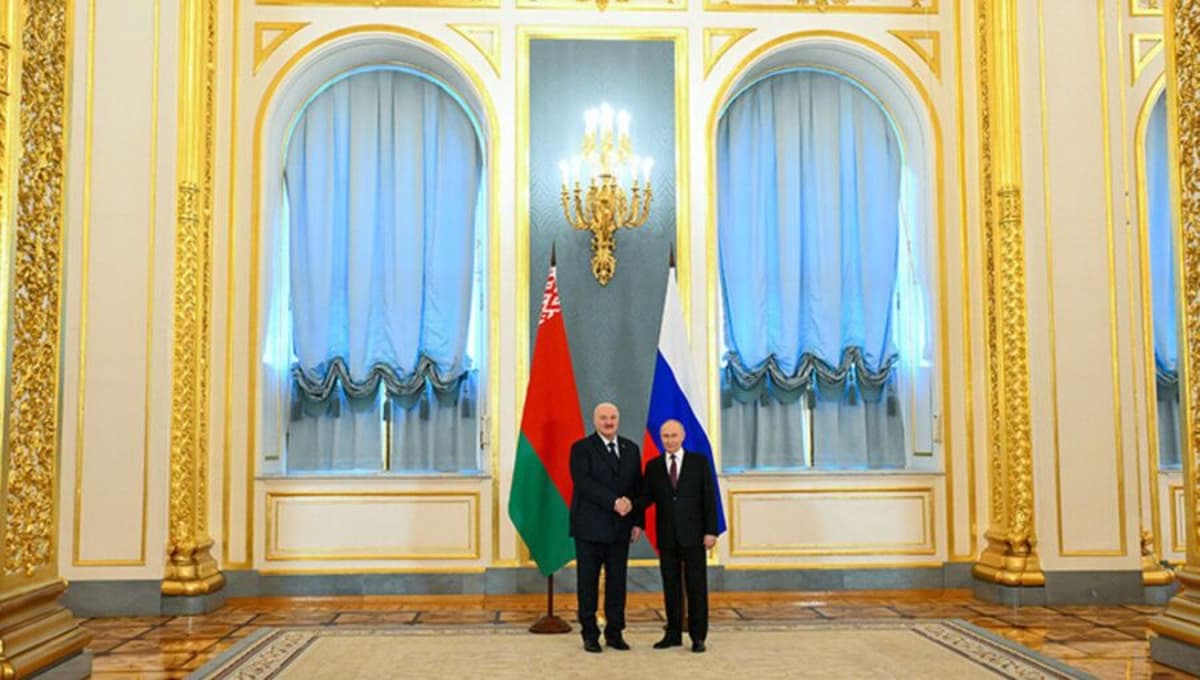
China and Iran Queue up to Copy Belarus-Russia Regional Blueprint, Lukashenko Claims
•February 26, 2026
0
Why It Matters
The move signals Russia's strategy to export its integration model to Asian and Middle Eastern partners, potentially reshaping regional alliances and extending geopolitical influence beyond Europe.
Key Takeaways
- •China, Iran seek Belarus‑Russia regional cooperation model.
- •Union State links regions directly, bypassing central governments.
- •Only half of 300 planned 2024‑26 projects completed.
- •Model could extend Russian influence into Asia and Middle East.
- •Council set agenda for 2027‑2029 successor treaty.
Pulse Analysis
The Belarus‑Russia Union State, originally a post‑Soviet integration experiment, has evolved into a pragmatic network that connects sub‑national entities rather than relying solely on national ministries. By focusing on regional corridors, infrastructure, and standards, the model promises faster implementation of joint projects, a feature that attracted attention from Beijing and Tehran. The Union State’s recent agenda, which includes cross‑border commuter services and a standardisation committee, underscores its ambition to create a seamless economic zone despite the incomplete rollout of over 300 initiatives slated for 2024‑2026.
China’s interest reflects its broader Belt and Road ambitions, seeking a template that can bypass bureaucratic bottlenecks and directly engage local economies in Eastern Europe. Iran, isolated by sanctions, views the model as a pathway to diversify trade routes and gain technical expertise without Western oversight. Both nations hope the region‑to‑region approach will accelerate joint ventures in energy, transport, and digital infrastructure, while also providing political leverage through closer ties with Moscow and Minsk.
For Russia, exporting the Union State framework serves a dual purpose: it reinforces its strategic partnership network and counters Western attempts to contain its influence. If China and Iran adopt the model, Moscow could gain footholds that extend its geopolitical reach into Asia and the Middle East, complicating the policy calculus of the United States and the European Union. However, the partial execution of existing projects raises questions about the model’s scalability and the capacity of partner states to meet ambitious timelines. Observers will watch closely whether the forthcoming 2027‑2029 treaty can address these execution gaps and solidify a new multilateral bloc.
China and Iran queue up to copy Belarus-Russia regional blueprint, Lukashenko claims
0
Comments
Want to join the conversation?
Loading comments...