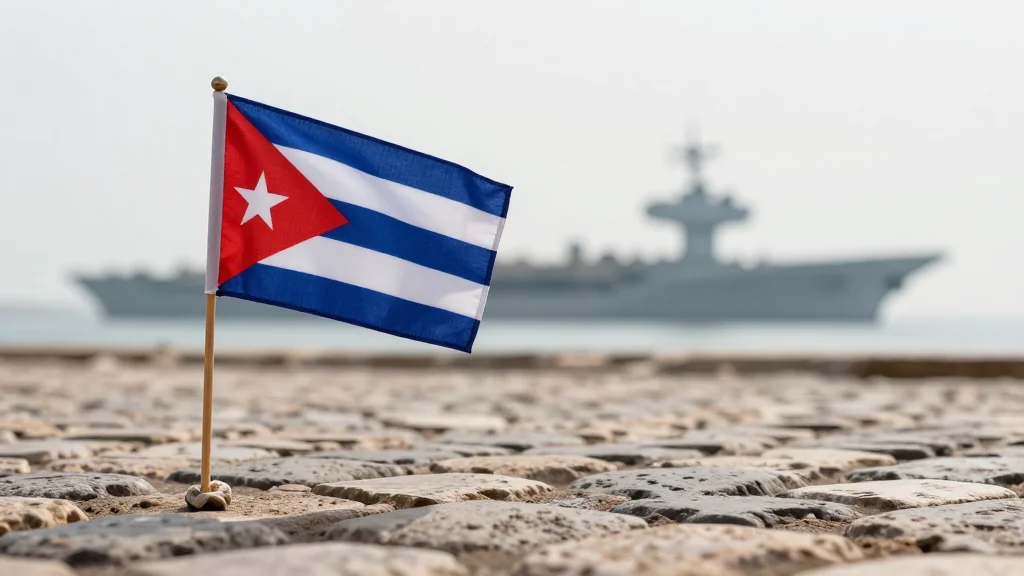
Cuban President Díaz‑Canel Warns of US Aggression, Says Island Ready to Defend Itself

Why It Matters
The standoff between Cuba and the United States illustrates how geopolitical friction can amplify economic vulnerability in emerging markets. Cuba’s reliance on imported oil and its limited access to international finance make it especially sensitive to sanctions, and any escalation could spill over into the broader Caribbean, affecting tourism, trade and regional security. Moreover, the rhetoric signals to investors that political risk in the region remains elevated, potentially curbing capital inflows and delaying development projects. For policymakers, the episode underscores the need for calibrated diplomatic engagement. A prolonged blockade could deepen a humanitarian crisis, prompting migration flows that strain neighboring economies. Conversely, a negotiated easing of restrictions could open pathways for modest economic reforms, offering a modest boost to growth prospects in a market that has been stagnant for half a decade.
Key Takeaways
- •Cuban President Miguel Díaz‑Canel says Cuba will fight US military aggression if it occurs.
- •US President Donald Trump hints at a possible visit to Cuba after the Iran war, calling the island a "failing nation."
- •The US energy blockade and new tariff threats have intensified Cuba’s five‑year economic crisis.
- •Blackouts, fuel shortages and increased emigration are reported as direct impacts of the sanctions.
- •Analysts warn heightened geopolitical risk could deter tourism and foreign investment across the Caribbean.
Pulse Analysis
The latest exchange between Havana and Washington is less about immediate military confrontation and more about signaling. For Cuba, projecting readiness to defend itself serves a dual purpose: it reinforces domestic legitimacy and attempts to extract concessions from a U.S. administration that has shown a willingness to leverage economic tools. Historically, Cuban leaders have used external threats to rally popular support, a tactic that appears to be resurfacing as the island grapples with chronic shortages.
From an investor’s perspective, the episode adds a layer of uncertainty to an already fragile market. The Caribbean’s tourism sector, which accounts for roughly 40% of Cuba’s GDP, is highly sensitive to travel advisories and perceived safety. A hardening of U.S. policy could depress visitor numbers not only from the United States but also from third‑party markets that follow U.S. guidance. Meanwhile, energy‑intensive industries face higher operational costs due to the blockade, limiting any near‑term upside for foreign direct investment.
Looking ahead, the trajectory will hinge on diplomatic maneuvering. If talks produce a modest easing of the energy blockade, Cuba could stabilise its power grid and modestly revive its agricultural output, offering a narrow window for investors willing to navigate political risk. Conversely, a further escalation could push the island deeper into isolation, prompting a wave of capital flight and accelerating the brain drain that has plagued the country since the early 2020s. Stakeholders should monitor any official statements from the U.S. State Department and the Cuban Ministry of Foreign Affairs for early signs of policy shifts.
Cuban President Díaz‑Canel Warns of US Aggression, Says Island Ready to Defend Itself
Comments
Want to join the conversation?
Loading comments...