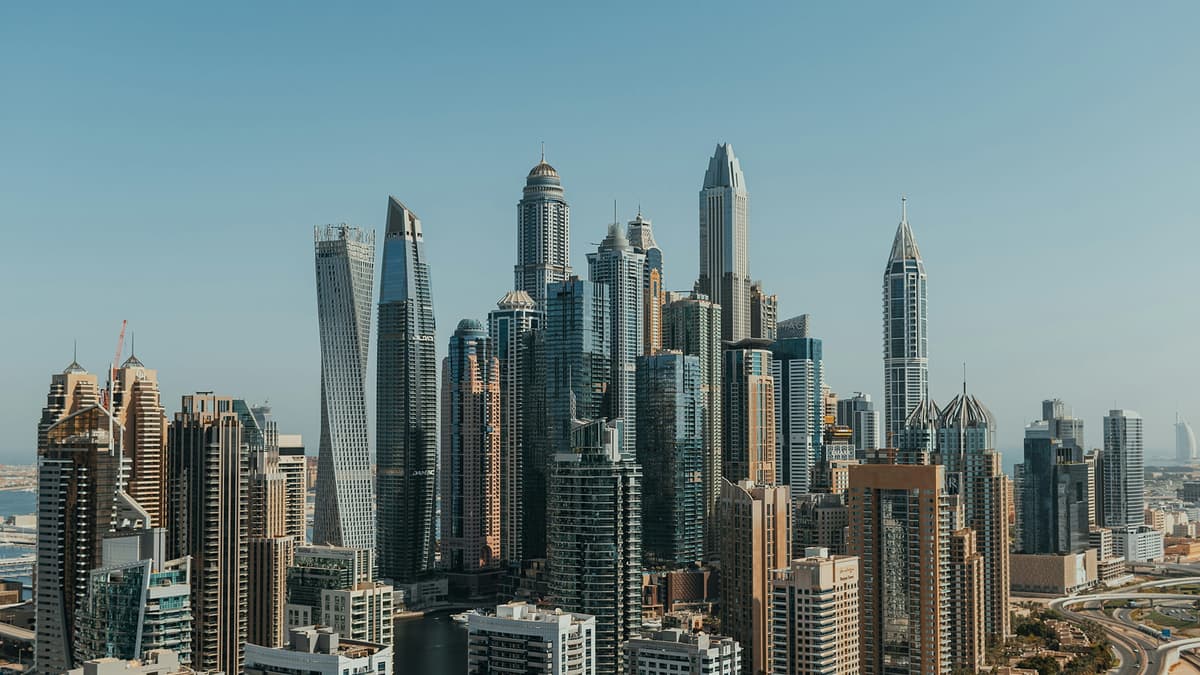
Dubai Open for Business, as Economic Head Cites Oman “Green Corridor”
Why It Matters
The measures aim to preserve Dubai’s attractiveness for global capital and mitigate supply‑chain disruptions. This reinforces its role as a regional hub amid Middle‑East volatility.
Key Takeaways
- •Dubai launched a “green corridor” with Oman on March 14.
- •AED 1 billion ($272 million) economic package announced to ease fees.
- •Q1 2026 GDP grew 4.4% YoY, topping regional peers.
- •Asian investors made up 46.9% of Dubai’s 2025 FDI inflows.
- •S&P PMI fell to 53.2, weakest expansion in nine months.
Pulse Analysis
The recent flare‑up between Iran, the United States and Israel has rattled markets across the Gulf, prompting investors to question the stability of trade routes that pass through the Strait of Hormuz. Dubai’s response has been to fast‑track a “green corridor” with neighboring Oman, a customs‑light pathway that moves goods by air and road, effectively bypassing the contested waterway. Launched on March 14, the corridor not only reduces transit times but also signals to multinational firms that the emirate can adapt its logistics infrastructure quickly when geopolitical risk spikes.
To cushion businesses from the fallout, Dubai announced on April 1 an economic stimulus worth AED 1 billion (about $272 million). The package permits three‑month deferrals on government fees for companies and on sales fees for hotels, providing immediate cash‑flow relief. Coupled with intensified outreach—daily calls with logistics “champions”—the initiative underscores the emirate’s commitment to predictability and transparency. The strategy is paying off: Dubai’s GDP rose 4.4% year‑on‑year in the first quarter of 2026, and the city retained its lead as the world’s top destination for greenfield foreign‑direct investment, with Asian investors contributing 46.9% of new projects in 2025.
Despite the upbeat macro data, private‑sector confidence showed signs of strain, with the S&P Global purchasing managers’ index slipping to 53.2 in March—the weakest expansion in nine months. Badri acknowledges short‑term adjustments but stresses that Dubai’s diversification agenda, embodied in the D33 ten‑year plan, remains on track, including a goal to rank among the top four global financial hubs by 2033. By positioning itself as a “twin‑city” partner to Asian financial centers such as Singapore and Hong Kong, Dubai aims to act as a super‑connector, channeling capital across the Middle East, Africa and beyond.
Dubai open for business, as economic head cites Oman “green corridor”
Comments
Want to join the conversation?
Loading comments...