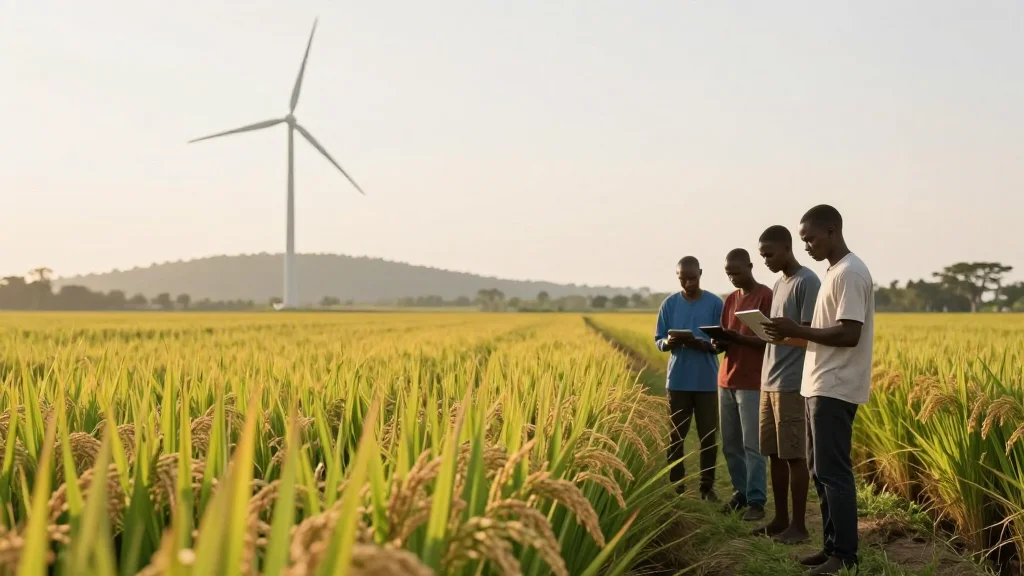
ECOWAS and AGRA Call for Massive Investment to Revamp West Africa’s Rice Sector

Why It Matters
Agriculture remains the backbone of most West African economies, employing over 60% of the labor force and accounting for a sizable share of GDP. Scaling the rice value chain addresses food security, reduces import bills and creates a platform for export growth, directly influencing balance‑of‑payments and fiscal stability in emerging markets. Moreover, the push for private‑sector financing introduces market‑based risk mitigation tools that can be replicated across other staple crops, potentially reshaping the investment narrative for African agriculture. By showcasing a coordinated regional approach—combining data‑driven market intelligence, trade facilitation and blended finance—ECOWAS and AGRA are testing a model that could attract institutional investors traditionally wary of agribusiness risk. Success would signal to global capital that emerging‑market agriculture can deliver predictable returns while delivering social impact, unlocking a new frontier for development finance.
Key Takeaways
- •ECOWAS and AGRA called for large‑scale private investment at an Accra roundtable.
- •AGRA marks 20 years of food‑system work and now seeks financing execution.
- •Dr. Kalilou Sylla emphasized farmers as the first investors in agriculture.
- •The ECOWAS Rice Observatory improves market intelligence to attract capital.
- •National Rice Investment Action Plans will be rolled out across member states.
Pulse Analysis
The Accra roundtable reflects a broader shift in emerging‑market development strategy: moving from donor‑driven grant programs to market‑oriented financing. In West Africa, rice is a strategic commodity because it is both a staple and a major import. Reducing import dependence can free up foreign‑exchange reserves, a critical buffer for economies vulnerable to commodity price shocks. However, unlocking private capital will require more than data; investors need clear exit pathways, enforceable contracts and credible sovereign guarantees. The ECOWAS protocols on free movement of goods are a step forward, but implementation gaps—customs delays, divergent standards and political instability—remain.
Comparatively, East Africa’s coffee and tea sectors have attracted blended finance by packaging climate‑risk insurance with impact‑linked bonds. West Africa could adopt a similar structure for rice, leveraging the Rice Observatory’s data to price risk accurately. If successful, the model could be extended to maize, cassava and horticulture, creating a diversified agribusiness pipeline that appeals to both impact investors and conventional fund managers.
In the short term, the key metric will be the volume of committed capital within the next 12 months. A measurable pipeline of projects—ideally with at least $500 million in blended finance—would validate the roundtable’s call to action and set a precedent for future sector‑wide investment drives across the continent.
ECOWAS and AGRA Call for Massive Investment to Revamp West Africa’s Rice Sector
Comments
Want to join the conversation?
Loading comments...