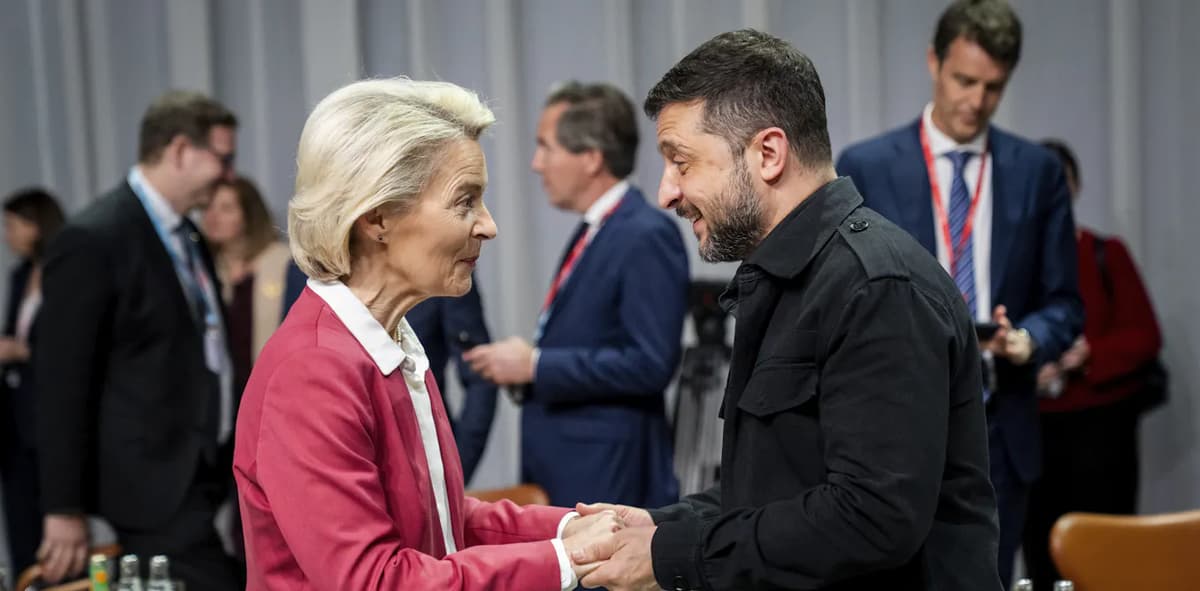
EU Enlargement Is Often Deeply Political – as Ukraine and Montenegro Show
Why It Matters
The divergent paths of Ukraine and Montenegro expose how member‑state politics can stall enlargement, affecting EU security strategy and the credibility of the accession process.
Key Takeaways
- •EU unlocked $97 billion loan for Ukraine after Hungary, Slovakia relented
- •Montenegro aims EU membership by 2028, accession treaty draft underway
- •Member-state vetoes, especially Hungary, politicize Ukraine’s accession timeline
- •Transitional arrangements likely for Montenegro to meet corruption and media standards
- •Calls for qualified‑majority voting to curb unanimity‑based enlargement stalls
Pulse Analysis
The European Union’s recent financial support for Ukraine underscores a strategic pivot amid shifting domestic politics. By unblocking a $97 billion loan, Brussels signaled solidarity while Hungary’s new leadership removed a key roadblock. Yet the same summit in Cyprus revealed lingering hesitancy: member states remain divided over a concrete accession timetable, reflecting concerns about the war’s impact on governance standards and the bloc’s capacity to absorb a large, frontline nation.
In contrast, Montenegro’s accession trajectory appears smoother, driven by its NATO membership and smaller geopolitical footprint. The establishment of an ad‑hoc working party to draft an accession treaty marks a concrete step toward a 2028 target. Nevertheless, EU officials caution that Montenegro must still address entrenched issues—corruption, judicial independence, and media pluralism—prompting the likely inclusion of transitional provisions that allow gradual integration while safeguarding EU norms.
These parallel cases illustrate the broader tension between political considerations and merit‑based criteria in EU enlargement. Calls for moving from unanimity to qualified‑majority voting aim to prevent single‑state vetoes from derailing the process, a reform that could accelerate future enlargements while preserving standards. As the EU balances security imperatives with internal cohesion, the outcomes for Ukraine and Montenegro will shape perceptions of the Union’s credibility and its role as a stabilising force in Europe.
EU enlargement is often deeply political – as Ukraine and Montenegro show
Comments
Want to join the conversation?
Loading comments...