Friendshoring Gains Traction as US‑China Tensions Redraw Emerging‑Market Supply Chains

Why It Matters
Friendshoring could become a defining feature of post‑pandemic trade, redirecting billions of dollars of investment toward emerging economies that are geopolitically aligned with the United States. For these markets, the influx of manufacturing can spur technology transfer, job creation, and higher export revenues, but it also raises the stakes of policy volatility and the need for rapid upskilling. For global supply chains, the shift may reduce dependence on China, altering the balance of power in international trade and prompting a new era of regionalized production networks. At the same time, the strategy underscores a broader strategic competition: advanced economies are weighing the costs of higher domestic production against the geopolitical benefits of diversifying away from rival powers. Emerging markets that can position themselves as reliable, cost‑effective partners stand to gain a lasting foothold in the re‑shaped global economy, while those left out may face a contraction in foreign direct investment and slower growth.
Key Takeaways
- •U.S. is diverting roughly $181 bn (6% of 2023 finished‑goods imports) to friendshoring partners.
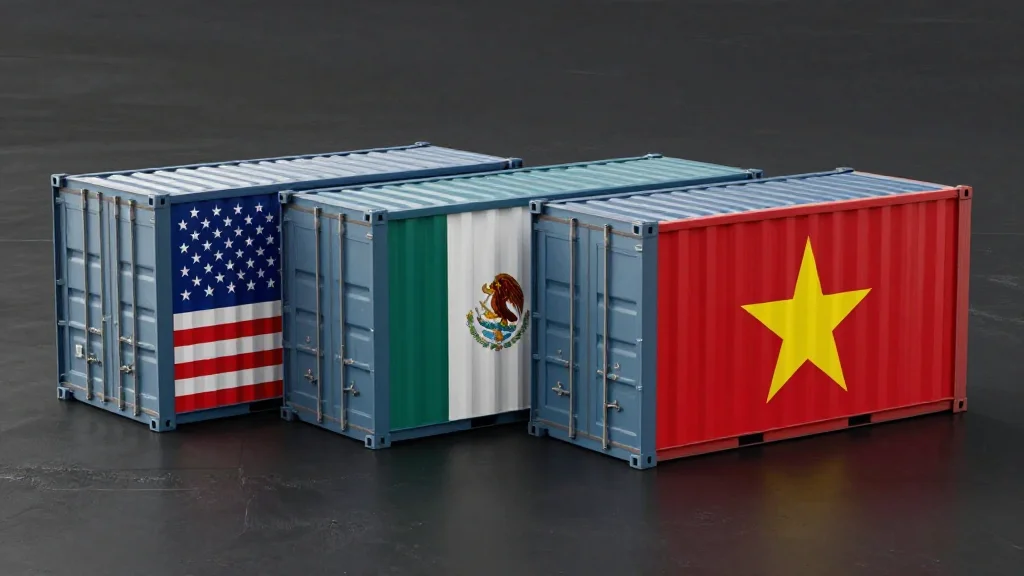
- •Mexico and Vietnam have seen increased factory expansions and investment incentives.
- •Two product clusters: complex goods being reshored; $181 bn segment where the U.S. lacks competitiveness.
- •Friendshoring offers emerging markets technology spillovers but also raises dependence on U.S. policy.
- •Future policy tweaks and firm decisions will determine how broadly friendshoring spreads across emerging economies.
Pulse Analysis
The friendshoring trend marks a strategic pivot that blends economic and security considerations. Historically, supply‑chain diversification has been driven by cost arbitrage; now, geopolitical risk is a primary catalyst. The United States' focus on allied suppliers reduces exposure to potential sanctions or supply disruptions from China, but it also introduces a new form of dependency on a narrower set of partners. For emerging markets, the opportunity is two‑fold: capture displaced manufacturing and leverage it to accelerate industrial upgrading, yet they must also navigate the volatility of policy shifts that could quickly reverse investment flows.
From a competitive standpoint, firms are likely to adopt a hybrid approach—reshoring high‑value, automation‑friendly components while friendshoring less‑complex, labor‑intensive products. This creates a tiered supply‑chain architecture where emerging economies become indispensable for the latter, reinforcing their role in the global value chain hierarchy. However, the success of this model hinges on the ability of countries like Mexico and Vietnam to scale up skilled labor, improve logistics, and maintain favorable regulatory environments.
Looking ahead, the friendshoring momentum could catalyze a broader rebalancing of trade patterns, especially if the United States formalizes incentives for allied sourcing through tax credits or procurement preferences. Such policy instruments would amplify the economic impact on emerging markets, potentially reshaping regional trade blocs and prompting rival powers to devise counter‑strategies. The next wave of data—investment pipelines, tariff adjustments, and corporate relocation announcements—will reveal whether friendshoring is a temporary response to current tensions or a lasting reconfiguration of the global manufacturing landscape.
Friendshoring Gains Traction as US‑China Tensions Redraw Emerging‑Market Supply Chains
Comments
Want to join the conversation?
Loading comments...