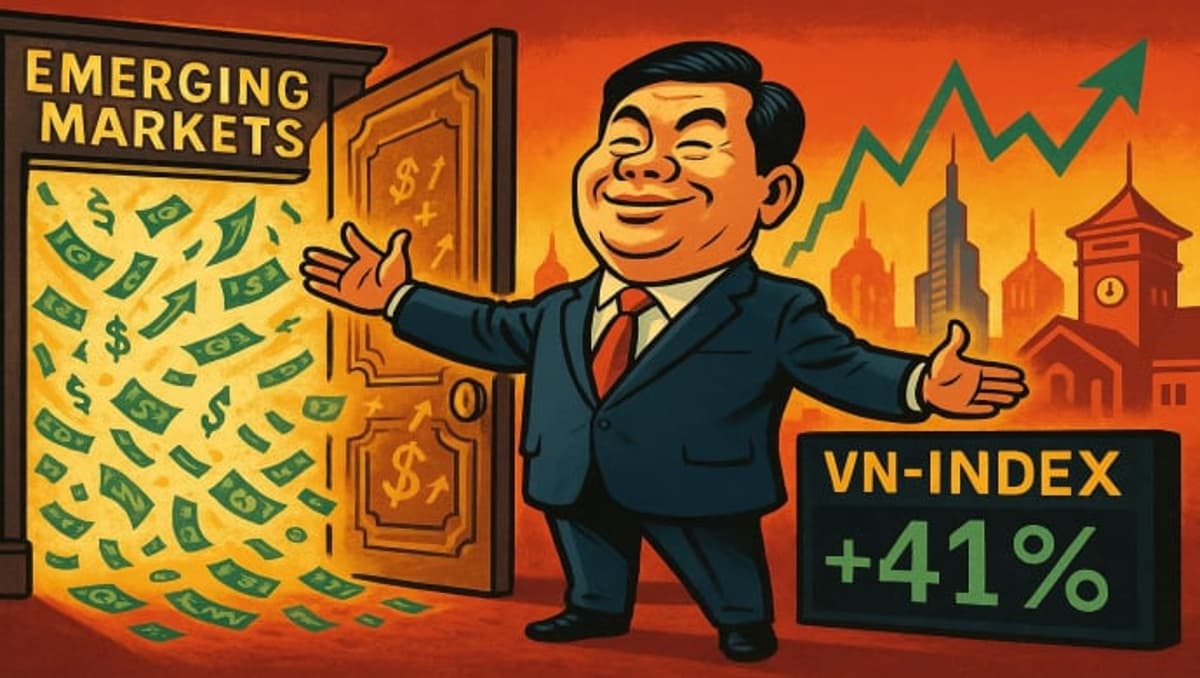
From Frontier to Emerging: How Vietnam’s Stock Market Rewrote the ASEAN Playbook in 2025
Companies Mentioned

Why It Matters
The EM reclassification unlocks large institutional capital, reshaping Vietnam’s equity market and positioning it as a key growth engine in Southeast Asia.
Key Takeaways
- •VN-Index posted 41% return in 2025, outpacing ASEAN peers
- •Daily trading volume hit US$1.2 billion, up 33% YoY
- •FTSE Russell will reclassify Vietnam as Emerging Market in Sep 2026
- •Projected $5‑$8 billion foreign inflows could exceed 2025 private‑capital total
Pulse Analysis
Vietnam’s equity market delivered a spectacular 41 percent gain in 2025, leaving Singapore, Indonesia, Thailand and the Philippines behind. The VN‑Index’s rally was underpinned by a surge in daily turnover to roughly US$1.2 billion, a 33 percent year‑on‑year rise and sixfold growth since 2020. A swelling retail investor base has deepened market participation, while reforms have eased long‑standing liquidity constraints that once deterred foreign institutions. The combination of higher volumes and broader ownership created a more resilient platform for sustained price appreciation.
The upgrade from Frontier to Emerging Market status, slated for September 2026, removes the pre‑funding hurdle that previously barred large institutional investors. FTSE Russell’s reclassification will insert Vietnam into its flagship Emerging Market index, compelling passive funds that track the benchmark to acquire Vietnamese shares. Active managers with EM mandates will also gain both permission and incentive to allocate capital. Analysts estimate the move could unlock between US$5 billion and US$8 billion of new foreign money—more than the total private‑capital inflows of 2025.
Beyond the immediate cash flow, EM status signals that Vietnam has met global standards for transparency, governance and market accessibility. The designation is likely to attract sovereign wealth funds, pension managers and other long‑term allocators seeking diversified exposure to Asia’s fastest‑growing economies. While publicly listed blue‑chips stand to benefit most, a more mature capital market could gradually ease financing for private‑equity and venture‑backed startups, especially if institutional investors begin to allocate pre‑IPO capital. Nevertheless, investors should watch for execution risks and potential “rumour‑driven” volatility after the reclassification takes effect.
From frontier to emerging: How Vietnam’s stock market rewrote the ASEAN playbook in 2025
Comments
Want to join the conversation?
Loading comments...