Emerging Markets News and Headlines
  • All Technology
  • AI
  • Autonomy
  • B2B Growth
  • Big Data
  • BioTech
  • ClimateTech
  • Consumer Tech
  • Crypto
  • Cybersecurity
  • DevOps
  • Digital Marketing
  • Ecommerce
  • EdTech
  • Enterprise
  • FinTech
  • GovTech
  • Hardware
  • HealthTech
  • HRTech
  • LegalTech
  • Nanotech
  • PropTech
  • Quantum
  • Robotics
  • SaaS
  • SpaceTech
AllNewsDealsSocialBlogsVideosPodcastsDigests

Emerging Markets Pulse

EMAIL DIGESTS

Daily

Every morning

Weekly

Sunday recap

NewsDealsSocialBlogsVideosPodcasts
Emerging MarketsNewsFrom Slump to Surge: Renault Korea’s Strategic Turnaround
From Slump to Surge: Renault Korea’s Strategic Turnaround

Large Cap StocksEmerging MarketsAsia Stocks

From Slump to Surge: Renault Korea’s Strategic Turnaround

•February 18, 2026
0
The Korea Herald – Business
The Korea Herald – Business•Feb 18, 2026

Companies Mentioned

Renault Group

Renault Group

General Motors

General Motors

GM

Polestar

Polestar

PSNY

Why It Matters

Renault’s pivot turns a former export‑focused plant into a core innovation hub, reshaping global vehicle development and enhancing resilience against regional regulatory pressures.

Key Takeaways

  • •Grand Koleos hybrid sold 40,877 units, 86.5% hybrids
  • •Domestic sales rose 31.3% to 52,271 units in 2025
  • •Exports fell 46.7%, indicating strategic pivot
  • •Busan plant upgraded for mixed hybrid/EV production
  • •Renault positions Korea as one of five global hubs

Pulse Analysis

Renault’s International Game Plan 2027 reflects a broader industry trend of diversifying away from Europe’s saturated market and tightening emissions standards. By earmarking Korea as a primary development hub, Renault taps into the country’s advanced engineering talent, strong midsize SUV demand, and flexible manufacturing capacity. This strategic realignment not only spreads risk across multiple regions but also accelerates the rollout of next‑generation powertrains, positioning the group to meet global regulatory targets while capturing growth in fast‑adopting Asian markets.

The Aurora Project’s hybrid‑first philosophy proved decisive. The Grand Koleos, launched in late 2024, captured 86.5% of its sales as hybrids, resonating with Korean buyers hesitant about full electrification. Domestic volumes surged 31.3% year‑over‑year, yet exports plunged 46.7%, underscoring Renault’s intentional shift from a pure export base to a localized innovation centre. Upgrades at the Busan plant—68 new facilities and a 300,000‑unit capacity—enable simultaneous production of ICE, hybrid, and EV models, reinforcing the hub’s versatility and readiness for future mobility demands.

Industry observers see Renault’s model as a potential blueprint for rivals. Unlike GM Korea, which remains export‑centric and tied to low‑margin compact models, Renault embeds hybrid and EV capabilities directly into its Korean operations, aligning the unit with the group’s long‑term roadmap. Decentralised R&D, exemplified by Renault Technology Korea, accelerates feedback loops and customer‑driven design, offering a competitive edge in a market where speed to market and regulatory agility are paramount. This approach may prompt other global OEMs to reconsider the balance between headquarters‑led development and regional innovation hubs.

From slump to surge: Renault Korea’s strategic turnaround

Feb. 18, 2026 · 14:13:19 · By Byun Hye‑jin

Hybrid‑first strategy, decentralized R&D reposition Korea unit as global growth hub

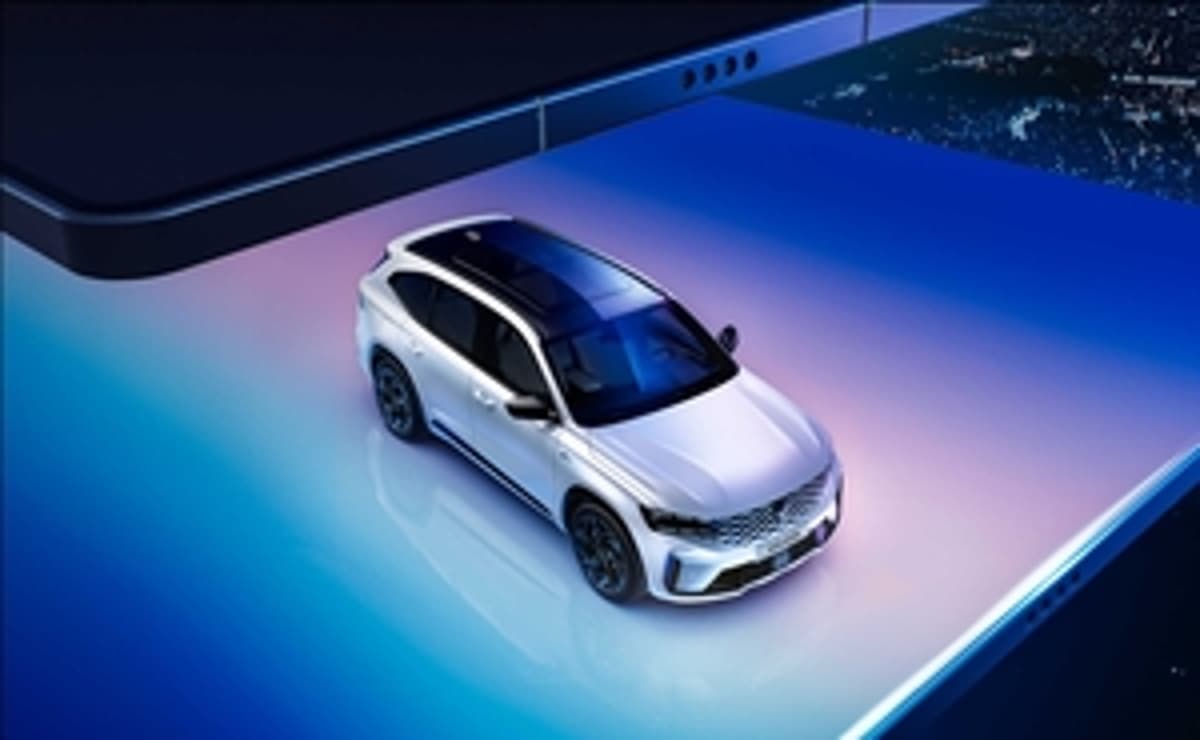
2026 Grand Koleos SUV (Renault Korea)

Once struggling with shrinking sales and an aging lineup, Renault Korea is now reemerging as one of the most resilient foreign carmakers in South Korea — not by retreating, but by upgrading its role within the global group.

At a time when global supply chains remain volatile, and Korea’s position as an export base is under pressure, Renault Group is doing something few rivals have: turning its Korean unit into a development and production hub for next‑generation vehicles.

The shift is part of Renault’s “International Game Plan 2027,” which aims to launch eight new models from five global hubs — Korea, Latin America, Turkey, India and Morocco — reducing reliance on Europe, where growth is structurally limited and regulatory costs are rising.

Kim Pil‑su, a car‑engineering professor at Daelim University, said the diversification reflects pressures in Renault’s home market. “Renault’s decision to diversify its revenue base comes after the structural constraints of its home market, Europe, where growth is limited and regulatory costs such as stringent CO₂ emissions mandates are rising,” he said. “These pressures have prompted the carmaker to enhance profitability by focusing on more rapidly growing regions.”

The Aurora Project: The turning point

Renault Korea’s rebound began with the “Aurora Project,” launched after a sales slowdown between 2022 and 2024. A long gap in new models — especially electrified vehicles — had left the company exposed as Korean consumers rapidly embraced hybrids and EVs.

The turnaround vehicle was the Grand Koleos, a midsize SUV launched in September 2024 as the effective successor to the QM6.

Rather than betting on full electrification, Renault adopted a hybrid‑first strategy. The Grand Koleos offers a Hybrid E‑Tech variant, targeting consumers who remain cautious about fully electric vehicles.

The strategy proved effective. The Grand Koleos sold 40,877 units domestically last year, with hybrids accounting for 86.5 percent of total sales, placing it in direct competition with Hyundai Motor Company’s Santa Fe and Kia’s Sorento. Renault Korea’s domestic sales rose 31.3 percent year on year to 52,271 units.

Exports, however, fell sharply by 46.7 percent, underscoring a key structural shift. Korea is becoming less of a pure export base and more of a strategic development centre within Renault’s global network.

Why Korea matters in Renault’s global strategy

Renault selected Korea to develop and produce three D‑ and E‑segment vehicles, reflecting the country’s strong domestic demand for midsize and large SUVs, engineering expertise and flexible manufacturing capabilities.

Lee Ho‑geun, an automotive‑engineering professor at Daeduk University, said a core driver of the Aurora Project was Renault’s continued commitment to investing in its Busan plant for hybrids and EVs despite mounting headwinds in the global automotive industry, including tariff tensions and a broader market slowdown.

Renault Korea CEO Nicolas Paris speaks with reporters during the launch event for the Filante crossover in Seoul in January. (Renault Korea)

The Busan plant, which has an annual capacity of 300,000 units, has upgraded 68 facilities to enable full mixed production spanning internal‑combustion‑engine vehicles, hybrids and EVs. During the 2025 APEC summit in Gyeongju, North Gyeongsang Province, Renault Korea CEO Nicolas Paris pledged additional facility investment targeting EV production at the Busan base, reinforcing its long‑term strategic role.

The plant is already demonstrating its capability through contract manufacturing of the Polestar 4 electric SUV, signaling its readiness for next‑generation production.

Crucially, Renault Technology Korea — the on‑site R&D centre — enables integrated vehicle development from design to mass production. The recently unveiled Filante crossover was developed with direct input from Korean customers, including acceleration improvements reflecting feedback on the Grand Koleos.

Kim said Renault’s approach suggests confidence in decentralising innovation. “Renault’s approach is likely based on the belief that a region with deep expertise and strong market demand in a particular vehicle segment can, in some cases, outperform headquarters‑led R&D,” he said. He added that the group appears increasingly comfortable distributing development authority beyond its European base.

This reflects a broader structural shift. Renault believes regional hubs with strong market demand and accumulated expertise can play a leading role in shaping next‑generation vehicles, rather than merely executing headquarters‑driven plans.

A lesson for GM?

The contrast with GM Korea underscores the significance of Renault’s repositioning.

GM Korea remains heavily dependent on exports. In 2025, it shipped 447,216 vehicles overseas, accounting for roughly 97 percent of its total sales, while domestic sales fell 39.2 percent to 15,094 units. The structure reflects GM’s broader US‑centric strategy, under which high‑margin pickups and large SUVs are produced in the US, while overseas plants such as Korea focus primarily on lower‑margin compact models for export.

By contrast, Renault is embedding hybrid and EV capabilities directly into its Korean operations, aligning the unit with the group’s future mobility roadmap rather than limiting it to legacy export production. The shift gives Renault Korea a stronger local foothold while expanding its strategic relevance within the global organisation.

Lee Ho‑geun said GM could potentially draw lessons from Renault’s approach. “Under its US‑centric strategy, GM produces high‑margin pickups and large SUVs at home while assigning lower‑margin compact models to overseas plants, leaving its Korean unit largely as an export base,” he said. “If GM were to invest in future mobility models such as hybrids in Korea, as Renault has, it could better cushion external risks and support more sustainable growth.”

Read Original Article
0

Comments

Want to join the conversation?

Loading comments...