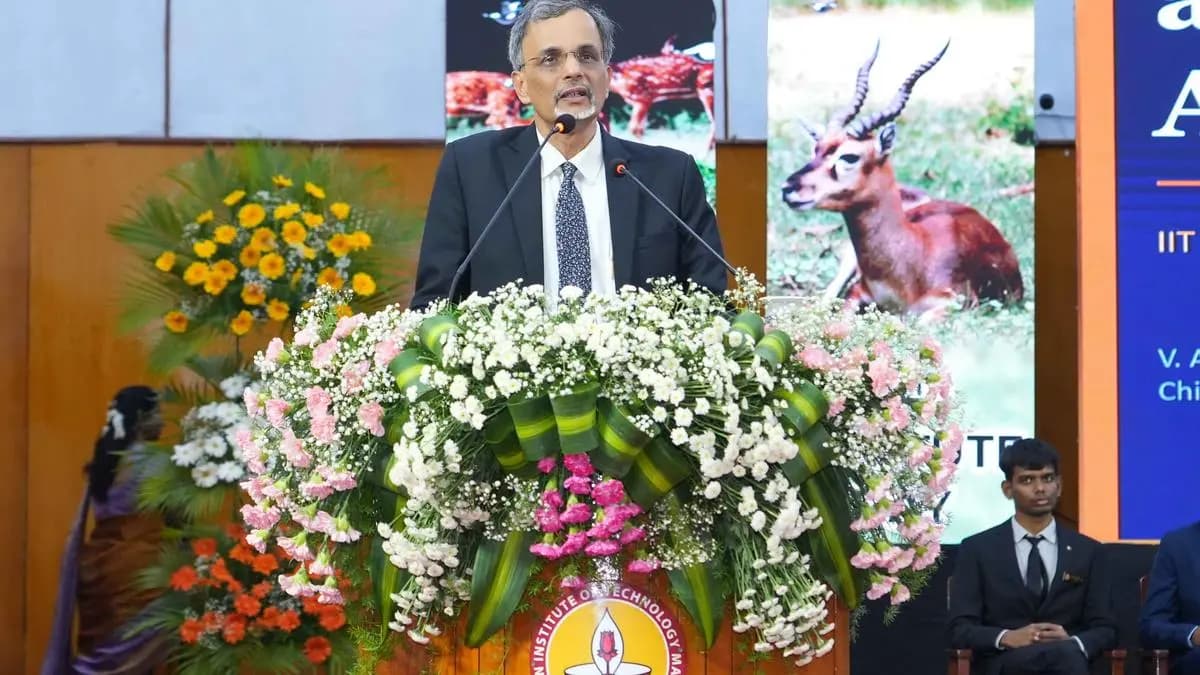
Geopolitical Environment Could Make India’s Growth Targets Harder to Achieve: CEA Nageswaran
Why It Matters
The outlook signals that India’s economic trajectory now hinges on scaling innovation and reforming talent pipelines, factors that will shape global investment and competitive dynamics.
Key Takeaways
- •India aims for $7‑8 trillion GDP by 2032, $30 trillion by 2047.
- •Hostile geopolitical climate may impede growth, says CEA Nageswaran.
- •R&D spending remains under 1% of GDP, far below China and US.
- •Industry‑academia collaboration weak, limiting commercialization of research.
- •Education shift needed toward AI‑centric technical depth and critical questioning.
Pulse Analysis
India’s growth ambitions are bold, but the global environment is increasingly fraught with trade tensions, supply‑chain disruptions and shifting alliances. Those external pressures raise the cost of capital and complicate market access for Indian exporters, making the $7‑8 trillion GDP target for 2032 and the $30 trillion milestone for 2047 more challenging than past expansion phases. Investors are watching how the government navigates these headwinds, as any slowdown could reverberate through emerging‑market portfolios worldwide.
A technology‑driven recovery is central to the CEA’s roadmap, yet India’s research and development outlay lags at under 1% of GDP, compared with China’s 2.4% and the United States’ 3.5%. This gap limits the creation of frontier innovations needed for high‑value manufacturing and digital services at scale. Strengthening industry‑academia partnerships is critical; without better knowledge transfer, promising lab breakthroughs risk remaining academic exercises rather than commercial products. Policy levers such as tax incentives for private R&D and public‑private research hubs could accelerate the scaling of homegrown technologies.
Equally vital is reshaping the education system for the AI era. Moving beyond credentialism toward deep technical expertise and critical evaluation of AI outputs will equip the workforce to harness emerging tools effectively. Interdisciplinary curricula, expanded access to advanced computing resources, and stronger links between universities and tech firms can cultivate the question‑asking mindset Nageswaran highlighted. If India can align its talent pipeline with its innovation agenda, it stands to mitigate geopolitical risks and sustain the momentum needed to meet its long‑term economic aspirations.
Geopolitical environment could make India’s growth targets harder to achieve: CEA Nageswaran
Comments
Want to join the conversation?
Loading comments...