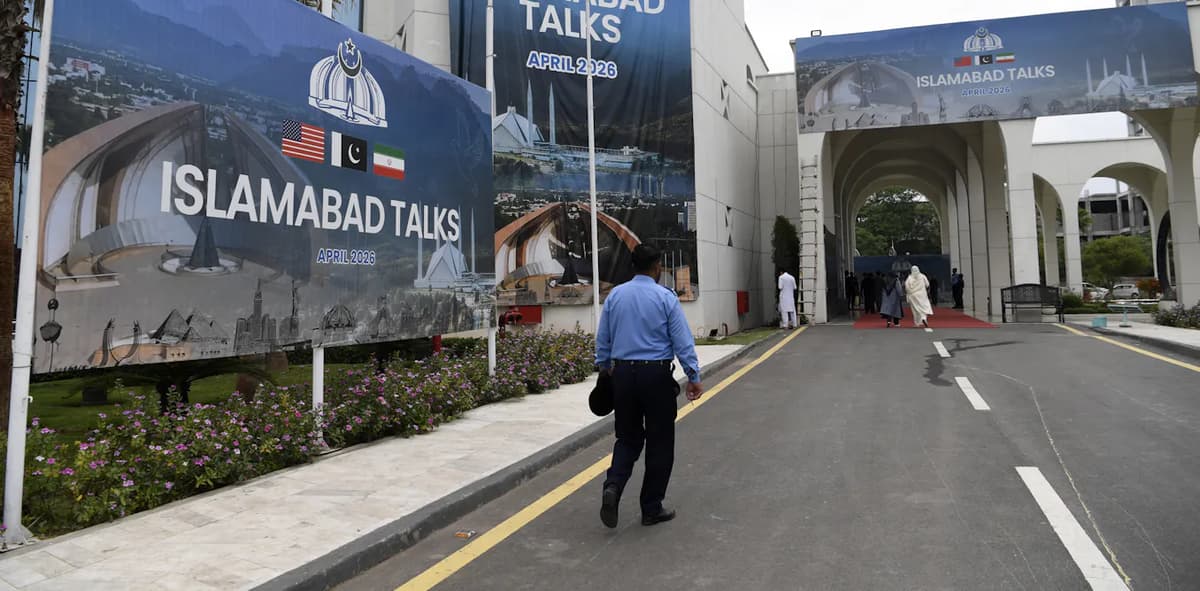
How Pakistan Became the Primary Mediator Between the US and Iran
Companies Mentioned
Why It Matters
Pakistan’s role can help contain a regional flashpoint that threatens global trade routes and its own fragile economy, while giving the United States a trusted conduit to Tehran.
Key Takeaways
- •Pakistan’s neutral stance stems from decades‑long US‑Iran diplomatic channels.
- •Trump’s personal rapport with Sharif and army chief boosted US‑Pakistan ties.
- •Rising fuel import bill to $800 million pressures Pakistan’s fiscal stability.
- •Balochistan insurgency risk pushes Islamabad to prevent spillover from war.
- •Gulf remittances (~$30 billion) could plunge if conflict persists.
Pulse Analysis
Pakistan’s diplomatic pedigree dates back to the early 1980s, when a dedicated section of its Washington embassy began handling Iranian affairs after Tehran and Washington severed ties. This long‑standing conduit, combined with historic facilitation of U.S.‑China rapprochement, has positioned Islamabad as a credible neutral party. By the time President Trump announced a pause to the Hormuz escort mission in May, Pakistan’s ability to speak both languages of Washington and Tehran made it an indispensable interlocutor, a role amplified by personal ties between Prime Minister Shehbaz Sharif, army chief Asim Munir, and the U.S. president.
Beyond prestige, Pakistan’s mediation is driven by stark strategic and economic imperatives. The 1,000‑kilometer border with Iran runs through Balochistan, a province already grappling with an insurgency that could flare if the regional war spreads. Economically, the country imports roughly 85‑90% of its crude oil and almost all of its liquefied natural gas from Gulf states; the conflict has pushed its fuel import bill from $300 million to $800 million and forced a more than 50% hike in domestic fuel prices. Fertiliser costs have surged 50%, threatening the agriculture sector that employs about 40% of the population, while remittances—approximately $30 billion annually from Gulf workers—risk contraction if the war destabilises host economies.
The broader implications are significant for both superpowers and the Middle East. For the United States, a reliable regional broker reduces the need for direct military engagement and helps safeguard the Strait of Hormuz, a chokepoint for global energy supplies. Iran, facing isolation, gains a channel to negotiate without appearing to concede to U.S. pressure. Pakistan, meanwhile, hopes to translate diplomatic capital into economic concessions, such as the recent oil‑development deal with Washington. However, the arrangement remains fragile; any misstep could reignite Balochistan unrest or erode the trust that underpins Islamabad’s mediating role, making the sustainability of this diplomatic bridge a key watchpoint for investors and policymakers alike.
How Pakistan became the primary mediator between the US and Iran
Comments
Want to join the conversation?
Loading comments...