How Trump and Erdoğan Can Turn US LNG Energy Dominance Into Black Sea Stability
•February 20, 2026
0
Why It Matters
The initiative turns U.S. energy dominance into a geopolitical lever, strengthening NATO’s posture and curbing Russia’s revenue streams while securing Ukraine’s power supply.
Key Takeaways
- •US LNG capacity exceeds 100 billion cubic feet annually
- •Turkey restricts vessels over 200 m, limiting large LNG tankers
- •Ukraine's gas storage holds ~32 bcm, Europe’s largest
- •Trump could secure engineering contracts for Turkey at summit
- •US‑backed corridor would deter Russian naval aggression
Pulse Analysis
The United States now commands the world’s largest liquefied natural gas export fleet, capable of moving over 100 billion cubic feet of gas each year. This surplus has become a diplomatic tool as Washington seeks to convert commercial capacity into strategic influence. By routing LNG through the Black Sea, the U.S. can diversify Europe’s energy mix, lower dependence on Russian pipelines, and create a revenue stream that directly undercuts Moscow’s war‑financing. The move aligns with broader U.S. policy to weaponize energy markets in support of allies.
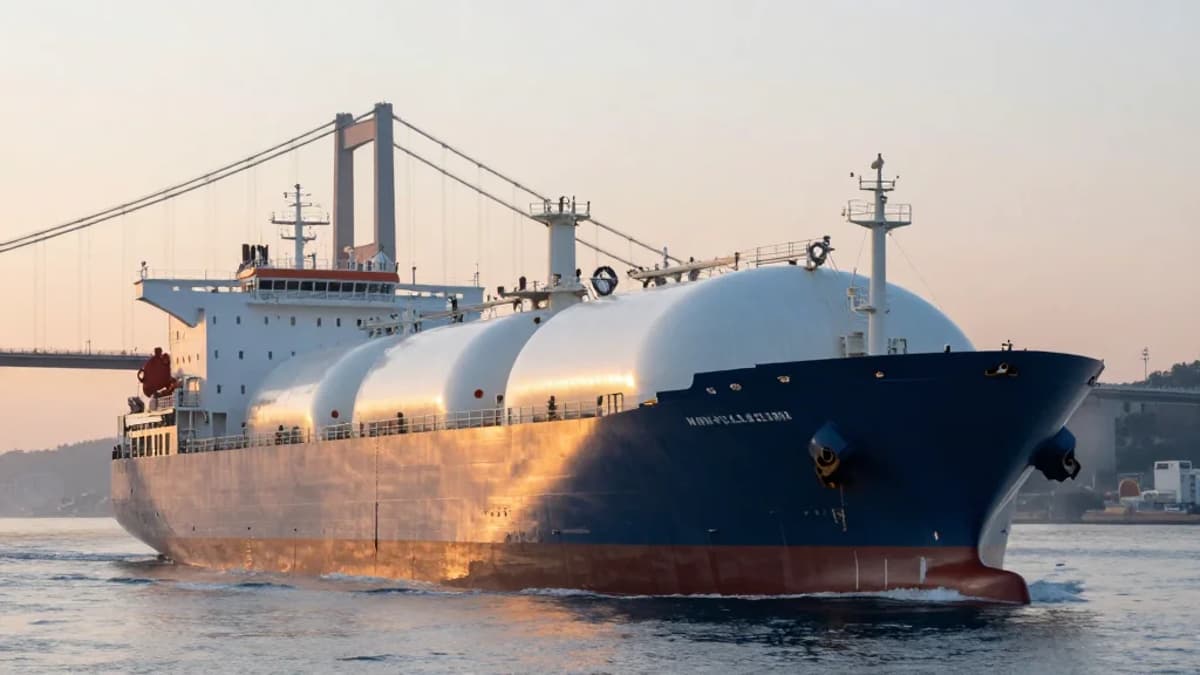
The Bosporus Strait, governed by the 1936 Montreux Convention, technically permits any merchant cargo in peacetime, yet Turkey enforces a de‑facto ban on tankers longer than 200 meters. Most U.S. LNG carriers measure 290‑300 meters, making the restriction a decisive bottleneck. Recent diplomatic overtures suggest that a Trump‑style bargain could persuade Ankara to relax these limits in exchange for lucrative engineering, procurement, and construction contracts for LNG terminals. Such a concession would not only boost Turkey’s maritime infrastructure but also embed it deeper within NATO’s strategic supply chain.
For NATO and Kyiv, a protected LNG corridor would dramatically enhance Ukraine’s energy security, leveraging its 32 bcm underground storage as a regional buffer. The added supply would diminish Russia’s leverage over European gas markets and raise the stakes for any Russian naval aggression in the western Black Sea. By intertwining U.S. energy assets with Turkish and Ukrainian interests, the proposed arrangement creates a multi‑layered deterrent, reinforcing alliance cohesion and reshaping the geopolitical calculus in a region long dominated by Moscow.
How Trump and Erdoğan can turn US LNG energy dominance into Black Sea stability
0
Comments
Want to join the conversation?
Loading comments...