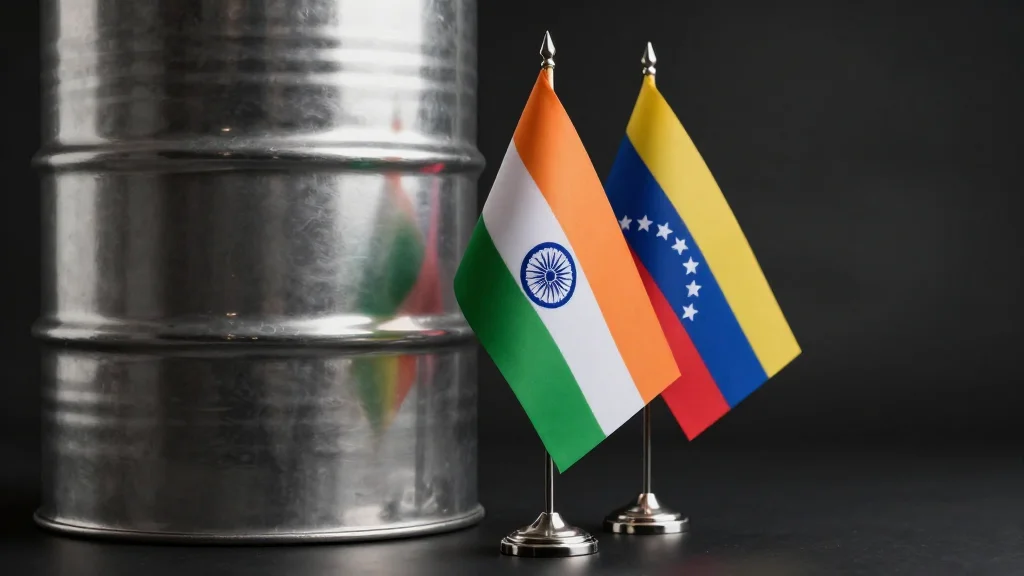
India and Venezuela Explore Energy Ties as Oil Markets Shift

Why It Matters
The potential India‑Venezuela energy partnership reflects a broader trend of emerging markets seeking alternative supply chains and investment sources amid a volatile oil market. For India, securing a reliable source of crude aligns with its goal of meeting rising domestic demand while diversifying away from traditional suppliers. For Venezuela, attracting Indian capital and technology could help revive its oil sector, which has been crippled by sanctions and under‑investment. Together, the two countries could set a template for South‑South cooperation that reshapes trade patterns, enhances price stability, and reduces dependence on traditional energy powers. Beyond bilateral benefits, the outreach signals a shift in how emerging economies are navigating geopolitical headwinds. As major economies impose tariffs and trade restrictions, countries like India and Venezuela are looking to deepen ties within the Global South, potentially creating new regional blocs that can collectively negotiate better terms in global markets. This dynamic could influence future policy decisions, investment flows, and the strategic calculus of both producers and consumers in the developing world.
Key Takeaways
- •Venezuela publicly seeks an Indian role in its energy sector (Xinhua, June 7, 2026).
- •India is monitoring Latin American economies for strategic shifts and opportunities.
- •Both nations face oil market volatility that drives the search for new partnerships.
- •Potential collaboration could bring capital and technology to Venezuela and diversify India's oil imports.
- •No formal agreement yet; details such as investment size and project scope remain undisclosed.
Pulse Analysis
India's energy demand has outpaced its domestic production, prompting New Delhi to look beyond the Middle East for reliable crude supplies. Venezuela, once a top oil exporter, now grapples with sanctions, declining output, and a need for foreign investment. The convergence of these needs creates a natural alignment, but the partnership's success will hinge on navigating U.S. sanctions, financing hurdles, and the technical challenges of reviving aging Venezuelan fields.
Historically, South‑South energy deals have been hampered by political risk and limited access to financing. However, the rise of multilateral development banks and the growing appetite of Indian state‑linked lenders for strategic assets could mitigate these barriers. If India commits to joint ventures or provides equipment and expertise, Venezuela could accelerate its production recovery, while India secures a foothold in a resource‑rich market. This could also encourage other Latin American nations to court Indian investment, reshaping the regional energy landscape.
From a market perspective, a stable supply line from Venezuela would cushion India against price shocks caused by OPEC output cuts or Middle‑East tensions. For global oil traders, a new India‑Venezuela corridor could introduce fresh pricing benchmarks and alter cargo flows, potentially easing the tightness that has driven recent price spikes. In the longer term, successful cooperation could inspire a broader coalition of emerging economies to develop parallel supply chains, reducing the dominance of traditional oil powers and fostering a more multipolar energy market.
India and Venezuela Explore Energy Ties as Oil Markets Shift
Comments
Want to join the conversation?
Loading comments...