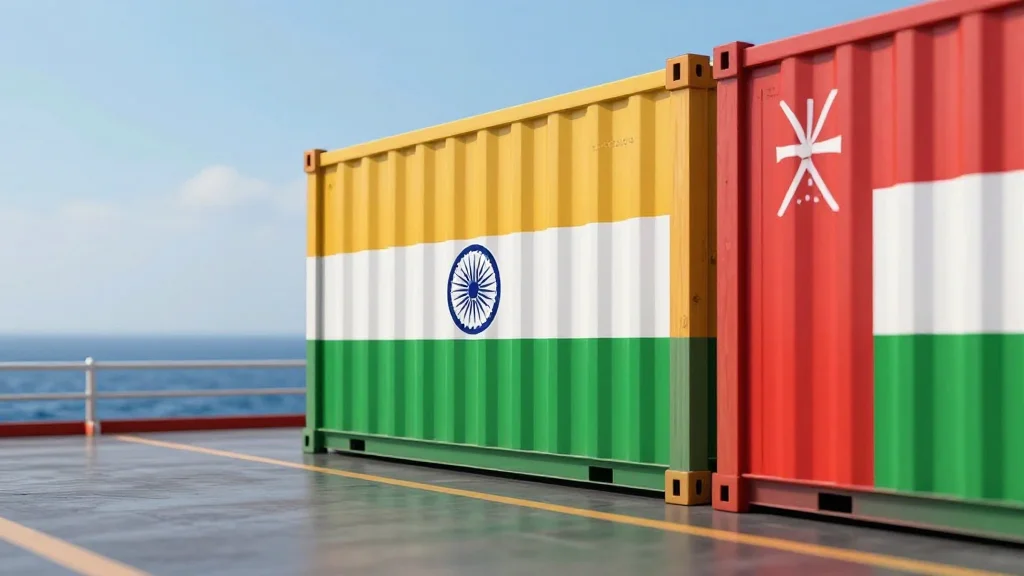
India-Oman CEPA Grants Duty‑Free Access for 99.38% of Indian Exports

Why It Matters
The India‑Oman CEPA reshapes trade dynamics in a region where geopolitical tensions have repeatedly disrupted supply chains. By offering near‑full tariff elimination, the pact lowers cost barriers for Indian manufacturers, potentially boosting export volumes, creating jobs, and enhancing India’s bargaining power in Gulf markets. For Oman, the agreement diversifies import sources, strengthens its logistics hub status, and deepens economic ties with a fast‑growing Asian economy. In the broader emerging‑markets landscape, the CEPA illustrates how bilateral trade accords can serve as strategic tools to mitigate external shocks—such as the Hormuz blockage—by opening alternative routes and reducing reliance on single‑point chokepoints. The deal may also spur competitive reforms in other GCC nations, prompting a wave of similar partnerships that could collectively rewire trade flows between South Asia and the Middle East.
Key Takeaways
- •CEPA effective June 1, 2026 removes duties on 99.38% of Indian exports to Oman
- •Bilateral trade rose to $11.18 bn in FY 2025‑26, up from $10.61 bn in FY 2024‑25
- •Zero‑duty coverage expands from 15.33% (MFN) to 98.08% of Oman’s tariff lines
- •First duty‑free shipments include agricultural goods and gems from Mumbai, Kolkata, Chennai
- •Oman’s pharmaceutical market valued at $302.84 mn in 2025, projected to reach $473.71 mn by 2031
Pulse Analysis
The India‑Oman CEPA arrives at a moment when both economies are seeking resilience against external volatility. For India, the agreement dovetails with a broader Gulf strategy that includes the India‑GCC FTA and ongoing infrastructure projects like the International North‑South Transport Corridor. By securing duty‑free access to Oman’s ports, Indian exporters can bypass the congested and politically sensitive Strait of Hormuz, reducing shipping times and insurance premiums that have surged since the Iran‑U.S. conflict escalated.
From Oman’s perspective, the pact diversifies its import basket and strengthens its role as a trans‑Gulf conduit. The country’s ambition to become a logistics hub for East Africa and the wider GCC hinges on reliable, low‑cost inbound supply. Indian textiles, pharmaceuticals, and engineered goods, now price‑competitive thanks to tariff elimination, can fill that niche. Moreover, the professional mobility provisions could address Oman’s skill shortages in sectors like healthcare and engineering, fostering a two‑way flow of talent.
The real test will be execution. Non‑tariff barriers—product standards, certification processes, and customs documentation—remain significant hurdles. The CEPA’s success will depend on how quickly both sides can harmonize regulations and streamline border procedures. If utilization rates climb as projected, the agreement could set a precedent for deeper economic integration across the Gulf, prompting other emerging markets to negotiate similarly comprehensive deals. In the short term, however, firms that can swiftly adapt will reap the first wave of benefits, while laggards risk being left behind in a rapidly reconfiguring trade landscape.
India-Oman CEPA Grants Duty‑Free Access for 99.38% of Indian Exports
Comments
Want to join the conversation?
Loading comments...