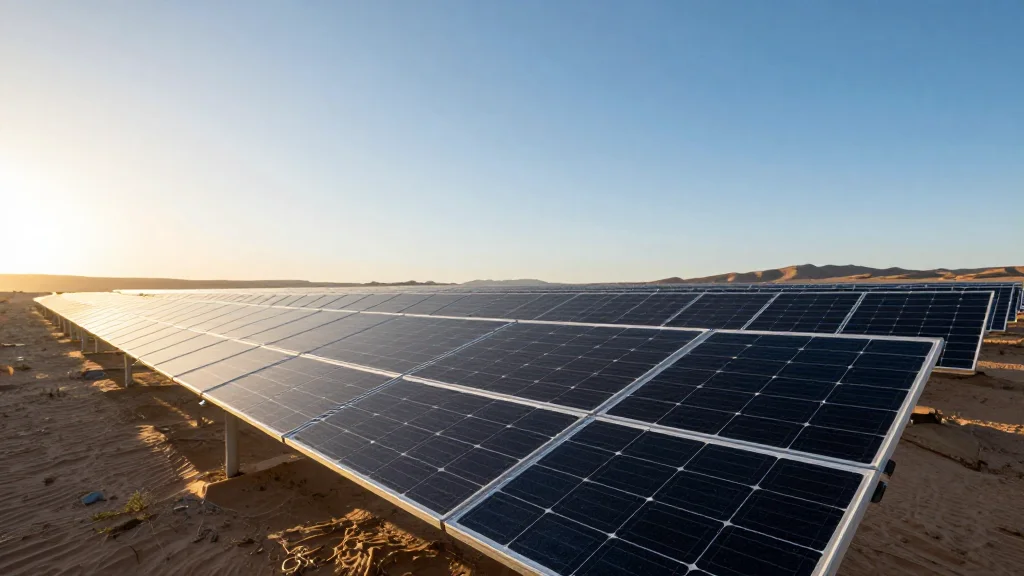
India’s Khavda Solar Park to Become World’s Largest Renewable Hub by 2029

Companies Mentioned
Why It Matters
The Khavda solar park illustrates how an emerging market can marshal scale, policy, and private capital to leapfrog traditional fossil‑fuel pathways. Its success could validate a growth model that decouples industrialisation from carbon emissions, offering a replicable blueprint for nations across Africa, Southeast Asia, and Latin America that face similar energy‑demand pressures. Moreover, the project's proximity to a contested border tests the limits of geopolitical risk tolerance for renewable investments, potentially reshaping how financiers assess security in green‑infrastructure deals. If Khavda delivers reliable, low‑cost electricity at the projected scale, it could accelerate India’s transition to a carbon‑neutral economy, reduce regional air‑quality harms, and create a new export commodity—clean power. The ripple effects would extend to global climate negotiations, where emerging economies could argue for differentiated pathways that still meet ambitious emissions targets.
Key Takeaways
- •Khavda solar park will generate 30 GW from 60 million panels across 280 sq mi by 2029.
- •India’s installed solar capacity grew 40% annually, surpassing 150 GW in March 2024.
- •Adani Group leads development; project sits within 6 mi of the India‑Pakistan border.
- •Kingsmill Bond (Ember) says India’s solar path could be mirrored by other emerging economies.
- •U.S. DOJ bribery case against Adani executives was dropped after new U.S. investment pledges.
Pulse Analysis
India’s Khavda solar park is more than a headline‑grabbing megaproject; it is a strategic lever that could reshape the economics of renewable deployment in emerging markets. Historically, large‑scale renewables have been concentrated in stable, high‑income jurisdictions where financing costs are low and policy risk is minimal. Khavda flips that script by marrying massive scale with a high‑risk geopolitical environment, suggesting that the cost‑curve benefits of solar—driven by falling panel prices and economies of scale—can outweigh traditional risk premiums.
The project also underscores a shift in the role of state‑linked conglomerates. Adani’s deep ties to the Modi administration have facilitated rapid land acquisition and regulatory clearance, but they also expose the venture to political backlash and scrutiny from foreign regulators. The recent DOJ episode illustrates how cross‑border legal exposure can become a bargaining chip, prompting the group to offer U.S. investments in exchange for case dismissal. This dynamic may become a template for other emerging‑market developers: leverage domestic political capital to secure project approvals, then use international capital inflows to mitigate legal and reputational risks.
From a market perspective, Khavda could catalyse a wave of green‑bond issuance and sovereign‑backed financing aimed at replicating its scale. If the park delivers on cost and reliability promises, it will validate the premise that renewable infrastructure can be a cornerstone of export‑oriented growth, especially for countries with abundant solar resources but limited domestic demand. The next few years will test whether the Khavda model can be exported to Africa’s Sahel, Brazil’s northeast, or Indonesia’s archipelago, potentially redefining the global renewable supply chain and accelerating the decarbonisation of emerging economies.
India’s Khavda Solar Park to Become World’s Largest Renewable Hub by 2029
Comments
Want to join the conversation?
Loading comments...