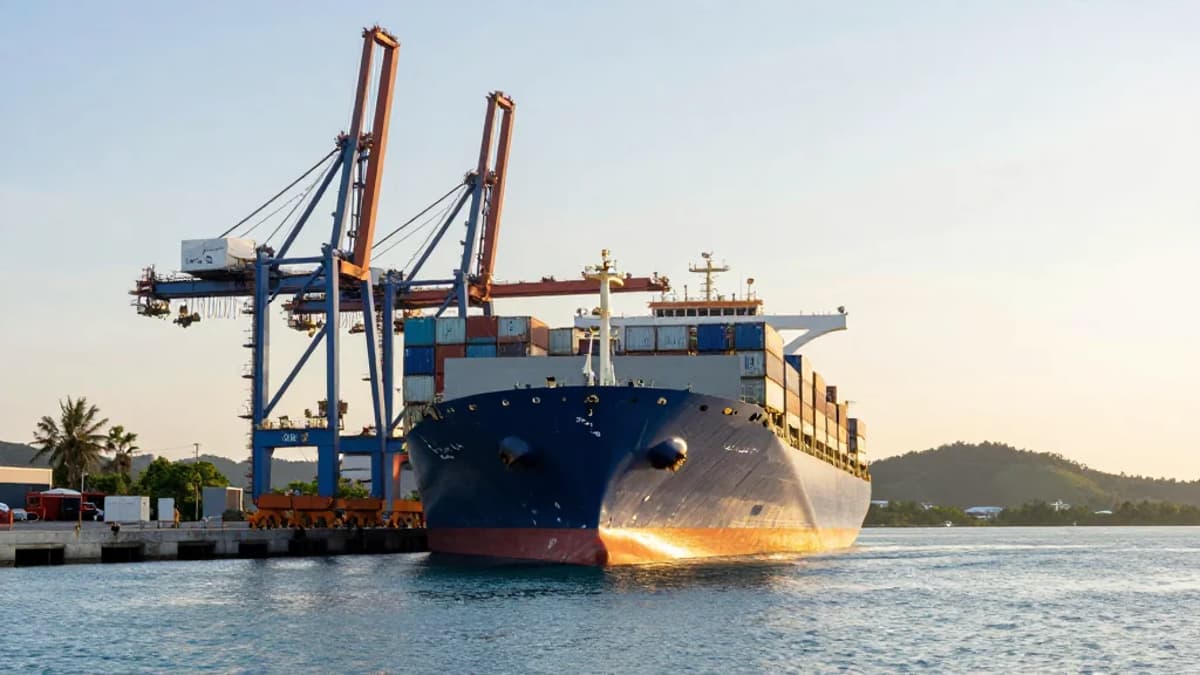
India’s Next Big Power Move Is Set to Unfold in the Bay of Bengal
•February 17, 2026
0
Why It Matters
By capturing transshipment volumes currently routed through overseas ports, India can retain revenue, cut logistics costs, and strengthen its maritime security in a geopolitically sensitive corridor.
Key Takeaways
- •NGT clears Rs 90,000‑crore Great Nicobar project.
- •ICTP aims 4 million TEUs by 2028, 16 million full capacity.
- •Port located 40 NM from Malacca Strait, boosting strategic reach.
- •Indian majority JV excludes foreign operators, ensuring domestic control.
Pulse Analysis
India’s shipping ecosystem has long relied on external hubs, with more than three‑quarters of its transshipment cargo processed in Colombo, Singapore or Port Klang. This dependence inflates costs and limits integration into global value chains, a shortfall highlighted by the RBI’s 2022 report. The Great Nicobar project, anchored by a Rs 40,040 crore International Container Transshipment Port, directly addresses this gap, offering a domestic gateway for ultra‑large vessels and promising to halve sailing distances for many east‑west routes.
Strategically, the port’s placement at Galethea Bay—just 40 nautical miles from the Malacca Strait—places India at the doorstep of one of the world’s busiest maritime chokepoints. The dual‑use civil‑military airport reinforces the island’s role as a forward outpost, enabling rapid deployment of assets and enhancing surveillance capabilities in the Bay of Bengal. In an era of intensifying Indo‑Pacific competition, the facility serves as both an economic engine and a geopolitical counterweight to China’s expanding port network.
Economically, the phased rollout targets 4 million TEUs by 2028, scaling to 16 million TEUs at full capacity, which could recapture a sizable share of the revenue currently flowing to foreign ports. Coupled with the Vizhinjam deep‑water hub on the western coast, the two‑pronged strategy aims to create a seamless east‑west maritime corridor under Indian control. The expected reduction in freight costs, shorter transit times, and increased domestic port utilization are poised to boost India’s manufacturing competitiveness and solidify its standing in global supply chains.
India’s next big power move is set to unfold in the Bay of Bengal
0
Comments
Want to join the conversation?
Loading comments...