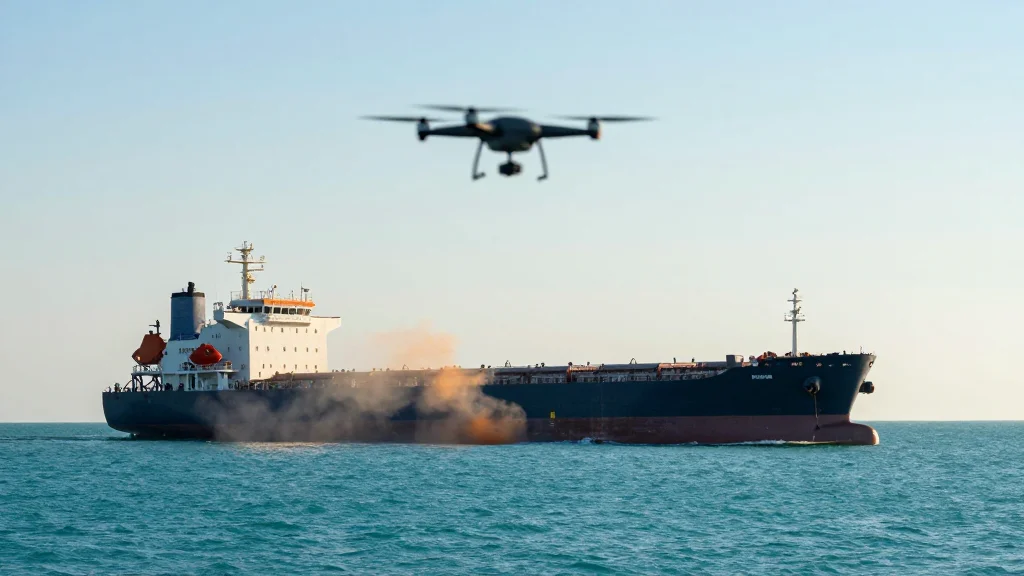
Iran Ceasefire Tested as Drone Sets Cargo Ship Aflame Off Qatar, Raising Gulf Shipping Risks

Why It Matters
The incident highlights how geopolitical flashpoints in the Gulf can quickly translate into economic shocks for emerging markets that rely on affordable energy. A sustained disruption of the Strait of Hormuz would elevate oil prices, erode export competitiveness, and increase fiscal pressures on countries already facing balance‑of‑payments challenges. Beyond energy, the security of maritime trade routes underpins supply chains for food, raw materials, and finished goods across Asia, Africa, and Latin America. Persistent instability could force shippers to reroute vessels around the Cape of Good Hope, inflating transport costs and delaying deliveries, thereby amplifying inflationary pressures in vulnerable economies.
Key Takeaways
- •Drone strike ignites cargo ship 23 nautical miles NE of Doha; fire extinguished, no casualties
- •UAE and Kuwait each downed two drones, blaming Iran for the attacks
- •Pakistan’s Shehbaz Sharif confirmed Iran’s response to a U.S. peace proposal
- •Iran holds >440 kg of uranium enriched to 60%, near weapons‑grade levels
- •Potential Strait of Hormuz disruptions could raise global oil prices, hitting emerging‑market economies
Pulse Analysis
The Gulf’s latest flare‑up underscores a broader pattern: regional conflicts are increasingly weaponized through low‑cost, high‑impact drone attacks that can destabilize critical trade arteries without triggering full‑scale war. For emerging markets, the risk calculus has shifted from traditional state‑to‑state confrontations to asymmetric threats that can swiftly alter shipping costs and market sentiment. Investors are likely to price in a risk premium for Gulf‑linked assets, especially energy‑intensive commodities, until a durable diplomatic solution emerges.
Historically, ceasefires in the Iran‑U.S. theater have been fragile, often punctuated by proxy actions that allow each side to claim compliance while testing the opponent’s resolve. The current episode mirrors past incidents where drone incursions served as calibrated signals rather than outright escalations. This ambiguity benefits neither side: Tehran can demonstrate deterrence without overtly violating the truce, while Washington can maintain pressure without committing to a broader conflict. The involvement of mediators like Pakistan adds a diplomatic layer that could either bridge the gap or become another arena for strategic posturing.
Looking ahead, the key variable will be the response to Iran’s yet‑unrevealed position on the U.S. proposal. If Tehran signals willingness to negotiate, regional actors may prioritize de‑escalation, stabilizing shipping lanes and easing commodity price volatility. Conversely, a hardline stance could prompt renewed U.S. naval actions, further entrenching the security dilemma. Emerging‑market policymakers should therefore monitor diplomatic signals closely and consider contingency plans for energy supply diversification to mitigate the systemic risk posed by Gulf instability.
Iran Ceasefire Tested as Drone Sets Cargo Ship Aflame off Qatar, Raising Gulf Shipping Risks
Comments
Want to join the conversation?
Loading comments...