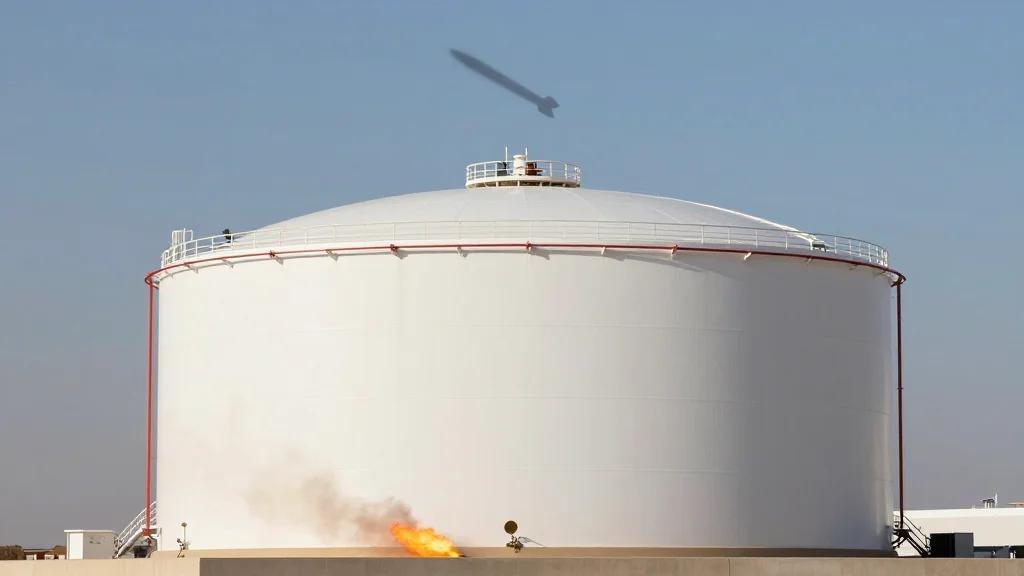
Iranian Missile Strike Wipes Out 17% of Global LNG Supply, Costs Gulf $58bn

Why It Matters
The Gulf’s economies are among the world’s fastest‑growing emerging markets, largely because of their reliance on hydrocarbon exports. A sudden loss of 17% of global LNG capacity and $58 billion in infrastructure damage threatens to reverse years of diversification and fiscal consolidation, raising borrowing costs and prompting capital flight. For investors, the heightened geopolitical risk re‑prices exposure to the region’s sovereign debt and corporate bonds, while multinational energy firms must reassess supply‑chain resilience and contract structures. Beyond finance, the disruption highlights the fragility of global energy supply chains that depend on narrow maritime chokepoints. Prolonged reductions in LNG output could accelerate the shift toward alternative fuels and renewables, reshaping demand patterns for emerging‑market exporters. Policymakers in the Gulf will need to balance short‑term reconstruction spending with longer‑term economic diversification to mitigate future shocks.
Key Takeaways
- •Iranian missile strike on March 18 knocked out ~17% of global LNG supply
- •QatarEnergy faces $20 billion annual revenue loss; repairs may take 3‑5 years
- •Total Gulf infrastructure damage estimated at $58 billion
- •World Bank cut Middle East growth forecast to 1.8% for 2026
- •Strait of Hormuz closure cuts ~20% of global oil/LNG flows, forcing pipeline reroutes
Pulse Analysis
The Gulf’s exposure to a single geopolitical flashpoint has become a textbook case of concentration risk in emerging markets. Historically, the region’s growth engine has been underpinned by cheap, abundant hydrocarbons and a predictable export corridor through the Strait of Hormuz. The missile strike shatters that predictability, forcing a rapid re‑evaluation of both physical and financial resilience.
In the short term, the $58 billion damage estimate will likely trigger a wave of sovereign bond downgrades, especially for Qatar and Kuwait, whose fiscal buffers are already strained by lower export receipts. Credit rating agencies will factor in not only the direct repair costs but also the opportunity cost of lost LNG sales, which could erode sovereign wealth fund contributions for years. Investors may demand higher spreads, prompting a shift toward more stable emerging‑market destinations such as Indonesia or Vietnam.
Longer‑term implications hinge on the Gulf’s ability to diversify away from oil and gas. Saudi Arabia’s recent Vision 2030 reforms and the UAE’s push into renewable energy and tourism could cushion the blow, but the pace of diversification is uncertain. If reconstruction funds are diverted from these initiatives, the region risks a prolonged period of low‑growth, high‑inflation environments that could exacerbate social pressures. Conversely, the crisis could accelerate investment in alternative export routes, such as expanded pipeline capacity to the Red Sea and increased storage facilities in Fujairah, creating new infrastructure assets that may eventually enhance the Gulf’s logistical flexibility.
For global LNG buyers, the loss of Qatar’s output may spur a scramble for alternative suppliers, benefitting competitors like the United States, Australia and Russia. This re‑allocation of demand could permanently reshape market share dynamics, reducing the Gulf’s leverage in price negotiations. In sum, the Iranian strike not only inflicts immediate economic pain but also forces a strategic pivot for the Gulf’s emerging‑market economies, with reverberations that will be felt across capital markets, energy trade flows, and regional development agendas.
Iranian Missile Strike Wipes Out 17% of Global LNG Supply, Costs Gulf $58bn
Comments
Want to join the conversation?
Loading comments...