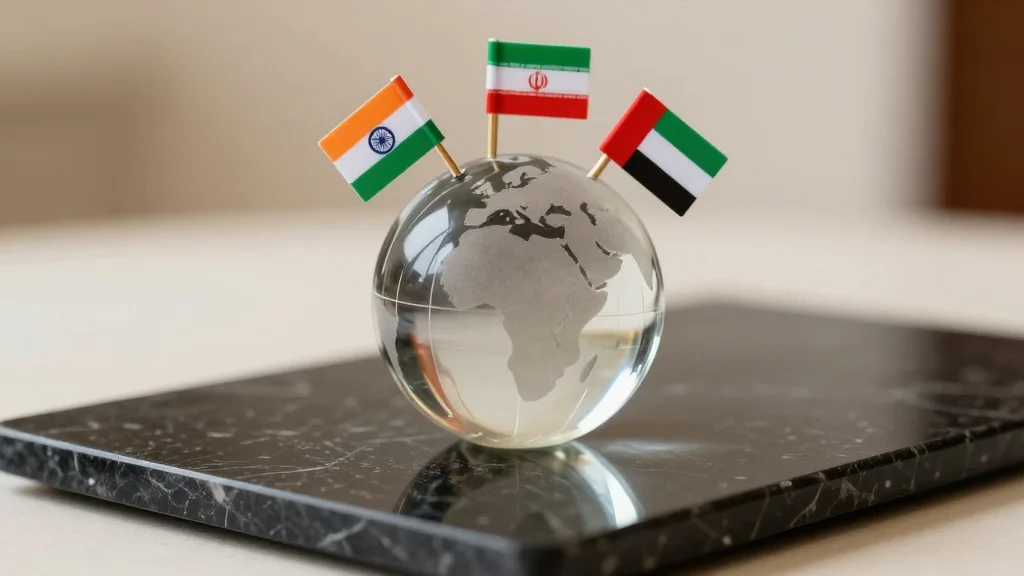
Iran‑Israel Conflict Casts Shadow Over BRICS Foreign Ministers Meeting in New Delhi

Why It Matters
The New Delhi BRICS meeting illustrates how regional conflicts can fracture coalitions of emerging economies that rely on collective bargaining power. A split between Iran and the UAE not only hampers the bloc’s political cohesion but also risks destabilising coordinated economic policies, especially in energy‑intensive sectors. For investors, the episode signals heightened geopolitical risk in markets that have traditionally been viewed as a unified alternative to Western financial institutions. If BRICS fails to produce a joint statement, member states may pursue divergent strategies, weakening the group’s leverage in global forums such as the G20 and the World Bank. Conversely, a successful diplomatic bridge could reinforce the bloc’s credibility, encouraging deeper trade ties and joint infrastructure projects that are critical for long‑term growth in the Global South.
Key Takeaways
- •Iran’s foreign minister is set to press India to condemn U.S. and Israeli actions at the BRICS summit.
- •The UAE and Iran are on opposite sides of the Gulf conflict, creating the first major split within the expanded BRICS group.
- •China will be represented by ambassador Xu Feihong, keeping a neutral stance while its foreign minister attends a U.S. presidential visit.
- •Rising oil prices triggered emergency economic measures in India and other BRICS economies to protect consumers.
- •A joint BRICS statement remains uncertain, highlighting the fragility of emerging‑market cooperation amid geopolitical tensions.
Pulse Analysis
The New Delhi summit underscores a structural vulnerability in BRICS: its reliance on political consensus among members with divergent security alliances. Historically, the bloc has managed to sidestep deep geopolitical rifts by focusing on economic cooperation. This time, the Iran‑Israel war forces a direct confrontation between two members whose regional interests are at odds, testing the limits of BRICS’s diplomatic flexibility.
From a market perspective, the inability to issue a unified statement could translate into higher risk premiums for sovereign debt issued by BRICS nations, especially those with significant exposure to oil imports. Investors may demand tighter spreads, slowing the flow of foreign capital that has been a lifeline for infrastructure projects across the Global South. Conversely, the episode could also catalyse a re‑evaluation of the bloc’s governance model, prompting calls for a more formalized decision‑making process that can weather geopolitical shocks without paralyzing the group.
Looking ahead, the outcome of the New Delhi talks will likely influence the agenda of the upcoming BRICS summit in 2026, where the bloc hopes to launch a new development bank and expand trade in local currencies. If the current tensions are not resolved, they could set a precedent for future disputes, eroding the credibility of BRICS as a cohesive force in global economics. Stakeholders should monitor the post‑summit communiqués closely, as any language on conflict resolution or energy security will be a bellwether for the bloc’s strategic direction.
Iran‑Israel Conflict Casts Shadow Over BRICS Foreign Ministers Meeting in New Delhi
Comments
Want to join the conversation?
Loading comments...