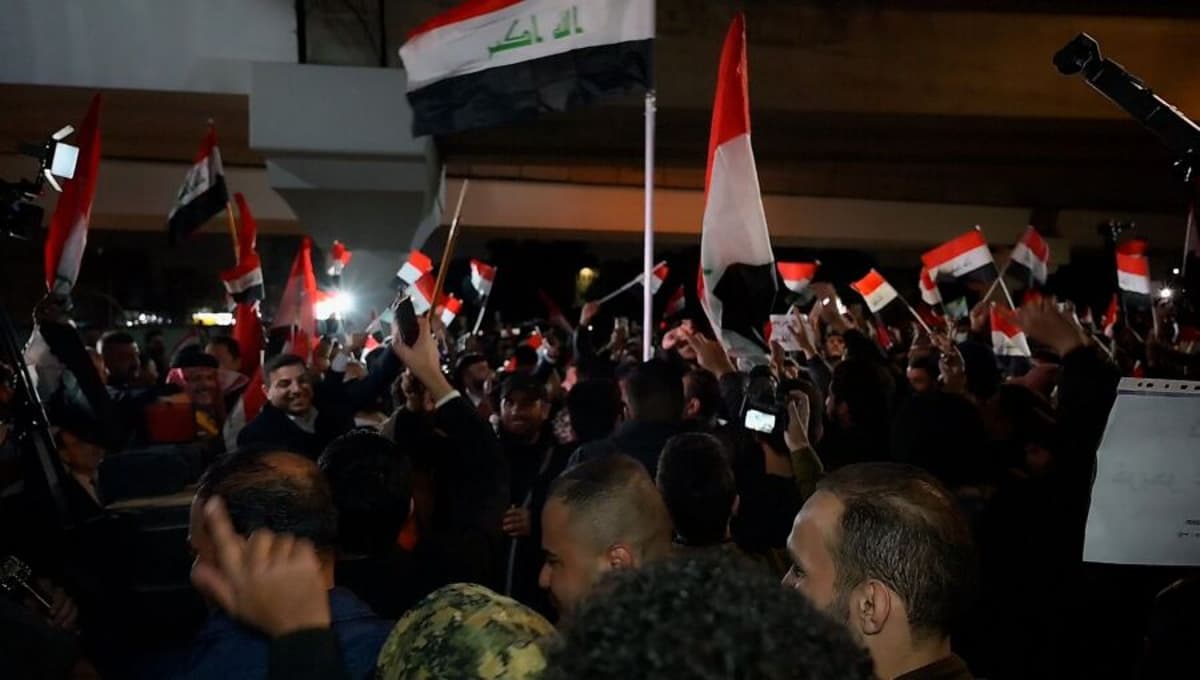
Iraqis Call for March to 'Uproot' US Embassy in Baghdad
•March 1, 2026
0
Why It Matters
The coordinated protest and drone campaign signal a sharp escalation in anti‑U.S. sentiment, threatening diplomatic security and complicating Washington’s strategic posture in the Middle East. The unrest also exposes Iraq’s fragile political environment, raising the risk of broader instability.
Key Takeaways
- •Islamic Resistance plans march to storm US embassy.
- •Iraqi security used tear gas, water cannons to disperse crowd.
- •16 drones launched against US bases across Iraq.
- •Kata’ib Hezbollah threatens prolonged attrition war.
- •Tensions risk destabilizing Iraq’s caretaker government.
Pulse Analysis
The latest protest in Baghdad reflects a deepening alignment between Iraq’s Islamic Resistance factions and Tehran’s regional agenda. Over the past year, Iran‑backed militias have leveraged anti‑American sentiment to expand their political leverage, often framing U.S. presence as a violation of Iraqi sovereignty. By organizing a high‑visibility march toward the U.S. embassy, these groups aim to demonstrate both domestic mobilization capacity and solidarity with Iran following the death of Ayatollah Khamenei, a narrative that resonates with hard‑line constituencies across the country.
Security forces’ decision to employ tear gas and water cannons underscores the Iraqi government’s precarious balancing act. While attempting to preserve the Green Zone’s security, authorities risk alienating powerful militia networks that control significant swaths of territory. The simultaneous claim of 16 drone operations against U.S. installations adds a kinetic dimension to the political pressure, suggesting that militia leaders are prepared to translate rhetoric into direct attacks. For Washington, the escalation forces a reassessment of force protection protocols and diplomatic engagement strategies, potentially prompting a shift toward more covert or multilateral security arrangements.
Regionally, the episode amplifies concerns about Iraq’s constitutional vacuum and the durability of its caretaker administration. A sustained campaign of protests and drone strikes could embolden other Iran‑aligned groups in Syria, Lebanon, and Yemen to coordinate similar actions, expanding the theater of conflict. Policymakers in Washington and allied capitals must therefore weigh the benefits of a calibrated diplomatic response against the risks of further militarizing the dispute, while Iraqi leaders face the urgent task of restoring governmental legitimacy to prevent a broader descent into instability.
Iraqis call for march to 'uproot' US embassy in Baghdad
0
Comments
Want to join the conversation?
Loading comments...